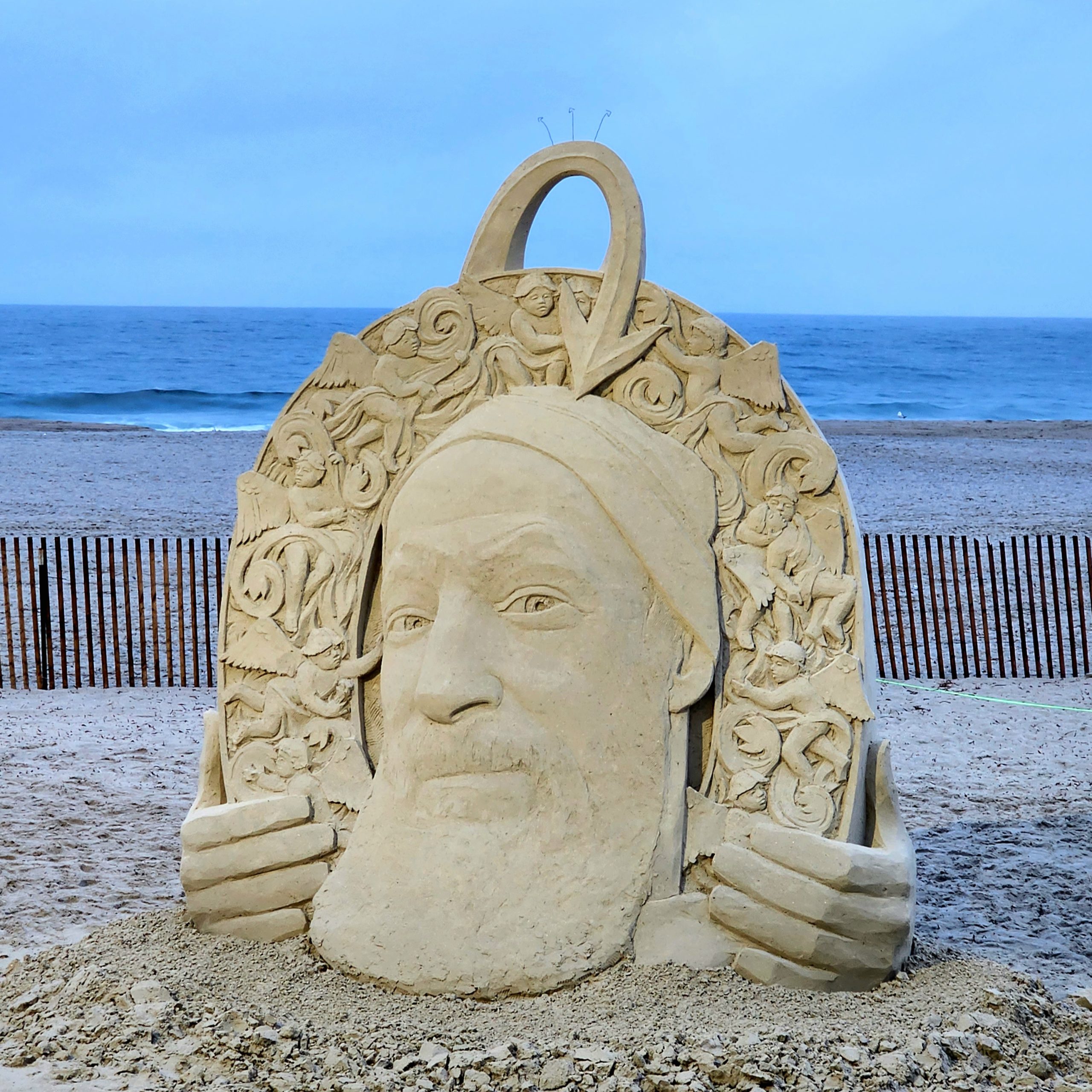
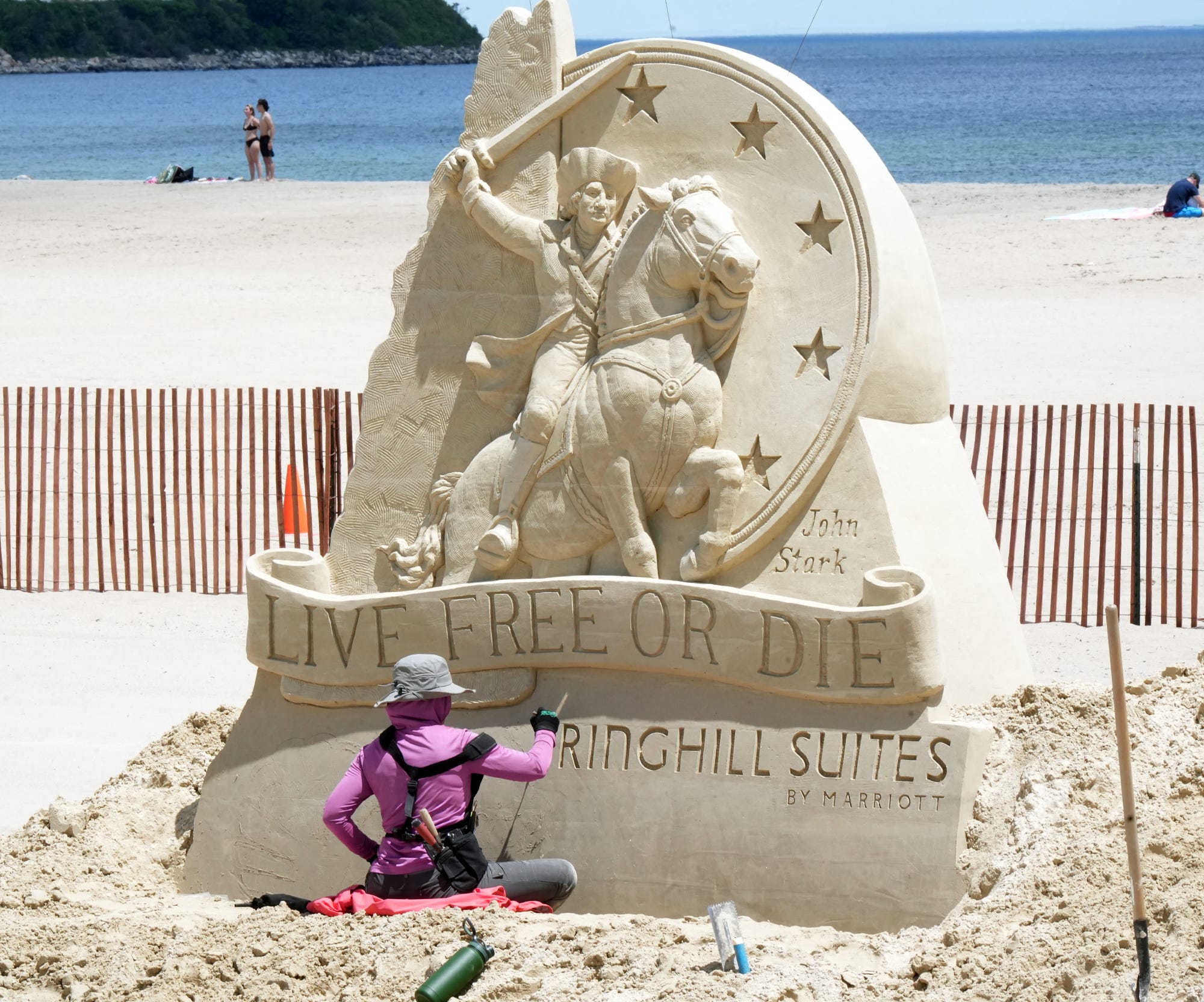
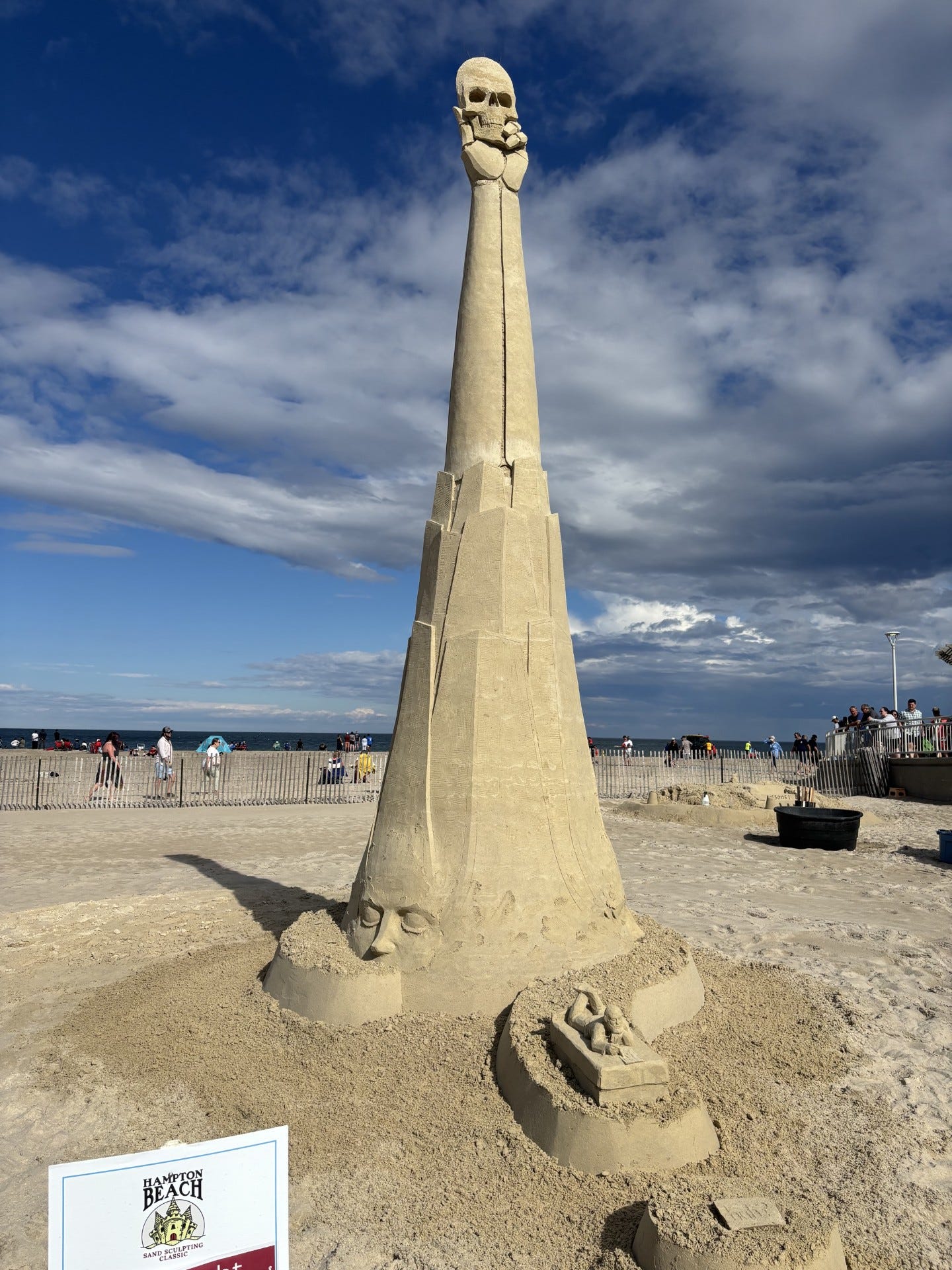
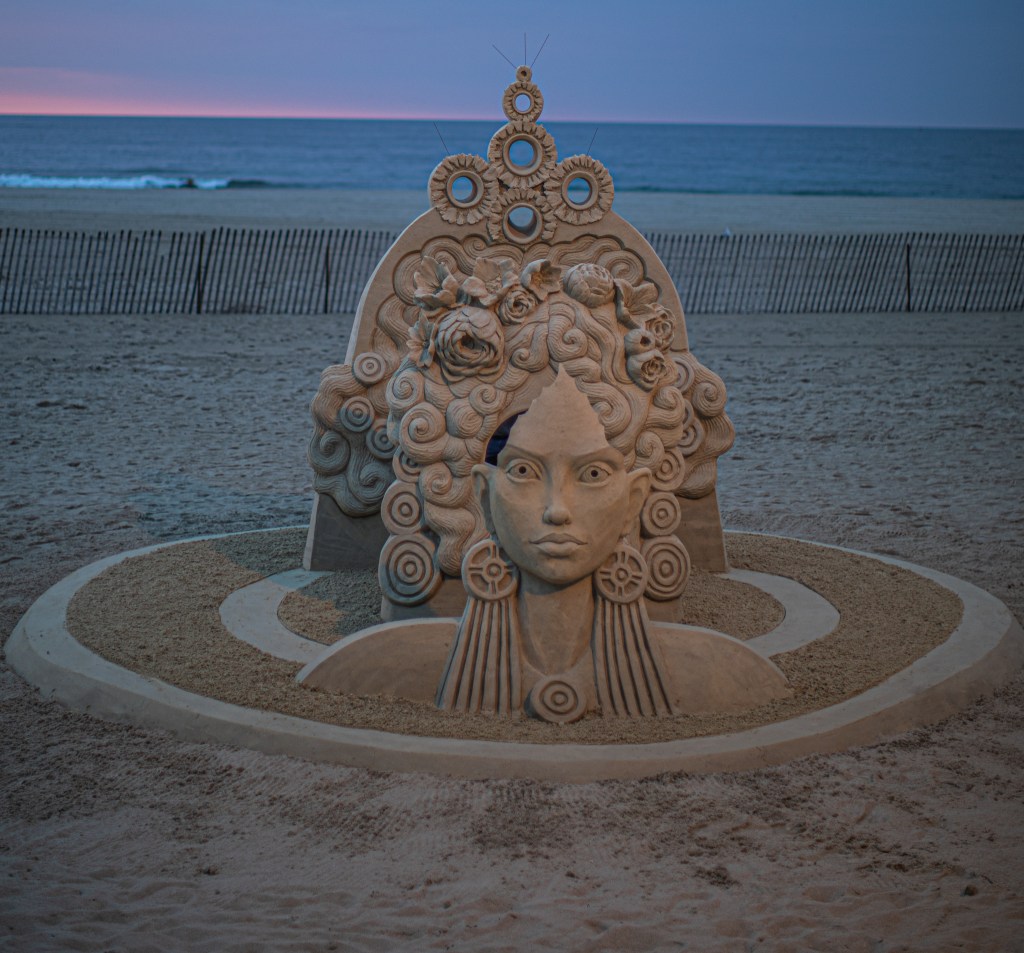
The official results for the 2025 Hampton Beach Master Sand Sculpting Classic have been announced, celebrating extraordinary artistry and structural engineering on New Hampshire’s coastline. Featuring world-renowned master sculptors competing for cash prizes and prestigious titles, the 2025 classic showcased over 150 tons of compacted sand turned into intricate, gravity-defying works of art.
| 2025 HAMPTON BEACH CLASSIC AT A GLANCE | |
|---|---|
| Location | Hampton Beach Center / Sea Shell Stage Arena, Hampton Beach, NH |
| Total Sand Used | 150+ Tons of Sourced Fine Quarry Sand |
| Primary Award Categories | Grand Champion (1st-4th Place), Sculptor's Choice, People's Choice |
| Key Judging Factors | Technical Complexity, Artistic Design, Detail, Use of Negative Space |
Overview of the 2025 Hampton Beach Master Sand Sculpting Classic
The Hampton Beach Master Sand Sculpting Classic stands as one of the premier invitation-only sand sculpting competitions in North America. Staged along the vibrant boardwalk area near the Sea Shell Stage in Hampton Beach, New Hampshire, the annual festival draws tens of thousands of spectators across its competition days and subsequent viewing week.
The 2025 event marked a major milestone as the classic celebrated its 25th Anniversary Edition. To honor a quarter-century of master-level competition, organizers invited an elite roster of internationally decorated sculptors from across North America, Europe, and Asia. Each sculptor was allocated an identical mound of compacted sand, measuring approximately 10 to 15 tons per block, and given a strict time window of 24 working hours spread over three days to complete their masterworks.
Unlike casual beach builds, the Hampton Beach Master Sand Sculpting Classic is a solo competition where artists work without assistants or power tools. The final results represent an extraordinary combination of physical stamina, fine artistic carving, knowledge of granular physics, and resilience against coastal weather conditions.
2025 Hampton Beach Sand Sculpting Winners & Results Breakdown
The 2025 judging panel—comprising seasoned sculptors, fine artists, and structural design professionals—evaluated entries based on a strict 100-point rubric. Below is the complete summary of the top award winners, sculpture titles, and recognized technical achievements from the 2025 competition.
| Award Category | Winning Sculptor | Sculpture Title | Key Artistic & Technical Features |
|---|---|---|---|
| 1st Place (Grand Champion) | Melineige Beauregard | Echoes of the Unseen | Deep fluid carving, dramatic archways, emotional depth, and high structural risk with delicate negative space. |
| 2nd Place | Carl Jara | Mind Over Matter | Hyper-detailed surrealism, crisp geometric lines, layered human profiles, and flawless surface finish. |
| 3rd Place | Karen Fralich | Guardians of the Ancient Canopy | Intricate wildlife textures, overlapping organic forms, micro-detailing on foliage, and exceptional balance. |
| 4th Place | Dan Belcher | The Mechanics of Thought | Interlocking mechanical gears, crisp architectural perspective, precise right angles, and smooth planar surfaces. |
| Sculptor’s Choice Award | Melineige Beauregard | Echoes of the Unseen | Selected by fellow master competitors for extreme structural difficulty and seamless aesthetic execution. |
| People’s Choice Award | Rusty Croft | The Ocean’s Lullaby | Story-driven composition, highly expressive character faces, and broad visual accessibility for all ages. |
Analysis of the Top Masterworks
Grand Champion & Sculptor’s Choice: Echoes of the Unseen by Melineige Beauregard
Melineige Beauregard achieved a rare double victory at the 2025 competition, securing both the official Grand Champion title and the coveted Sculptor’s Choice Award, which is voted on exclusively by rival master sculptors. Echoes of the Unseen featured a sweeping, ethereal figure emerging from interconnected ribbons of sand. The piece stood over nine feet tall, utilizing risky undercut technique where massive amounts of weight were suspended over open gaps. The seamless transitions between polished skin textures and rough, granular lattice work demonstrated complete control over sand density and moisture.
Second Place: Mind Over Matter by Carl Jara
Carl Jara, a multi-time champion across global competitions, captured second place with a striking surrealist study on human consciousness. Mind Over Matter depicted nested faces opening like architectural panels to reveal geometric patterns within. Judges praised the sculpture for its mathematical precision, sharp linear edges, and immaculate polish, which gave the sand the optical appearance of carved limestone or cast concrete.
Third Place: Guardians of the Ancient Canopy by Karen Fralich
Karen Fralich’s third-place entry drew widespread praise for its complex organic storytelling. Depicting a series of forest guardians intertwined with mythic forest creatures, the piece required painstaking detail work using micro-spatulas and dental tools. Fralich managed to carve hundreds of individual leaves, scales, and fur textures without compromising the core structural stability of the central column.
Fourth Place: The Mechanics of Thought by Dan Belcher
Dan Belcher delivered an architectural marvel that relied on exact geometry and structural balance. Featuring interlocking clockwork components, hanging pendulums, and crisp interior chambers carved deep into the block, Belcher pushed the load-bearing capabilities of compacted silt sand to its ultimate limit.
People’s Choice Award: The Ocean’s Lullaby by Rusty Croft
Voted on by public attendees over the weekend, the People’s Choice Award was awarded to Rusty Croft for his whimsical and emotionally touching piece, The Ocean’s Lullaby. Featuring a colossal sea turtle carrying an enchanted sleeping child on its shell, the sculpture captivated spectators of all ages with its narrative warmth, deep relief carving, and expressive facial anatomy.
How Sand Sculpting Champions Are Judged: Criteria & Scoring
Winning at the Hampton Beach Master Sand Sculpting Classic requires satisfying rigorous judging standards. A panel of expert judges inspects each sculpture from 360 degrees, evaluating technical execution and artistic expression.
OFFICIAL SCORING DISTRIBUTION
- Technical Difficulty & Physics Risk (30%)
- Artistic Design & Originality (25%)
- Quality of Detail & Surface Finish (20%)
- Effective Use of Negative Space (15%)
- Overall Visual Impact & Proportions (10%)
1. Technical Difficulty and Structural Risk (30%)
Sand is an inherently unstable medium that relies entirely on compaction and surface tension. Judges award maximum technical points to artists who execute dangerous undercuts, towering arches, tall slender vertical columns, and unsupported overhangs. If a sculpture suffers a collapse during the competition window, points are deducted based on the severity of the structural failure and the sculptor's ability to recover the composition.
2. Artistic Design, Concept, and Composition (25%)
This criterion measures the original thought, thematic depth, and visual movement of the piece. A sculpture must possess strong focal points and tell a coherent visual story from every viewing angle, rather than presenting a flat, single-sided relief.
3. Quality of Detail and Surface Texture (20%)
Judges examine the clarity and sharpness of the carving. Master sculptors must demonstrate control over varying textures—from glass-smooth polished surfaces to rough, stippled, or fabric-like patterns. Smudges, stray tool marks, or crumbly edges immediately reduce points in this category.
4. Effective Use of Negative Space (15%)
Negative space refers to the open, carved-out air voids within the sculpture. Pushing light through a sand sculpture by opening windows, tunnels, and hollows creates dramatic shadows and reduces the visual heaviness of the sand.
5. Overall Visual Impact and Proportions (10%)
The final evaluation considers how effectively the piece commands attention from a distance. Proper human or animal anatomy, correct perspective scale, and visual balance ensure the sculpture makes an immediate impression on both judges and spectators.
Behind the Scenes: The Physics and Engineering of Master Sand Sculpting
Spectators frequently wonder how master sand sculptures achieve such immense height and sharp detail without collapsing into dust. The secret lies in material selection, mechanical compaction, and fluid dynamics.
COMPACTION AND CARVING PHASES
- Quarry Sand Selection (Angular grains + silt content)
- Formwork Stacking (Tiered wooden boxes)
- Saturation & Tamping (Water + mechanical compaction)
- Top-Down Carving (Working from peak to base)
- Surface Sealing (Biodegradable PVA spray for protection)
Why Native Beach Sand Isn't Used
A common misconception is that sculptors shovel sand directly off Hampton Beach. Ocean beach sand consists of rounded, wave-tumbled grains coated in salt crystals. Because the grains are rounded like tiny marbles, ocean sand slides apart easily when dry and cannot support vertical loads.
Instead, organizers import over 150 tons of specialized quarry sand (often referred to as silt sand or masonry sand). Quarry sand consists of sharp, angular grains that have not been eroded by water, mixed with a small percentage of fine clay and silt. When mixed with water, these angular grains interlock tightly like puzzle pieces, creating a dense, clay-like structural block.
The Compaction Process: Building the Forms
Before the public competition begins, organizers construct heavy wooden or plastic formwork boxes (termed "pikes") stacked in a tiered, pyramid fashion.
- Layering: Workers deposit 10 to 12 inches of quarry sand inside the form.
- Saturation: Hundreds of gallons of water are pumped into the form to fill all air gaps between the grains.
- Mechanical Tamping: Sculptors use heavy hand tampers or gasoline-powered plate compactors to pound the wet sand down, forcing out excess air and driving the angular grains together.
- Stripping Forms: Once the sand sets into a dense, solid block, the outer wooden forms are removed, leaving a rock-hard monolith ready for carving.
Carving Techniques and Preservation
Sculptors always carve from the top down. This prevents falling debris from destroying previously finished work lower on the mound.
- Primary Rough-Out: Artists use large trowels, masonry shovels, and curry combs to remove massive amounts of excess sand and establish the primary forms.
- Fine Carving: Using loop tools, pallet knives, drinking straws (to blow away fine loose sand), and soft paintbrushes, sculptors refine intricate details.
- Surface Preservation: To protect finished sections from ocean winds, baking sun, and light rain, sculptors spray a fine mist of water mixed with a small amount of biodegradable PVA glue (water-soluble white glue). This creates a flexible thin crust across the outer layer without altering the appearance or color of the sand.
History and Significance of the Hampton Beach Master Classic
First established at the turn of the 21st century, the Hampton Beach Master Sand Sculpting Classic has grown from a modest regional exhibition into an internationally recognized premier event. Sponsored by the Hampton Beach Village District and local business partners, the competition serves as a major economic driver for the Seacoast region of New Hampshire.
- 2000s: Event Inception to Regional Exhibition
- 2010s: Global Invitation-Only Format Adopted
- 2020s: International Master Roster & LED Night Lighting Added
- 2025: 25th Anniversary Milestone Event
Over its 25-year history, the event has hosted dozens of World Champion sculptors from around the globe. The competition is unique because the sculptures remain on display for up to a week after the winners are declared, transformed into an illuminated night gallery thanks to specialized LED lighting installed along the boardwalk.
Visitor Guide: Experiencing the Sand Sculptures
For visitors planning to view the sculptures during event season, utilizing proper logistical strategies ensures the best possible experience.
Viewing Schedule and Lighting
While the primary sculpting takes place over a three-day window in mid-June, the finished sculptures remain fully intact and open to the public for up to 10 days following the competition (weather permitting).
- Daytime Viewing: Offers clear sightlines for photography, allowing visitors to appreciate fine textures, crisp lines, and micro-carvings.
- Nighttime Viewing: After sunset, custom directional LED lighting illuminates the sculptures, creating dramatic cast shadows that highlight the depth, undercuts, and negative space in ways invisible during daylight hours.
Location and Accessibility
The competition site is centered on the sand directly behind the Hampton Beach Sea Shell Stage (located along Ocean Boulevard in Hampton Beach, NH).
- Boardwalk Access: A raised, wooden viewing platform surrounds the entire sculpture perimeter, making the event fully wheelchair and stroller accessible without requiring visitors to walk directly on soft sand.
- Parking: Paid public parking lots are available along Ocean Boulevard, Ashworth Avenue, and at the Hampton Beach State Park South Pavilion lot. Early arrival is highly recommended during peak weekend hours.
Frequently Asked Questions
What happens to the sculptures after the event ends?
Once the public viewing window concludes, heavy machinery and excavators enter the arena site to knock down the sculptures. The sand is knocked down, cleared of any form materials, and either safely integrated into local beach nourishment projects or returned to local quarries for future construction use.
Are sculptors allowed to use internal supports or glues inside the sand?
No. Competition rules strictly prohibit internal structural supports such as rebar, wooden posts, foam blocks, or wire mesh. The sculpture must be composed entirely of sand and water. Glue is permitted only as a thin surface mist sprayed onto the exterior skin after carving to prevent wind erosion.
What happens if it rains during the competition?
Light to moderate rain generally does not destroy sand sculptures because the sand is already densely compacted and saturated with water. Sculptors cover sensitive sections with plastic tarps during severe downpours. Once the storm passes, artists repair minor surface erosion using fine trowels and brushes.
How are sculptors selected to compete at Hampton Beach?
The Hampton Beach Master Sand Sculpting Classic is an invitation-only tournament. Selection is handled by the event director and advisory board, who evaluate master sculptors based on their portfolio, international competition rankings, structural innovation, and past championship performance.
Can the public vote for the winner?
Yes. While the official Grand Champion, 2nd, 3rd, and 4th place awards are determined by a professional panel of judges, all event attendees can purchase or cast official ballots on site for the People’s Choice Award.
Practical Recommendations for Event Attendees
When visiting the Hampton Beach sand sculptures, consider the following expert guidance to maximize your experience:
- Visit During Off-Peak Hours: To avoid heavy foot traffic along the viewing boardwalk, plan your visit during weekday mornings (between 8:30 AM and 10:30 AM) or late evenings after 8:30 PM for illuminated viewing.
- Bring a Telephoto or Zoom Lens: Photographers seeking detailed shots of intricate face carvings or undercuts will benefit from a 70–200mm lens, as security fencing keeps spectators approximately 15 to 20 feet back from the base of the mounds.
- Combine Viewing with Local Programs: Check the local Sea Shell Stage schedule, as evening music performances and fireworks displays frequently coincide with the sand sculpture exhibition days during peak beach season.