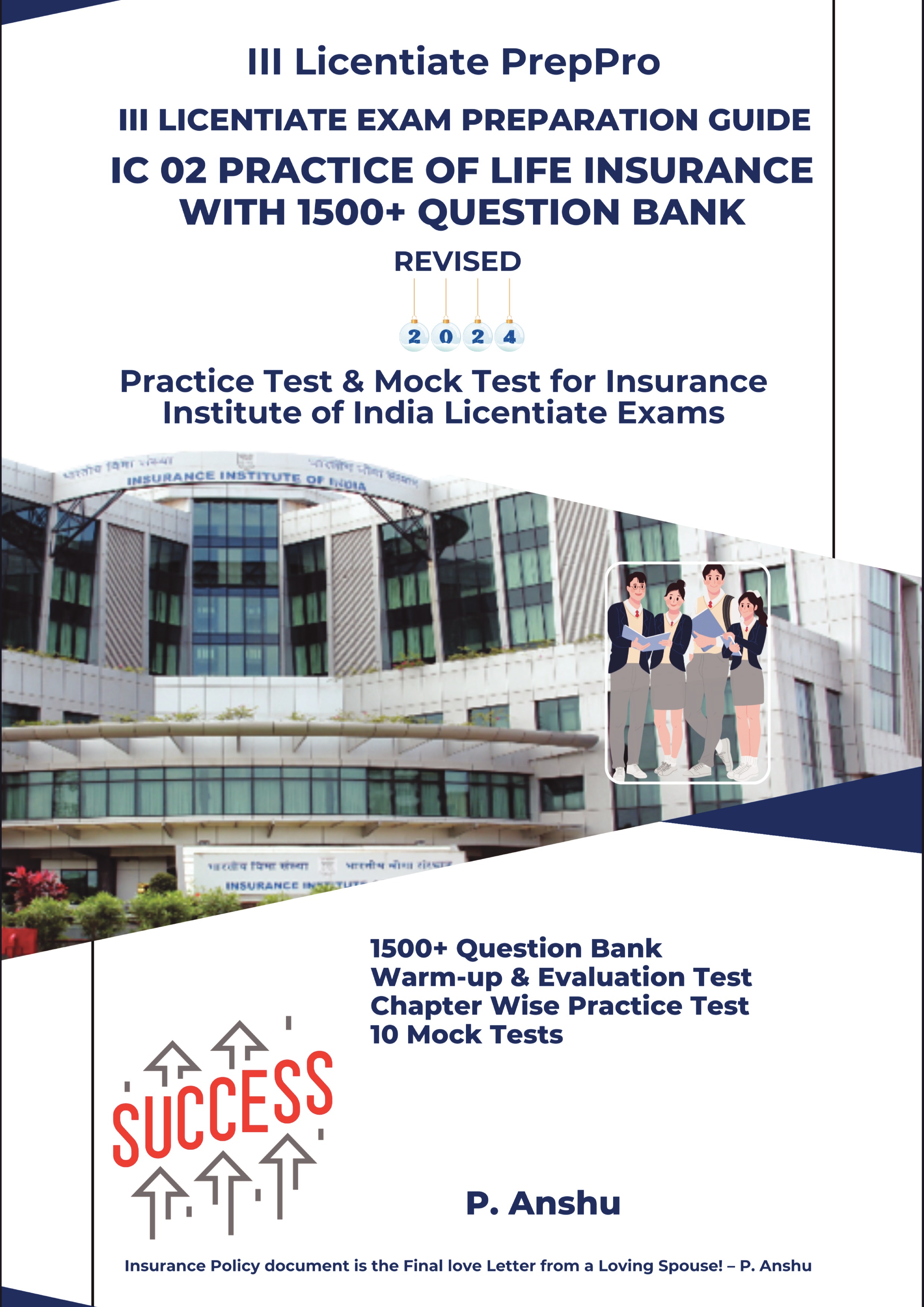
The IC 26 Life Insurance certification is a specialized educational module offered by the Insurance Institute of India (III), designed to provide agents and financial professionals with a rigorous understanding of life insurance products, underwriting principles, and the regulatory landscape governing the Indian insurance market. Mastering this material is essential for practitioners seeking to provide accurate financial guidance and maintain professional licensure.
The Role of IC 26 in Professional Development
The Insurance Institute of India serves as the primary regulatory and educational body for insurance professionals across the country. The IC 26 module is a foundational component of the Licentiate or Associate level curriculum. Unlike general consumer guides, this material is structured for individuals who intend to act as intermediaries or advisors in the life insurance sector.
The primary objective of the IC 26 guide is to standardize the technical knowledge required to sell and service life insurance products. As of 2026, the life insurance industry operates under a sophisticated regulatory framework established by the Insurance Regulatory and Development Authority of India (IRDAI). Candidates studying IC 26 must understand not only the mathematical foundations of risk assessment but also the ethical obligations and legal mandates that protect policyholders.
Core Components of the Curriculum
The curriculum is divided into several thematic pillars that form the basis of a professional life insurance practice. These segments bridge the gap between theoretical actuarial science and practical sales interaction.
1. Fundamental Principles of Life Insurance
Life insurance is built on the law of large numbers and the concept of risk pooling. IC 26 explains how insurers calculate premiums by assessing mortality risks and investment returns. Candidates learn the difference between various product structures, such as term insurance, endowment plans, whole life policies, and unit-linked insurance plans (ULIPs). Each of these structures serves a different financial goal, ranging from pure risk protection to long-term wealth accumulation.
2. Underwriting and Risk Selection
One of the most critical aspects of the IC 26 material is the study of underwriting. This is the process by which an insurance company evaluates an applicant to determine the level of risk they represent. Professionals must understand:
- Financial Underwriting: Assessing the applicant's income and financial needs to ensure the insurance coverage is proportionate to their potential loss.
- Medical Underwriting: Interpreting medical reports, health declarations, and family history to classify risks as standard, sub-standard, or uninsurable.
- Occupational Risk: Evaluating how an individual’s career affects their mortality rate.
3. Legal and Regulatory Framework
The guide emphasizes the role of the IRDAI in protecting consumer interests. This includes understanding the "File and Use" procedure for product approvals, the standardized commission structures for agents, and the grievance redressal mechanisms available to policyholders. By 2026, these regulations have evolved to place a heavy emphasis on digital transparency and the prompt settlement of claims.
Practical Application: From Theory to Practice
For a financial professional, the IC 26 guide is a reference tool for daily decision-making. When advising a client, an agent must be able to translate complex actuarial terms into language that a consumer can understand.
A central task for any professional is determining the "sum assured" a client requires. The IC 26 framework provides the basis for Human Life Value (HLV) calculations. This method helps an agent calculate the present value of an individual's future earnings, adjusted for inflation and personal expenses, to recommend an appropriate level of coverage.
Comparison of Key Life Insurance Product Categories
To provide effective financial guidance, practitioners must master the differences between product classes. The table below outlines how these products are generally categorized within the context of the IC 26 syllabus.
| Product Category | Primary Purpose | Risk Profile | Investment Component |
|---|---|---|---|
| Term Insurance | Pure Risk Protection | High (Death Benefit) | None |
| Endowment Plan | Savings & Protection | Moderate | Guaranteed Returns |
| Whole Life | Estate Planning | Long-term | Cash Value Growth |
| ULIPs | Market-Linked Wealth | Market-Dependent | Fund-based Growth |
Navigating Regulatory Requirements in 2026
As of 2026, the regulatory environment is more stringent than in previous years. The focus has shifted significantly toward "suitability." Agents are no longer expected to simply sell policies; they are required to prove that a product is suitable for the client’s specific financial profile.
This shift involves:
- Know Your Customer (KYC) Compliance: Ensuring all identity and financial documentation is verified via digital portals to prevent fraud and money laundering.
- Needs-Based Selling: Documentation showing that a thorough financial audit was conducted before a recommendation was made.
- Digital Mandates: The integration of the Insurance Information Bureau of India (IIB) data to prevent over-insurance and ensure the validity of existing policies.
Common Challenges and Mistakes
Even experienced professionals often struggle with the technical nuances of the IC 26 syllabus. A recurring issue is the failure to properly explain the "Free Look Period." Under current regulations, a policyholder has a 15-day period from the date of receipt of the policy document to review its terms and conditions. If they are dissatisfied, they may return the policy and receive a refund, subject to specific deductions. Agents who fail to highlight this right risk losing client trust and facing regulatory penalties.
Another common mistake involves the misrepresentation of "guaranteed" versus "projected" returns. In the current market, all illustrations must clearly state the assumptions made regarding market performance. Professionals must be careful to avoid promising returns that are not backed by the policy document, as this constitutes "mis-selling," a serious infraction under IRDAI guidelines.
Preparing for the Certification
The IC 26 examination requires more than rote memorization. It requires a conceptual understanding of how financial markets interact with insurance liabilities. Candidates are encouraged to focus on:
- Case Studies: Applying the theory to hypothetical clients with varying age groups, health conditions, and income levels.
- Regulatory Updates: While the core concepts remain stable, candidates must stay informed about the most recent IRDAI circulars and amendments that influence current operational rules.
- Ethical Scenarios: Evaluating the moral implications of specific sales practices and adhering to the code of conduct mandated by the Insurance Institute of India.
Next Steps for Practitioners
For those looking to leverage their IC 26 knowledge, the recommended next step is to integrate these principles into a formal "Financial Planning" approach. Rather than acting as a product salesperson, transition into the role of a financial advisor by:
- Conducting a Needs Audit: Assess the client’s current assets, liabilities, and long-term goals.
- Mapping Insurance to Goals: Connect the life insurance policy to specific milestones, such as a child’s education, retirement funding, or debt elimination.
- Routine Review: Schedule annual policy reviews to ensure coverage remains relevant as the client's financial status changes.
If you are currently enrolled in the program or seeking to refresh your understanding, focus on the interaction between mortality tables and premium calculation. This is the "engine" of the insurance industry, and mastering it allows you to explain to your clients why their premiums are structured the way they are, thereby building the credibility necessary for long-term professional success.