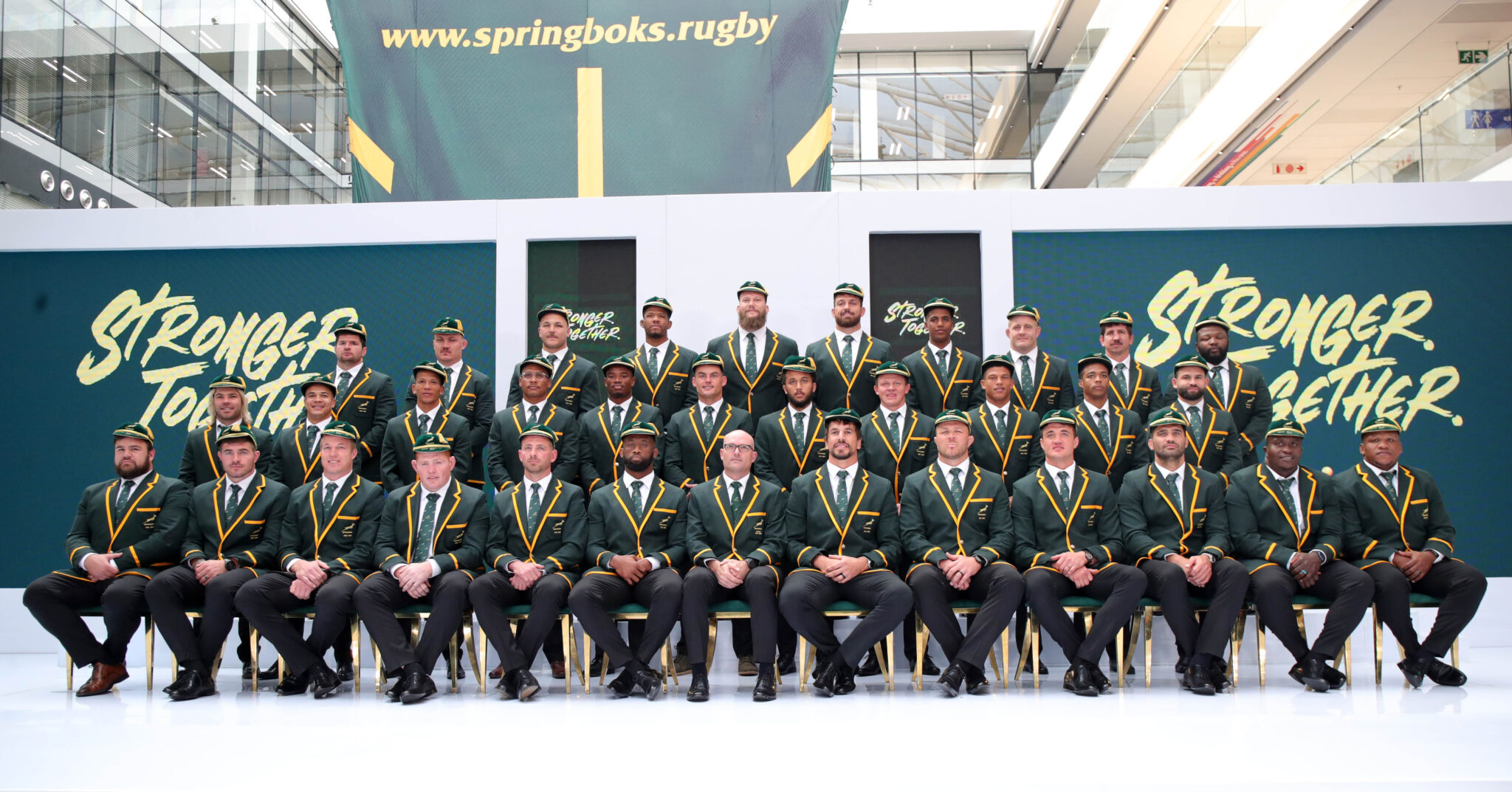
The South African national rugby team, the Springboks, claimed their third Rugby World Cup title in 2019 by defeating England 32–12 in the final held in Yokohama, Japan. Led by captain Siya Kolisi and head coach Rassie Erasmus, the 31-man squad demonstrated tactical excellence and physical dominance throughout the tournament, overcoming an opening-match loss to New Zealand to lift the Webb Ellis Cup.
The Selection Philosophy: Building a Balanced Squad
The 2019 Springbok squad was constructed under the strategic vision of Rassie Erasmus, who took over as Director of Rugby and head coach during a period of transition. The objective was to create a team that combined traditional South African physical intensity with a modern, structured game plan capable of succeeding in diverse conditions.
Erasmus utilized a selection strategy often referred to as the "Bomb Squad"—a tactical deployment of six forwards and two backs on the replacement bench. This approach ensured that the team maintained physical dominance in the set-pieces and the breakdown for the full 80 minutes. By rotating fresh, heavy-hitting forwards into the match late, the Springboks could fatigue opponents, force handling errors, and dominate the scrummaging and line-out phases.
The 31-Man Official Roster
The composition of the squad was designed for versatility, with several players capable of covering multiple positions.
- Forwards: Schalk Brits, Bongi Mbonambi, Malcolm Marx (Hookers); Frans Malherbe, Trevor Nyakane, Vincent Koch, Wilco Louw, Steven Kitshoff, Tendai Mtawarira (Props); Lood de Jager, Eben Etzebeth, Franco Mostert, RG Snyman (Locks); Siya Kolisi (Captain), Pieter-Steph du Toit, Francois Louw, Kwagga Smith, Duane Vermeulen (Loose Forwards).
- Backs: Faf de Klerk, Herschel Jantjies, Cobus Reinach (Scrum-halves); Elton Jantjies, Handré Pollard (Fly-halves); Lukhanyo Am, Damian de Allende, Jesse Kriel, Frans Steyn (Centers); Cheslin Kolbe, Makazole Mapimpi, S'busiso Nkosi, Willie le Roux (Outside Backs).
Path Through the Tournament: Group Stage Dynamics
The Springboks were drawn into Pool B alongside New Zealand, Italy, Namibia, and Canada. The campaign began with significant pressure following a 23–13 loss to the All Blacks in the opening match. This result forced South Africa into a "must-win" mentality for the remainder of their group fixtures, effectively turning every match into a knockout game.
Following the loss, the Springboks showcased clinical efficiency. They secured a 57–3 victory over Namibia and followed up with dominant wins against Italy (49–3) and Canada (66–7). By securing bonus points in these matches, the team solidified their position in second place in the pool, setting up a quarter-final clash against host nation Japan.
Knockout Stages: Clinical Execution and Resilience
Entering the quarter-finals, the Springboks faced the "Brave Blossoms" of Japan, the team that had shocked the rugby world four years prior. South Africa maintained discipline and tactical control, utilizing their superior forward pack to dismantle Japan’s ball-in-hand aspirations, resulting in a 26–3 victory.
The Semi-Final: A Tactical Grinder
The semi-final against Wales represented a defensive stalemate. In a match dominated by kicking and territorial gains, the Springboks relied on the tactical boot of Handré Pollard and a relentless defensive line. A late penalty goal from Pollard broke the deadlock, resulting in a narrow 19–16 victory that sent South Africa to their third final.
The Final: Dominance in Yokohama
On November 2, 2019, the Springboks met England at the International Stadium Yokohama. While England entered as slight favorites after defeating the All Blacks in their respective semi-final, the Springboks implemented a masterclass in pressure rugby.
The South African defensive line speed prevented England from finding their rhythm. The set-piece, led by the veteran Tendai "Beast" Mtawarira, utterly dominated the English scrum. Two late tries from Makazole Mapimpi and Cheslin Kolbe punctuated a scoreline that highlighted the disparity in dominance:
- Final Score: South Africa 32, England 12.
- Key Performers: Handré Pollard (22 points from the tee), Makazole Mapimpi (first Springbok to score a try in a Rugby World Cup final).
Performance Summary Table
| Stage | Opponent | Result | Margin |
|---|---|---|---|
| Pool B | New Zealand | Loss | 13–23 |
| Pool B | Namibia | Win | 57–3 |
| Pool B | Italy | Win | 49–3 |
| Pool B | Canada | Win | 66–7 |
| Quarter-final | Japan | Win | 26–3 |
| Semi-final | Wales | Win | 19–16 |
| Final | England | Win | 32–12 |
Tactical Considerations and Technical Impact
The success of the 2019 squad significantly influenced global rugby tactics. The "Bomb Squad" became a standard reference for teams seeking to integrate high-impact substitutes. By prioritizing "pressure moments"—specifically, the transition between defense and the breakdown—the Springboks minimized the necessity of complex backline play in favor of high-percentage tactical kicking and defensive turnovers.
Critics often debated the entertainment value of this approach, but the clinical nature of the 2019 campaign confirmed the efficacy of defensive-first strategies in tournament rugby. The ability of the squad to adapt to different officiating styles and weather conditions across the Japanese venues was a testament to the technical preparation of the coaching staff.
Frequently Asked Questions
Who was the leading points scorer for the Springboks in the 2019 World Cup? Handré Pollard was the tournament’s leading points scorer overall. He accumulated a total of 69 points throughout the competition, primarily through his goal-kicking, which proved decisive in the knockout stages.
Why did the Springboks choose a 6-2 bench split so frequently? The 6-2 split (six forwards, two backs) allowed South Africa to maintain overwhelming physical superiority in the tight exchanges. This ensured that even in the final quarter of a match, their scrum and line-out remained as potent as they were at kick-off, effectively neutralizing the opponent's momentum.
How did the loss to New Zealand in the opening pool match affect the team? The loss to the All Blacks served as a catalyst for the team’s tactical refinement. It eliminated any room for error, forcing the squad to treat every subsequent match with the intensity of a final, which ultimately forged the cohesive, defensive-minded unit that dominated the later stages of the tournament.
What was the significance of the 2019 title for South African rugby? Beyond the sporting achievement, the 2019 victory held immense social significance in South Africa. As the first Black captain to lead the Springboks to a World Cup title, Siya Kolisi’s leadership served as a powerful symbol of unity, reflecting the country's ongoing efforts toward transformation and reconciliation.
Who were the try scorers in the final against England? Makazole Mapimpi and Cheslin Kolbe were the only two players to cross the try-line for South Africa in the final. Mapimpi’s try was the first by a South African in a World Cup final, followed shortly by Kolbe’s signature footwork and speed to seal the result.
Recommendation for Further Research
To fully appreciate the technical nuances of the 2019 Springbok campaign, it is recommended to review the match statistics provided by official World Rugby archives. These records detail the specific frequency of scrum resets, defensive line speed metrics, and turnover rates that defined the team's defensive structure. For those interested in the human element, the "Chasing the Sun" documentary series provides an unfiltered look at the team’s internal communication and tactical evolution throughout the 2019 season.