The 2015 Toyota Corolla features two distinct versions of a 1.8-liter four-cylinder engine. The standard 2ZR-FE produces 132 horsepower, while the LE Eco trim utilizes the 2ZR-FAE with Valvematic technology to achieve 140 horsepower and superior fuel economy. Buyers primarily choose between reliable standard performance and optimized highway efficiency.
As we evaluate the 2015 Toyota Corolla in 2026, its powertrain remains a benchmark for secondary-market reliability. While the automotive industry has shifted significantly toward hybridization and electrification over the last decade, the eleventh-generation Corolla persists as a high-volume choice for commuters and students. Understanding the nuances of its engine choices, transmission pairings, and long-term efficiency is essential for anyone maintaining or purchasing this vehicle today.
The Engineering Philosophy of the Eleventh-Generation Corolla
In 2015, Toyota’s approach to the Corolla's powertrain was conservative yet calculated. Unlike competitors who were rapidly adopting turbocharging or direct injection—technologies that can introduce complexity and long-term maintenance hurdles—Toyota opted for a refined, naturally aspirated 1.8-liter platform.
The goal was not to win drag races but to provide a "bulletproof" ownership experience. This philosophy prioritized thermal efficiency, ease of service, and consistent fuel economy over raw output. Even a decade later, in 2026, this decision has paid dividends for owners, as these engines frequently cross the 200,000-mile mark with only routine maintenance.
The Standard 1.8L 2ZR-FE Engine
The vast majority of 2015 Corollas found on the road are equipped with the 2ZR-FE engine. This powerplant was used in the L, LE, and S trim levels. It is a DOHC (Double Overhead Cam), 16-valve inline-four that utilizes Dual VVT-i (Variable Valve Timing with intelligence).
Technical Specifications and Performance
The 2ZR-FE produces 132 horsepower at 6,000 RPM and 128 lb-ft of torque at 4,400 RPM. By 2026 standards, these figures are modest, yet they provide sufficient motivation for a compact sedan weighing approximately 2,800 pounds. The power delivery is linear, though the engine can become audible under heavy acceleration, particularly when merging onto high-speed interstates.
Reliability and Longevity Characteristics
The 2ZR-FE is celebrated for its simplicity. It uses a timing chain rather than a belt, which eliminates a costly service item common in older vehicles. In the used car market of 2026, the primary concerns for this engine are typically limited to the water pump, which may require replacement between 100,000 and 150,000 miles, and the occasional ignition coil failure.
The Valvematic Advantage: The 2ZR-FAE Engine
For the 2015 model year, Toyota offered a specialized variant for the LE Eco trim: the 2ZR-FAE. While it shares the same 1.8-liter displacement as the standard engine, it incorporates Toyota’s Valvematic technology.
How Valvematic Works
Standard VVT-i controls when the valves open and close (timing). Valvematic goes a step further by providing continuous adjustment to the lift amount of the intake valves. This allows the engine to control intake air via the valves themselves rather than relying solely on the throttle plate.
This reduction in "pumping losses" results in two distinct benefits:
- Increased Power: The engine output rises to 140 horsepower.
- Increased Efficiency: The engine operates more efficiently across the entire RPM range, particularly at highway speeds.
Performance Trade-offs
Interestingly, while the Valvematic engine gains 8 horsepower over the standard unit, it actually loses a small amount of torque, producing 126 lb-ft. In practical driving scenarios, the LE Eco feels slightly more responsive at mid-to-high speeds but offers nearly identical off-the-line performance compared to the standard LE or S trims.
Transmission Choices and Their Impact on Power Delivery
In 2015, the Corolla's engine performance was heavily dictated by the transmission paired with it. Depending on the trim level, owners in 2026 may encounter one of three different gearboxes.
The CVTi-S (Continuously Variable Transmission)
The most common transmission is the CVTi-S. The "i-S" stands for "intelligent-Shift." Toyota engineered this CVT to mimic the feel of a traditional hydraulic automatic by providing seven simulated "gears" or shift points. This reduces the "rubber band" feel often associated with early CVTs. It is the primary reason the 2015 Corolla achieved such competitive fuel economy ratings in its era.
The 6-Speed Manual
Found primarily on the S and L trims, the 6-speed manual transmission allows drivers to extract the maximum potential from the 132-hp engine. It features relatively short gearing for the first three speeds to aid acceleration, with a tall sixth gear for cruising.
The 4-Speed Automatic (Base L Trim)
A historical curiosity in 2015, the base "L" trim was offered with an aging 4-speed automatic. This transmission significantly blunts the engine's efficiency and performance. In the 2026 used market, these models are generally less desirable due to higher fuel consumption and a less refined driving experience.
Fuel Efficiency and Real-World Consumption
Efficiency was the primary selling point for the 2015 Corolla. Toyota optimized the aerodynamics (a 0.28 coefficient of drag) and engine mapping to compete with the rising popularity of hybrids.
EPA Ratings vs. 2026 Reality
At the time of release, the EPA ratings were as follows:
- LE Eco: 30 mpg city / 42 mpg highway / 35 mpg combined.
- LE / S (CVT): 29 mpg city / 38 mpg highway / 32 mpg combined.
- L (4-speed auto): 27 mpg city / 36 mpg highway / 31 mpg combined.
In 2026, real-world data suggests that well-maintained Corollas still hit these numbers. However, efficiency can degrade if the oxygen sensors or spark plugs are original. Replacing the iridium-tipped spark plugs (recommended every 100,000 miles) is a critical step in maintaining these high efficiency levels as the vehicle ages.
Comparative Engine Analysis: 2015 Corolla Trims
The following table summarizes the engine and efficiency data for the 2015 model year to assist in identifying the best powertrain configuration.
| Trim Level | Engine Code | Horsepower | Torque (lb-ft) | Primary Transmission | Est. Highway MPG |
|---|---|---|---|---|---|
| L | 2ZR-FE | 132 | 128 | 6-Speed Manual / 4-Speed Auto | 36-37 |
| LE | 2ZR-FE | 132 | 128 | CVTi-S | 38 |
| LE Eco | 2ZR-FAE | 140 | 126 | CVTi-S | 42 |
| S | 2ZR-FE | 132 | 128 | CVTi-S / 6-Speed Manual | 37 |
Maintenance Considerations for Engine Longevity
As of 2026, most 2015 Corollas have surpassed the 100,000-mile mark. To ensure the engine continues to deliver its original power and efficiency, specific maintenance areas require attention.
Variable Valve Timing (VVT) Solenoids
Both the 2ZR-FE and 2ZR-FAE rely heavily on oil pressure to operate the variable valve timing systems. Using the recommended 0W-20 synthetic oil and adhering to a 5,000 to 7,500-mile change interval is non-negotiable. Sludge buildup can clog the VVT solenoids, leading to a loss of power and a "Check Engine" light (often codes P0011 or P0012).
Cooling System Integrity
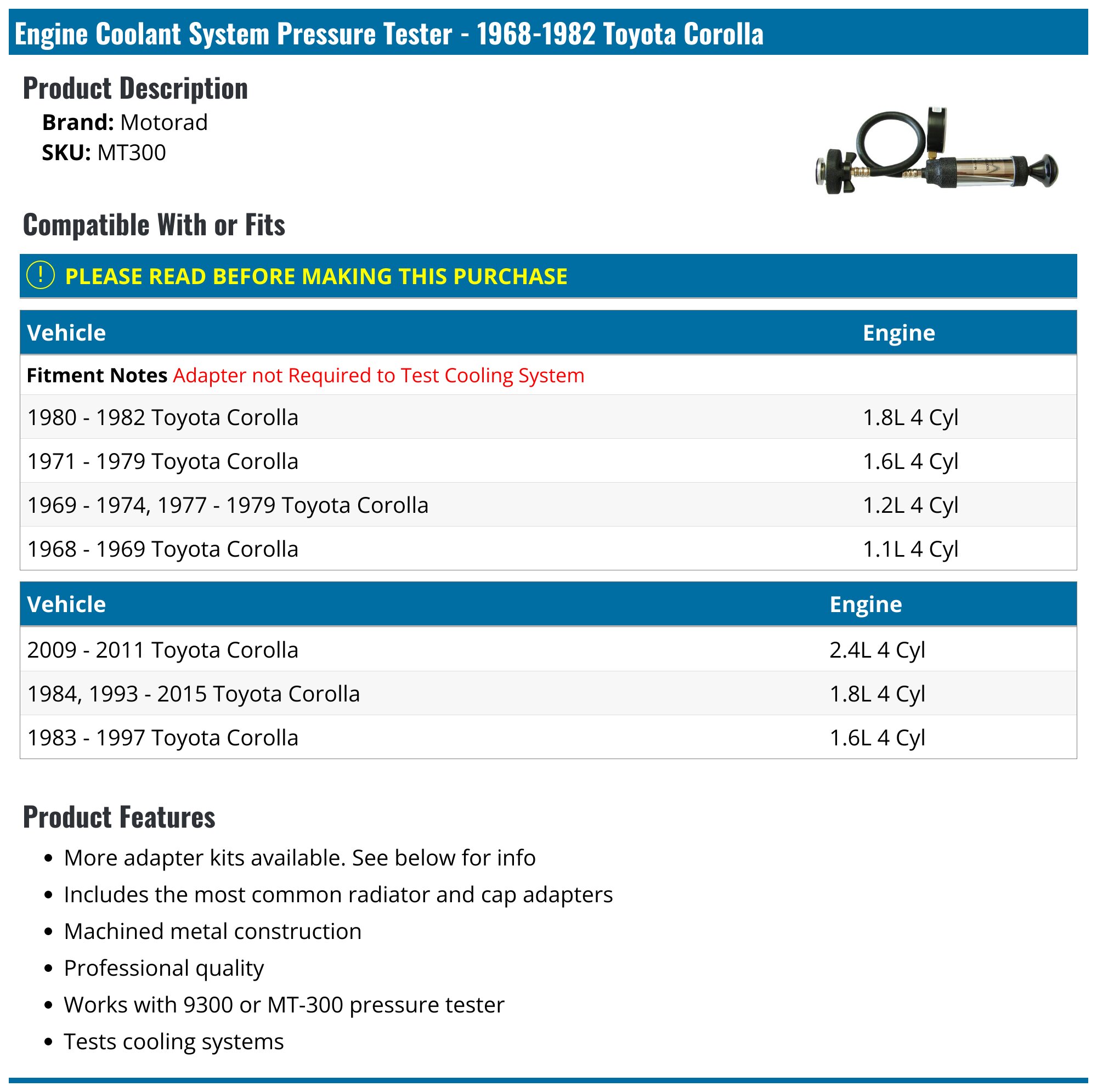
The 2ZR series engines are robust but sensitive to overheating. The plastic components of the cooling system, including the radiator tanks and the coolant bypass pipe, can become brittle after 11 years of heat cycles. Proactive replacement of the coolant and inspection of the water pump for "pink crusting" (a sign of slow leaks) can prevent catastrophic engine failure.
Intake Manifold Gasket
A common but minor issue with the 1.8L engine is the intake manifold gasket. Over time, the gasket can shrink, causing a vacuum leak when the engine is cold. This results in a rough idle but usually clears up once the engine warms. Replacing this with the updated orange silicone gasket is a simple and inexpensive fix.
Driving Experience: Power in the Real World
While the 2015 Corolla isn't "fast" by modern 2026 standards, the way it delivers power is optimized for urban environments. The CVTi-S is tuned for immediate "tip-in" response, meaning the car feels peppy when pulling away from a stoplight.
On the highway, the LE Eco's Valvematic engine shows its strength during passing maneuvers. Between 50 and 70 mph, the extra 8 horsepower and the more flexible valve lift allow the car to maintain speed with less drama than the standard 132-hp version. However, for those living in mountainous regions, both engines will require the CVT to "downshift" to higher RPMs to maintain speed on steep inclines.
FAQ
Is the 2015 Toyota Corolla underpowered for highway driving?
For most drivers, no. While its 132–140 horsepower is low compared to modern turbocharged engines, the 2015 Corolla is capable of maintaining 75–80 mph comfortably. The CVT is efficient at keeping the engine in its power band during merging, though it can be noisy under full-throttle applications.
What is the difference between the LE and the LE Eco engines?
The LE uses the standard 2ZR-FE engine (132 hp) with VVT-i. The LE Eco uses the 2ZR-FAE engine (140 hp) with Valvematic technology. The LE Eco is designed for maximum fuel efficiency, offering roughly 4 more miles per gallon on the highway while providing a slight bump in horsepower.
Does the 2015 Corolla engine use a timing belt or a timing chain?
Both engine variants in the 2015 Corolla use a timing chain. Unlike a timing belt, which requires replacement every 60,000 to 90,000 miles, a timing chain is designed to last the life of the engine, provided that regular oil changes are performed to keep the tensioner lubricated.
How can I improve the fuel efficiency of my 2015 Corolla in 2026?
The most effective ways to restore or improve efficiency include replacing old spark plugs with OEM iridium units, ensuring tires are inflated to the recommended 32–35 PSI, and cleaning the Mass Air Flow (MAF) sensor. Additionally, using low-rolling-resistance tires can help maintain the high MPG ratings the car had when new.
Is the CVT transmission reliable on the 2015 model?
Historically, the Toyota CVTi-S has proven to be one of the more reliable CVTs on the market. In 2026, many of these units are reaching high mileages. The key to their longevity is a fluid "drain and fill" every 60,000 miles, despite some earlier claims that the fluid was "lifetime."
Practical Recommendation for Buyers and Owners
For those looking to purchase a 2015 Toyota Corolla in 2026, the LE Eco remains the most sophisticated choice due to the Valvematic engine's superior balance of power and efficiency. However, the standard LE trim is often found at a lower price point and offers simpler mechanical components that may be cheaper to repair in the long run.
If you currently own a 2015 Corolla, prioritize the cooling system and oil quality. These engines are mechanically sound, but their longevity is entirely dependent on thermal management and the cleanliness of the oil channels that feed the VVT and Valvematic systems. With proper care, the 2015 Corolla’s engine is well-positioned to remain a viable, efficient daily driver for the remainder of the 2020s.