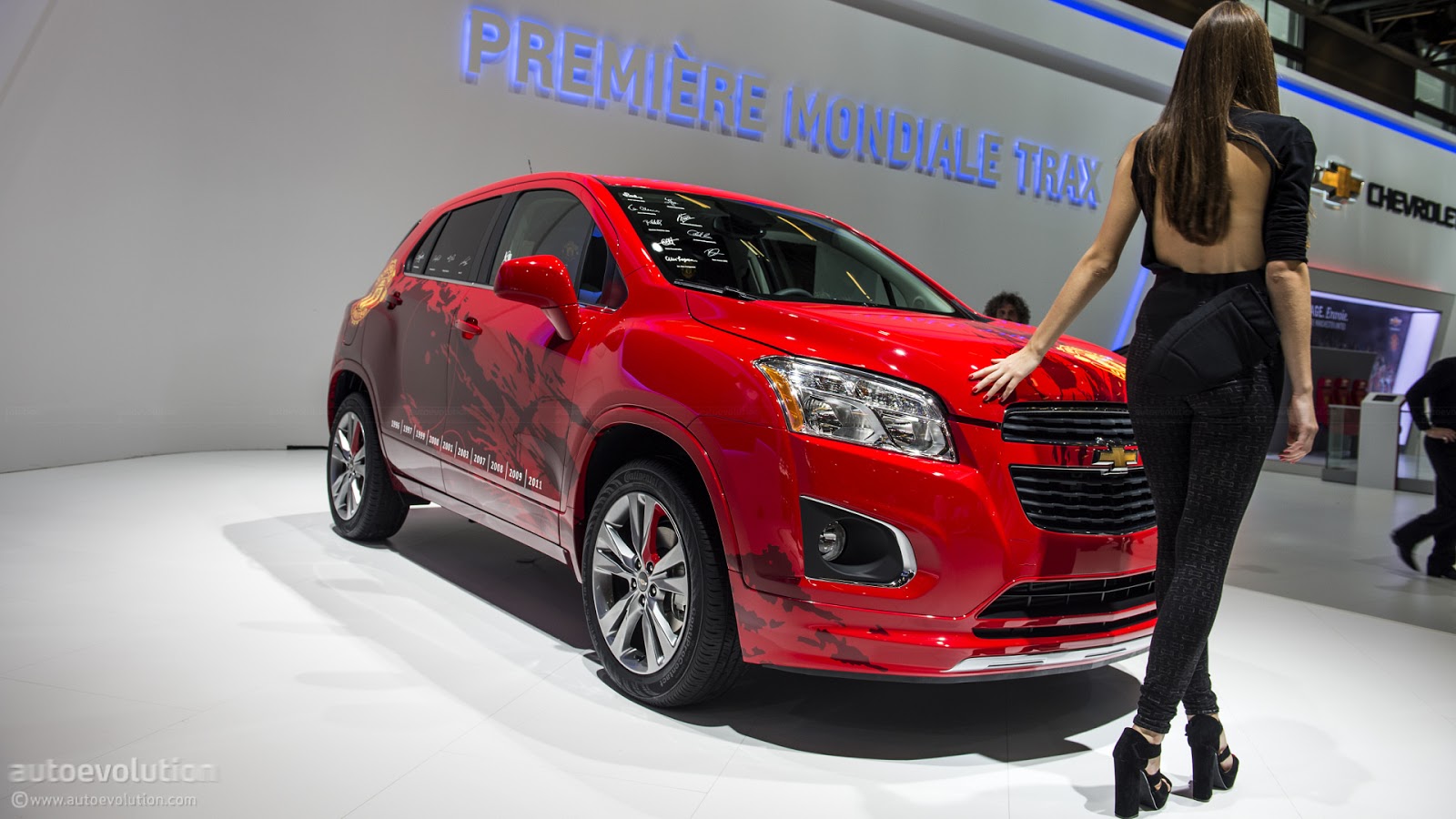
The 2013 Chevrolet Trax debuted as a pivotal global entry in the subcompact crossover segment, offering a blend of small-car maneuverability and SUV-style utility. Designed for urban environments, it features a 1.4-liter turbocharged engine, available all-wheel drive, and a versatile interior with flat-folding seats. While it preceded the model's U.S. launch, it established the foundation for the modern urban crossover market.
The Global Context and Market Positioning of the 2013 Trax
The 2013 Chevrolet Trax arrived at a time when the automotive world was shifting away from large, fuel-hungry SUVs toward more efficient, "right-sized" vehicles. Built on General Motors' Gamma II platform, which it shared with the Chevrolet Sonic and the Buick Encore, the Trax was engineered to provide a high seating position and the command of an SUV without the cumbersome footprint of a full-sized truck.
In 2013, the Trax was launched in over 140 countries, though it notably bypassed the United States market until the 2015 model year. For Canadian and Mexican drivers, as well as those in Europe and Asia, the 2013 Trax represented one of the first truly competitive entries in the subcompact SUV niche. It competed directly with early pioneers like the Nissan Juke and the Mitsubishi ASX (Outlander Sport).
The primary appeal of the Trax was its urban versatility. Engineers focused on a tight turning radius and a short overall length of approximately 4.2 meters, making it exceptionally easy to parallel park in crowded cities. However, by utilizing a tall roofline, Chevrolet managed to provide a sense of interior airiness that many traditional hatchbacks lacked.
Powertrain and Performance Specifications
The heart of the 2013 Chevrolet Trax in most Western markets is the 1.4-liter Ecotec turbocharged four-cylinder engine. This engine was a strategic choice by General Motors to balance fuel economy with the torque necessary to move a vehicle that could be equipped with All-Wheel Drive (AWD).
Engine Output and Dynamics
The 1.4L turbo unit produces 138 horsepower and 148 lb-ft of torque. The torque delivery is the most critical aspect of this powertrain; because it is turbocharged, the peak torque is available early in the RPM range (starting at 1,850 RPM), which helps the Trax feel punchy when accelerating from a stoplight.
In some international markets, a naturally aspirated 1.6-liter gasoline engine and a 1.7-liter turbodiesel were also available. The 1.7L diesel was particularly popular in Europe, offering 130 horsepower and a more robust 221 lb-ft of torque, catering to those who prioritized long-distance fuel efficiency and towing capability over urban zip.
Transmission and Drivetrain Options
The 2013 Trax offered two primary transmission choices:
- Six-speed Manual: Often found on base front-wheel-drive (FWD) models, providing a more engaged driving experience and slightly better control over the small engine's power band.
- Six-speed Automatic: The more common choice, featuring a "TAPshift" manual mode on the gear selector for driver intervention.
The optional on-demand All-Wheel Drive (AWD) system was a significant selling point. This system primarily operates in front-wheel drive to save fuel but can automatically redirect power to the rear wheels if sensors detect slippage. It is an "on-demand" system, meaning it does not require driver input to activate, making it ideal for navigating snowy suburban streets or rain-slicked highways.
Interior Versatility and Technology
Despite its small exterior dimensions, the 2013 Trax was designed with a "cargo-first" mentality. The interior features a dual-cockpit design that was a signature of Chevrolet interiors during this era, characterized by a symmetrical dashboard and a mix of digital and analog instrumentation.
Storage Solutions and "Fold-Flat" Capability
One of the Trax's most functional features is its seating configuration. The rear seats are 60/40 split-folding, but more importantly, the front passenger seat can also fold flat. This allows the Trax to carry items up to 2.3 meters (roughly 8 feet) long, such as a surfboard or flat-pack furniture, which is unusual for a vehicle in this size class.
The cargo area provides approximately 358 liters (12.6 cubic feet) of space with the seats up, expanding significantly when the rear bench is stowed. Furthermore, the cabin is littered with small storage cubbies, including four bins on the dashboard and a hidden drawer under the front passenger seat in higher trim levels.
Infotainment and Connectivity
In 2013, the Trax introduced the Chevrolet MyLink infotainment system. This system featured a 7-inch high-resolution color touchscreen that acted as a hub for smartphone integration. While it lacked the Apple CarPlay and Android Auto of later years, it allowed for Bluetooth streaming, hands-free calling, and the use of specific apps like BringGo (navigation) and TuneIn Radio. For the time, this was a high level of connectivity for an entry-level crossover.
Safety Features and Engineering
Safety was a core pillar of the Trax’s development, as it was intended to be a family vehicle in many markets. The vehicle's structure utilizes high-strength steel in over 60% of the body frame to ensure a rigid passenger cell.
Active and Passive Safety
Standard safety equipment for the 2013 Trax generally included:
- Electronic Stability Control (StabiliTrak): Helps prevent skids by applying brakes to individual wheels.
- Traction Control: Essential for managing power delivery in slippery conditions.
- Anti-lock Braking System (ABS): Standard across all trims with Panic Brake Assist.
- Airbags: Depending on the market and trim level, the Trax offered between six and ten airbags, including side-impact and knee airbags.
The 2013 Trax performed well in safety testing, earning a 5-star rating from Euro NCAP. It was specifically praised for its adult occupant protection and the inclusion of Electronic Stability Control as standard equipment across the range.
Driving Impressions and Real-World Use
Driving the 2013 Trax is an exercise in practicality. The high seating position provides excellent visibility over the hood, which builds confidence for drivers who feel intimidated by lower-slung sedans. The steering is electrically assisted, which makes it very light at low speeds—perfect for navigating tight parking garages—but it weights up slightly at highway speeds to provide more stability.
Ride Quality
The suspension setup consists of MacPherson struts in the front and a compound crank (torsion beam) in the rear. This is a common setup for subcompacts, optimized for space and cost rather than aggressive cornering. On smooth pavement, the Trax is composed and quiet, though the short wheelbase can lead to a slightly "busy" ride over repetitive highway expansion joints or rough gravel roads.
Noise, Vibration, and Harshness (NVH)
Chevrolet engineers utilized acoustic glass and extensive sound-deadening material to keep the cabin quiet. While the engine can become buzzy under heavy acceleration—typical of small-displacement turbocharged engines—it settles into a quiet hum once at cruising speed.
2013 Chevrolet Trax Technical Specifications
The following table summarizes the key technical data for the 1.4L Turbocharged model, which was the most prominent variant in North American (Canada/Mexico) and many European markets.
| Feature | Specification (1.4L Turbo) |
|---|---|
| Engine Type | Inline 4-cylinder, Turbocharged Ecotec |
| Displacement | 1,364 cc |
| Horsepower | 138 hp @ 4,900 RPM |
| Torque | 148 lb-ft @ 1,850 RPM |
| Transmission | 6-speed Manual or 6-speed Automatic |
| Drivetrain | Front-Wheel Drive (FWD) or All-Wheel Drive (AWD) |
| Length | 4,248 mm (167.2 in) |
| Width | 1,776 mm (69.9 in) |
| Height | 1,674 mm (65.9 in) |
| Wheelbase | 2,555 mm (100.6 in) |
| Cargo Capacity | 358 L (Seats Up) / 1,370 L (Max) |
| Fuel Tank | 53 Liters (approx. 14 gallons) |
Long-Term Reliability and 2026 Perspective
In 2026, a 2013 Chevrolet Trax is a 13-year-old vehicle. For potential second-hand buyers, understanding the long-term reliability of this specific model year is essential. While the Gamma II platform is robust, the 1.4L turbo engine has several well-documented areas that require attention as the vehicle ages.
Common Issues to Inspect
- Cooling System: The 1.4L Ecotec engine is known for plastic cooling components that can become brittle over time. Water pump leaks and thermostat housing failures are common around the 10-year/150,000 km mark.
- Turbocharger Integrity: High-mileage units may experience wastegate wear or oil leaks within the turbocharger housing. Listen for excessive whistling or look for blue smoke under acceleration.
- PCV System: The Positive Crankcase Ventilation (PCV) system is integrated into the valve cover. If it fails, it can cause high oil consumption and rough idling. In 2026, many of these will have already been replaced with updated parts, but it remains a point of verification.
- Oil Leaks: Common leak points include the oil cooler gaskets and the crankshaft front seal.
Maintenance Recommendations
For a 2013 Trax still on the road today, adherence to a strict maintenance schedule is the difference between a reliable commuter and a costly project. High-quality synthetic oil is mandatory for the turbocharged engine to prevent oil coking in the turbo lines. Additionally, the AWD system's rear differential fluid should be checked and changed every 80,000 to 100,000 kilometers to ensure longevity.
Comparison: Trax vs. Buick Encore (2013)
It is impossible to discuss the 2013 Trax without mentioning its corporate cousin, the Buick Encore. Both vehicles were developed simultaneously and share the same mechanical DNA.
The Trax was positioned as the "active" and "functional" choice, featuring more durable interior plastics and a straightforward exterior design. The Encore was the "premium" alternative, focusing on QuietTuning technology (extra insulation and active noise cancellation), leather upholstery, and more chrome trim.
For a buyer in 2026, the Trax often represents better value because it lacks the "luxury" price premium of the Buick while offering identical mechanical performance and cargo utility. However, the Encore may be preferred by those who want a softer ride and a quieter cabin environment.
Frequently Asked Questions
Is the 2013 Chevrolet Trax good on gas?
The 2013 Trax is relatively efficient for an SUV of its era. The 1.4L turbo engine typically achieves approximately 7.8 L/100km (30 MPG) on the highway and 9.4 L/100km (25 MPG) in the city. Real-world figures vary depending on whether the vehicle is equipped with the heavier All-Wheel Drive system.
Does the 2013 Trax have a backup camera?
Backup cameras were not standard on the base LS trims in 2013. However, they were available or standard on the higher LT and LTZ trims, integrated into the 7-inch MyLink display. If a specific used model lacks one, the MyLink system is generally compatible with aftermarket camera kits.
Can the 2013 Chevrolet Trax tow a trailer?
The 2013 Trax is not rated for significant towing. In most markets, the maximum towing capacity is limited to approximately 500 kg (1,100 lbs) for a braked trailer. It is better suited for bike racks or small cargo hitch baskets rather than heavy trailers.
Is the 1.4L Turbo engine reliable?
The engine is generally reliable if maintained properly, but it is sensitive to heat and oil quality. By 2026, most "infant mortality" issues with the turbo or cooling system should have been addressed by previous owners. Prospective buyers should verify that the cooling system has been refreshed.
Why wasn't the 2013 Trax sold in the USA?
General Motors originally believed the U.S. market would prefer the more premium Buick Encore or the larger Chevrolet Equinox. However, after seeing the massive success of the Trax in Canada and Mexico, Chevrolet decided to bring the refreshed version to the U.S. starting in late 2014 as a 2015 model.
Final Recommendations for Buyers
The 2013 Chevrolet Trax remains a pragmatic choice for those seeking an affordable, compact footprint with a higher seating position. Its greatest strengths are its versatile interior—specifically the fold-flat passenger seat—and its parkability in dense urban areas.
When shopping for a 2013 model in 2026, prioritize vehicles with a documented service history, particularly regarding the cooling system and oil changes. Opting for the LT or LTZ trim is recommended, as these levels include the MyLink screen and better safety features, which help the car feel more modern. Avoid the 1.6L naturally aspirated engine if you live in mountainous areas, as it lacks the torque of the 1.4L turbo.