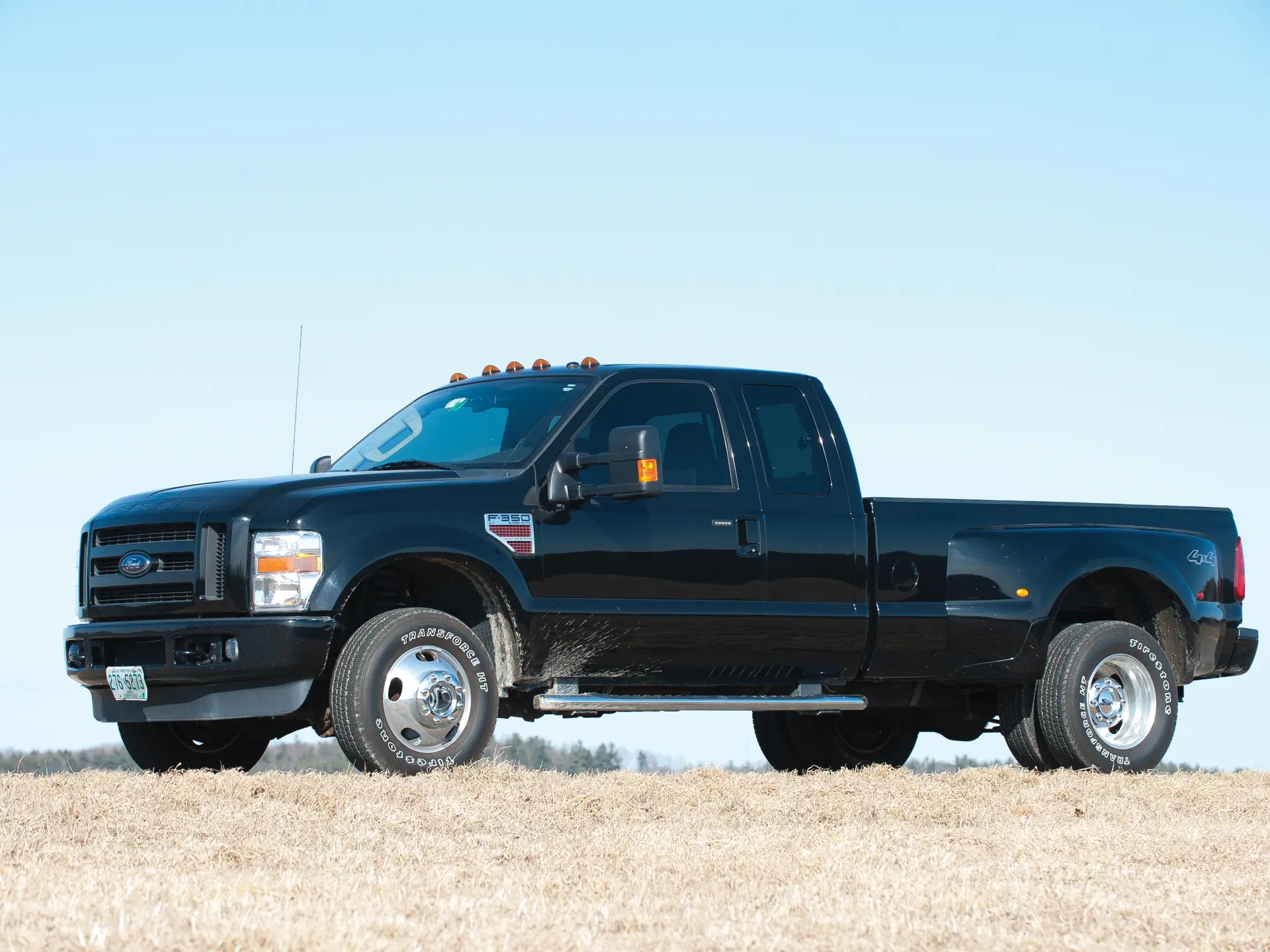
The 2008 Ford F-350 Super Duty dually—technically designated as the F-350 DRW (Dual Rear Wheel)—represented a pivotal point in heavy-duty truck engineering. Designed for maximum towing capacity and payload stability, it featured a robust chassis, an available 6.4L Power Stroke V8 turbo-diesel engine, and a distinctive wide-stance configuration capable of handling substantial fifth-wheel and gooseneck trailer requirements.
The Role of the 2008 F-350 DRW in Heavy-Duty Hauling
The 2008 model year marked the second year of the second-generation Super Duty platform, which introduced a bolder, more aggressive exterior aesthetic while refining the interior comfort to better align with the "luxury-truck" market segment. For professional haulers, agricultural operators, and recreational towers, the DRW configuration provides a critical foundation for stability. The dual-wheel setup increases the lateral footprint, significantly reducing the "tail-wag" effect often experienced when towing heavy, high-profile loads in crosswind conditions.
Beyond mere stability, the DRW configuration allows for higher rear axle weight ratings compared to the Single Rear Wheel (SRW) variant. When coupled with the appropriate rear axle gear ratios, the 2008 F-350 dually served as the benchmark for commercial-grade capability in a consumer-accessible package.
Powertrain and Performance Specifications
The primary engine associated with the heavy-lifting capability of the 2008 F-350 is the 6.4L Power Stroke V8 turbo-diesel. This engine replaced the long-running 6.0L unit, introducing a dual-sequential turbocharger system designed to minimize turbo lag and improve throttle response under heavy loads.
- Engine: 6.4L Power Stroke V8 Turbo-Diesel
- Horsepower: 350 hp @ 3,000 rpm
- Torque: 650 lb-ft @ 2,000 rpm
- Transmission Options: TorqShift 5-speed automatic (standard); 6-speed manual (limited availability).
For those prioritizing gasoline alternatives, the 6.8L Triton V10 was the standard engine offering. While it lacks the raw torque of the diesel, the Triton V10 is often favored for its relative simplicity and lower upfront maintenance costs.
- Engine: 6.8L Triton V10 SOHC
- Horsepower: 362 hp @ 4,750 rpm
- Torque: 457 lb-ft @ 3,250 rpm
Dimensions and Chassis Architecture
The sheer size of the 2008 F-350 dually requires significant space for operation and storage. The DRW variant is wider than the SRW to accommodate the outboard wheel hubs.
- Wheelbase: Ranges from 137 inches (Regular Cab) to 172 inches (Crew Cab Long Bed).
- Overall Width: Approximately 96 inches (without mirrors).
- Ground Clearance: Dependent on 4x2 or 4x4 drivetrain, typically ranging from 7.5 to 8.5 inches.
- Curb Weight: Depending on the trim (XL, XLT, Lariat) and powertrain, curb weights typically fall between 7,500 and 8,500 lbs.
The chassis utilizes a hydroformed, fully boxed frame that provides high torsional rigidity. This is essential for preventing frame flex during extreme trailering maneuvers. The suspension setup features a solid Twin-Coil beam front axle (on 4x4 models) and a rear leaf-spring assembly tuned specifically for the heavy-duty demands of the F-350 platform.
Comparative Specification Summary
The following table outlines the key differences between the major powertrain options for the 2008 F-350.
| Feature | 6.4L Power Stroke Diesel | 6.8L Triton V10 Gasoline |
|---|---|---|
| Configuration | V8, Turbocharged | V10, Naturally Aspirated |
| Peak Horsepower | 350 hp | 362 hp |
| Peak Torque | 650 lb-ft | 457 lb-ft |
| Primary Advantage | High-load towing torque | Lower maintenance/complexity |
| Transmission | 5R110W TorqShift | 5R110W TorqShift |
Payload and Towing Considerations
When operating a 2008 F-350 dually, understanding the Gross Vehicle Weight Rating (GVWR) and Gross Combined Weight Rating (GCWR) is critical for safety and legal compliance. The 2008 DRW models typically carry a GVWR of 13,000 lbs.
It is important to note that the "specifications" often found in manufacturer brochures represent the maximum capability under ideal conditions. Real-world towing capacity is heavily dictated by the specific axle ratio (e.g., 3.73, 4.10, or 4.30) and the specific hitch equipment installed. Drivers must always consult the Safety Compliance Certification Label located on the driver-side door jamb to determine the exact payload and towing limits for their specific vehicle identification number (VIN).
Maintenance and Operational Realities
As a 2008 model, these vehicles are now mature assets. Reliability for the 6.4L Power Stroke is highly dependent on maintenance history. Key areas to monitor include the Diesel Particulate Filter (DPF) system—one of the first iterations of emissions-heavy diesel technology—and the high-pressure fuel system.
Operators should maintain strict adherence to the fuel filter replacement schedule. Because the 6.4L engine uses a complex fuel injection system, water contamination or low-quality fuel can lead to catastrophic injector failure. Additionally, due to the cooling system complexity in this model, flushing the coolant at recommended intervals is essential to prevent cavitation and engine overheating.
Frequently Asked Questions
1. What is the standard rear axle ratio for the 2008 F-350 dually? Ford offered various ratios, including 3.73 and 4.10. The 4.10 ratio is generally preferred for heavy towing applications as it provides better low-end mechanical advantage, whereas the 3.73 offers improved fuel efficiency during highway cruising.
2. Can the 6.4L diesel be upgraded to increase towing power? While many aftermarket tuners exist, users should be aware that modifying the Engine Control Module (ECM) or exhaust system can impact vehicle emissions compliance and may lead to premature wear on the transmission and drivetrain components. Always ensure any modifications comply with local environmental regulations.
3. Is there a difference in maintenance costs between the V10 and the Diesel? Yes. The 6.4L Power Stroke requires more frequent oil changes, higher fluid capacities, and has a more complex emissions system compared to the naturally aspirated 6.8L V10. Consequently, the diesel usually entails higher long-term maintenance costs.
4. Does the dual rear wheel (DRW) make the truck harder to drive daily? The increased width makes maneuvering in tight parking lots more challenging. However, the added stability provided by the dual wheels is significant. Drivers should be prepared for a firmer ride, as the suspension is tuned to carry high payloads, and the ride quality may feel harsh when the truck is unloaded.
5. How do I verify the towing capacity of my specific truck? Locate the white and silver sticker on the driver's side door frame. This label contains the Gross Vehicle Weight Rating (GVWR) and the Gross Axle Weight Ratings (GAWR). The difference between the GVWR and the vehicle's actual weight (the curb weight) provides the maximum payload capacity.
Recommendations for Owners
If you are currently operating or considering the purchase of a 2008 Ford F-350 dually, prioritize an inspection of the DPF system and the cooling system. If the vehicle is primarily used for heavy towing, verifying the health of the transmission fluid and the cooling system is the most effective way to prevent mid-haul failure. For long-term reliability, keep a detailed log of all fluid changes and use OEM-specification filters, particularly for the fuel system. When towing, always confirm your trailer’s actual weight rather than relying on manufacturer estimates, and ensure that your trailer brake controller is calibrated correctly to the specific load before entering public highways.