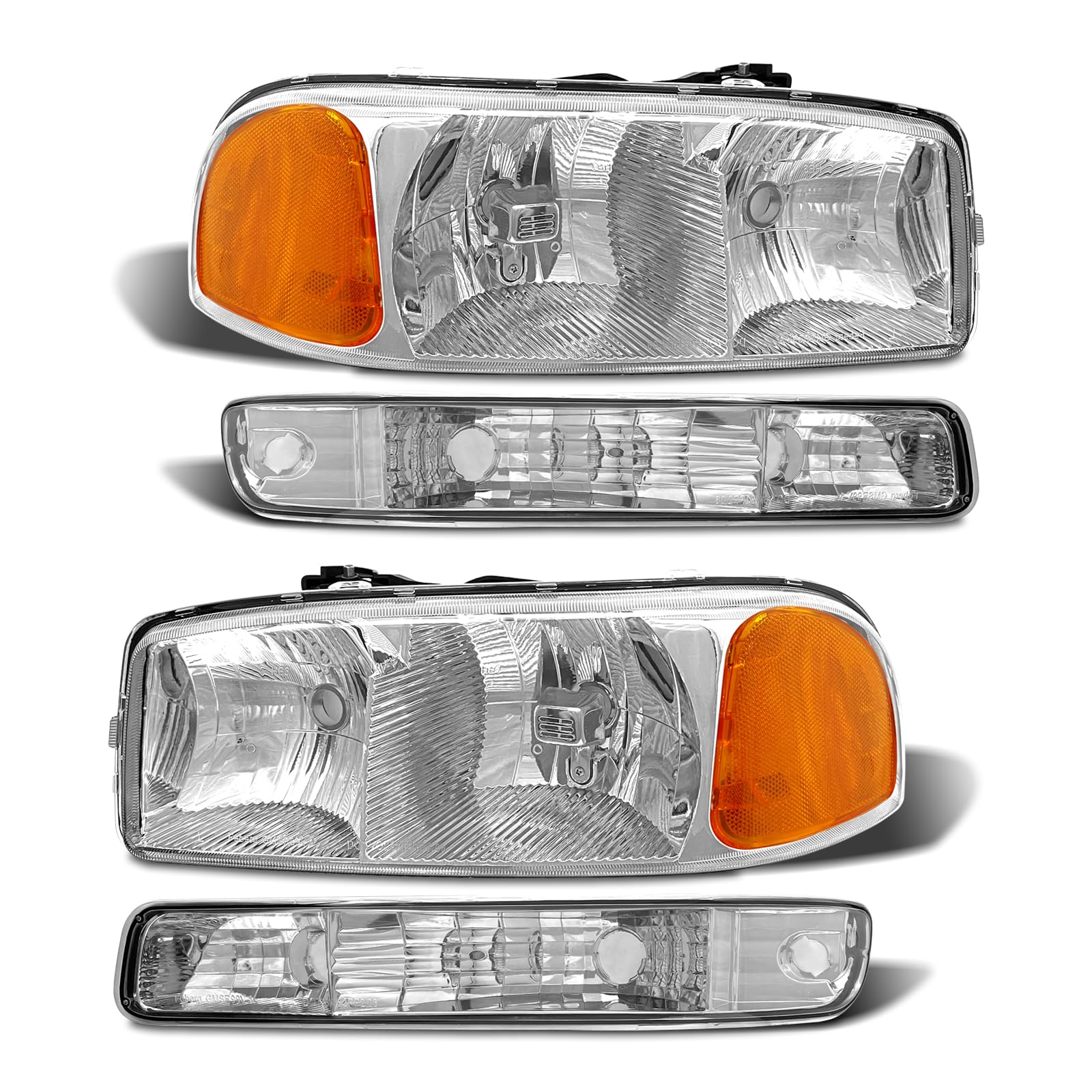
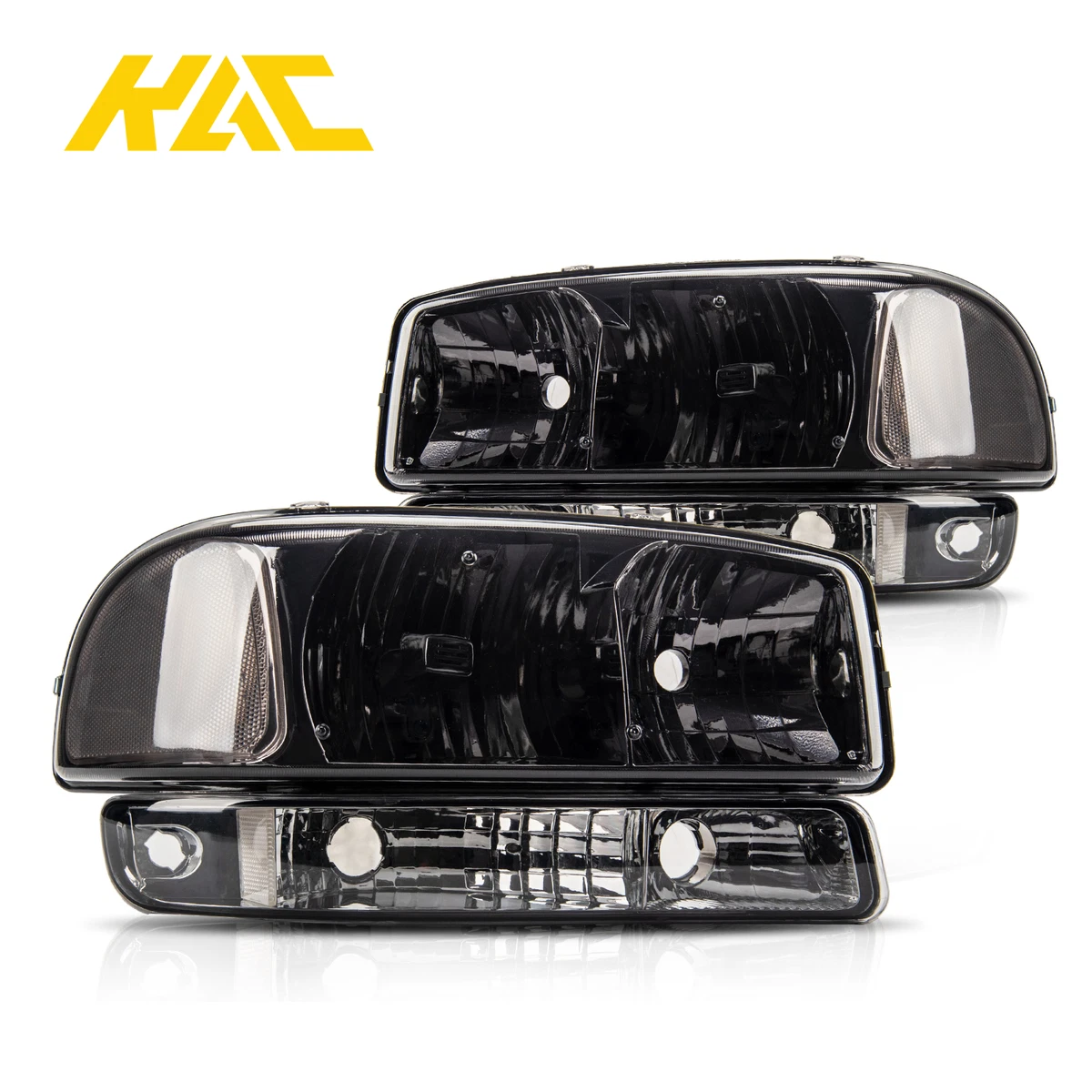
The 1998 GMC Sierra 1500 typically utilizes a composite headlight system with 9006 low-beam and 9005 high-beam halogen bulbs. Owners can maintain visibility by replacing aged bulbs, restoring oxidized plastic housings, or upgrading to modern LED conversions. Proper alignment and inspection of the mounting brackets are essential for safe nighttime operation.
Understanding the 1998 GMC Sierra Headlight Configurations
The 1998 model year represents the final full year of the legendary GMT400 platform. Because this was a transitional period for General Motors, the 1998 GMC Sierra 1500 can be found with two distinct headlight configurations depending on the trim level. Identifying which system your truck uses is the first step in any maintenance or upgrade project.
Composite Headlight Systems (SLE and SLT Trims)
Most consumer-grade 1998 Sierras feature the composite headlight assembly. These are identifiable by their large, clear plastic lenses that wrap slightly around the front corners of the truck. Inside these housings, the high and low beams are separated into two distinct reflectors. These systems use replaceable halogen capsules (bulbs) rather than replacing the entire glass unit. While they offer better aerodynamics and styling, the plastic lenses are prone to "yellowing" or oxidation over decades of UV exposure.
Sealed Beam Systems (Work Truck / W/T Trims)
The "Work Truck" or base models often came equipped with two large, rectangular glass sealed-beam lamps. In this configuration, the bulb and the glass lens are a single integrated unit. When the filament burns out, you replace the entire glass block. These are rugged and never turn yellow, but they offer inferior light output compared to composite systems and are significantly more difficult to upgrade to modern lighting technologies without replacing the entire grille and mounting header panel.
Essential Bulb Specifications and Identification
For the vast majority of 1998 GMC Sierra 1500 owners, the composite system is the standard. If you are performing a simple bulb replacement, you must match the specific industry-standard part numbers to ensure the socket fitment and wattage are correct for the factory wiring harness.
- Low Beam Bulb: 9006 (HB4). This bulb is rated at approximately 51 watts. It features a painted "cap" on the tip of the glass to prevent glare for oncoming traffic.
- High Beam Bulb: 9005 (HB3). This bulb is rated at approximately 65 watts. It lacks the painted tip, allowing maximum light projection for long-distance visibility.
- Daytime Running Lights (DRL): In 1998, GMC utilized a separate DRL module. On many configurations, the low beams operate at a reduced voltage during the day.
- Parking/Turn Signal Lamps: These are located in a separate housing directly below the main headlights, typically using 3157 or 2357 dual-filament bulbs.
It is important to note that while 9005 and 9006 bulbs look similar, their plastic locking tabs are keyed differently. You cannot easily install a high-beam bulb into a low-beam socket without modifying the plastic housing, a practice sometimes referred to as a "HIR" (Halogen Infrared Reflective) modification, which is less common now that high-quality LEDs are available in 2026.
Step-by-Step Guide to Replacing Headlight Bulbs
Replacing the bulbs on a 1998 Sierra is one of the most straightforward DIY tasks, as it requires no tools if the mounting brackets are in good condition.
- Access the Engine Bay: Open the hood and locate the rear of the headlight housings. Unlike modern trucks, there are usually no plastic covers blocking your path.
- Disconnect the Wiring Harness: Press the plastic release tab on the wiring connector and pull it downward away from the bulb. If the connector is stubborn, a small flat-head screwdriver can gently pry the tab, but be careful as the 30-year-old plastic can be brittle.
- Remove the Old Bulb: Rotate the bulb counter-clockwise (about a quarter-turn) until the tabs align with the slots in the housing. Pull the bulb straight out.
- Install the New Bulb: Insert the new bulb into the housing and rotate it clockwise to lock it in place.
- Critical Safety Note: Never touch the glass of a halogen bulb with your bare fingers. The oils from your skin create "hot spots" on the quartz glass, which will cause the bulb to shatter or burn out prematurely when it reaches operating temperature. If you touch the glass, clean it thoroughly with rubbing alcohol before installation.
- Reconnect and Test: Plug the wiring harness back in until it clicks. Test both the high and low beams before closing the hood.
Replacing the Entire Headlight Assembly
By 2026, most original 1998 GMC Sierra headlight housings have suffered from significant UV damage or mechanical failure of the adjustment screws. Replacing the entire housing is often more cost-effective than attempting to polish the old plastic.
Removing the Grille
To remove the headlight housings on a 1998 Sierra, you must first remove or partially displace the front grille. This is the most time-consuming part of the process.
- Remove the several 7mm bolts along the top of the grille shell.
- Locate the hidden screws tucked inside the "nostrils" of the grille near the GMC emblem.
- Gently pull the grille forward. There are metal tension clips holding the bottom of the grille to the radiator support. These often require a firm but careful tug.
Extracting the Housings
Once the grille is out of the way, each headlight housing is held in place by two long metal pins.
- Pull these pins straight up. They act as vertical hinges for the housing.
- Once the pins are removed, the housing will slide forward.
- Disconnect the bulbs from the rear.
- When installing new housings, ensure the "adjustment blocks" (the plastic nuts that the aiming screws thread into) are properly seated. Aftermarket housings often include new blocks, but they can be fragile.
Comparing Headlight Technology Options for 1998 Models
| Feature | Factory Halogen | High-Performance Halogen | LED Conversion | HID (Xenon) Kit |
|---|---|---|---|---|
| Brightness | Standard (approx. 1000 lumens) | Improved (approx. 1300 lumens) | High (2500+ lumens) | Very High (3200+ lumens) |
| Color Temp | 3000K (Yellowish) | 3500K - 4000K (Whiter) | 5000K - 6500K (Pure White) | 4300K - 8000K (White/Blue) |
| Lifespan | 500 - 1,000 hours | 200 - 400 hours | 30,000+ hours | 2,000 - 5,000 hours |
| Installation | Direct Plug-in | Direct Plug-in | Plug-in with Fan/Driver | Requires Ballast & Relay |
| Heat Output | High | Very High | Low (at the lens) | High |
Modernizing with LED and HID Upgrades
In the current 2026 automotive landscape, LED technology has matured to the point where it is the preferred upgrade for older trucks like the 1998 Sierra. However, there are technical hurdles unique to the GMT400 platform that must be addressed.
The "Scatter" Problem
The original 1998 composite housings were designed for a filament that glows in a 360-degree arc. Many cheap LEDs only emit light from two sides. When installed in a 1998 housing, this can result in "dark spots" in the beam pattern or excessive glare that blinds oncoming drivers. When shopping for LEDs, look for "multi-die" or "360-degree" LED chips that mimic the focal point of a halogen filament.
The Daytime Running Light (DRL) Conflict
The 1998 Sierra uses a DRL module that sends reduced voltage to the headlights during the day. LEDs generally do not like reduced voltage; they will either flicker rapidly or fail to turn on. To solve this, owners often install a "DRL Bypass" or use a wiring harness with a capacitor (anti-flicker) to provide steady voltage.
The "4-Hi" Modification
A popular modification for the 1998 GMC Sierra is the "4-Hi" relay kit. By factory default, when you switch to high beams, the low beams turn off. The 4-Hi mod uses a simple relay bridge to keep the low beams illuminated even when the high beams are engaged. This significantly fills in the foreground light and is highly recommended if you frequently drive in rural or wooded areas.
Aiming and Alignment Procedures
Replacing a bulb or a housing is useless if the light is pointed at the treetops or the ground. Proper aiming is a critical safety step that is often overlooked.
- Find a Level Surface: Park the truck on flat ground exactly 25 feet away from a vertical wall or garage door.
- Mark the Wall: Use painter's tape to mark the horizontal and vertical centerlines of the headlights on the wall.
- Adjust the Vertical Aim: On the back of the 1998 Sierra housing, there are two long threaded rods with a Torx or Hex head. The top screw usually controls the vertical movement. The "hot spot" of the low beam should fall about 2 inches below the horizontal tape line you made. This ensures the light stays on the road and out of other drivers' eyes.
- Adjust the Horizontal Aim: The side screw moves the beam left or right. The center of the beam should be slightly to the right of the vertical mark for the passenger side, and dead-center for the driver's side.
Common Troubleshooting and Electrical Issues
The 1998 Sierra is known for specific electrical quirks in the lighting circuit as it ages.
Dim or Flickering Lights
This is almost always a grounding issue. The headlight grounds on a GMT400 are located on the radiator support, usually near the battery on the passenger side or near the junction block on the driver's side. Over time, corrosion builds up between the wire terminal and the frame. Cleaning these contact points with a wire brush can often restore full brightness to the headlights.
Melted Harness Connectors
The factory 9006 connectors are plastic and can become brittle. If you use "High Wattage" blue-tinted halogen bulbs (which draw more than the factory 55W), the heat can melt the connector. If your lights are intermittent, inspect the plastic plug for signs of charring or warping. Heavy-duty ceramic replacement pigtails are a cheap and effective fix.
Moisture in the Lens
If you see fog or water droplets inside the headlight housing, the seal between the clear lens and the black plastic back-housing has failed. While some people attempt to re-seal them with silicone, the most reliable fix is replacement. Moisture will quickly corrode the reflective coating inside the housing, permanently ruining the light output.
Frequently Asked Questions
Can I use LED bulbs in my 1998 Sierra without changing the housings? Yes, you can install 9005 and 9006 LED bulbs into the factory composite housings. However, if your lenses are yellowed or foggy, the LED light will be scattered and ineffective. It is highly recommended to polish or replace the housings when switching to LED.
Why do my headlights turn off when I turn on my high beams? This is the standard factory operation for the 1998 model. It was designed this way to prevent the headlight housings from overheating and to stay within the electrical limits of the factory wiring. To change this, you will need to install a "4-Hi" relay harness.
What is the best way to clean yellowed 1998 GMC Sierra headlights? A multi-stage sanding process (800 grit, then 1500, then 3000) followed by a specialized clear coat or UV sealant is the only way to achieve a lasting result. Simple "wipe-on" cleaners usually only last a few weeks before the oxidation returns.
Is there a fuse specifically for the headlights on the 1998 Sierra? Yes, the headlight fuses are located in the Underhood Convenience Center, a black box located on the driver-side fender well. There are typically separate fuses for the left and right circuits to ensure that a single fuse failure doesn't leave you completely in the dark.
Next Steps for Owners
If you are looking to improve the nighttime performance of your 1998 GMC Sierra 1500, start by inspecting your current housings. If they are clear, a simple upgrade to high-performance halogen bulbs or a quality LED conversion kit will provide the most immediate benefit. If your housings are original and yellowed, your best path forward is to purchase a complete set of replacement composite housings and pair them with a 4-Hi relay kit for maximum visibility. Always remember to re-aim your headlights after any mechanical work to ensure safety for yourself and others on the road.