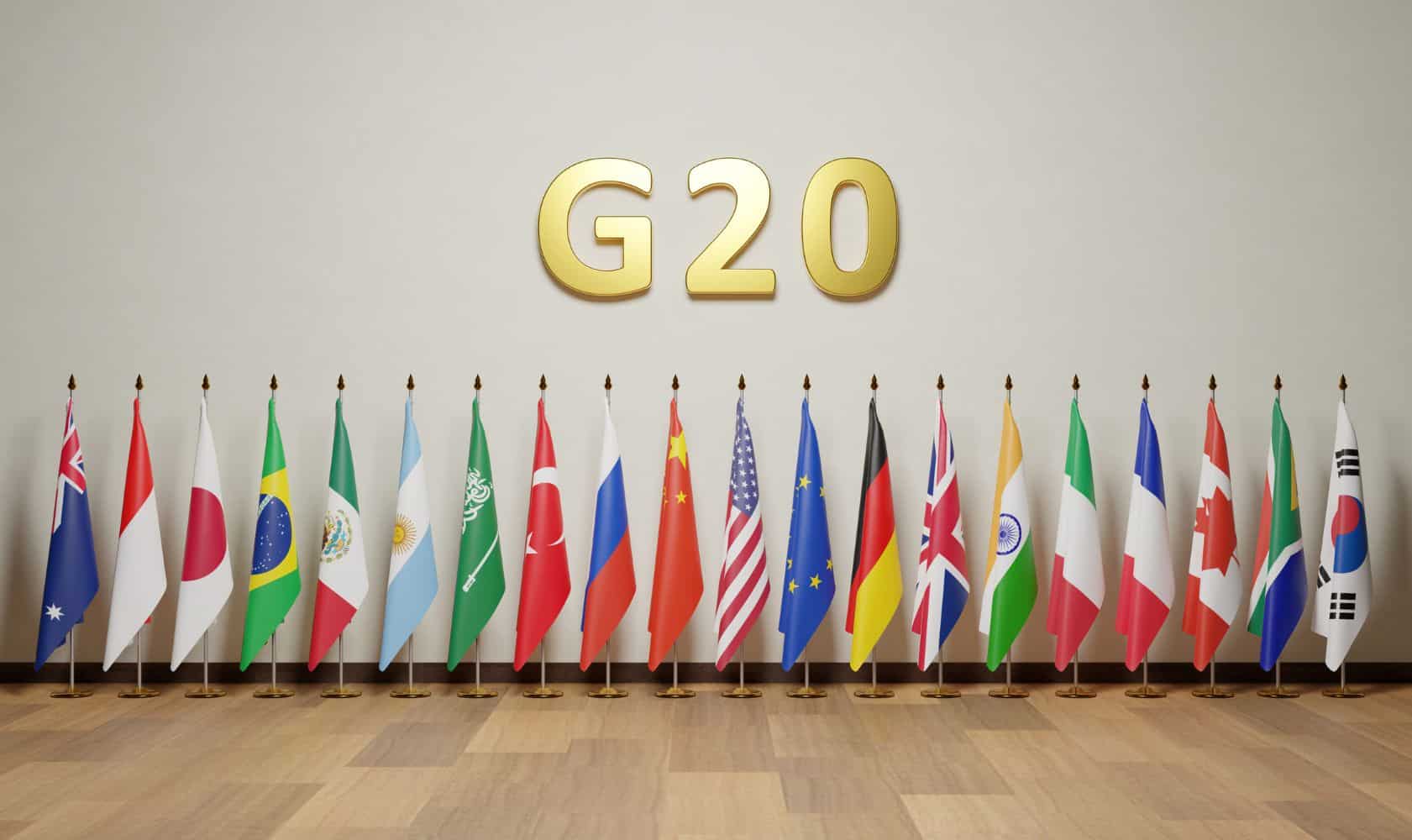
The G20 comprises 19 individual countries plus the European Union and the African Union, functioning as the premier forum for international economic cooperation. Together, these entities represent around 85 percent of global gross domestic product, over 75 percent of global trade, and about two-thirds of the world's population, making their collective policy coordination vital for stability.
The Genesis and Evolution of the Group of Twenty
The architecture of modern international financial governance has undergone significant transformations since the post-World War II Bretton Woods system. The origins of the Group of Twenty (G20) trace back to the late 1990s, an era defined by severe financial contagion that rippled outward from East Asia and impacted emerging markets globally. In response to these recurring economic shocks, the G7 finance ministers and central bank governors agreed in 1999 to establish an informal dialogue mechanism. This new forum sought to bring together systemic industrial and emerging market economies to discuss key issues related to the global financial system.
During its first decade, the forum operated primarily at the level of finance ministers and central bank governors. However, the 2008 global financial crisis—sparked by the subprime mortgage collapse in the United States—exposed the limitations of existing institutional frameworks. Recognizing that regional contagion required a coordinated global intervention at the highest political level, the G20 was elevated to a leaders' summit in Washington, D.C., in November 2008. Since then, heads of state and government have gathered annually to address macroeconomic coordination, international trade, financial regulation, and sustainable development.
Understanding the distinction between the "19 countries" and the overall G20 organizational framework is crucial for accurate economic analysis. While the collective body is universally known as the G20, its permanent membership consists of 19 individual nation-states, alongside major supranational bodies. In 2023, the African Union was admitted as a permanent member, formalizing representation for the developing world's largest continental bloc. This institutional evolution reflects the shifting dynamics of global power, moving away from Western-centric forums like the G7 toward a more inclusive, pluralistic arrangement that incorporates major developing powerhouses.
Comprehensive Breakdown of the 19 Individual Member Countries
The 19 individual sovereign states that make up the backbone of the G20 span every inhabited continent, representing vastly different political systems, resource endowments, and developmental stages. This geographic and economic diversity ensures that policy discussions encompass perspectives from both advanced industrial democracies and rapidly industrializing emerging economies.
North America
North America is represented by three highly integrated economies that account for a substantial portion of North American and global output:
- United States: The world's largest national economy by nominal GDP, serving as the epicenter of global capital markets, technological innovation, and reserve currency issuance.
- Canada: A major advanced economy rich in natural resources, characterized by a stable banking sector and deep trade integration with its southern neighbor.
- Mexico: A leading Latin American emerging market featuring a manufacturing-heavy economy deeply integrated into global supply chains through trade agreements.
South America
South America contributes two influential regional heavyweights:
- Brazil: The largest economy in Latin America, boasting a diverse industrial base, extensive agricultural production, and leadership in renewable energy.
- Argentina: A major agricultural exporter and South American economic player that frequently navigates complex sovereign debt and structural macroeconomic adjustments.
Europe
Beyond the European Union's institutional seat, individual European nations maintain separate, influential memberships:
- United Kingdom: A leading global financial hub and advanced service-based economy with significant historical and diplomatic reach.
- Germany: Europe's largest national economy, renowned for high-end manufacturing, engineering excellence, and export-driven growth.
- France: A major European power characterized by a diversified industrial base, advanced aerospace and nuclear sectors, and a robust welfare state.
- Italy: The third-largest economy in the euro area, featuring a vibrant small-and-medium enterprise sector, specialized manufacturing, and rich cultural industries.
- Russia: A transcontinental nation possessing vast reserves of hydrocarbons, minerals, and metals, playing a unique strategic and economic role.
- Turkey: A crucial bridge between Europe and Asia, featuring a dynamic emerging market economy with a strong manufacturing and construction footprint.
Asia
Asia hosts several of the world's most populous nations and fastest-growing economies:
- China: The world's second-largest economy by nominal GDP and the largest by purchasing power parity, serving as the primary global manufacturing hub.
- Japan: An advanced technological powerhouse and the fourth-largest national economy, noted for precision engineering and high-value exports.
- India: The world's most populous nation and one of the fastest-growing major economies, driven by a booming technology sector, digital public infrastructure, and domestic consumption.
- Indonesia: Southeast Asia's largest economy, possessing a rapidly expanding digital market, significant commodity wealth, and a strategic maritime position.
- South Korea: An advanced, highly industrialized economy renowned for global leadership in electronics, automotive manufacturing, and semiconductor production.
- Saudi Arabia: The world's leading petroleum exporter and the largest economy in the Middle East, currently executing ambitious economic diversification plans.
Oceania and Africa
Rounding out the individual sovereign states are key representatives from Oceania and Africa:
- Australia: An advanced economy characterized by abundant mineral resources, strong trade ties with the Asia-Pacific region, and a robust financial regulatory framework.
- South Africa: A key African economy boasting sophisticated financial markets, extensive mineral wealth, and a critical leadership role on the African continent.
Economic Weight and Demographic Scale of the G20
The collective dominance of the 19 G20 economies and their supranational partners is rooted in hard economic metrics. According to data from the International Monetary Fund (IMF) and the World Bank, the group accounts for approximately 85% of the world's gross domestic product (GDP). This economic concentration means that shifts in monetary policy, fiscal stimulus measures, or trade barriers enacted by G20 members have immediate, systemic repercussions for non-member developing nations.
| Metric Dimension | G20 Collective Share | Global Context |
|---|---|---|
| Global Gross Domestic Product (Nominal) | ~85% | Drives worldwide capital allocation and investment trends. |
| Global Merchandise Trade | >75% | Controls the vast majority of international import and export flows. |
| World Population | ~65% | Encompasses over 5 billion people across diverse income brackets. |
| Global Energy Consumption | ~80% | Directs major initiatives on fossil fuel consumption and green transitions. |
Beyond raw GDP figures, the demographic weight of the G20 is striking. Representing roughly two-thirds of the global population, the member countries encompass the world's largest consumer markets and labor forces. However, this demographic distribution is highly uneven. While advanced economies like Japan, Germany, and Italy face aging populations and contracting workforces, emerging members like India, Indonesia, and South Africa possess youthful populations that represent the future of global labor supply and consumption growth.
Energy production and consumption patterns further underscore the group's systemic importance. G20 nations are responsible for approximately 80 percent of global greenhouse gas emissions and a similar share of global energy consumption. Consequently, international climate agreements—such as the Paris Agreement implementation frameworks—depend heavily on the domestic policy commitments and financial pledges negotiated at G20 summits.
Institutional Structure and Decision-Making Processes
Unlike formal international organizations such as the United Nations, the World Trade Organization, or the IMF, the G20 operates as an informal bloc. It possesses no permanent secretariat, no charter, and no legally binding enforcement mechanisms. Instead, policy coordination relies on consensus, peer pressure, and voluntary commitments made by heads of state during annual summits.
The operational workload of the G20 is divided into two primary parallel tracks, ensuring continuous engagement throughout the year:
- The Finance Track: Led by finance ministers and central bank governors. This track focuses on macroeconomic surveillance, international financial architecture, fiscal policy, taxation standards (such as global minimum corporate tax agreements), financial sector regulation, and sustainable finance initiatives.
- The Sherpa Track: Led by personal representatives of the leaders (known as "Sherpas"). This track coordinates non-financial policy areas, including international trade, anti-corruption campaigns, climate change mitigation, global health security, digital transformation, employment, and agricultural development.
In addition to these core tracks, the G20 engages civil society through official engagement groups. These include B20 (business), L20 (labor), T20 (think tanks), Y20 (youth), W20 (women), and C20 (civil society). These groups ensure that diverse sectoral perspectives feed into the ministerial meetings and leaders' declarations, broadening the legitimacy of the policy recommendations.
The Role of Supranational Members: The European Union and the African Union
While the 19 individual countries form the core of the G20, the inclusion of permanent supranational entities is essential for capturing the true scope of global governance.
The European Union (EU) has been a founding member of the G20 since its inception as a leaders' summit in 2008. Although major individual European economies like Germany, France, Italy, and the United Kingdom hold independent seats, the EU participates as a distinct entity. It is jointly represented by the President of the European Commission and the President of the European Council. This dual representation allows the EU to coordinate single-market regulations, agricultural policies, and external trade rules that apply across all 27 member states, even those not holding individual G20 seats (such as Spain or the Netherlands, which attend selectively as permanent invitees).
In September 2023, during the New Delhi summit under India's presidency, the African Union (AU) was admitted as a permanent member on equal footing with the EU. This historic inclusion addressed a long-standing structural imbalance in global governance, ensuring that the voice of the African continent—representing 55 nations and over 1.4 billion people—is directly integrated into discussions on debt relief, climate finance, infrastructure development, and food security. The AU's permanent seat strengthens the G20's legitimacy as a truly representative body for the global economy.
Key Policy Challenges Addressed by the G20
The agenda of the G20 has evolved significantly since 2008, expanding far beyond emergency financial rescue packages to encompass complex, interconnected global crises.
Macroeconomic Stability and Debt Vulnerabilities
Preventing systemic financial meltdowns remains a core mandate. Through the Financial Stability Board (FSB), G20 members monitor global banking risks, regulate shadow banking, and establish capital adequacy standards (such as the Basel III accords). Furthermore, the G20 addresses sovereign debt distress in low- and middle-income countries through specialized frameworks like the Common Framework for Debt Treatments, which brings traditional bilateral creditors and private lenders together to restructure unsustainable debt burdens.
Climate Change and the Energy Transition
Because G20 nations generate the vast majority of global carbon emissions, their commitments dictate the pace of global decarbonization. Key initiatives include phasing out inefficient fossil fuel subsidies, mobilizing climate finance to support developing nations in transitioning to renewable energy, and establishing carbon border adjustment mechanisms to prevent carbon leakage.
International Trade and Supply Chain Resilience
As protectionist pressures and geopolitical tensions strain global commerce, the G20 serves as a diplomatic platform to reaffirm commitments to an open, fair, and rules-based multilateral trading system centered around the World Trade Organization. Discussions focus on reforming dispute settlement mechanisms, securing critical mineral supply chains, and preventing export restrictions on essential agricultural commodities during global food crises.
Frequently Asked Questions
What is the difference between the G7, G20, and G24?
The G7 is an exclusive club of seven advanced industrial economies (US, UK, Germany, France, Italy, Canada, Japan) focusing primarily on shared democratic values and macroeconomic coordination. The G20 expands this by including major emerging markets like China, India, Brazil, and Indonesia, capturing 85% of global GDP. The G24 is an intergovernmental group of developing countries coordinated within the IMF and World Bank to coordinate positions on international monetary and development finance issues.
Do the 19 G20 countries include the European Union?
No. The G20 consists of 19 individual sovereign countries plus the European Union and the African Union as permanent corporate members. Counting the individual nations yields 19, but counting the total official members results in 21 distinct entities.
Are G20 declarations and agreements legally binding?
No. The G20 is an informal forum without supranational legislative authority. Agreements reached at summits represent political commitments and declarations of intent by national leaders. Implementation depends entirely on domestic legislation, regulatory changes, and voluntary compliance by each member state.
How does a country get chosen to host the G20 presidency?
The G20 presidency rotates annually among member countries, which are organized into five distinct regional groups to ensure geographic equity. The presiding country sets the thematic agenda for the year, hosts the leaders' summit, and drives ministerial working group negotiations.
Why was the African Union added as a permanent member?
The African Union was added to correct historical underrepresentation of the Global South in premier economic forums. Given Africa's growing economic significance, demographic weight, and vulnerability to global crises like climate change and food insecurity, permanent membership ensures the continent has a direct voice in shaping international economic policies.
Next Actions and Practical Guidance
For researchers, policymakers, and business analysts tracking global economic trends, staying informed on G20 outputs requires monitoring official communique releases, working group reports, and ministerial declarations published following each annual summit. Reviewing the specific policy briefs issued by official engagement groups such as the B20 and T20 provides granular insights into private sector expectations and academic consensus surrounding international financial reform.