Navigating the workers' compensation system within the Navajo Nation involves understanding a complex interplay of tribal sovereignty, federal employment standards, and specific territorial jurisdictions. Because the Navajo Nation is a federally recognized sovereign Indian tribe spanning parts of Arizona, New Mexico, and Utah, traditional state-level workers' compensation laws do not automatically apply to injuries sustained on tribal lands. Instead, injured workers, employers, and legal practitioners must carefully examine where the injury occurred, the status and ownership of the employer, and whether tribal or federal statutes govern the claim.
Understanding the Legal Landscape of Workers' Compensation on Tribal Lands
The foundational principle governing workers' compensation within the Navajo Nation is tribal sovereignty. As a sovereign entity, the Navajo Nation possesses the inherent authority to regulate commercial activity, employment conditions, and civil remedies within its boundaries. Consequently, state workers' compensation boards generally lack subject-matter jurisdiction over employment disputes and workplace injuries occurring on trust land within the reservation, provided the employer is the tribe itself, a tribally owned enterprise, or a private entity operating under specific tribal compacts.
For workers, this means that state-administered insurance programs managed by state industrial commissions do not routinely process claims for accidents happening inside the reservation lines. Instead, legal recourse depends heavily on the specific legal identity of the employer.
- Tribal and Enterprise Employers: Businesses owned directly by the Navajo Nation or operated as tribal enterprises usually fall under tribal jurisdiction.
- Private Employers on Trust Land: Private contractors, retail stores, and service providers operating on Navajo trust land may be subject to tribal employment laws, depending on tribal code provisions and lease agreements negotiated with the Navajo Nation.
- Federal and Bureau of Indian Affairs (BIA) Workers: Federal employees working within the Navajo Nation, including BIA or Indian Health Service (IHS) personnel, are covered under the federal Employees' Compensation Act (FECA) rather than tribal or state systems.
Jurisdictional Boundaries and the Maze of State Versus Tribal Authority
One of the most frequent challenges injured workers face is determining whether their claim belongs in a tribal court, a state court, or a federal administrative forum. This jurisdictional puzzle depends on a legal doctrine balancing tribal sovereignty against state authority on reservation lands.
When a worker is injured on the reservation while working for a non-Indian employer or an off-reservation corporation, courts evaluate whether the application of state workers' compensation law would infringe upon the right of reservation Indians to make their own laws and be ruled by them. In many instances, state courts have ruled that applying state workers' compensation acts to on-reservation accidents involving tribal members employed by non-Indians interferes with tribal self-government.
Conversely, if an employer is a standard commercial business operating within border towns or on fee lands (fee-simple land owned by non-Indians within the external boundaries of the reservation), state jurisdiction may apply. Navigating these overlapping boundaries requires careful examination of land status maps, corporate charters, and applicable employment contracts.
Employer Obligations and Insurance Coverage Options
Employers operating within the Navajo Nation face unique compliance requirements. Unlike standard businesses in off-reservation U.S. jurisdictions that must seamlessly secure state-mandated workers' compensation insurance, businesses on Navajo lands must evaluate whether state policies extend to tribal operations or if specialized coverage is necessary.
Many commercial insurers write policies with specific endorsements addressing tribal jurisdiction, but standard state policies frequently exclude injuries occurring on tribal trust land unless explicitly endorsed. Employers must verify their policy language to ensure they are not paying premiums for coverage that a tribal court or administrative body might deem unenforceable due to jurisdictional bars.
Tribal enterprises often establish internal risk management protocols or participate in self-insurance pools tailored to the sovereign status of the Navajo Nation. These mechanisms are designed to provide injured workers with medical care and wage replacement while respecting the legal framework of the Navajo Nation.
Comparison of Workers' Compensation Frameworks in the Region
| Governing Authority | Typical Applicability | Primary Dispute Resolution Venue | Relevant Governing Statutes |
|---|---|---|---|
| Navajo Nation Tribal Jurisdiction | Tribal members and workers employed by tribal enterprises or on trust land | Navajo Nation Courts / Tribal Administrative Bodies | Navajo Nation Code, Tribal Employment Rights Ordinance (TERO) |
| State Jurisdictions (AZ, NM, UT) | Off-reservation workplaces and specific fee-land operations within reservation boundaries | State Industrial Commissions / State Workers' Compensation Courts | State Labor Codes (e.g., Arizona Revised Statutes, New Mexico Statutes) |
| Federal Jurisdiction (FECA) | Employees of the federal government, BIA, and IHS working within the reservation | U.S. Department of Labor, Office of Workers' Compensation Programs | Federal Employees' Compensation Act (5 U.S.C. § 8101 et seq.) |
Steps for Injured Workers: Filing and Protecting a Claim
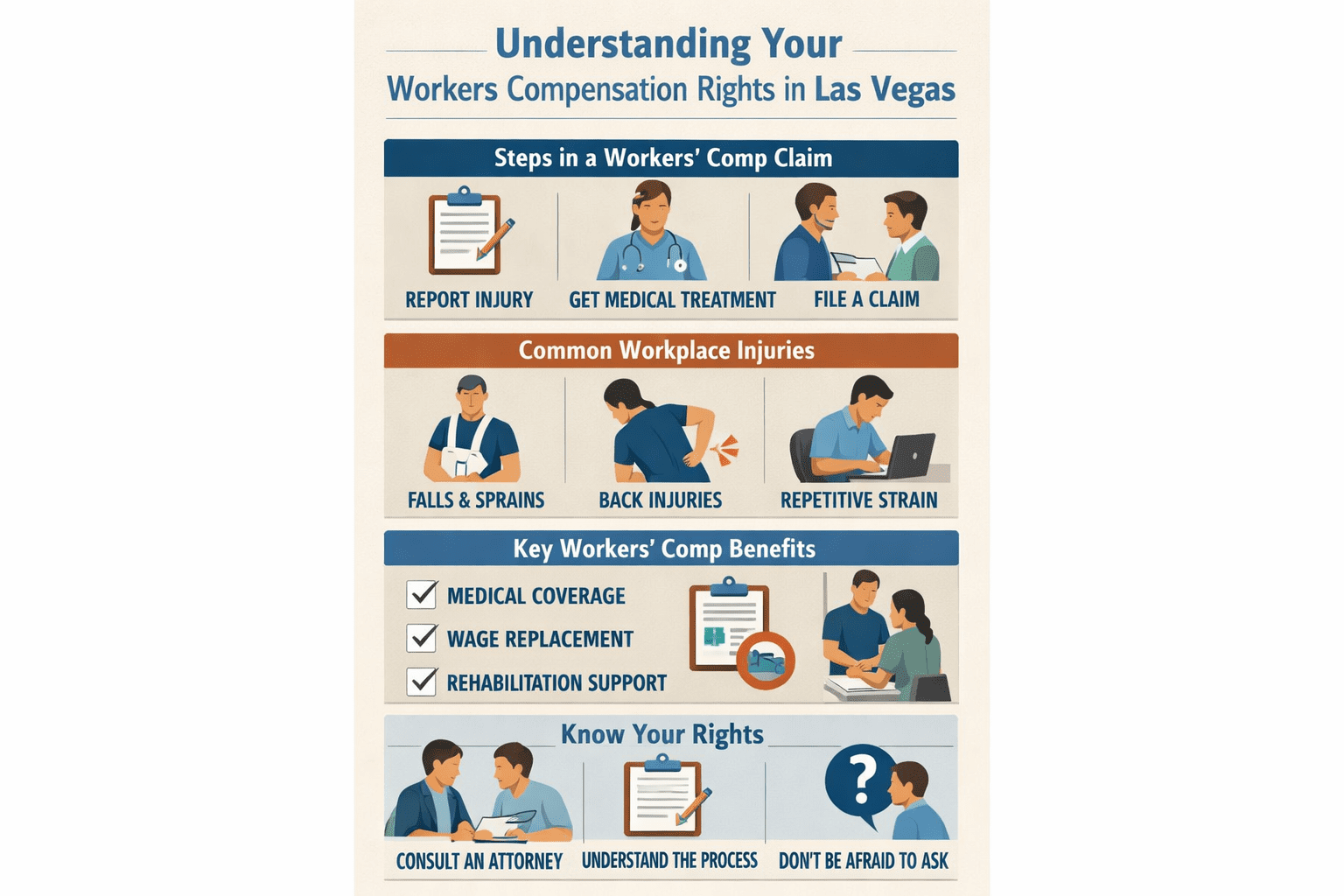
For an employee injured while working within the Navajo Nation, taking immediate, structured steps is vital to protecting the right to medical treatment and financial compensation. Because administrative procedures can vary drastically depending on the employer's legal status, following a precise sequence prevents costly procedural missteps.
- Seek Immediate Medical Attention: Prioritize health and safety. Report to the nearest healthcare facility, such as an Indian Health Service hospital, a tribal health center, or an approved regional medical center. Clearly inform the medical provider that the injury occurred while on the job.
- Notify the Employer in Writing: Provide prompt written notice of the workplace injury to supervisors or the human resources department. Adhere to any specific reporting timelines mandated by the employer or tribal enterprise.
- Document the Incident: Gather detailed records of the accident, including the exact date, time, location, names of witnesses, and a description of the unsafe condition or equipment involved.
- Determine the Proper Jurisdiction: Consult with human resources, legal counsel, or worker advocacy groups to establish whether the claim falls under tribal administrative rules, state jurisdiction, or federal programs like FECA.
- File the Formal Claim: Submit the required claim documentation to the appropriate entity—whether that is the tribal risk management office, a private insurance carrier, or a state industrial commission. Ensure all deadlines for filing are strictly met.
Common Obstacles and Legal Complexities
Workers' compensation claims originating within the Navajo Nation frequently encounter obstacles that do not exist in standard domestic jurisdictions. Recognizing these hurdles helps claimants anticipate delays and secure appropriate professional guidance.
Sovereign Immunity Issues
Tribal sovereign immunity protects the Navajo Nation and its official enterprises from being sued in external courts without explicit congressional authorization or a clear waiver by the tribe. When a worker is injured due to the negligence of a tribal enterprise, sovereign immunity can bar standard personal injury lawsuits in state or federal court, making administrative workers' compensation remedies or limited waivers of immunity the primary avenues for relief.
Forum Selection Disputes
Employers and insurance carriers frequently challenge the jurisdiction of the forum where a claim is filed. An insurance carrier might argue that a state commission lacks jurisdiction over an on-reservation injury, while simultaneously contesting whether a tribal court has the administrative machinery to adjudicate a complex medical indemnity claim. These jurisdictional battles can stall medical approvals and wage replacement benefits for months.
Frequently Asked Questions
Does Arizona, New Mexico, or Utah workers' compensation cover injuries on the Navajo Nation?
Generally, state workers' compensation laws do not apply to injuries sustained on Navajo trust land by tribal members or when working for tribal entities, due to tribal sovereignty. However, application depends heavily on whether the employer is a private off-reservation business operating on fee land or trust land.
What should I do if my employer denies my claim based on tribal jurisdiction?
If an employer or insurer denies a claim citing jurisdictional conflicts, consult with an attorney experienced in Indian law and tribal workers' compensation. They can help determine whether the claim belongs in a tribal administrative forum, federal program, or state court.
Are federal employees working on the Navajo Nation covered by tribal laws?
No. Federal employees, including those working for the Bureau of Indian Affairs or the Indian Health Service within the boundaries of the Navajo Nation, are covered under the federal Employees' Compensation Act (FECA).
How do I find out which insurance policy covers a business on the reservation?
You can request proof of insurance coverage and policy endorsements directly from the employer's human resources department or the Navajo Nation Labor Commission. Examining the specific land status where the accident occurred is also necessary to verify applicability.
Can I sue a tribal employer in state court for a workplace injury?
Usually no. Tribal sovereign immunity typically protects the Navajo Nation and its direct enterprises from lawsuits in state courts. Relief must typically be sought through internal tribal mechanisms, self-insurance programs, or designated administrative channels.
Next Actions and Professional Guidance
Navigating workers' compensation within the Navajo Nation requires diligence, precise documentation, and an understanding of legal boundaries that separate tribal, state, and federal domains. Injured workers should immediately report injuries, secure medical records, and verify the exact legal status of their employer. Because jurisdictional rules are highly nuanced, consulting with legal professionals specializing in tribal employment law is strongly recommended to ensure claims are filed in the correct forum and benefits are properly secured.