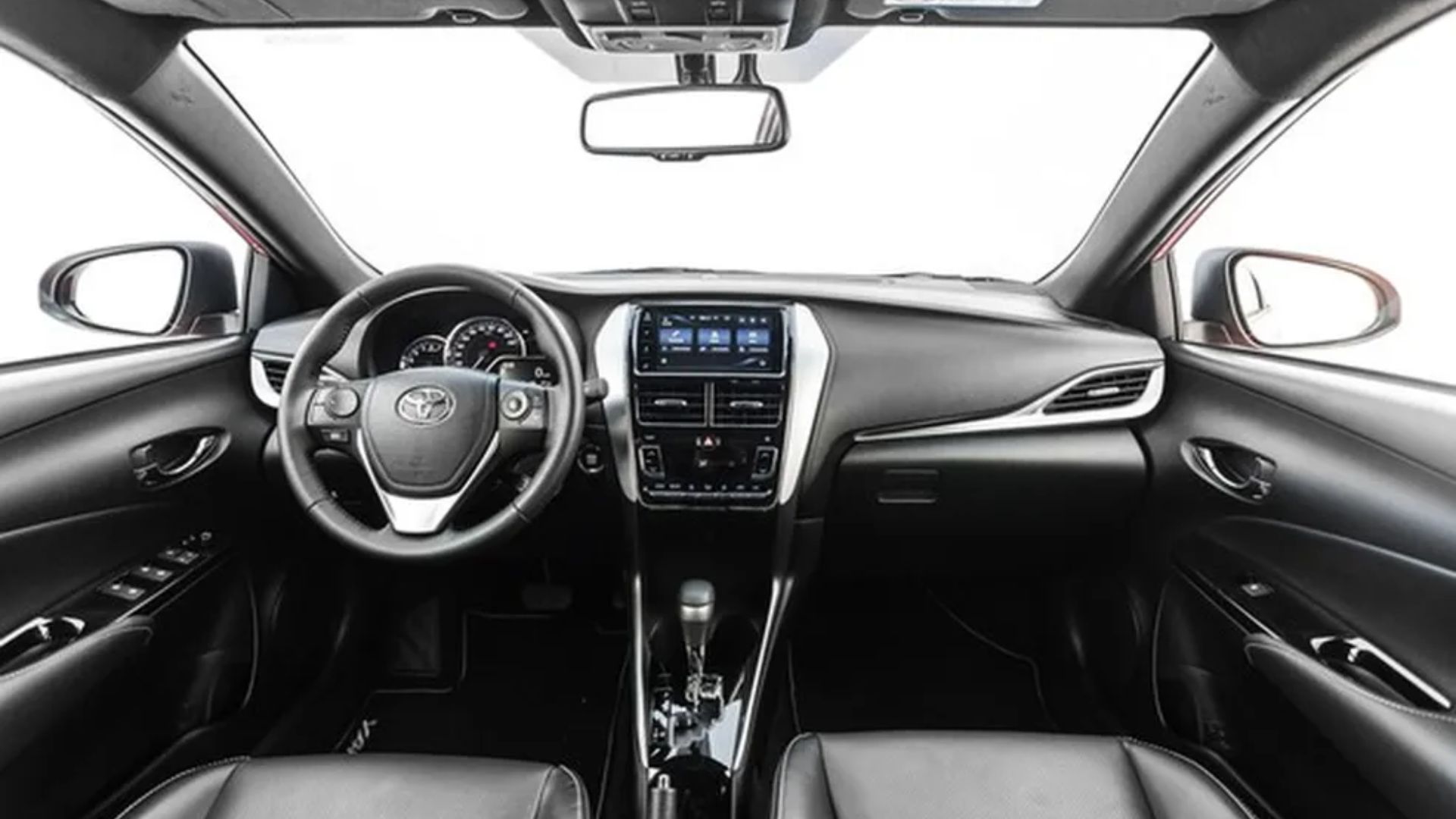
The Toyota Yaris 1.5-liter engine producing approximately 110 hp is a cornerstone of Toyota's global B-segment lineup, primarily represented by the 1NZ-FE, 2NR-FE, and the modern M15A-FKS series. These engines are engineered for high thermal efficiency and long-term durability, utilizing Variable Valve Timing with intelligence (VVT-i) to balance fuel economy with the responsive low-end torque required for urban driving.
The Evolution of the 1.5L Powerplant in the Toyota Yaris
The 1.5-liter displacement has long been the "sweet spot" for the Toyota Yaris, providing enough power for highway merging while maintaining the frugality expected of a subcompact car. As of 2026, the 110 hp threshold remains a significant benchmark for this segment. Historically, the Yaris relied on the 1NZ-FE, a robust four-cylinder engine that powered the platform for nearly two decades. However, as global emissions standards tightened, Toyota transitioned toward the NR series and, more recently, the Dynamic Force M15A series.
The "110 hp" designation is specifically relevant because it represents the peak output of many naturally aspirated 1.5L variants found in various global markets. In some regions, this power is delivered by a traditional four-cylinder architecture, while in newer TNGA (Toyota New Global Architecture) based models, it comes from a high-efficiency three-cylinder design. Understanding which version resides under the hood is critical for maintenance, performance expectations, and long-term ownership costs.
Technical Architecture and Design Philosophies
The design of the 1.5L Yaris engine focuses on reducing internal friction and optimizing the combustion process. Whether discussing the older four-cylinder units or the modern three-cylinder Dynamic Force engines, several core Toyota engineering philosophies remain constant.
Valvetrain and VVT-i Technology
Toyota’s Variable Valve Timing with intelligence (VVT-i) is the heart of the 110 hp output. This system adjusts the timing of the intake valves by changing the relationship between the camshaft drive and the intake camshaft. At higher RPMs, the timing is advanced to allow more air into the cylinders, increasing power. At lower RPMs or under light loads, the timing is retarded to reduce pumping losses and improve fuel economy.
In the 2NR-FE and later versions, Dual VVT-i is employed, controlling both the intake and exhaust camshafts. This allows for even finer control over the engine's "breathing," resulting in a flatter torque curve. This is why a 110 hp Yaris feels more "peppy" in city traffic than its horsepower figure might suggest; the engine provides a significant portion of its maximum torque very early in the rev range.
The Shift to the Dynamic Force (M15A) Series
In recent years, the 1.5L 110 hp output has been achieved through the M15A-FKS engine. This is a three-cylinder unit that belongs to the Dynamic Force family. By moving to three cylinders, Toyota increased the displacement per cylinder, which improves thermal efficiency. This engine uses a high compression ratio (often 13.0:1 or higher) and high-speed combustion technology.
The M15A series utilizes a long-stroke design, which is inherently better for torque production. By using a "straight" intake port and laser-clad valve seats, the engine achieves a tumble flow of air-fuel mixture that burns faster and more completely. This allows the engine to produce approximately 110 to 125 hp (depending on regional tuning) while significantly reducing CO2 emissions compared to previous four-cylinder iterations.
Engine Specifications and Performance Metrics
The following table compares the primary versions of the 1.5L engine found in the Yaris that hover around the 110 hp mark.
| Specification | 1NZ-FE (Legacy) | 2NR-FE (Dual VVT-i) | M15A-FKS (Dynamic Force) |
|---|---|---|---|
| Configuration | Inline 4-Cylinder | Inline 4-Cylinder | Inline 3-Cylinder |
| Displacement | 1,497 cc | 1,496 cc | 1,490 cc |
| Horsepower | 106–110 hp | 105–108 hp | 118–125 hp (Tuned for 110 in some markets) |
| Torque | 103 lb-ft (140 Nm) | 103 lb-ft (140 Nm) | 107–113 lb-ft (145–153 Nm) |
| Compression Ratio | 10.5:1 | 11.5:1 | 13.0:1 |
| Fuel System | Multi-point Injection | Multi-point Injection | D-4S (Direct & Port) |
| Cooling System | Water-cooled | Water-cooled | Electric Water Pump (Standard) |
Fuel Efficiency and Environmental Impact
One of the primary reasons for the 1.5L engine's popularity is its efficiency. The 110 hp variants typically achieve between 35 and 45 miles per gallon (MPG) in combined driving cycles, depending on the transmission (CVT vs. Manual) and vehicle weight. The adoption of the Atkinson Cycle in hybrid-assisted versions of this engine further pushes efficiency, though the pure internal combustion versions (Otto Cycle) remain the standard for the 110 hp non-hybrid baseline.
Maintenance Requirements and Long-Term Reliability
Toyota’s 1.5L engines are famous for their "bulletproof" reputation. It is not uncommon to see these units surpass 200,000 miles (320,000 km) with only routine maintenance. However, to reach this longevity, owners must adhere to specific service intervals and understand the technical requirements of the engine.
Timing Chain vs. Timing Belt
All modern 1.5L Toyota Yaris engines (1NZ, 2NR, and M15A) utilize a timing chain rather than a timing belt. This is a significant advantage for owners, as timing chains are designed to last the lifetime of the engine and do not require the costly 60,000-mile replacements associated with belts. However, the health of the timing chain is entirely dependent on oil quality. Neglecting oil changes can lead to "chain stretch" or damage to the hydraulic tensioners, which rely on oil pressure to function.
Lubrication Standards
For the newer 110 hp engines, Toyota specifies ultra-low viscosity oils, typically SAE 0W-20 or even 0W-16. These thin oils reduce internal drag and ensure that oil reaches the overhead cams and VVT-i actuators immediately upon a cold start. Using a thicker oil (like 10W-30) in an engine designed for 0W-16 can lead to sluggish VVT-i response and decreased fuel economy.
Spark Plugs and Ignition
The 1.5L engines generally use iridium-tipped spark plugs. These are designed for long-life intervals, often lasting 60,000 to 100,000 miles. Because these engines run high compression ratios, maintaining a clean and strong spark is essential to prevent "knock" or pre-ignition, which can damage the pistons over time.
Common Issues and Troubleshooting
While the 110 hp 1.5L is exceptionally reliable, there are a few documented issues that mechanics and owners should be aware of:
- Water Pump Leaks: On the 1NZ and 2NR series, the water pump is a known wear item that may show signs of pink crust (coolant residue) or weeping around 80,000 miles. Replacing this proactively prevents overheating.
- Carbon Buildup: Engines equipped with the D-4S system (like the M15A) use both port and direct injection to mitigate carbon buildup on intake valves. However, engines that are used strictly for short city trips may still experience some buildup. Occasional highway driving helps the engine reach operating temperatures that "burn off" these deposits.
- VVT-i Solenoid Clogging: If oil changes are missed, the tiny screens in the VVT-i solenoids can become clogged with sludge. This usually triggers a Check Engine Light (CEL) and a noticeable loss of power.
- Engine Vibration: In the newer three-cylinder 1.5L variants, a slightly higher level of vibration is normal at idle compared to the older four-cylinder units. Toyota uses counter-balancer shafts and specialized engine mounts to minimize this, but it remains a characteristic of the three-cylinder design.
Transmission Pairing and Driveability
The performance of the 110 hp engine is heavily influenced by the transmission it is mated to. In the Yaris, you will typically find three options:
- 5-Speed/6-Speed Manual: Favored by driving enthusiasts, the manual allows the driver to keep the engine in its power band (above 4,000 RPM) for better acceleration.
- Direct Shift-CVT: Modern Toyota CVTs (Continuously Variable Transmissions) often feature a physical "launch gear." This gear handles the initial acceleration from a stop, providing the feel of a traditional automatic, before handing over the duties to the belt-and-pulley system for efficiency. This significantly improves the 1.5L engine's responsiveness off the line.
- Traditional 4-Speed Automatic: Found in older or "budget" versions of the Yaris, this transmission is incredibly durable but saps some of the 110 hp engine's potential, particularly during highway passing maneuvers.
Why the 110 HP Benchmark Matters in 2026
In 2026, the automotive market is heavily bifurcated between high-performance EVs and small, efficient internal combustion engines (ICE). The 110 hp 1.5L Toyota engine remains relevant because it represents the most cost-effective entry point into reliable transportation. It is an engine designed not for the racetrack, but for the "real world"—where reliability, ease of repair, and predictable fuel costs are the most valued metrics.
Furthermore, these engines are increasingly being used as the "base" for hybrid systems. Even in non-hybrid form, the technology trickle-down from Toyota’s racing and hybrid programs means that today's 110 hp engine is vastly more sophisticated and cleaner-running than a 110 hp engine from twenty years ago.
Frequently Asked Questions
Is the 1.5L 110 hp engine enough for highway driving?
Yes, the 110 hp output is sufficient for highway cruising and merging in a vehicle as light as the Toyota Yaris. While it is not a "performance" engine, it can comfortably maintain speeds of 70–80 mph. However, when the car is fully loaded with four passengers and luggage, you will notice a decrease in passing power on steep inclines.
Does this engine use a timing belt or a chain?
All Toyota Yaris 1.5L engines produced in the last decade (including the 1NZ, 2NR, and M15A series) use a timing chain. This eliminates the need for expensive periodic belt replacements, provided that oil changes are performed regularly to keep the chain lubricated.
What is the best oil for the 1.5L Toyota engine?
For the 2NR and M15A series, 0W-20 full synthetic oil is generally the standard. Some of the newest M15A versions may even require 0W-16. Always check the oil cap or the owner's manual for the specific weight required for your region, as Toyota sometimes adjusts these specs based on local climates.
Is the 3-cylinder 1.5L better than the 4-cylinder?
The 3-cylinder M15A (Dynamic Force) is technically more advanced, offering better thermal efficiency and slightly more torque. While some drivers prefer the smoothness of the older 4-cylinder (1NZ/2NR), the 3-cylinder is superior in terms of fuel economy and modern emissions compliance.
Can the 110 hp Yaris engine run on E10 or E85 fuel?
Most global versions of the 1.5L Yaris engine are compatible with E10 (10% ethanol). However, they are generally not "Flex-Fuel" vehicles and should not be run on E85 unless specifically stated by Toyota for that specific market (such as Brazil). Using E85 in a standard 1.5L engine can cause lean-running conditions and damage fuel system components.
Practical Recommendations for Owners
For those owning or considering a Toyota Yaris with the 1.5L 110 hp engine, the path to longevity is simple: prioritize fluid chemistry. Change the engine oil every 5,000 to 7,500 miles regardless of the "maximum" interval suggested by the onboard computer, especially if you drive in "severe" conditions (short trips, extreme heat, or heavy traffic).
Additionally, ensure the cooling system is serviced every 50,000 miles to protect the water pump and head gasket. By following these basic steps, the 110 hp 1.5L engine will likely be the most reliable component of the vehicle, often outlasting the interior and suspension components.