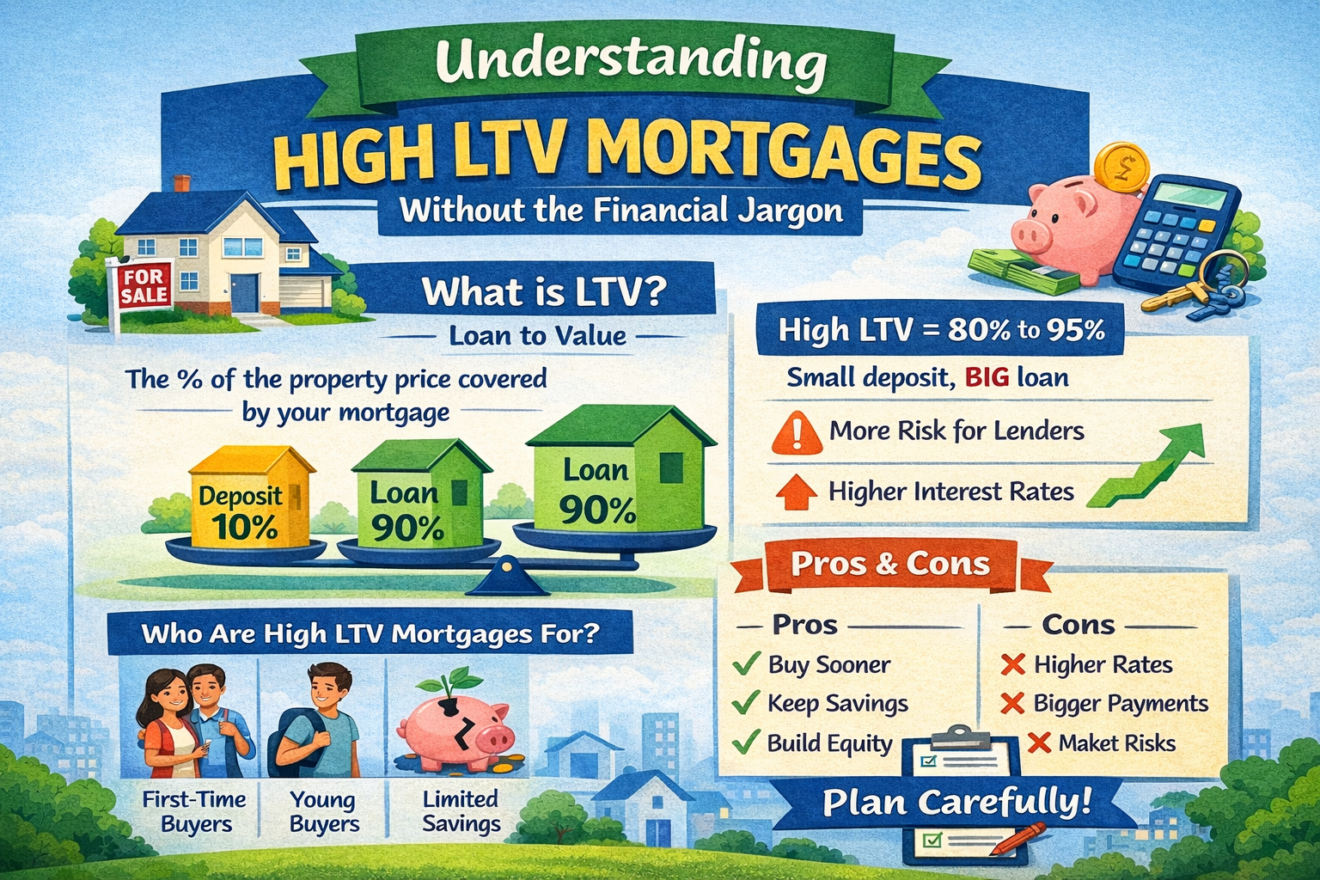
A 100 LTV second mortgage is a specialized home equity loan or line of credit allowing borrowers to borrow against the total appraised value of their property, rather than retaining traditional equity cushions. While it provides total financing up to a home's full worth, it carries heightened interest rates, strict qualification requirements, and substantial financial vulnerability due to the absence of a built-in equity buffer.
Securing financing against residential real estate is a foundational strategy for homeowners seeking debt consolidation, home renovations, or major life expenses. Traditionally, lenders restrict total borrowing—encompassing both a primary mortgage and a secondary lien—to 80% or 85% of a property's market value. This leaves a mandatory equity cushion to protect the lender against market volatility and potential foreclosure losses. However, specialized lending products and modern financial structures occasionally introduce options that push leverage limits to the absolute maximum. Understanding how a 100 LTV second mortgage functions requires an examination of Loan-to-Value mathematics, underwriting criteria, market risks, and alternative borrowing strategies available to property owners.
Understanding Loan-to-Value (LTV) and Combined LTV (CLTV)
To evaluate a 100 LTV second mortgage, one must first master the fundamental metric of mortgage underwriting: Loan-to-Value (LTV). LTV is a ratio calculated by dividing the total amount borrowed by the appraised value of the property. For example, if a home is valued at $400,000 and the homeowner carries a primary mortgage balance of $300,000, the LTV is 75%.
When dealing with a second mortgage, lenders look beyond standard LTV and evaluate Combined Loan-to-Value (CLTV). CLTV accounts for all outstanding liens secured by the property. If the primary mortgage balance is $250,000 and a homeowner takes out a second mortgage for $50,000 on a $300,000 home, the CLTV is 100%.
$$\text{CLTV} = \frac{\text{Primary Mortgage Balance} + \text{Second Mortgage Balance}}{\text{Appraised Home Value}}$$
Most conventional financial institutions view a 100% CLTV as an aggressive risk profile. Standard home equity lines of credit (HELOCs) and home equity loans (HELs) cap their maximum CLTV at 85% or 90%. Reaching the 100% threshold means the homeowner has zero remaining equity, transforming the property into a fully leveraged asset.
How Second Mortgages Function at Maximum Leverage
A second mortgage is structurally subordinate to the primary mortgage. In the event of a financial default and subsequent foreclosure, the primary lender is paid in full from the proceeds of the property sale before the second mortgage holder receives any funds. This hierarchy dictates the risk pricing of second liens.
When a second mortgage pushes the CLTV to 100%, the second lienholder absorbs all the downside risk of minor market fluctuations. If local real estate values drop by even 5%, the second mortgage becomes entirely unsecured by physical equity. Consequently, finding a traditional bank or credit union willing to underwrite a 100 LTV second mortgage through standard retail channels is exceedingly rare.
Instead, maximum-leverage second mortgages are typically found within specialized portfolio lending programs, credit unions with flexible portfolio options, or private niche lenders. These products often feature distinct structural characteristics:
- Adjustable Interest Rates: Many high-LTV second liens are structured as lines of credit with variable interest rates pegged to the prime rate.
- Shorter Draw or Repayment Periods: To mitigate long-term exposure, lenders may enforce compressed repayment schedules.
- Higher Margins: The lender adds a substantial risk margin to the benchmark index to compensate for the lack of equity protection.
Borrower Eligibility and Underwriting Criteria
Qualifying for a 100 LTV second mortgage demands exceptionally strong financials across multiple vectors. Because the lender cannot rely on property equity as a safety net, they must rely entirely on the borrower's capacity to repay the debt.
Credit Score Requirements
Borrowers seeking maximum-leverage financing typically need prime or super-prime credit scores. While a standard home equity loan might accept scores in the mid-600s, a 100 LTV product often mandates a FICO score of 720 or higher, with preferred pricing reserved for scores above 750.
Debt-to-Income (DTI) Ratios
The Debt-to-Income ratio measures a borrower's monthly debt payments against their gross monthly income. For a 100 LTV second mortgage, lenders enforce strict DTI ceilings, frequently capping total DTI at 43% or lower, even when utilizing automated underwriting systems. Every dollar of the new second mortgage payment is factored into this calculation alongside the primary mortgage, vehicle loans, and revolving credit minimums.
Income Verification and Employment Stability
Self-employed borrowers or those with volatile commission-based income face rigorous scrutiny. Lenders require comprehensive documentation, including multiple years of tax returns, profit and loss statements, and W-2 verification, to prove steady, predictable cash flow capable of absorbing the dual mortgage burden.
Comparative Overview of Home Equity Financing Options
To contextualize the 100 LTV second mortgage, it helps to compare it against alternative borrowing methods that leverage residential real estate.
| Financing Type | Maximum Typical CLTV | Interest Rate Structure | Primary Risk Factor |
|---|---|---|---|
| Traditional HELOC | 80% – 85% | Variable | Rate fluctuations during repayment phase |
| Home Equity Loan (HEL) | 85% – 90% | Fixed | Higher monthly payment locked in long-term |
| Cash-Out Refinance | 80% – 85% | Fixed or Variable | Replacing a low historical primary mortgage rate |
| 100 LTV Second Mortgage | 100% | Usually Variable | Negative equity and severe default vulnerability |
Risks and Financial Vulnerabilities
Utilizing a 100 LTV second mortgage introduces profound financial risks that require careful consideration before application.
Market Downturns and Negative Equity
The most acute danger of a 100 LTV position is negative equity. Real estate markets are cyclical. If home values decline regionally or nationally shortly after securing the loan, the property's market value will fall below the total debt owed. This condition, commonly known as being "underwater," traps the homeowner. They cannot sell the home conventionally without bringing cash to the closing table to pay off both the primary and secondary lenders.
Refinancing Roadblocks
An underwater or fully leveraged property cannot be easily refinanced. If interest rates drop, a homeowner with a 100 LTV second mortgage will struggle to refinance their primary mortgage because new lenders view the secondary lien as an unmanageable risk hurdle, often requiring subordination agreements that the second lienholder may refuse to grant.
Increased Monthly Cash Flow Strain
Carrying two distinct mortgage payments strains monthly liquidity. If a household experiences an income interruption, medical emergency, or unexpected expense, the dual debt burden accelerates the timeline toward mortgage default and potential foreclosure.
Alternative Strategies for Maximizing Equity and Raising Capital
Given the significant hurdles and risks associated with a 100 LTV second mortgage, borrowers should evaluate alternative paths to achieve their financial goals.
Cash-Out Refinance Execution
For homeowners with existing primary mortgage rates higher than current market rates, a cash-out refinance replacing the old mortgage with a new, larger one can be more cost-effective than adding a second lien. However, cash-out refinances are also generally capped at 80% to 85% LTV.
Personal Loans and Unsecured Lines of Credit
If the capital requirement is relatively modest—such as $25,000 to $50,000 for home improvements—an unsecured personal loan or signature line of credit avoids placing a lien on the home entirely. While interest rates on unsecured debt can be higher than secured debt, they eliminate the risk of foreclosure and bypass appraisal fees.
Shared Equity Agreements
Emerging financial technology platforms offer shared equity investments. In this arrangement, an investor provides cash upfront in exchange for a percentage of the home’s future appreciation. This avoids monthly debt service payments entirely, though it trades away a portion of long-term property upside.
Frequently Asked Questions
Can I get a 100 LTV second mortgage from a traditional retail bank?
Major national commercial banks rarely offer 100 LTV second mortgages due to internal risk policies and regulatory capital requirements. These products are typically restricted to specialized credit unions, portfolio lenders, or private wealth management divisions that can manually underwrite the holistic financial profile of the borrower.
How does a 100 LTV second mortgage affect my primary mortgage?
A second mortgage does not alter the terms, interest rate, or balance of your primary mortgage. However, it places a junior lien on the property title. If you ever attempt to modify or refinance your primary mortgage, the second lienholder must agree to a subordination agreement to keep your primary mortgage in the first position.
What happens if I default on a 100 LTV second mortgage?
Defaulting on a second mortgage gives the lender the legal right to initiate foreclosure proceedings, exactly like a primary mortgage. Because the second lienholder is in a subordinate position, they take the primary financial hit if foreclosure proceeds do not cover both debts, making them aggressive in pursuing collections, wage garnishment, or legal judgments.
Are interest rates higher on 100 LTV second mortgages compared to 80 LTV loans?
Yes. Lenders price loans according to risk. Operating at a 100% Loan-to-Value ratio eliminates the safety margin provided by borrower equity, prompting lenders to charge higher interest rates and wider margins to offset potential credit losses.
Can the appraisal value impact my eligibility for a 100 LTV loan?
Appraisal accuracy is paramount. Because the loan pushes leverage to the absolute limit, a conservative appraisal or a declining local market can instantly disqualify a borrower by pushing the calculated CLTV past the 100% threshold, forcing a reduction in the requested loan amount.
Practical Next Steps for Prospective Borrowers
Before pursuing a 100 LTV second mortgage, conduct a comprehensive financial audit. Review your current credit reports for errors, calculate your exact Debt-to-Income ratio including all recurring liabilities, and obtain an independent, realistic estimate of your property's current market value. Consult with multiple specialized mortgage brokers or credit union loan officers to compare available portfolio products, fee structures, and variable rate caps. Given the permanent encumbrance placed on your primary asset, ensure that the intended use of the funds—whether debt consolidation or essential home capital investment—justifies the elevated financial risk profile.