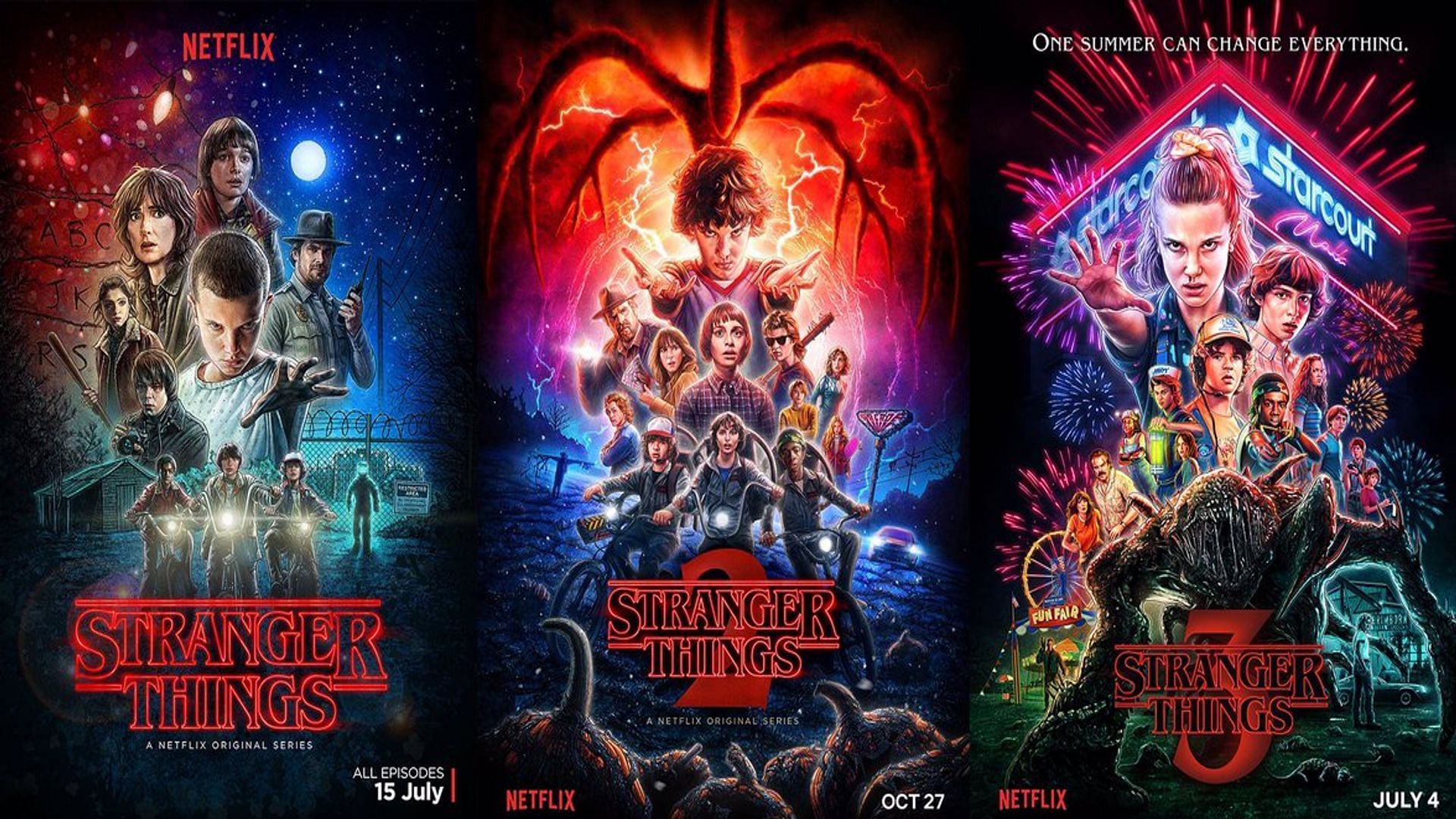
Stranger Things Season 1 introduces the small town of Hawkins, Indiana, in 1983, where the sudden disappearance of young Will Byers triggers a supernatural mystery. As his friends and family search for him, they encounter a telekinetic girl named Eleven, clandestine government experiments, and a terrifying alternate dimension known as the Upside Down.
The Inciting Incident: The Disappearance of Will Byers
The narrative begins on November 6, 1983, when twelve-year-old Will Byers vanishes while cycling home from a Dungeons & Dragons campaign at his friend Mike Wheeler’s house. This event serves as the primary catalyst for the entire series. In the immediate aftermath, Will’s mother, Joyce Byers, and the local police chief, Jim Hopper, initiate separate investigations. While the town remains largely skeptical or indifferent, Joyce becomes increasingly convinced that Will is communicating with her through electrical disturbances in their home.
The disappearance exposes the fissures in the small-town facade of Hawkins. Unlike typical police procedural dramas, the investigation quickly moves beyond the domestic realm, suggesting that the threats facing the town are not terrestrial. The atmosphere is thick with 1980s nostalgia—from the walkie-talkies and rotary phones to the synth-heavy soundtrack—which anchors the viewers in a specific cultural moment while establishing a sense of dread.
The Role of Eleven and the Hawkins National Laboratory
Shortly after Will disappears, a young, shorn-headed girl identified only by the number "011" (Eleven) appears in town. She possesses psychokinetic abilities, a result of experimentation conducted at the nearby Hawkins National Laboratory. The laboratory, ostensibly a facility for the U.S. Department of Energy, is revealed to be a front for secretive MKUltra-style projects led by Dr. Martin Brenner.
Eleven’s presence is the show's defining technical hook. Her character arc—transitioning from a weaponized test subject to a member of a found family—provides the emotional core of the season. Her ability to "see" into the Upside Down via sensory deprivation acts as the narrative engine, allowing the protagonists to bridge the gap between their reality and the supernatural threat. The secrecy surrounding the lab creates a dual-layered conflict: the friends must fight both the physical monster and the institutional corruption of the government agency trying to recapture Eleven and conceal their failures.
Navigating the Upside Down
The "Upside Down" is an alternate dimension that mirrors the physical layout of Hawkins but exists in a state of decay. It is characterized by freezing temperatures, an atmosphere laden with toxic, spore-like particles, and a lack of human life. The environment acts as a predator’s domain, housing the "Demogorgon," a humanoid creature that serves as the primary antagonist.
Understanding the physics of the Upside Down is crucial for viewers trying to piece together the show's internal logic. The realm appears to be a distorted reflection of the real world, and the barrier between the two is porous at specific locations—notably, where intense psychokinetic energy has been exerted or where the lab has breached the veil. The creature is drawn to blood and electrical disturbances, which explains its initial fixation on Will and its eventual hunt for Barbara Holland, another pivotal character whose disappearance serves to raise the stakes.
Key Characters and Developmental Arcs
The success of Stranger Things Season 1 relies on the interplay between three distinct demographic groups:
- The Kids (Mike, Dustin, Lucas, and eventually Will and Eleven): These characters represent the heart of the story. Their loyalty and problem-solving abilities, often modeled on the logic of board games like Dungeons & Dragons, allow them to interpret the supernatural phenomena more accurately than the adults.
- The Teens (Nancy, Jonathan, and Steve): This group bridges the gap between the mundane coming-of-age drama and the horror elements. Nancy’s investigation into Barb's death forces her to confront the reality of the monster, leading to an unlikely partnership with Will's brother, Jonathan.
- The Adults (Joyce and Hopper): They represent the search for truth within institutional limitations. Hopper, a jaded and grieving police officer, finds a second chance at purpose, while Joyce represents the frantic, unwavering faith of a parent.
Comparison of Investigative Paths
The search for Will Byers progresses through three distinct, parallel investigations that eventually converge in the final episodes.
| Investigation Group | Primary Motivation | Methodology | Main Discovery |
|---|---|---|---|
| Joyce & Hopper | Rescue/Search | Intuition and local law enforcement access | The existence of the monster and the lab's cover-up. |
| The Kids | Friendship/Rescue | D&D logic and Eleven’s tracking powers | The "Upside Down" as a parallel dimension. |
| Nancy & Jonathan | Justice/Truth | Photography and research | The physical manifestation of the monster. |
The Climax and Resolution
The season reaches its peak when the various groups finally share information. The climax involves an infiltration of the school, where the Demogorgon is confronted, and a final showdown in the lab where Eleven sacrifices her physical presence to destroy the creature. While the threat is temporarily neutralized, the final scene reveals that Will has returned with a lingering, visceral connection to the Upside Down, setting the stage for the narrative trajectory of subsequent seasons.
The resolution is bittersweet. While the community of Hawkins returns to a semblance of order, the trauma experienced by the primary characters is permanent. The government remains a looming threat, and the supernatural door, while pushed shut by Eleven, is clearly not permanently sealed. This balance between character resolution and plot-based cliffhangers defines the "parted" structure of the series, ensuring that the stakes remain high regardless of the season's conclusion.
Common Misconceptions and Trivia
Viewers often confuse the origins of the creature with the origins of the dimension. It is important to note that the Demogorgon is a resident of the Upside Down; it is not the ruler of it, nor is it the source of the realm’s existence. Furthermore, many fans conflate the "Shadow Monster" seen in later seasons with the season one Demogorgon. In 1983, the creature functions as a predatory animal, directed by its survival instincts and, potentially, the influence of the atmosphere within the dimension.
Another common point of inquiry involves the exact nature of Eleven's powers. Throughout the season, the audience sees that utilizing her abilities results in significant physical strain, such as nosebleeds and exhaustion. This is not merely a stylistic choice; it is a vital plot constraint that limits her ability to serve as a "deus ex machina" solution for every encounter. Her exhaustion necessitates the need for the other characters to step up, reinforcing the theme of teamwork.
Preparing for Subsequent Viewing
If you are re-watching or analyzing this season in 2026, keep in mind that the pacing is designed to mimic the slow-burn horror aesthetic of the 1980s. The first few episodes focus heavily on world-building and establishing the mundane life of Hawkins before the supernatural events escalate. Resist the urge to dismiss the "teen drama" elements—scenes involving Steve, Nancy, and Jonathan are essential for understanding how the town’s social hierarchy is disrupted by the entry of the supernatural.
For those interested in the technical aspects of the production, look for the practical lighting choices. The show frequently uses colored light (reds and blues) to denote the presence of the Upside Down, a visual language that remains consistent as the franchise grows. The sound design, particularly the flickering of lights and the wet, organic sounds associated with the Demogorgon, remains a benchmark for horror-television audio mixing.
Frequently Asked Questions
Is Eleven the daughter of someone in Hawkins? No, Eleven is not the biological daughter of any of the main characters. She is a test subject kidnapped by Dr. Brenner and the Hawkins Lab staff. Her backstory is explored through flashbacks that reveal her mother, Terry Ives, was a participant in the MKUltra program.
Why does the town of Hawkins not know the truth by the end of Season 1? The Hawkins National Laboratory, backed by government resources, successfully coordinates a cover-up. They frame the supernatural events as a tragic series of accidents and maintain control over the local narrative through misinformation and the influence of local law enforcement, which they eventually leverage against Hopper.
What is the significance of the Dungeons & Dragons game at the start? The D&D game acts as a narrative blueprint. The creatures the kids encounter in the real world are categorized using the game's monster manual, such as the "Demogorgon." This provides the kids with a framework for understanding an enemy they have no other way of conceptualizing.
Does Will Byers remain in the Upside Down for the entire season? No, Will is rescued in the penultimate and final episodes. However, the season ends with the revelation that he brought something back from the other side, setting up the internal conflicts he faces in subsequent years.
Is it necessary to watch other media to understand Season 1? No, the season is a self-contained narrative. While subsequent seasons and tie-in comics provide more lore regarding the laboratory and the origins of the Upside Down, the first season is structured to provide all the context a viewer needs to understand the plot as it unfolds in 1983.
Final Recommendations
To fully appreciate the narrative construction of Season 1, prioritize watching the episodes in their original broadcast order. Focus specifically on the contrast between the quiet, suburban aesthetics of the daytime scenes and the high-contrast, dark visuals of the scenes involving the Upside Down. If you are analyzing the show for themes of government surveillance or Cold War paranoia, pay close attention to the scenes featuring Dr. Brenner, as his dialogue often highlights the era's obsession with human potential and weaponized psychic research. Should you find the pacing slow, consider the character interactions as the primary draw rather than the action sequences; the strength of the show remains its grounded portrayal of friendships under pressure.