Colonial Penn currently holds an A- (Excellent) financial strength rating from AM Best, reflecting its stable ability to meet long-term policyholder obligations. Specializing in senior life insurance, the company is best known for its "unit-based" Guaranteed Acceptance plan for individuals aged 50 to 85, which requires no medical exams or health inquiries.
Colonial Penn Life Insurance Company, a subsidiary of CNO Financial Group, has remained a fixture in the American insurance landscape for decades. As of 2026, it continues to focus primarily on the "final expense" market, catering to seniors who may have difficulty securing traditional underwritten life insurance due to age or pre-existing health conditions. While the brand is synonymous with its "unit" pricing model, understanding the nuances of its AM Best rating and the specifics of its policy structures is essential for any prospective buyer.
The Significance of Colonial Penn’s AM Best Rating
When evaluating any insurance provider, the AM Best rating serves as the industry gold standard for assessing financial health. AM Best is a credit rating agency that focuses exclusively on the worldwide insurance industry. For Colonial Penn, its A- (Excellent) rating, which has remained consistent into 2026, provides a critical layer of security for policyholders who are often purchasing coverage intended to last until the end of their lives.
An "A-" rating indicates that the company has an "excellent" ability to meet its ongoing insurance obligations. AM Best arrives at this conclusion by analyzing the company’s balance sheet strength, operating performance, business profile, and enterprise risk management. For a consumer, this means that even in fluctuating economic cycles, Colonial Penn maintains sufficient capital reserves to pay out death benefits when the time comes.
Furthermore, Colonial Penn’s parent company, CNO Financial Group, provides additional financial backing. The stability of the parent organization often influences the subsidiary's rating. Investors and policyholders alike look to these ratings to ensure that the "guarantee" in guaranteed acceptance is backed by real-world solvency. While an A- is not the highest possible rating (which would be A++), it is firmly within the "Secure" category, distinguishing Colonial Penn from smaller, less capitalized regional carriers.
Understanding the "Unit" Pricing Model
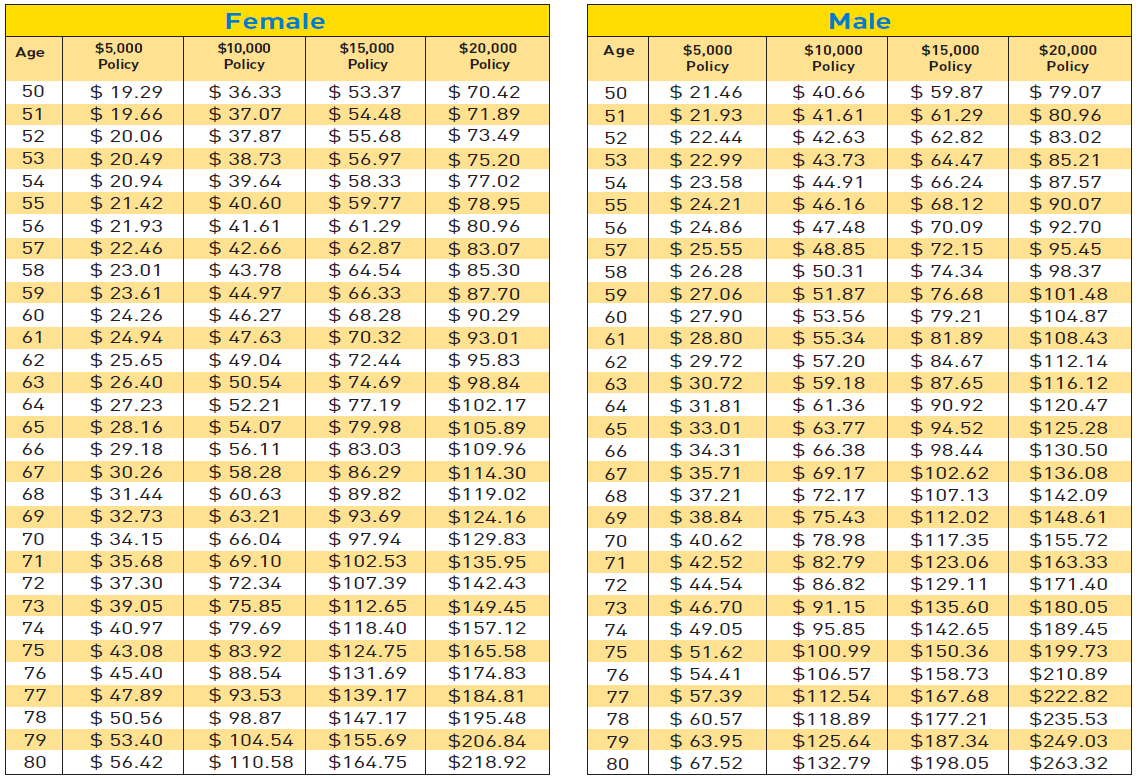
The most distinctive feature of Colonial Penn is its unit-based pricing system. Unlike traditional life insurance, where you choose a death benefit (e.g., $10,000) and the company tells you the cost, Colonial Penn sets the price at $9.95 per unit and tells you how much coverage that unit buys based on your age and gender.
As of 2026, the cost per unit remains a fixed hallmark of their marketing. However, the "value" of that unit decreases as the applicant gets older. A 50-year-old male will receive significantly more coverage for one unit than an 80-year-old male. This model is designed for affordability and simplicity, allowing seniors on fixed incomes to purchase exactly as much coverage as they can afford in $9.95 increments.
Coverage Breakdown by Unit (Estimated 2026 Values)
| Age (at Purchase) | Gender | Death Benefit per Unit | Monthly Premium |
|---|---|---|---|
| 50 | Male | $1,786 | $9.95 |
| 50 | Female | $2,100 | $9.95 |
| 60 | Male | $1,200 | $9.95 |
| 60 | Female | $1,615 | $9.95 |
| 70 | Male | $715 | $9.95 |
| 70 | Female | $1,020 | $9.95 |
| 80 | Male | $426 | $9.95 |
| 80 | Female | $560 | $9.95 |
Note: The values above are illustrative based on historical unit performance and 2026 actuarial trends. Exact amounts vary by state of residence.
Colonial Penn Policy Options
While the Guaranteed Acceptance plan is the most famous, Colonial Penn offers three primary types of life insurance. Choosing the right one depends on your health status and how much coverage you require.
1. Guaranteed Acceptance Whole Life
This is the flagship product. It is available to individuals aged 50 to 85 (in most states). The "guaranteed" aspect means you cannot be turned down for any reason—there are no medical exams and no health questions. This is an ideal solution for seniors with chronic illnesses or those who have been declined elsewhere.
However, it comes with a two-year graded death benefit. If the insured person dies from natural causes within the first two years of the policy, the beneficiary will not receive the full face value. Instead, they will receive all premiums paid plus a specific percentage of interest (usually 7%). If death occurs due to an accident within those first two years, the full benefit is typically paid. After the two-year mark, the full death benefit is active for any cause of death.
2. Permanent Whole Life
For those who are in relatively good health, the Permanent Whole Life plan offers higher coverage amounts—up to $50,000. Unlike the Guaranteed Acceptance plan, this policy requires you to answer several health questions. There is still no medical exam required in most cases, but the "simplified issue" underwriting allows the company to offer lower rates or higher coverage amounts than the unit-based plan.
Once issued, the premiums for Permanent Whole Life never increase, and the death benefit never decreases. This policy also builds cash value over time, which the policyholder can borrow against if needed.
3. Term Life Insurance
Colonial Penn’s term life product provides coverage that lasts for a specific period, though it can be renewed up to age 90. Term life is generally cheaper than whole life because it does not build cash value and is not permanent.
The primary drawback of Colonial Penn’s term life is that the premiums increase every five years as the insured enters a new age bracket. While it may be affordable at age 50, it can become prohibitively expensive by age 75. This plan is best suited for individuals who only need coverage for a specific financial obligation, such as a mortgage or a short-term debt.
The Role of CNO Financial Group
Colonial Penn’s operational efficiency and financial standing are deeply tied to its parent company, CNO Financial Group, Inc. Based in Carmel, Indiana, CNO is a publicly-traded company (NYSE: CNO) that manages several insurance brands, including Bankers Life and Washington National.
In 2026, CNO Financial Group continues to emphasize middle-income pre-retiree and retiree markets. The synergy between these brands allows Colonial Penn to keep administrative costs relatively low, which is how they maintain the $9.95 price point despite inflationary pressures. When reviewing the AM Best report for Colonial Penn, the agency often cites the "strategic importance" of the company to CNO Financial Group as a reason for its strong rating.
Pros and Cons of Colonial Penn Coverage
When making a decision about life insurance, it is vital to weigh the convenience of the application process against the long-term cost of the coverage.
Advantages
- No Medical Exams: The Guaranteed Acceptance plan is truly "no-questions-asked," which is a lifeline for seniors with serious health issues.
- Predictable Premiums: For the whole life products, the premium is locked in at the time of purchase and will never increase.
- Strong Financial Rating: The A- rating from AM Best provides peace of mind that the company is solvent and reliable.
- Brand Reputation: Having been in business for over 60 years, Colonial Penn has a proven track record of paying claims.
Disadvantages
- Low Coverage Amounts: The unit-based system often results in death benefits that are quite small (often under $10,000), which may not cover all funeral and burial costs in 2026.
- The Two-Year Wait: The graded death benefit on guaranteed acceptance policies means you are essentially "uninsured" for the first two years for natural causes of death.
- Cost per Thousand: On a "cost per $1,000 of coverage" basis, Colonial Penn is often more expensive than policies that require a medical exam or detailed health questions.
How to Determine if Colonial Penn is Right for You
Choosing Colonial Penn is often a trade-off between convenience and cost. If you are 65 years old and in excellent health, you can almost certainly find more coverage for less money by choosing a fully underwritten policy from a different carrier.
However, Colonial Penn is a specialized tool. It is designed for:
- Seniors who cannot qualify for traditional insurance due to health problems.
- Individuals who only need a small "burial policy" to cover basic final expenses.
- People who want a simple, transparent application process without the hassle of a physical exam or blood tests.
Before applying, it is recommended to calculate your total anticipated final expenses. In 2026, the average cost of a funeral, including burial and headstone, ranges between $9,000 and $13,000. If one unit of Colonial Penn only provides $800 in coverage at your current age, you would need to purchase over 12 units to cover a standard funeral, which would cost roughly $120 per month.
Frequently Asked Questions
What happens if I stop paying my premiums?
If you have a Whole Life or Guaranteed Acceptance policy that has built up cash value, the policy may stay in force for a short period through an "automatic premium loan" or "reduced paid-up insurance" option. However, if no cash value exists or is exhausted, the policy will lapse, and the coverage will be terminated. Unlike a savings account, you generally do not get your premiums back if you cancel the policy.
Can Colonial Penn cancel my policy if my health gets worse?
No. As long as you continue to pay your premiums on time, Colonial Penn cannot cancel your coverage due to changes in your health or age. This is a standard feature of "guaranteed renewable" life insurance. The only way the policy can be canceled by the insurer is if you stop paying or if you committed material fraud on the application (though the latter is difficult on a "no questions" policy).
How long does it take for beneficiaries to receive the death benefit?
Once the beneficiary submits the required documentation—usually a death certificate and a completed claim form—Colonial Penn typically processes the claim within 30 days. Many beneficiaries report receiving funds much faster, often within 7 to 10 business days, provided there are no disputes regarding the cause of death during the two-year contestability or graded benefit period.
Does the death benefit of the $9.95 plan increase over time?
No. The death benefit is fixed at the time of purchase based on your age. For example, if your $9.95 unit buys $1,000 of coverage at age 60, it will remain $1,000 for the rest of your life. It does not adjust for inflation, which is why some policyholders choose to buy additional units later in life, though those new units will be more expensive relative to the coverage they provide.
Is the cash value of the policy taxable?
Generally, the death benefit paid to beneficiaries is not subject to federal income tax. However, if you choose to surrender the policy for its cash value or take a loan against it, you may owe taxes on any amount that exceeds the total premiums you paid into the policy.
Final Recommendation
Colonial Penn Life Insurance is a reliable option for seniors who prioritize financial stability (AM Best A-) and guaranteed acceptance. If you have significant health issues and are between the ages of 50 and 85, their unit-based plan provides a straightforward way to secure final expense coverage. However, if you are in good health, it is fiscally prudent to compare quotes with simplified-issue whole life policies from other providers, as you may find higher death benefits for a lower monthly premium. Always ensure you understand the "two-year graded benefit" rule before signing, as this is the most common point of confusion for new policyholders.