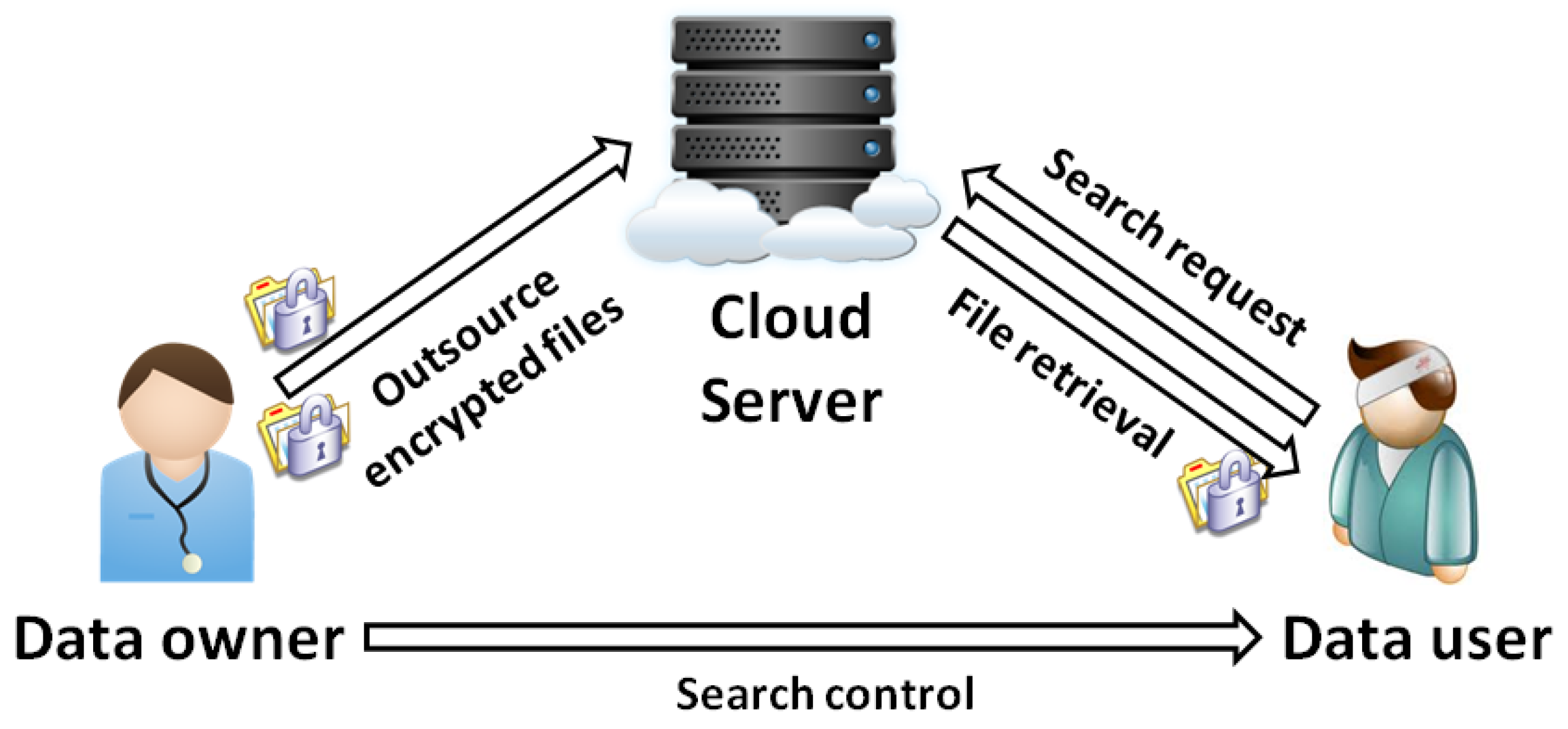
Managing data security while maintaining operational efficiency is a primary challenge for organizations leveraging cloud infrastructure. A secure and dynamic multi-keyword ranked search scheme over encrypted cloud data enables users to query private datasets stored in the cloud without decrypting the entire repository. By utilizing cryptographic techniques—specifically searchable symmetric encryption (SSE)—this architecture ensures that only authorized parties can search for information, while the cloud provider remains oblivious to the content of the data and the specific nature of the queries being executed.
Understanding the Challenge of Encrypted Data Retrieval
Cloud service providers offer massive storage scalability, but shifting sensitive information to external servers introduces significant privacy risks. If data is stored in plaintext, the provider—or any malicious actor who gains unauthorized access—can read, modify, or leak sensitive files. To mitigate this, organizations encrypt their data before uploading it.
However, traditional encryption presents a functional hurdle: once data is encrypted, standard database search operations become impossible. A simple text search or keyword query on an encrypted blob of data will fail because the underlying bits do not represent the original content. Historically, the only way to search encrypted data was to download the entire dataset, decrypt it locally, and then perform the search. This approach is inefficient, consumes massive bandwidth, and defeats the primary purpose of cloud-based storage and computing.
A secure and dynamic multi-keyword ranked search scheme addresses these limitations by creating a searchable index. Instead of searching the raw document, the user queries an encrypted index that maps keywords to file identifiers. The "ranked" aspect ensures that results are returned based on relevance scores—similar to how a search engine operates—rather than delivering a chaotic list of all documents containing a specific term.
Core Components of the Scheme
To build a robust search scheme, four distinct entities must interact in a structured environment:
- Data Owner: The party responsible for generating the data and encrypting it before sending it to the cloud. The owner maintains the secret keys required for encryption and index generation.
- Cloud Server: The infrastructure provider that stores the encrypted documents and the encrypted index. The server is responsible for performing the search operations according to the user's trapdoor (search query) without ever seeing the plaintext content.
- Data User: An authorized individual who possesses the necessary permissions and keys to perform searches and decrypt the retrieved results.
- Trapdoor Generation: The process by which a user converts a search request (e.g., "financial audit 2026") into an encrypted format that the server can process without knowing the original keywords.
The Dynamics of Searchability and Ranking
The "dynamic" requirement is critical for modern cloud environments. Static schemes, which are common in legacy cryptographic research, do not allow for the addition, deletion, or modification of files after the initial encryption phase. If a single document is added to the cloud, the entire index would traditionally need to be rebuilt, which is computationally expensive and operationally unfeasible for large-scale enterprise data.
A dynamic scheme employs advanced data structures—such as linked lists or balanced search trees—to support real-time updates. When a new file is uploaded, the index is modified incrementally. The cloud server can incorporate this new data into its existing encrypted structure without requiring a full system reboot or total re-encryption of the database.
Ranking is achieved through coordinate matching or inner product similarity. During the index creation process, the data owner assigns weights to keywords based on their importance within a document, often using TF-IDF (Term Frequency-Inverse Document Frequency) metrics. These weights are encrypted into the index. When a user submits a query, the cloud server calculates the relevance score for each matching document using the encrypted values and returns the results ordered from most to least relevant.
Comparative Analysis of Search Mechanisms
To understand why a dynamic multi-keyword ranked approach is preferred, it is helpful to compare it with earlier, more limited search methodologies.
| Feature | Plaintext Search | Basic SSE (Single Keyword) | Dynamic Multi-Keyword Ranked Search |
|---|---|---|---|
| Data Privacy | None | High | High |
| Search Accuracy | High | Low (Exact match only) | High (Relevance-based) |
| Update Capability | Easy | Limited/Hard | Built-in/Efficient |
| Bandwidth Usage | Low | Medium | Efficient |
| Server Overhead | Very Low | High (Linear scan) | Low (Index-based) |
As shown in the table, the primary advantage of the dynamic multi-keyword ranked scheme is its balance of utility and security. It avoids the linear scan issues of basic searchable symmetric encryption, where the server must inspect every encrypted document, by using an efficient index-based lookup.
Implementation Prerequisites and Security Considerations
Implementing such a scheme is not a plug-and-play operation; it requires careful cryptographic planning and adherence to strict protocols. Before deploying a search scheme, organizations must ensure:
- Key Management Infrastructure: The strength of the entire scheme rests on the secrecy of the keys. If the keys used for trapdoor generation are compromised, an attacker can brute-force the search queries. A robust Key Management Service (KMS) is essential for handling key rotation and access control.
- Access Control Policies: Not every user should have access to every document. The search scheme must integrate with the organization's existing identity management system to ensure that the search results returned to a user are limited to those they are authorized to view.
- Computational Latency: While index-based searching is faster than full-text decryption, it still adds computational overhead. Depending on the size of the dataset, index lookups may require high-performance memory allocation on the server side.
- Mitigation of Leakage: All searchable encryption schemes leak some information. For instance, the server might determine which documents are frequently searched or identify patterns in query frequency (access pattern leakage). Designers must decide on an acceptable level of security versus performance, often employing padding techniques to disguise the true size of files or the exact frequency of searches.
Addressing Common Implementation Challenges
One frequent mistake during implementation is failing to account for "False Positives" or "False Negatives" in the ranking process. Because the server is performing calculations on encrypted data, the ranking accuracy is dependent on the precision of the TF-IDF scores computed at the client side. If the client does not periodically audit these weights, the ranking quality may degrade over time, leading to irrelevant results surfacing at the top.
Troubleshooting search issues often involves auditing the "trapdoor" generation. If a user receives no results for a keyword they know exists in the dataset, the issue usually stems from a mismatch in the cryptographic salt or the hashing algorithm used to generate the trapdoor. Verification should start by checking whether the index was updated successfully after the last file modification; if the update process was interrupted, the index might have become desynchronized from the actual file repository.
Practical Steps for Deployment
For IT architects looking to integrate this solution, the workflow typically follows these phases:
- Preparation: Define the keyword set and establish a formal weighting model for your documents.
- Encryption: Utilize a standard library (such as those based on AES or cryptographic hash functions) to encrypt the documents and the metadata index separately.
- Indexing: Build the encrypted index and upload it to the cloud storage bucket alongside the encrypted files.
- Querying: Develop a client-side module that accepts plaintext keywords, transforms them into an encrypted trapdoor using the shared secret key, and transmits the request to the cloud provider.
- Re-Ranking: While the server provides an initial ranked list, consider adding a local refinement step where the end-user device performs a final pass on the retrieved metadata to ensure the ranking aligns with their specific session parameters.
Frequently Asked Questions
Does this scheme prevent the cloud provider from seeing the content of the files? Yes. In a well-implemented scheme, the cloud provider only ever sees encrypted binary blobs. The search and ranking operations are performed on the encrypted index, which is designed to be mathematically decoupled from the actual plaintext content.
Can I use this for non-textual data, such as images? The scheme primarily applies to text-based search. To search images, you must first associate the images with descriptive metadata or tags. These tags can be encrypted and added to the index, allowing for a search based on the metadata rather than the image file itself.
How does this impact the storage costs of my cloud account? There is a minor increase in storage requirements because you are storing not just the encrypted documents, but also the encrypted index. For most enterprise applications, this overhead is negligible compared to the total volume of data, typically adding less than 5% to total storage requirements.
Is it possible to perform a search without a central server? The scheme described is centralized (client-server). While peer-to-peer or decentralized storage solutions exist, they usually struggle with the real-time ranking requirements that centralized cloud servers handle efficiently through indexed lookups.
What happens if the secret key is lost? If the master key or the trapdoor generation key is lost, the data in the cloud effectively becomes permanently inaccessible. It is imperative to maintain a hardware security module (HSM) or a secure, offline backup of the keys used to encrypt the search index.
Recommendations for Future-Proofing
As of 2026, the best approach for maintaining a secure and dynamic multi-keyword ranked search scheme involves moving toward "Searchable Symmetric Encryption 2.0" standards, which prioritize forward and backward security. Forward security ensures that newly added documents cannot be linked to previous search queries, while backward security ensures that deleted documents cannot be searched or returned in results.
Organizations should regularly audit their cryptographic implementations and ensure that their chosen libraries are compliant with current NIST guidelines. Prioritize vendors or internal architectures that offer granular control over index updates, as the ability to delete or modify data securely is just as important as the ability to search it. For your next phase of development, consider implementing a secondary verification layer on the client side to validate that the search results retrieved from the cloud match the integrity hashes of the original documents.