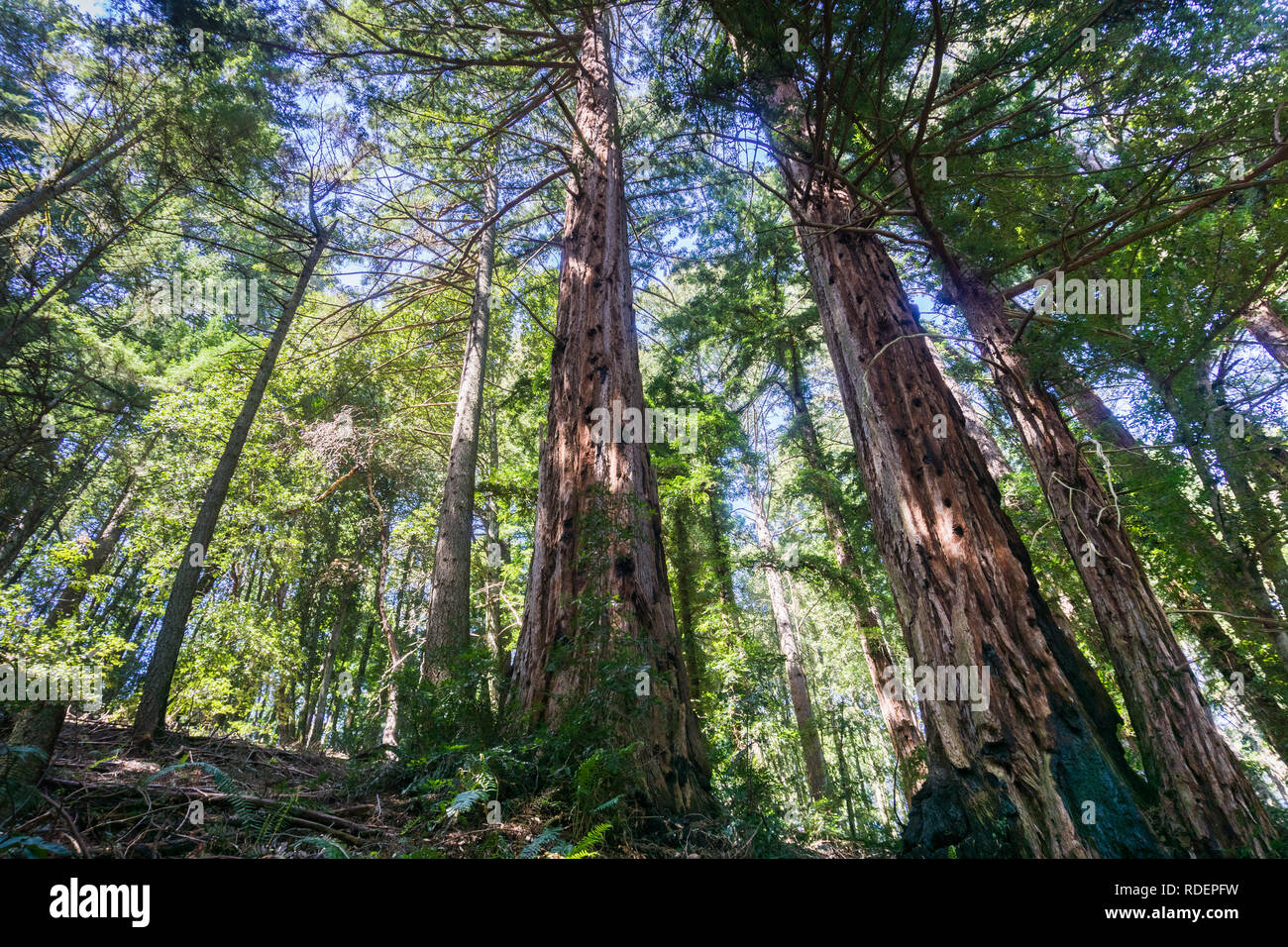
Redwood trees, specifically the Coast Redwood (Sequoia sempervirens), are not native to the peninsula of San Francisco, yet they have been planted extensively throughout the city’s parks, botanical gardens, and residential neighborhoods. While these majestic specimens can reach impressive heights in the city, their ability to "thrive" is nuanced, depending heavily on microclimates, supplemental irrigation, and the specific soil composition of the urban environment.
The Ecological Context: Coast Redwoods in an Urban Setting
To understand the success of redwood trees in San Francisco, one must first look at their natural requirements. Coast Redwoods are native to the fog belt along the Pacific Coast, stretching from southern Oregon to the Santa Lucia Mountains in Central California. They depend on high moisture levels—often provided by coastal fog—and deep, well-drained, slightly acidic soil.
San Francisco presents a complex environment for this species. While the city benefits from a coastal influence that brings cooling fog, it also features significant wind exposure and highly variable topography. In the native range of the Sequoia sempervirens, the trees benefit from a stable ecosystem characterized by old-growth forest floor conditions, which retain moisture and suppress temperature extremes. In a city like San Francisco, a redwood tree is often a "managed" entity rather than a self-sustaining member of a forest community.
In areas such as the Presidio, Golden Gate Park, and Mount Sutro, redwoods have been planted in stands. Because these parks provide larger swaths of managed land, they allow for a micro-ecosystem to develop, where the trees can shade one another and retain ground moisture more effectively than a lone street tree could. In these controlled, high-density scenarios, redwoods are generally considered to be thriving, showing healthy annual growth and resilience against local pests.
Factors Influencing Redwood Health in San Francisco
When determining if these trees are thriving, arborists look at indicators like crown density, leader growth, and the absence of drought stress. Several variables determine whether a tree will survive or flourish in the city.
Soil Composition and Drainage
Redwoods prefer alluvial soils—deep, rich, and well-draining. San Francisco’s geology is diverse, ranging from dune sand to serpentinite and dense clay. In areas with dense clay, root systems can struggle with oxygen deprivation, which limits the tree's ability to take up nutrients. Conversely, in the sandier soils of the western neighborhoods, moisture retention becomes a challenge. Success in these varied environments usually depends on the depth of the topsoil and the tree's proximity to supplemental water sources.
The Fog Factor and Evapotranspiration
The famous San Francisco fog is more than just an aesthetic feature; it is a critical hydrologic input for the Coast Redwood. These trees have a unique ability to perform "fog drip," where their needles capture moisture from the fog, which then drips to the forest floor, providing essential water during the dry summer months. Trees situated in neighborhoods that receive consistent fog coverage demonstrate better foliage color and lower levels of needle drop compared to those in the warmer, inland-facing valleys of the city.
Irrigation and Urban Stressors
A primary reason for the failure of urban-planted redwoods is the lack of deep watering. As of 2026, San Francisco's water conservation mandates remain strict. While mature redwoods are remarkably hardy, young trees require a rigorous schedule of irrigation. Many residential redwoods struggle because they are treated as low-maintenance ornamental shrubs rather than the water-intensive, massive organisms they are. When planted in restricted street-side plots, their roots are often confined by concrete, leading to heat stress and stunted development.
Comparing Managed Stands vs. Isolated Specimens
The performance of redwoods varies significantly depending on their spatial configuration within the city. The following table highlights the difference between redwoods in managed park environments and those in residential or street-side settings.
| Feature | Managed Park Stands | Isolated Residential Specimens |
|---|---|---|
| Microclimate | Moderated by canopy density | Exposed to heat and wind |
| Root Space | Unrestricted; symbiotic fungi present | Often restricted by pavement/utilities |
| Moisture | Higher retention via leaf litter | Reliant on human irrigation |
| Growth Potential | High; resembles forest behavior | Moderate to low; prone to stress |
| Maintenance | Professional oversight | Dependent on homeowner knowledge |
Challenges and Limitations
Despite their impressive stature in places like the Conservatory of Flowers or the groves near the University of California, San Francisco campus, redwoods face significant limitations in a dense urban grid.
- Space Requirements: A mature Coast Redwood is not merely a tall tree; it is a massive structural entity. In residential areas, homeowners often plant redwoods too close to foundations, sewer lines, or utility wires. This leads to inevitable conflict, where the tree must be aggressively pruned—a process that compromises its health and structural integrity.
- The Urban Heat Island Effect: San Francisco experiences localized heat pockets. While the city is generally temperate, the asphalt and concrete of the dense eastern neighborhoods increase the surrounding air temperature. This forces the tree to transpire at a rate higher than it would in the cool, shaded conditions of the Santa Cruz mountains.
- Pests and Pathogens: While Sequoia sempervirens is naturally resistant to many pests due to its high tannin content, urban stress can leave the trees vulnerable to secondary infections. In 2026, urban foresters are monitoring the impact of changing humidity patterns on fungal pathogens that thrive in warmer, less ventilated urban microclimates.
Practical Guidance for Success
If you are considering the health of an existing redwood on your property or evaluating the prospect of planting one, several factors dictate long-term success.
- Deep Watering: For young trees, surface watering is insufficient. Implement a deep-root watering system that allows moisture to reach the lower root ball. During the summer, ensure the soil remains moist to a depth of at least 12 inches.
- Mulching: Utilize a thick layer of organic mulch around the base of the tree (without touching the trunk). This mimics the forest floor, suppresses weed growth, retains moisture, and provides organic nutrients as the mulch breaks down.
- Space Allocation: Never plant a redwood where it will eventually compete for space with buildings or overhead infrastructure. These trees require significant vertical and horizontal clearance. If space is limited, consider smaller, more drought-tolerant conifer species that are better suited for urban lot sizes.
- Monitoring Foliage: Pay attention to the tips of the needles. Browning at the tips is often an early sign of water stress or excessive salt buildup in the soil. If the tree exhibits consistent needle drop during the winter, consult a certified arborist to check for irrigation efficiency.
Frequently Asked Questions
Can I plant a redwood in a small San Francisco backyard? It is generally discouraged. While they are beautiful, redwoods grow to massive proportions and have extensive, aggressive root systems. In a small backyard, they will eventually damage hardscaping, foundations, and underground plumbing.
Why are the redwoods in my neighborhood turning brown? Browning is frequently a sign of drought stress or the "urban heat island" effect. Because redwoods require significant moisture, the lack of consistent, deep watering during the dry season—or restricted root space—will cause the tree to shed foliage to save energy.
Do redwoods need special fertilizer? In well-maintained soil with organic mulch, redwoods usually do not require chemical fertilizer. Over-fertilization can actually stimulate rapid, weak growth that makes the tree more susceptible to wind damage or pest infestations. Focus on improving soil health through organic compost rather than synthetic fertilizers.
Are redwoods protected by law in San Francisco? Yes, San Francisco has strict protections for "Significant Trees" and "Street Trees." If a redwood is designated as a significant tree or is part of the city’s canopy, you may need a permit from the Bureau of Urban Forestry for any maintenance, pruning, or removal.
How long does it take for a redwood to reach maturity? In an urban setting, a redwood is considered "mature" when it reaches heights of 60–100 feet, which can take 50 to 100 years depending on local conditions. They continue to grow throughout their lives, but their growth rate typically slows as they age.
Final Recommendation
Redwood trees can thrive in San Francisco, provided they are treated as the forest giants they are. If you are caring for a redwood, prioritize consistent, deep irrigation and the maintenance of a healthy, mulched root zone. If you are planning to plant, look at the mature size of the tree and ensure your site can accommodate its massive root and crown development. For those with limited space, enjoying the existing groves in the Presidio or Golden Gate Park is a far more sustainable way to appreciate the species than attempting to shoehorn one into a small urban plot.