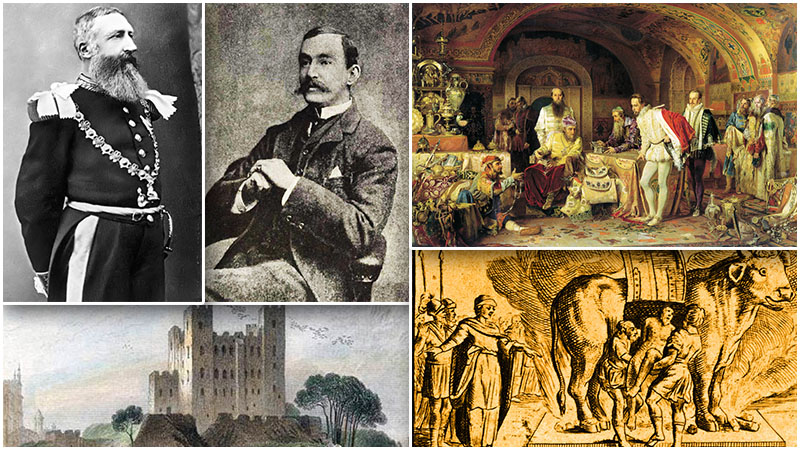
Defining a "real life villain" requires an objective look at historical figures whose actions caused systemic suffering, widespread loss of life, or the calculated destruction of social order. While history is often written by the victors, the individuals listed here are analyzed based on documented records, their administrative roles in humanitarian catastrophes, and the long-term impact of their policies on global populations across different centuries.
Defining Historical Villainy
The classification of a "villain" in a historical context often stems from the deviation between an individual's actions and the established humanitarian standards of their time—or the objective harm inflicted upon vulnerable populations. It is important to distinguish between simple political opponents and those who architected mass violence or totalitarian suppression. When evaluating historical figures, historians prioritize primary documentation: legal decrees, internal correspondences, and victim accounts.
By 2026, our understanding of these figures has evolved through the digitization of archives, allowing for a more nuanced view of how personal ideology and bureaucratic systems converged to produce "villainous" outcomes. This article examines key figures not for the purpose of moral posturing, but to provide an academic overview of how extreme power, when divorced from accountability, impacts human history.
Comparative Framework of Infamous Historical Figures
The following table provides a high-level summary of figures frequently analyzed in historical literature for their significant negative impact. This list is categorized by their primary spheres of influence and the nature of their actions.
| Historical Figure | Primary Era | Sphere of Influence | Documented Impact |
|---|---|---|---|
| Ivan the Terrible | 16th Century | Russian Tsardom | Internal terror campaigns and the Oprichnina |
| Maximilien Robespierre | 18th Century | French Revolution | Architect of the Reign of Terror and mass executions |
| Leopold II of Belgium | 19th Century | Congo Free State | Systemic exploitation and mass death in the Congo |
| Adolf Hitler | 20th Century | Nazi Germany | Orchestration of the Holocaust and World War II |
| Joseph Stalin | 20th Century | Soviet Union | Great Purge, mass deportations, and famine |
| Pol Pot | 20th Century | Khmer Rouge | Cambodian Genocide and forced agrarian labor |
The Mechanics of Authoritarian Control
To understand why these figures achieved such destructive potential, one must examine the mechanisms they used to secure and maintain power. Unlike local criminals or individual offenders, these figures operated at the state level, leveraging institutional resources to enforce their will.
1. Ideological Radicalization
Most historical villains utilized a specific ideological framework to dehumanize their targets. By defining an "out-group"—whether based on ethnicity, social class, or political affiliation—they could justify extreme violence as a necessity for the "greater good" or the preservation of the state. This process often involved the systematic control of media and the suppression of dissenting voices to ensure the population remained compliant.
2. The Bureaucratization of Evil
A common theme in 20th-century history is the transformation of state bureaucracy into a weapon. Historians note that the scale of destruction observed under regimes like that of the Third Reich or the Soviet Union was only possible because individuals within the government apparatus efficiently executed orders. This "banality of evil," a term coined by Hannah Arendt, suggests that the most effective villains are often those who successfully integrate atrocities into the standard daily functions of government.
Case Studies in Historical Impact
Leopold II and the Congo Free State
The actions of King Leopold II of Belgium remain one of the most stark examples of corporate and personal greed masquerading as civilizational progress. Between 1885 and 1908, he managed the Congo Free State as a private possession rather than a colony. Under his administration, the forced labor system established for the collection of rubber resulted in millions of deaths through disease, starvation, and direct execution. The 2026 academic consensus highlights how Leopold used international diplomatic manipulation to obscure these atrocities from the global stage for decades.
Pol Pot and the Khmer Rouge
The Cambodian genocide (1975–1979) represents a distinct form of ideological radicalization. Pol Pot’s attempt to revert Cambodia to a pre-industrial, agrarian society resulted in the deaths of approximately 1.7 to 2 million people. The regime targeted intellectuals, ethnic minorities, and religious figures with the goal of "purifying" the population. The speed at which this destruction occurred—within a mere four-year window—highlights the vulnerability of societies when legal protections and social structures are completely dismantled.
Distinguishing Between Villainy and Political Conflict
A critical component of historical analysis is avoiding the conflation of strategic political maneuvering with the deliberate infliction of suffering. Historical figures engaged in war often make decisions that result in significant casualties; however, a "villainous" categorization is typically reserved for those who intentionally target civilians, dismantle legal rights, or execute campaigns of extermination.
For example, a military leader fighting a defensive war against an aggressor is rarely scrutinized under the same moral lens as a leader who initiates a war of conquest predicated on the annihilation of an ethnic group. Verification of these actions relies on identifying clear, intentional, and verifiable breaches of universal human rights, such as genocide, state-sanctioned slavery, or the mass starvation of one's own populace.
The Role of Historical Documentation in 2026
In the current era, researchers have access to a wider array of evidence than ever before. The digitization of the Nuremberg Trial documents, Soviet-era gulag records, and colonial administrative files has provided clarity on the decision-making processes of these historical figures.
When evaluating these lists, students and researchers should adhere to the following principles:
- Contextualize: Understand the political climate and social pressures of the time, even if those factors do not excuse the outcome.
- Seek Primary Sources: Rely on eyewitness accounts, official government logs, and trial transcripts rather than popularized narratives or dramatizations.
- Avoid Presentism: While moral judgment is often inevitable, accurate history requires understanding the specific legal and social frameworks available to the actors at the time.
Frequently Asked Questions
Who determines who qualifies as a "villain" in history? Historical classification is generally established through the consensus of international historians, legal experts, and human rights organizations. It is not determined by a single entity but through decades of peer-reviewed research, public records, and the analysis of the long-term impact on global human rights.
Why are some figures considered more villainous than others? The distinction is often based on the scale of suffering and the degree of intentionality. Figures who architected systemic extermination or intentional famines are generally viewed with more severity than those who engaged in conventional political or territorial conflict, even if those conflicts were also destructive.
Can a historical figure's legacy change over time? Yes. Historical reputations often fluctuate based on the discovery of new evidence. For example, some leaders once viewed as heroes have been re-evaluated as modern research uncovered evidence of their participation in human rights abuses. Conversely, historical context can sometimes provide a more nuanced view of the pressures acting upon an individual.
Are there universal traits among historical villains? While their contexts vary, many historical villains share a disregard for the rule of law, a reliance on propaganda to maintain power, the use of scapegoats to divert public anger, and an obsessive commitment to an ideological goal that supersedes the value of human life.
How does history treat state-sanctioned violence versus individual crime? History treats state-sanctioned violence as a matter of geopolitical and sociological study, often leading to changes in international law (such as the creation of the International Criminal Court). Individual crime is treated within the context of domestic law; historical "villainy" is almost exclusively associated with those who hold systemic state power.
Conclusion and Next Steps for Research
Studying history’s most infamous figures is a sobering endeavor that provides insight into the fragility of democracy and human rights. To further your understanding, focus on accessing authoritative digital repositories such as the United States Holocaust Memorial Museum, the International Committee of the Red Cross archives, or university-led projects focused on post-colonial studies. By engaging with primary sources, you can move beyond simple lists and develop a deep, evidentiary understanding of how power impacts the course of human history.