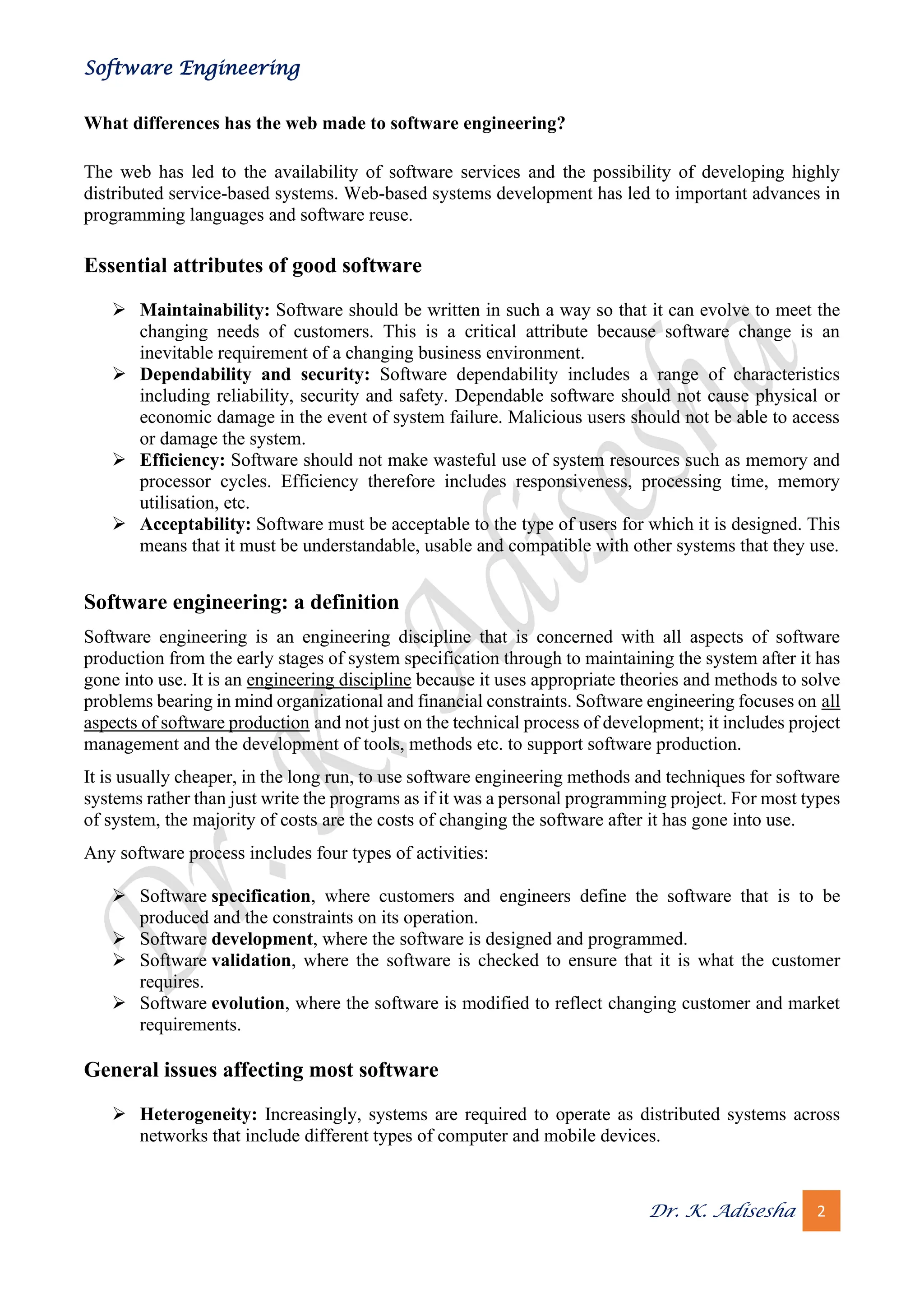
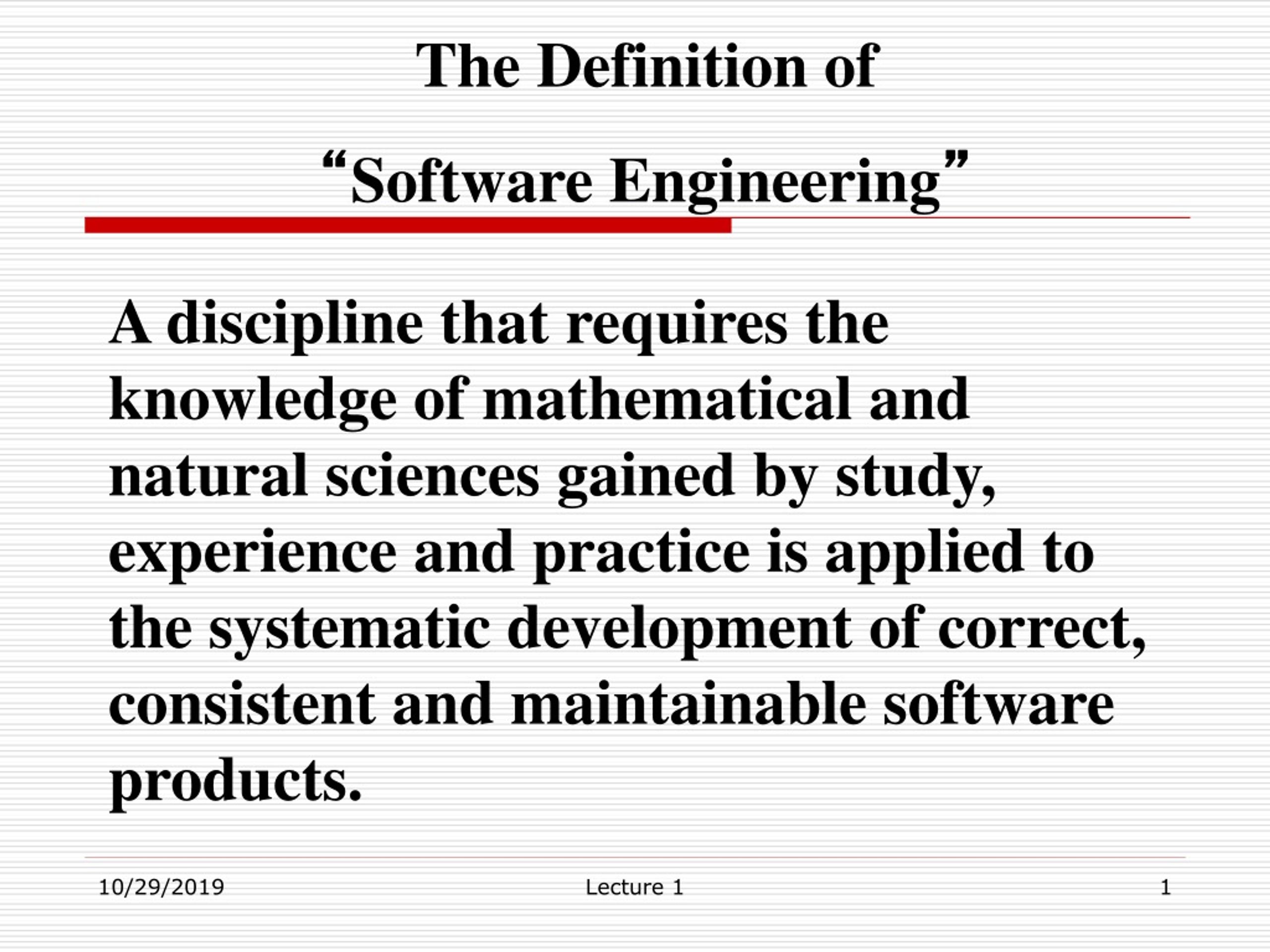
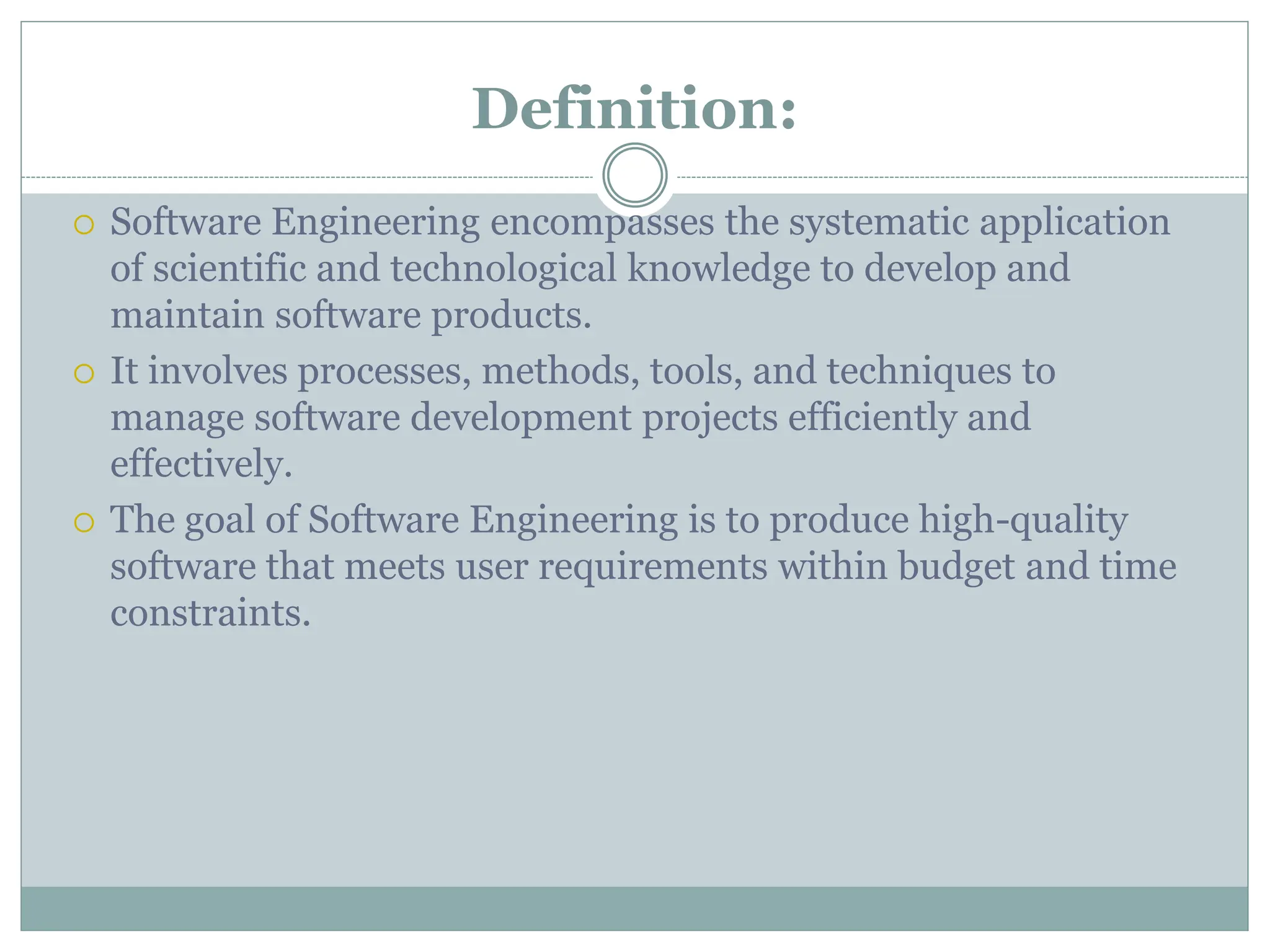
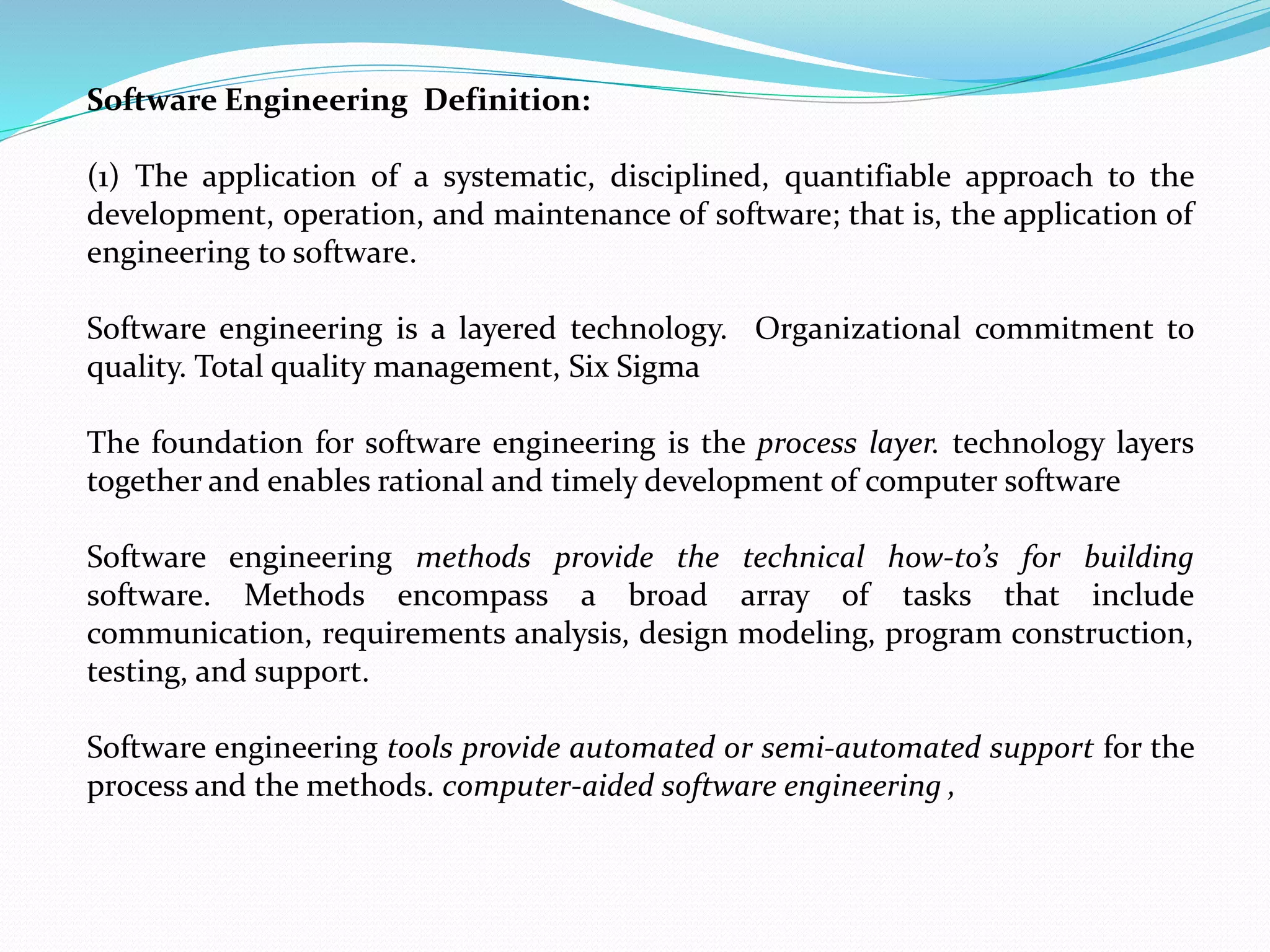
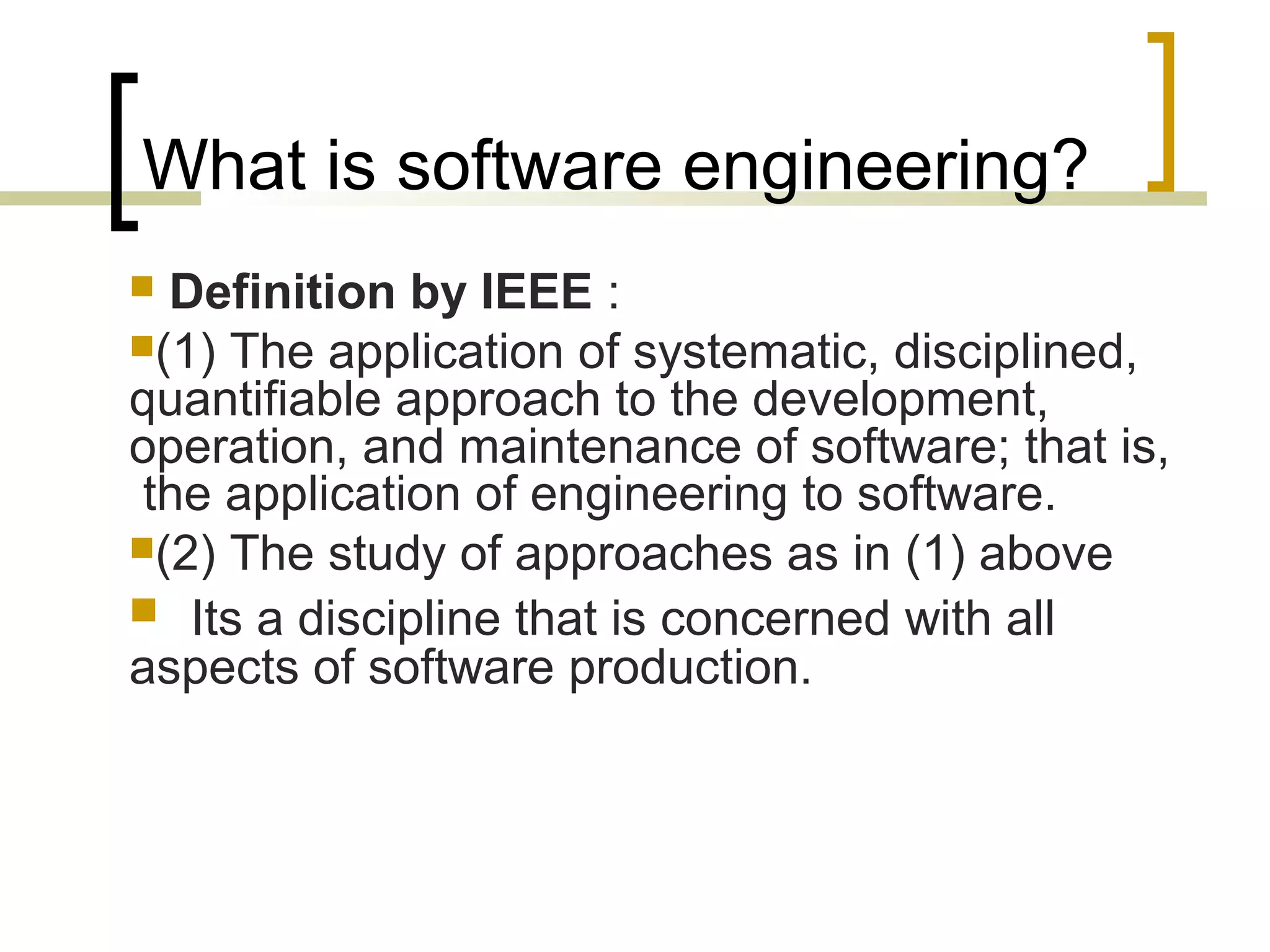
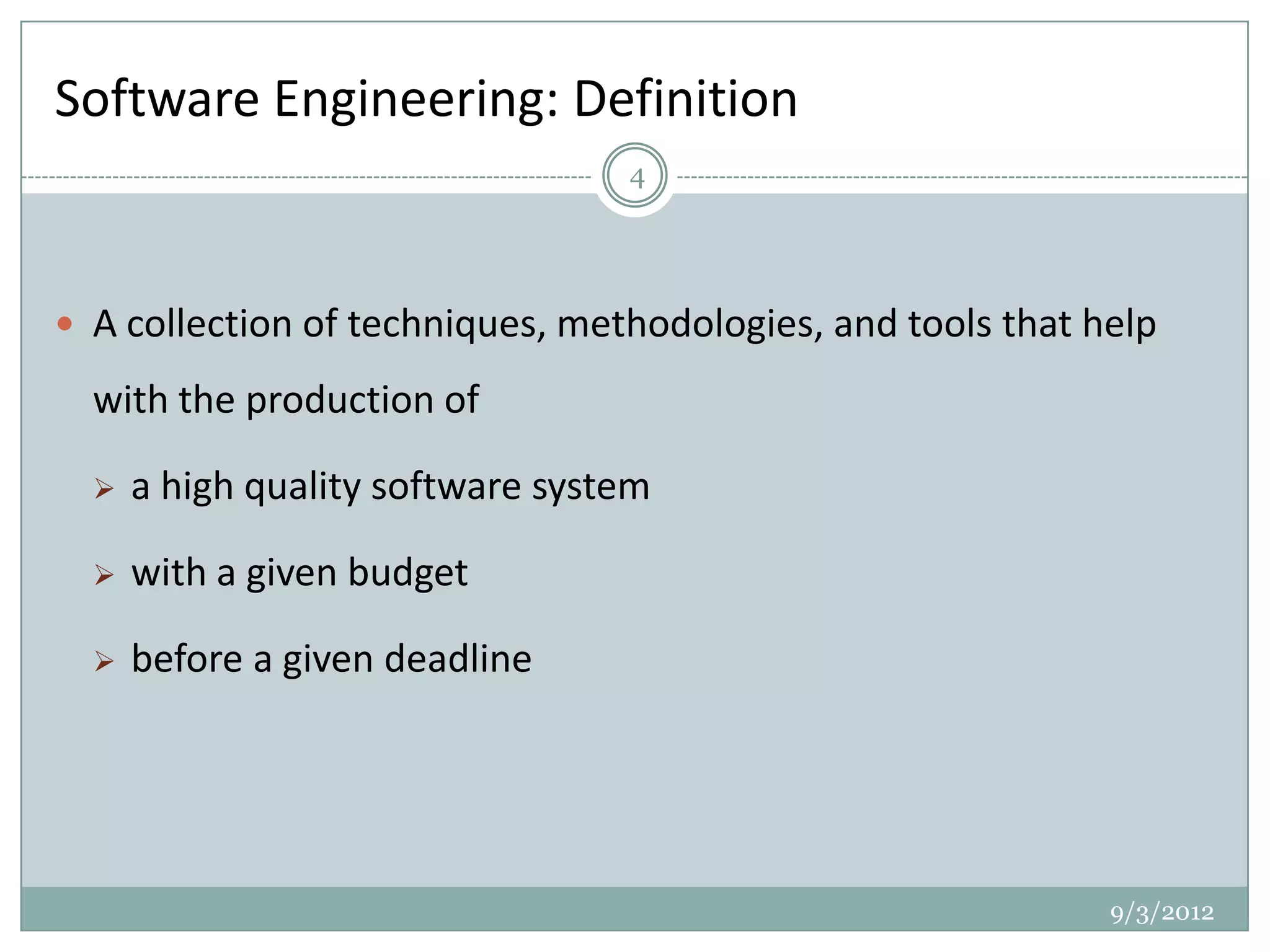
Software engineering is the systematic, disciplined, and quantifiable application of engineering principles to the design, development, operation, and maintenance of software. Unlike casual programming, it focuses on building scalable, reliable, and cost-effective systems through standardized methodologies, rigorous testing, and continuous lifecycle management to meet specific user and organizational requirements.
The Core Concept: Engineering vs. Programming
To understand software engineering, one must first distinguish it from the act of programming. While programming is the primary activity of writing code to perform specific tasks, software engineering encompasses the entire ecosystem surrounding that code. A programmer might focus on solving a specific algorithmic puzzle; a software engineer focuses on how that solution integrates into a massive, multi-user system that must remain functional for a decade or more.
The distinction is often compared to the difference between a handyman and a structural engineer. A handyman can build a sturdy shed using intuition and basic tools. However, building a forty-story skyscraper requires structural engineering—knowledge of material stresses, wind loads, safety regulations, and scalable blueprints. In the digital realm, software engineering provides the "structural" framework that ensures software does not collapse under its own complexity or the weight of increasing user demands.
In 2026, this distinction is more critical than ever. With the proliferation of AI-assisted code generation, the "writing" of code has become partially automated. The role of the software engineer has shifted further toward architectural design, verification, and the management of complex dependencies. Engineering ensures that even if individual components are generated or modified by AI, the system as a whole remains secure, maintainable, and aligned with human objectives.
Formal Definitions from Standard Bodies
Establishing a clear definition requires looking at the organizations that govern the profession's standards. These definitions provide a foundation for education, certification, and legal accountability within the industry.
The IEEE Definition
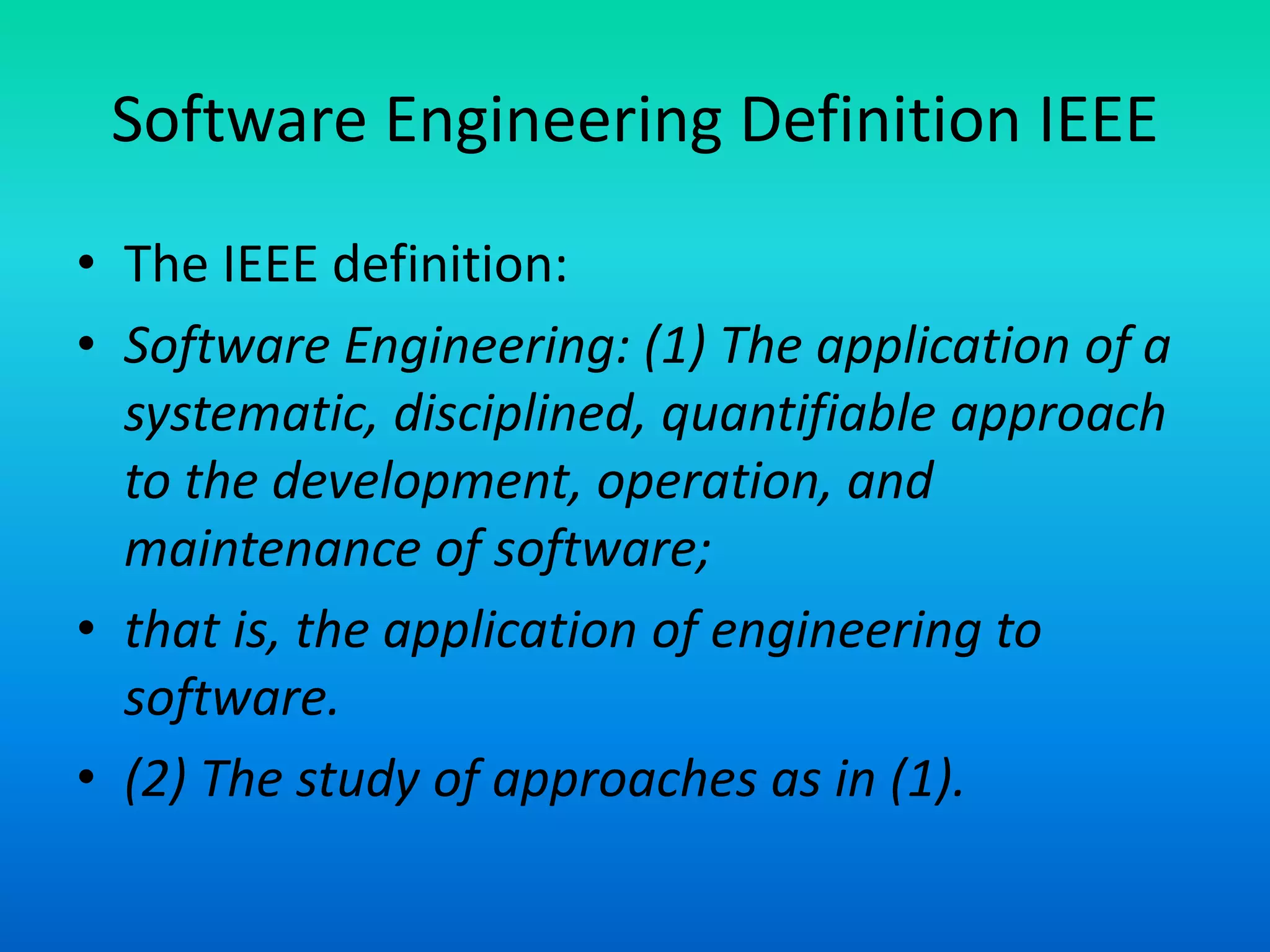
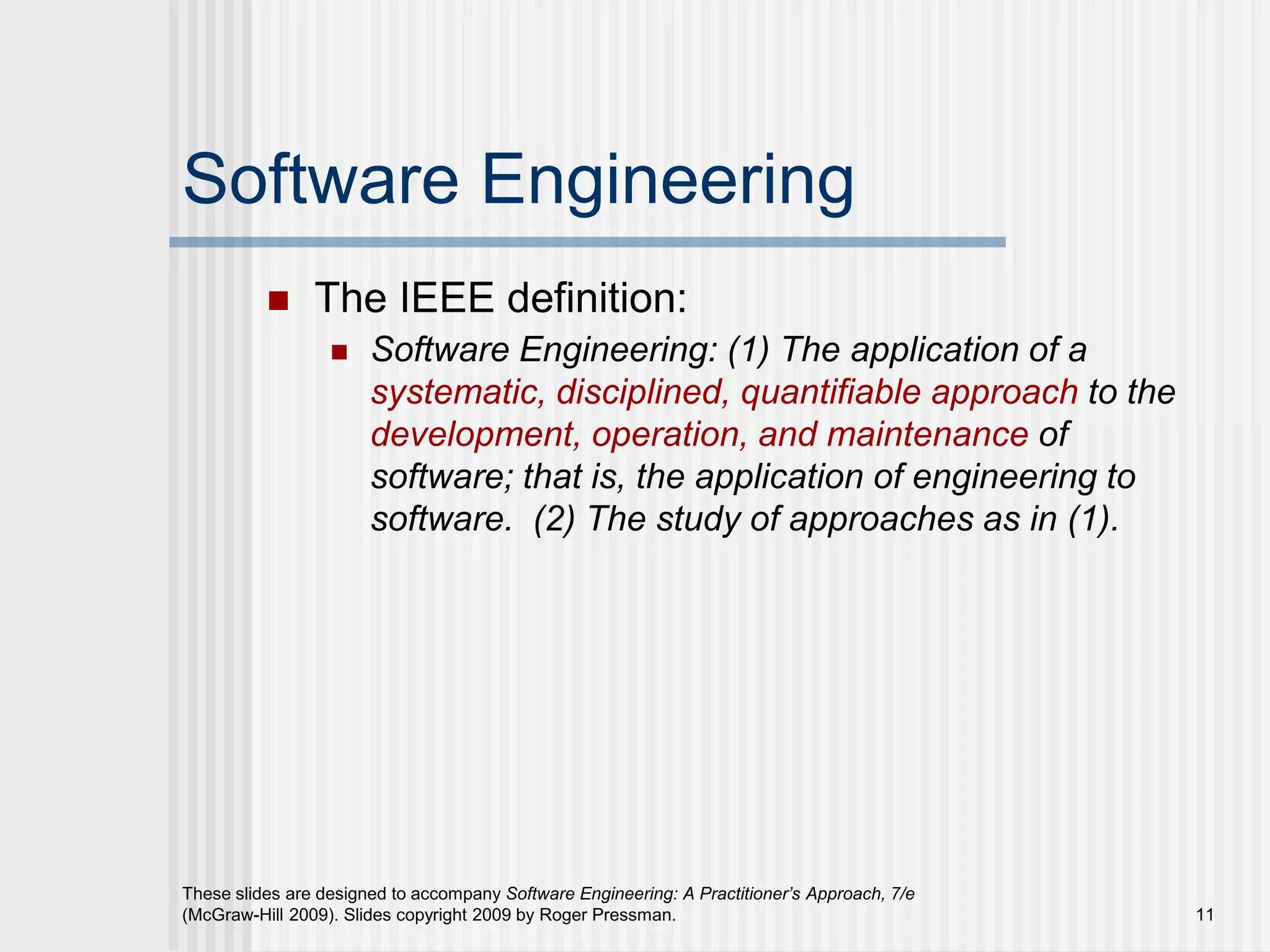
The Institute of Electrical and Electronics Engineers (IEEE), specifically in its Standard Glossary of Software Engineering Terminology, provides the most widely cited definition. It defines software engineering as: "The application of a systematic, disciplined, quantifiable approach to the development, operation, and maintenance of software; that is, the application of engineering to software."
This definition emphasizes three key attributes:
- Systematic: Following a logical, planned sequence of actions rather than an ad-hoc process.
- Disciplined: Adhering to professional standards and codes of conduct.
- Quantifiable: Using metrics and data to measure progress, quality, and performance.
The ISO/IEC 12207 Perspective
The International Organization for Standardization (ISO) and the International Electrotechnical Commission (IEC) offer a more process-oriented view. Their standards focus on the "software life cycle processes." Under ISO/IEC 12207, software engineering is viewed as the set of activities required to manage the life of a software product from conception to retirement. This perspective highlights that engineering does not end when the code is deployed; it continues through years of updates, bug fixes, and eventual decommissioning.
The Foundations of the Software Engineering Body of Knowledge (SWEBOK)
To move beyond a one-sentence definition, we must look at the "Knowledge Areas" that constitute the field. The Guide to the Software Engineering Body of Knowledge (SWEBOK), published by the IEEE Computer Society, categorizes the profession into several critical domains.
- Software Requirements: The process of eliciting, analyzing, specifying, and validating what the software must do. This is often where engineering projects succeed or fail.
- Software Design: The architectural process of defining the internal structure, components, interfaces, and other characteristics of a system.
- Software Construction: The detailed creation of working software through a combination of coding, verification, unit testing, and debugging.
- Software Testing: An empirical investigation conducted to provide stakeholders with information about the quality of the product.
- Software Maintenance: The totality of activities required to provide cost-effective support to software. This includes correcting faults, improving performance, and adapting the software to a changed environment.
By looking at these areas, we see that a clear definition of software engineering must account for the high-level planning and the granular technical execution. It is a multi-disciplinary field that sits at the intersection of computer science, management, and mathematics.
Key Pillars of Software Engineering
Every software engineering project is built upon several non-negotiable pillars. These distinguish a professional engineering effort from a hobbyist project.
Systematic Approach
A systematic approach means that nothing is left to chance. Before a single line of code is written, engineers engage in feasibility studies and requirement gathering. They use models (such as Unified Modeling Language or UML) to visualize how different parts of the system will interact. This planning phase reduces the risk of "scope creep," where a project grows uncontrollably because the initial goals were never clearly defined.
Disciplined Methodology
Whether a team uses Agile, Scrum, Kanban, or the traditional Waterfall model, the "discipline" lies in following the rules of that methodology. This includes regular stand-up meetings, sprint reviews, and rigorous documentation. In 2026, discipline also extends to "Clean Code" practices—writing code that is readable by other humans, not just machines. As software systems grow more complex, the cost of "technical debt" (the future cost of fixing sloppy work done now) becomes a primary concern for engineers.
Quantifiable Metrics
You cannot manage what you cannot measure. Software engineering relies on data to determine the health of a project. Common metrics include:
- Cyclomatic Complexity: A measure of how complex the logic of the code is.
- Code Coverage: The percentage of code that is automatically tested.
- Mean Time to Repair (MTTR): How quickly the team can fix a critical bug.
- Lead Time for Changes: The time it takes for a requested feature to go from a requirement to a live production environment.
The Software Development Life Cycle (SDLC) in 2026
The definition of software engineering is fundamentally tied to the Software Development Life Cycle (SDLC). By 2026, the SDLC has evolved from a linear progression into a continuous loop, often referred to as DevOps or DevSecOps.
- Planning and Analysis: Defining the business value and technical feasibility.
- Design: Creating the system architecture and user experience (UX) flows.
- Implementation (Construction): Developing the code, often using AI-assisted pair programming tools.
- Testing and Integration: Verifying that the code works in isolation and as part of the whole system.
- Deployment: Using automated pipelines to push code to servers or cloud environments.
- Operations and Maintenance: Monitoring performance and security in real-time.
Modern software engineering emphasizes "Shift Left" practices, where testing and security considerations are integrated as early as possible in the life cycle. This prevents the high costs associated with finding a fundamental architectural flaw after the software has already been shipped.
Comparing Software Roles and Disciplines
To further clarify the definition, it is helpful to compare software engineering with related but distinct fields.
| Feature | Computer Science | Software Engineering | Programming |
|---|---|---|---|
| Primary Focus | Theories of computation, algorithms, and data structures. | Application of engineering to build and maintain systems. | Writing code to implement a specific logic or function. |
| Goal | Expanding the boundaries of what is possible with computers. | Delivering reliable, scalable, and economical software. | Creating a working program that solves a problem. |
| Methods | Mathematical proofs, experimentation, and research. | SDLC, methodologies (Agile), and quality standards. | Syntax mastery, debugging, and logic implementation. |
| Typical Outcome | New algorithms, languages, or theoretical frameworks. | A robust, integrated software system or product. | A specific script, tool, or application component. |
| Long-term View | Usually abstract and evergreen. | Focused on the entire lifecycle and maintenance. | Often focused on the immediate task at hand. |
Modern Challenges and Specialized Disciplines
In 2026, a "clear definition" must also account for the specialized branches that have emerged within the field. Software engineering is no longer a monolithic discipline; it has fragmented into several highly technical sub-fields.
Site Reliability Engineering (SRE)
Pioneered by Google, SRE is a discipline that incorporates aspects of software engineering and applies them to infrastructure and operations problems. The main goal is to create ultra-scalable and highly reliable software systems. SREs define the "engineering" of uptime, using Service Level Objectives (SLOs) to determine how much risk a system can tolerate.
AI and Machine Learning Engineering
As AI becomes central to software, a new branch of engineering has formed. This involves more than just writing algorithms; it includes the engineering of data pipelines, model versioning, and "MLOps." An AI engineer ensures that a machine learning model is not just a laboratory experiment but a reliable component of a production system.
Cybersecurity and DevSecOps
With the increasing threat of cyber warfare and data breaches, security is no longer an afterthought. Modern software engineering includes "Security as Code," where security checks are baked into the automated build process. A software engineer in 2026 must understand threat modeling, encryption standards, and secure coding practices as fundamental parts of their job.
Ethical Standards and Professional Responsibility
A final, often overlooked part of the definition of software engineering is ethics. Because software now controls everything from medical devices to financial markets and autonomous vehicles, the engineer carries a significant social burden.
The ACM/IEEE Code of Ethics outlines that software engineers must commit themselves to making the analysis, specification, design, development, testing, and maintenance of software a beneficial and respected profession. This includes:
- Accepting full responsibility for their work.
- Modifying software only after a professional evaluation of the need for the modification.
- Ensuring that the software is used for a purpose that is consistent with the public interest.
This ethical framework is what transforms a "tech worker" into a "professional engineer." It implies a level of accountability that is similar to that of a doctor or a civil engineer.
Frequently Asked Questions
Is software engineering just a fancy word for coding?
No. Coding is the "construction" phase of software engineering. Software engineering includes the planning, requirement analysis, architectural design, testing, deployment, and long-term maintenance of the system. Coding is a tool used by engineers, but it is not the entirety of the profession.
Do you need a degree to be a software engineer?
While many software engineers hold degrees in Computer Science or Software Engineering, it is possible to enter the field through alternative paths. However, the "engineer" title implies a mastery of the systematic and quantifiable approaches mentioned earlier. Regardless of formal education, an engineer must demonstrate proficiency in the SWEBOK knowledge areas.
How has software engineering changed by 2026?
By 2026, the field has become heavily integrated with AI-driven development tools. This has shifted the engineer's focus away from syntax and toward system design, security, and verification. There is also a much stronger emphasis on "Sustainable Software Engineering," which aims to reduce the carbon footprint of massive data centers through efficient code.
What is the "Software Crisis" and how does it relate to the definition?
The term "software engineering" was popularized in the late 1960s during the "Software Crisis." At the time, software projects were consistently over budget, behind schedule, and full of bugs. The field was created to bring the rigor of traditional engineering to software to solve these recurring failures.
What is the difference between a software engineer and a software developer?
In many companies, these titles are used interchangeably. However, technically, a "developer" often focuses on the creative aspect of building features, while an "engineer" focuses on the underlying systems, scalability, and the application of formal engineering principles.
Final Recommendation
For those seeking to implement or study software engineering, the best next step is to move beyond the syntax of a specific programming language and focus on systems thinking. To be a true engineer, one must master the art of requirement gathering and architectural design. Begin by studying the SWEBOK guide and familiarizing yourself with modern CI/CD (Continuous Integration/Continuous Deployment) pipelines. In the landscape of 2026, the most valuable engineers are those who can bridge the gap between complex business requirements and resilient, AI-integrated technical solutions while maintaining a strict adherence to ethical and safety standards.