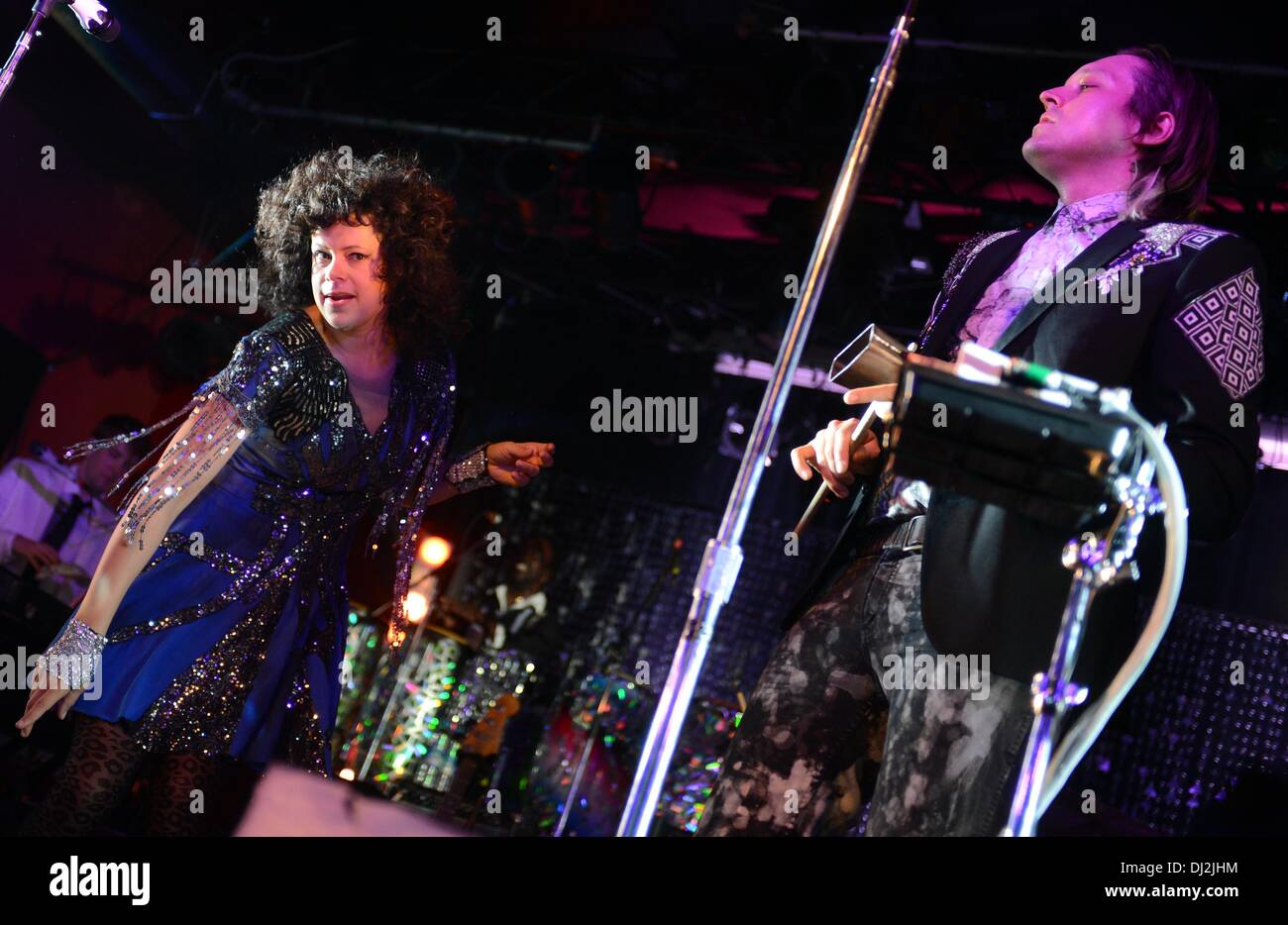
Arcade Fire’s core creative partnership between Win Butler and Régine Chassagne continues to drive the band’s artistic direction in 2026, with the duo actively collaborating on new material that builds upon their decades-long musical history. This collaboration remains the foundational element of the group's songwriting process, integrating Chassagne’s multi-instrumental expertise and distinct vocal contributions with Butler’s lyrical frameworks to shape the next phase of the band’s output.
The Foundations of the Butler-Chassagne Creative Dynamic
Since the formation of Arcade Fire in the early 2000s, the collaborative relationship between Win Butler and Régine Chassagne has been the engine of the band’s identity. Their partnership is defined by a deep-seated creative synthesis that often begins in intimate, acoustic settings before expanding into the orchestral and multi-layered rock arrangements for which the band is known. In 2026, this dynamic continues to serve as the primary laboratory for the band’s songwriting.
Unlike many collaborative songwriting pairs that function through rigid role delegation, Butler and Chassagne have historically utilized a more fluid approach. Chassagne, a trained jazz percussionist with a background in classical piano, provides a rhythmic and melodic complexity that balances Butler’s more traditional rock-oriented structural tendencies. Their current work together emphasizes these strengths, focusing on how electronic textures and organic instrumentation can coexist in contemporary production.
For fans and industry observers, this collaboration represents the continuation of a legacy that began with Funeral (2004) and evolved through the experimental phases of Reflektor (2013) and Everything Now (2017). The persistence of this partnership ensures that despite lineup fluctuations and the evolving landscape of the music industry, the core emotional and sonic "Arcade Fire sound" remains tied to the specific interplay between these two artists.
Current Collaboration Process: How New Music Takes Shape
The process of composing new music in 2026 involves a transition from the heavy reliance on expansive studio environments to more decentralized, iterative workflows. For Butler and Chassagne, this has meant spending significant periods in private studio settings, stripping songs down to their essentials before introducing the wider band.
Key Stages of the Collaborative Workflow
- Conceptual Sketching: Often initiated during downtime between tour cycles, these sketches focus on specific lyrical themes or rhythmic motifs derived from Chassagne’s percussive explorations.
- Harmonic Expansion: Once a core riff or melody is established, the pair experiments with instrumentation. In recent sessions, there has been a notable focus on integrating analog synthesizers with traditional piano arrangements.
- Vocal Arrangement: The interplay of voices remains a signature element. The duo spends considerable time layering harmonies, often utilizing the "call-and-response" or "dovetailing" vocal techniques that characterized early tracks like "No Cars Go."
- Arrangement Finalization: Before bringing in the full ensemble, the pair creates a structural skeleton, defining where the dynamic shifts—often referred to as "the build"—will occur within each composition.
This workflow serves to protect the integrity of the initial vision, ensuring that the personal nature of the songwriting is not diluted by the logistical complexity of managing a large, touring rock band.
Influences on the 2026 Creative Output
The music currently being developed by the duo reflects a fusion of their long-standing influences and the changing auditory environment of the mid-2020s. Chassagne’s influence is particularly evident in the increased integration of global rhythms and dance-oriented percussion, elements that have intermittently surfaced in their discography since the mid-2010s.
Butler, conversely, continues to focus on the narrative arc of the songwriting. The themes under exploration in 2026 appear to revolve around the intersection of digital-era isolation and the necessity for physical community—a recurring tension in their work. By collaborating in a direct, hands-on manner, they are able to infuse these heady concepts with the raw emotional urgency that brought the band international acclaim two decades ago.
Comparing Stylistic Eras
| Era | Primary Focus | Collaborative Dynamic | Production Approach |
|---|---|---|---|
| Early Years (2004–2007) | Raw emotion / Orchestral indie | Heavy reliance on communal live energy | Lo-fi / Organic |
| Mid-Period (2010–2017) | Genre experimentation / Dance | Shift toward external production partnerships | High-fidelity / Polished |
| Current (2026) | Internalized reflection | Return to core duo-led songwriting | Hybrid / Minimalist foundations |
Technical and Artistic Considerations
For listeners and aspiring musicians interested in how these collaborators construct their sound, several technical aspects are worth noting. The duo’s use of vintage analog equipment, combined with modern digital recording software (DAWs), allows them to bridge the gap between retro aesthetic and contemporary production precision.
A primary challenge for any legacy band in 2026 is avoiding self-imitation while maintaining a recognizable sonic signature. Butler and Chassagne solve this by intentionally swapping their primary instruments during the songwriting phase. Chassagne might handle the lead melodic line on a synthesizer, while Butler manages the rhythmic foundation on a guitar or bass. This "cross-training" approach prevents the writing process from becoming rote and forces them to listen to their own music from a new perspective.
Furthermore, the integration of new music into the band’s future performance schedule is a key factor. Unlike bands that write exclusively for streaming platforms, Arcade Fire remains a live-first entity. Consequently, the collaboration between Butler and Chassagne is constantly vetted for "live viability"—testing whether a new song carries the same weight in a stadium setting as it does in the intimacy of a recording studio.
Frequently Asked Questions (FAQ)
1. Is this the first time Butler and Chassagne have collaborated exclusively on new music? No. While they have always collaborated, the duo has, at various points in the band's history, brought in external songwriters or producers earlier in the process. Their 2026 focus represents a more intentional return to the foundational "duo-first" writing model used in the band's earliest days.
2. How does the current collaborative process impact the rest of the band? The rest of the band members typically join the process once the core songs are established. This allows Butler and Chassagne to provide a clear creative direction for the ensemble, ensuring the complex arrangements remain cohesive rather than chaotic.
3. Will the new music follow the style of their previous albums? While the band is known for shifting its sonic palette with every project, the core songwriting sensibilities of Butler and Chassagne remain a constant. Listeners can expect the same focus on emotional resonance and dynamic building that has defined their work since 2004, though the instrumentation is likely to evolve to reflect 2026 standards.
4. Can we expect a release date for the new collaborative material? As of 2026, the band has not provided a specific release date. The collaborative process remains ongoing, and the band has historically prioritized the completion of the creative arc over strict industry deadlines.
5. How do they balance their personal partnership with their professional creative collaboration? Both Butler and Chassagne have frequently cited the fluidity between their personal and professional lives as a necessity for their longevity. By treating the music as a shared language, they navigate the complexities of their working relationship, viewing the creative output as a mutual pursuit rather than an individual endeavor.
Next Steps and Recommendations for Listeners
For those interested in following the trajectory of this collaboration, the most effective approach is to monitor the band’s official communication channels. Arcade Fire has historically utilized a mix of social media previews and direct fan communication to provide updates on their studio status.
If you are a student of their songwriting, pay close attention to the evolution of their live performances. New material is often road-tested during surprise club shows or smaller, intimate venues before it reaches the studio finalization stage. By comparing live bootlegs—should they become available—with the final studio versions, you can observe the collaborative polish applied by the duo.
Ultimately, the partnership between Win Butler and Régine Chassagne remains the cornerstone of Arcade Fire’s longevity. Their ongoing work in 2026 serves as a reminder that even after two decades, the chemistry between a songwriting duo can continue to yield new perspectives on the human condition through song.