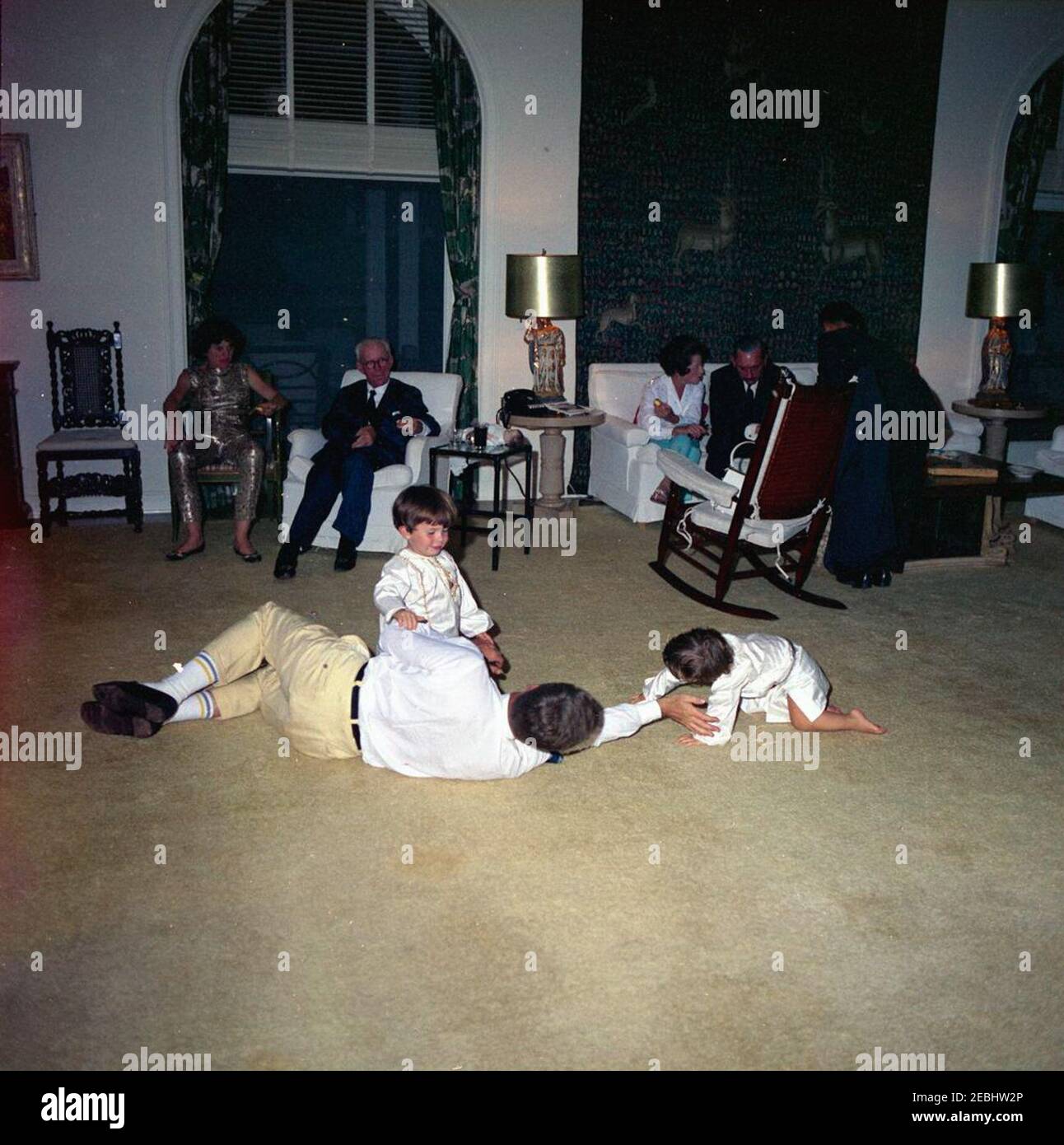
The historical overview of the tributes following the death of John F. Kennedy Jr. in July 1999 centers on the profound bond between him and his cousin, Anthony Radziwill. While Senator Edward M. Kennedy delivered the official public eulogy, Anthony Radziwill’s role as a pallbearer and his lifelong proximity to John serve as the emotional focal point of the era's historical record.
The summer of 1999 remains one of the most tragic periods in American cultural history, marked by a "double tragedy" that claimed the lives of two of the most prominent members of the Kennedy-Radziwill family. For decades, historians and biographers have analyzed the relationship between John F. Kennedy Jr. and his cousin Anthony Radziwill, particularly the events surrounding John’s memorial service and Anthony’s subsequent death just three weeks later. This historical overview examines the context of the eulogies, the private tributes exchanged, and the enduring legacy of their friendship as viewed from the perspective of 2026.
The Historical Context of July 1999
To understand the eulogy and the tributes paid to John F. Kennedy Jr., one must first revisit the atmosphere of July 1999. John, the son of President John F. Kennedy, was not merely a celebrity; he was a symbol of American potential and a "prince" of the Kennedy political dynasty. On July 16, 1999, the Piper Saratoga aircraft piloted by John disappeared over the Atlantic Ocean. Onboard were his wife, Carolyn Bessette-Kennedy, and her sister, Lauren Bessette.
The subsequent search and recovery operation, led by the U.S. Navy and Coast Guard, gripped the international media. The discovery of the wreckage and the recovery of the bodies on July 21 led to a private burial at sea. However, the memorial service held on July 23, 1999, at the Church of St. Thomas More in Manhattan, provided the setting for the historical tributes that defined the family's grief.
The Radziwill-Kennedy Connection
Anthony Radziwill was the son of Princess Lee Radziwill (the sister of Jacqueline Kennedy Onassis) and Prince Stanisław Albrecht Radziwiłł. Though born into European and American royalty, Anthony established a distinguished career as an Emmy Award-winning producer for ABC News. His relationship with John F. Kennedy Jr. was described by family members as more akin to a brotherhood than a cousinship.
By the summer of 1999, Anthony was in the final stages of a five-year battle with fibrosarcoma, a rare and aggressive form of cancer. Throughout his illness, John had been his primary support system, often accompanying him to chemotherapy treatments and providing emotional stability. The historical irony of the "healthy" protector dying before the "terminally ill" friend is a central theme in the historical narratives of this period.
The Eulogy Delivered by Senator Edward M. Kennedy
While search queries often associate Anthony Radziwill with the "eulogy for John Kennedy," the primary historical address was delivered by Senator Edward (Ted) Kennedy. This speech is regarded as one of the most poignant moments in 20th-century American oratory.
In his address, the Senator famously stated, "We dared to think... that this John Kennedy would live to comb gray hair, with his beloved Carolyn by his side. But like his father, he had every gift but length of years." The eulogy did not just mourn a nephew; it sought to humanize a figure who had been a national icon since he was a toddler saluting his father’s casket in 1963.
Anthony Radziwill’s contribution to this moment was not spoken from a podium but expressed through his physical presence. Despite being severely weakened by cancer and having undergone multiple surgeries, Anthony served as a pallbearer. Historians note that his insistence on performing this duty was a "silent eulogy" of immense power, symbolizing the loyalty that defined their relationship.
The Inverse Tragedy: The Eulogy John Never Gave
A significant aspect of the "Anthony Radziwill eulogy" history is the speech that was never delivered. Because Anthony was terminally ill throughout 1998 and early 1999, it was widely understood within the family that John F. Kennedy Jr. would likely deliver the eulogy at Anthony’s funeral.
John had been preparing himself for this inevitability. He had spent years protecting Anthony’s privacy and managing the family’s emotional response to the illness. The historical tragedy lies in the fact that John died only weeks before Anthony. Consequently, instead of John speaking for Anthony, the world witnessed the Kennedy family gathering twice in less than a month—first for John, then for Anthony on August 10, 1999.
Comparative Timeline of Events (Summer 1999)
| Date | Event | Location | Historical Significance |
|---|---|---|---|
| July 16, 1999 | JFK Jr.'s Plane Disappears | Off Martha's Vineyard | End of the "Camelot" second generation's prime. |
| July 21, 1999 | Bodies Recovered | Atlantic Ocean | Conclusion of a massive federal search effort. |
| July 22, 1999 | Burial at Sea | USS Briscoe | Private ceremony adhering to John's love of the ocean. |
| July 23, 1999 | Memorial Mass | St. Thomas More, NYC | Ted Kennedy's eulogy; Anthony Radziwill serves as pallbearer. |
| Aug 10, 1999 | Anthony Radziwill Dies | New York City | The "double tragedy" concludes; death from cancer at age 40. |
| Aug 16, 1999 | Anthony's Funeral | East Hampton, NY | Attended by surviving members of the Kennedy/Radziwill families. |
The Legacy of Carole Radziwill’s Documentation
Much of what is known today about the private "eulogies" and conversations between Anthony and John comes from the memoirs of Carole Radziwill, Anthony’s widow. Her 2005 book, What Remains: A Memoir of Fate, Friendship, and Love, provides the primary historical source for the internal dynamics of the family during the 1999 crisis.
Carole’s accounts highlight that the "eulogy" for these men was a continuous dialogue of support. She documents how Anthony, even in his final days, was devastated by the loss of the man who was his "best man" in both his wedding and his life. The historical overview of this topic is incomplete without acknowledging how these personal records shifted the public's understanding from the "Kennedy Myth" to a more grounded story of human struggle and friendship.
Analysis of the Tributes' Cultural Impact
The eulogies and memorial services of 1999 marked a transition in how the American public viewed the Kennedy family. For the first time, the narrative was not about political assassination or public service, but about the relatable, albeit high-stakes, grief of a family losing its youth.
- The Humanization of Icons: The tributes emphasized John’s sense of humor and his desire to be a "regular guy" despite his fame. Anthony’s struggle with cancer added a layer of vulnerability to the family’s image.
- The Closing of a Chapter: Historically, the deaths of John and Anthony are seen as the final closing of the "Jackie Kennedy" era. As the children of the two Bouvier sisters, their deaths ended a specific lineage of style, grace, and media fascination.
- The Role of Media: The 1999 events were among the first "24-hour news cycle" tragedies that utilized early internet resources to disseminate information, though the memorial service itself remained private to the press, setting a precedent for "private-public" mourning.
Professional Perspective on Historical Accuracy
When researching the "Anthony Radziwill eulogy," it is vital to distinguish between the various Kennedy-related tributes. Because the name "John Kennedy" is shared by the President and his son, archival searches often conflate different eras.
- JFK Sr. (1963): Eulogies by Mike Mansfield, Earl Warren, and John McCormack.
- JFK Jr. (1999): Eulogy by Edward M. Kennedy; Anthony Radziwill as a key mourner and pallbearer.
- Anthony Radziwill (1999): Tributes given by his wife, Carole, and other close friends in August 1999.
The "historical overview" of Anthony’s tribute to John is therefore one of action rather than just words. It is the story of a dying man summoning the strength to carry his best friend’s casket, an act that has become a permanent fixture in the visual history of the Kennedy family.
Frequently Asked Questions
Did Anthony Radziwill speak at John F. Kennedy Jr.'s funeral?
No, Anthony Radziwill did not deliver a public speech at the memorial mass on July 23, 1999. Due to his advanced stage of cancer, his participation was limited to serving as a pallbearer. The primary eulogy was delivered by Senator Edward M. Kennedy. Anthony’s tribute was considered a "silent" one, demonstrated by his physical presence despite his illness.
What was the cause of Anthony Radziwill's death?
Anthony Radziwill died on August 10, 1999, at the age of 40, following a five-year battle with fibrosarcoma. This rare cancer affects the connective tissue. His illness was a private struggle that John F. Kennedy Jr. helped him manage, often keeping the extent of the disease away from the tabloid press.
How were Anthony Radziwill and JFK Jr. related?
They were first cousins. Anthony’s mother, Lee Radziwill, was the younger sister of Jacqueline Kennedy Onassis, John’s mother. The two grew up closely together, and their bond was frequently described as a brotherhood. They both worked in the media—John as the founder of George magazine and Anthony as a producer for NBC.
What was the significance of Ted Kennedy's eulogy for JFK Jr.?
Ted Kennedy’s eulogy is historically significant because it served as the definitive public farewell to the "Prince" of the Kennedy family. It addressed the "Camelot" myth directly while emphasizing the personal losses suffered by the family. The speech is often cited in studies of American rhetoric for its emotional depth and its use of the "every gift but length of years" motif.
Is there a transcript of Anthony Radziwill's tribute to John?
There is no transcript of a formal speech given by Anthony at the funeral. However, private sentiments and letters from that period are recounted in Carole Radziwill's memoir, What Remains. These accounts provide the historical basis for understanding the private "eulogy" of their friendship.
Summary of Historical Significance
The historical overview of the Anthony Radziwill and John F. Kennedy Jr. eulogies reveals a narrative of intense loyalty and tragic timing. By 2026, the story of these two men has moved from the realm of tabloid fodder into a recognized chapter of American historical biography. The eulogy delivered by Ted Kennedy remains the formal record, but the "silent tribute" of Anthony Radziwill—a man dying of cancer who insisted on carrying his cousin’s casket—remains the most enduring image of that somber summer.
For those researching this topic, it is recommended to consult official archives such as the John F. Kennedy Presidential Library and Museum or reputable journalistic records from July 1999 for full transcripts of the formal proceedings. Understanding the distinction between the public eulogy and the private bond is essential for a complete historical perspective.