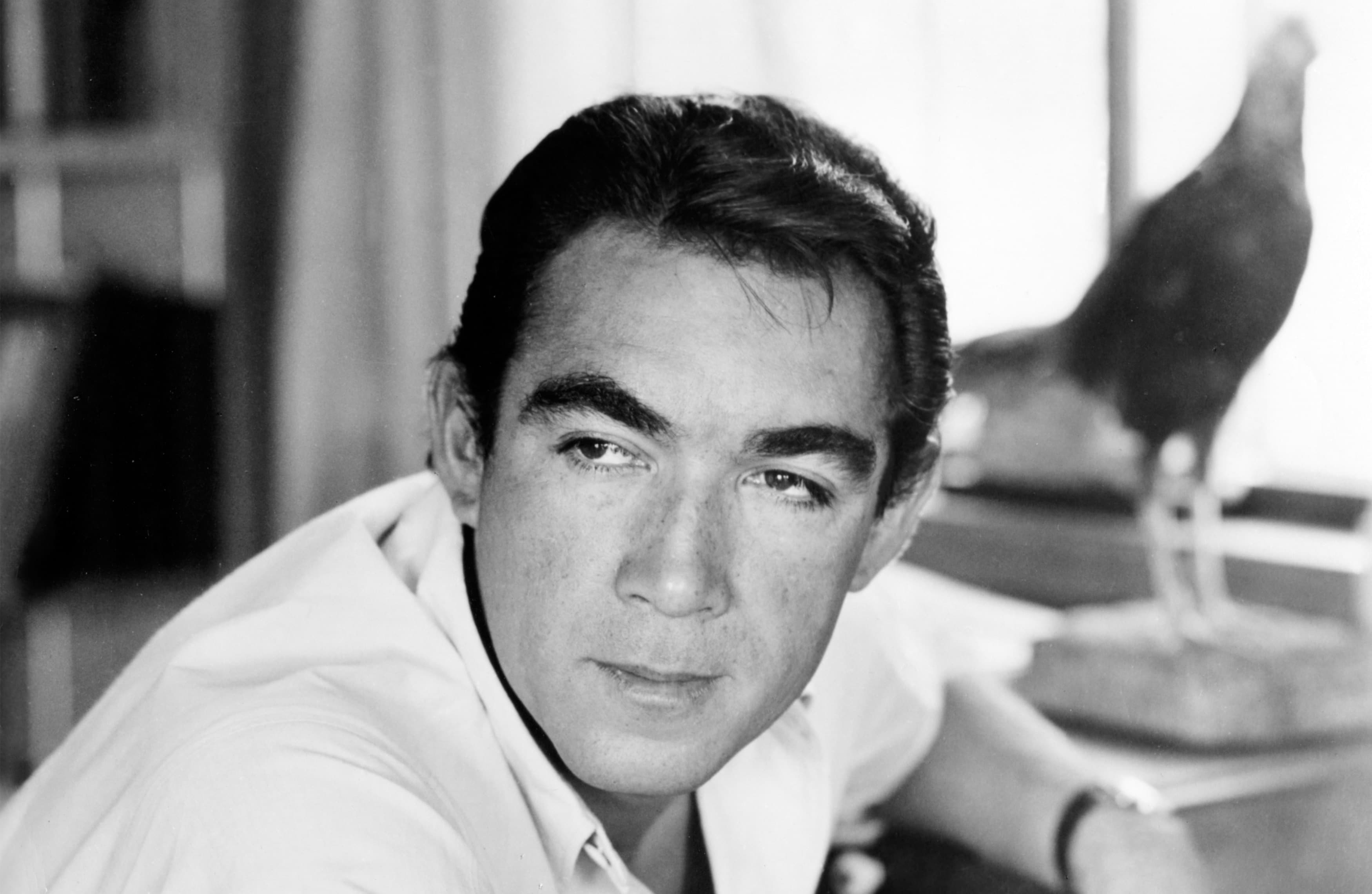
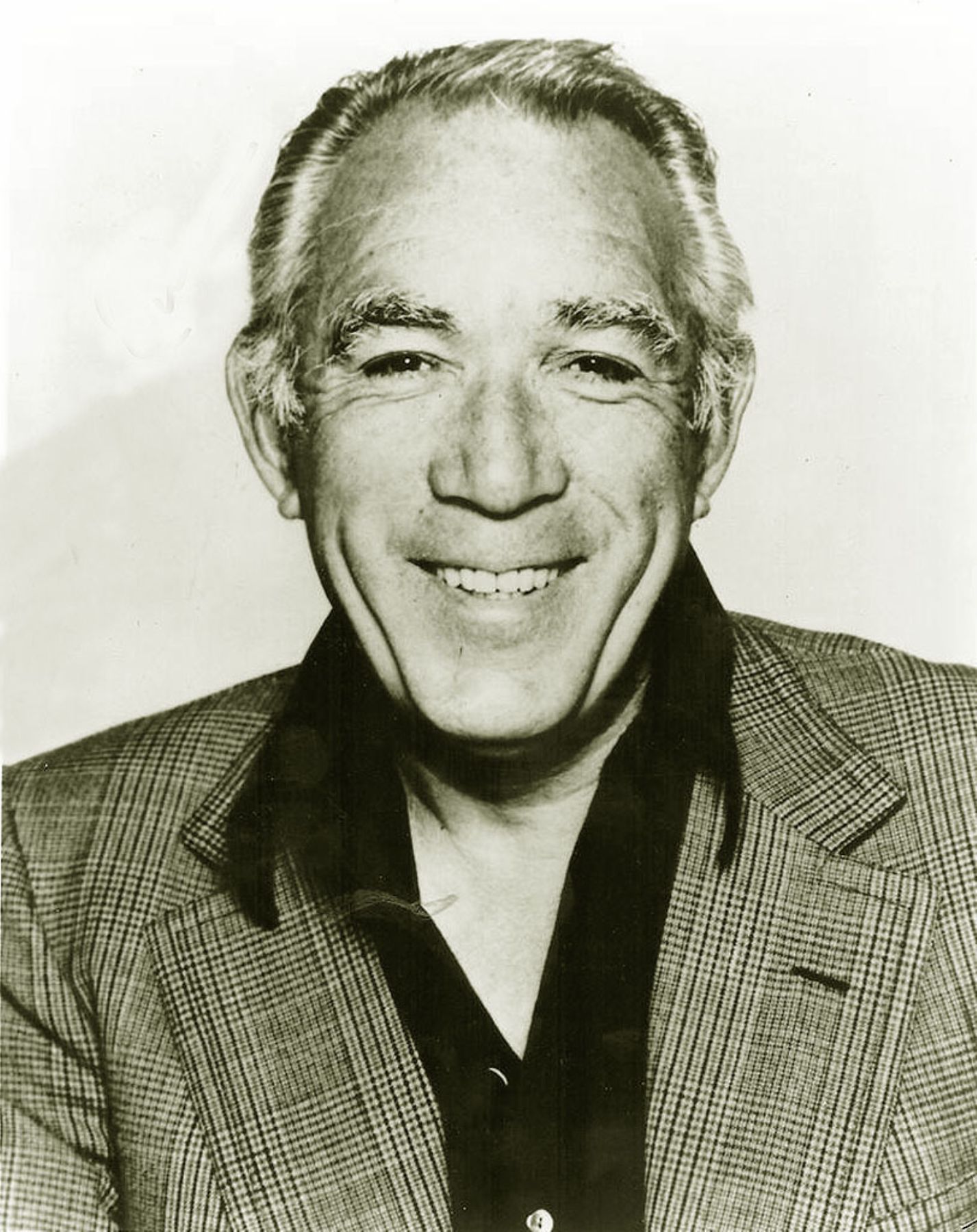
Anthony Quinn was a titan of mid-20th-century cinema, a two-time Academy Award winner whose career spanned seven decades and over 150 films. Born in Mexico and raised in the United States, he became the ultimate "world citizen" of Hollywood, portraying a vast array of ethnicities and larger-than-life characters with a raw, visceral energy that remains influential in 2026.
The Formative Years: A Cross-Cultural Foundation
To understand the magnetic screen presence of Anthony Quinn, one must first look at the tumultuous environment of his birth. Born Manuel Antonio Rodolfo Quinn Oaxaca on April 21, 1915, in Chihuahua, Mexico, Quinn was a child of the Mexican Revolution. His mother, Manuela "Nellie" Oaxaca, was of Aztec descent, while his father, Francisco Quinn, was of half-Irish and half-Mexican heritage. This dual identity would become the cornerstone of his career, allowing him to bypass the rigid racial typing of early Hollywood by embodying a universal "otherness."
The family moved to the United States when Anthony was an infant, eventually settling in East Los Angeles. His childhood was defined by poverty and the relentless drive to survive. After his father’s untimely death in an automobile accident when Anthony was just a teenager, he became the primary provider for his mother and sister. The young Quinn took on a variety of grueling jobs: he was a professional boxer, a migrant farmworker, a newsboy, and even a preacher in the Pentecostal church.
These early experiences instilled in him a physical toughness and an emotional depth that many of his peers lacked. He didn't just study acting; he lived the struggle that many of his later characters would represent. His entry into the world of performance was somewhat accidental. While studying architecture under the legendary Frank Lloyd Wright, Quinn underwent surgery to correct a speech impediment. Wright suggested that Anthony take acting lessons to improve his elocution and projection. It was Wright who famously told him that he wasn't an architect but a born actor—a pivot that changed the course of film history.
Breaking into Hollywood: The Shadow of Cecil B. DeMille
Quinn’s professional debut occurred in the mid-1930s. His first significant role was in the 1936 film The Plainsman, directed by Cecil B. DeMille. However, his physical features—rugged, dark-complexioned, and imposing—initially limited him to stereotypical roles. For years, he was cast as the "ethnic" villain, the Native American chief, or the generic "henchman."
During this period, Quinn married Katherine DeMille, the adopted daughter of Cecil B. DeMille. While this connection theoretically placed him in the inner circle of Hollywood royalty, it was often a source of frustration. Quinn felt he had to work twice as hard to prove he wasn't merely a beneficiary of nepotism. Furthermore, the elder DeMille was a demanding and often dismissive figure who did little to advance Quinn’s career beyond bit parts in his epics.
Frustrated by the lack of substantial roles in California, Quinn moved to New York in the late 1940s to hone his craft on the stage. This was a pivotal decision. He replaced Marlon Brando in the Broadway production of A Streetcar Named Desire, playing Stanley Kowalski. His performance was a revelation, proving that he could handle complex, psychologically demanding roles with the same intensity as the new generation of Method actors.
The Golden Era: Two Oscars and International Stardom
The 1950s marked Quinn’s ascent to the top tier of international actors. His return to Hollywood was heralded by a performance that would win him his first Academy Award for Best Supporting Actor: Eufemio Zapata in Viva Zapata! (1952). Acting alongside Marlon Brando, Quinn brought a gritty, earth-bound reality to the role of the revolutionary's brother. He became the first Mexican-American to win an Oscar, a landmark achievement in an era of deep systemic prejudice.
Just four years later, Quinn secured a second Academy Award for Best Supporting Actor for his brief but electrifying portrayal of the painter Paul Gauguin in Lust for Life (1956). Although he was on screen for less than ten minutes, his presence was so dominant that he overshadowed the film's lead, Kirk Douglas. This win solidified his reputation as a "scene-stealer" and a master of the character-driven performance.
The Fellini Collaboration and "La Strada"
While Quinn was a Hollywood star, he achieved true artistic immortality through his work in European cinema. In 1954, he starred in Federico Fellini's La Strada. Playing the brutish strongman Zampanò, Quinn delivered a performance of tragic depth. Zampanò is a man who cannot articulate his feelings, and Quinn’s ability to convey a soul trapped behind a mask of animalistic violence remains one of the great feats of screen acting.
La Strada was instrumental in the "Art House" movement, introducing American audiences to the possibilities of neo-realist cinema. For Quinn, it was a turning point. He realized he didn't need the validation of the Hollywood studio system if he could find roles in Europe that challenged his intellect and his range.
Zorba the Greek: The Definitive Role
If one role defines the biography of Anthony Quinn, it is Alexis Zorba in the 1964 film Zorba the Greek. Based on the novel by Nikos Kazantzakis, the character of Zorba was the perfect vessel for Quinn’s "larger-than-life" persona. Zorba is a man who embraces life in all its messy, tragic, and joyful glory.
The film's climax, featuring the famous "Sirtaki" dance on the beach, became a global cultural phenomenon. Interestingly, the dance was largely improvised and simplified because Quinn had broken his foot just days before the scene was shot. He couldn't perform the traditional Cretan leaps, so he developed a sliding, rhythmic step that the director, Michael Cacoyannis, captured in long takes. This accidental choreography became the most famous dance in cinematic history and cemented Quinn as a symbol of unbridled vitality.
| Year | Film Title | Role | Awards/Significance |
|---|---|---|---|
| 1952 | Viva Zapata! | Eufemio Zapata | Academy Award (Best Supporting Actor) |
| 1954 | La Strada | Zampanò | Landmark of Italian Neo-realism |
| 1956 | Lust for Life | Paul Gauguin | Academy Award (Best Supporting Actor) |
| 1957 | Wild Is the Wind | Gino | Academy Award Nomination (Best Actor) |
| 1962 | Lawrence of Arabia | Auda Abu Tayi | Iconic Supporting Role in an Epic |
| 1964 | Zorba the Greek | Alexis Zorba | Academy Award Nomination (Best Actor) |
| 1968 | The Shoes of the Fisherman | Pope Kiril I | Golden Globe Nomination |
Beyond Acting: The Artist and the Man
Quinn was not merely an actor; he was a polymath who pursued art with the same fervor he brought to the screen. In his later years, he became an accomplished painter and sculptor. His work, which often leaned toward the abstract and the primitive, was exhibited in galleries worldwide. He viewed art as a form of therapy and a way to explore his complex heritage. As of 2026, his sculptures remain highly sought after by collectors, often fetching significant sums at auction.
His personal life was as expansive and tumultuous as his career. Quinn was married three times and fathered twelve children. His first marriage to Katherine DeMille ended in 1965 after nearly 30 years. He then married Iolanda Addolori, an Italian costume designer, with whom he had three sons. His final marriage was to Kathy Benvin, his former secretary. Quinn’s personal life was frequently the subject of tabloid scrutiny, but he remained unapologetic about his passions and his large, complicated family.
The Cultural Impact of the "Universal Actor"
Quinn’s most significant contribution to cinema was his dismantling of ethnic barriers. In an era when most actors were pigeonholed by their appearance, Quinn played:
- Greeks: Zorba the Greek, The Guns of Navarone
- Italians: La Strada, The Secret of Santa Vittoria
- Arabs: Lawrence of Arabia, Lion of the Desert
- Russians: The Shoes of the Fisherman
- Native Americans: Buffalo Bill, They Died with Their Boots On
- Mexicans: Viva Zapata!
By portraying these diverse nationalities with dignity and psychological complexity, he paved the way for the multicultural casting that is standard in 2026. He refused to be a "minority actor"; he was simply an actor who happened to possess the versatility to represent the human condition in all its global variations.
Late Career and Final Works
In his final decades, Quinn continued to work prolifically. While some of his later films were criticized as being beneath his talent, he never phoned in a performance. He appeared in television projects, such as the Hercules legendary journeys films, and took on roles in independent cinema.
His final film role was in Avenging Angelo (2002), released shortly after his death. Anthony Quinn passed away on June 3, 2001, in Boston, Massachusetts, due to respiratory failure and complications from throat cancer. He was 86 years old.
Frequently Asked Questions
How many Academy Awards did Anthony Quinn win?
Anthony Quinn won two Academy Awards, both in the Best Supporting Actor category. The first was for Viva Zapata! (1952) and the second was for Lust for Life (1956). He received two other nominations for Best Actor in a Leading Role for Wild Is the Wind (1957) and Zorba the Greek (1964), though he did not win those specific categories.
Was Anthony Quinn actually Greek?
No, Anthony Quinn was of Mexican and Irish descent. However, his portrayal of Alexis Zorba in Zorba the Greek and his role in The Guns of Navarone were so convincing that many people worldwide mistakenly believe he was of Greek origin. He was even granted honorary Greek citizenship later in his life due to his contributions to Greek culture through film.
What was Anthony Quinn's relationship with Frank Lloyd Wright?
Quinn originally intended to be an architect and worked as a draftsman for Frank Lloyd Wright. To pay for the apprenticeship, Quinn worked odd jobs. Wright was the one who noticed Quinn's potential as a performer and encouraged him to seek speech therapy and acting classes, eventually leading him to abandon architecture for Hollywood.
How many children did Anthony Quinn have?
Anthony Quinn had twelve children. His children were from his three marriages as well as several long-term relationships. Many of his children, including Francesco, Danny, and Lorenzo Quinn, followed him into various fields of the arts, such as acting and sculpture.
What is the "Quinn Estate" in the context of his art?
The Quinn Estate manages the extensive collection of paintings and sculptures left behind by the actor. Since his death in 2001, his artwork has been archived and exhibited globally. In 2026, the estate remains the primary authority for authenticating his pieces, which are noted for their bold use of color and exploration of themes like family and identity.
Final Recommendation for Fans and Historians
For those looking to truly appreciate the breadth of Anthony Quinn’s talent, a chronological viewing of his major works is highly recommended. Start with La Strada to witness his silent-film-inspired physicality, followed by Viva Zapata! for his explosive intensity, and conclude with Zorba the Greek to see the culmination of his life-affirming philosophy. His two autobiographies, The Original Sin and One Man Tango, provide deep, albeit subjective, insights into the man behind the myths. As of 2026, many of his films have been painstakingly restored and are available on high-definition streaming platforms, preserving his legacy for a new generation of cinema enthusiasts.