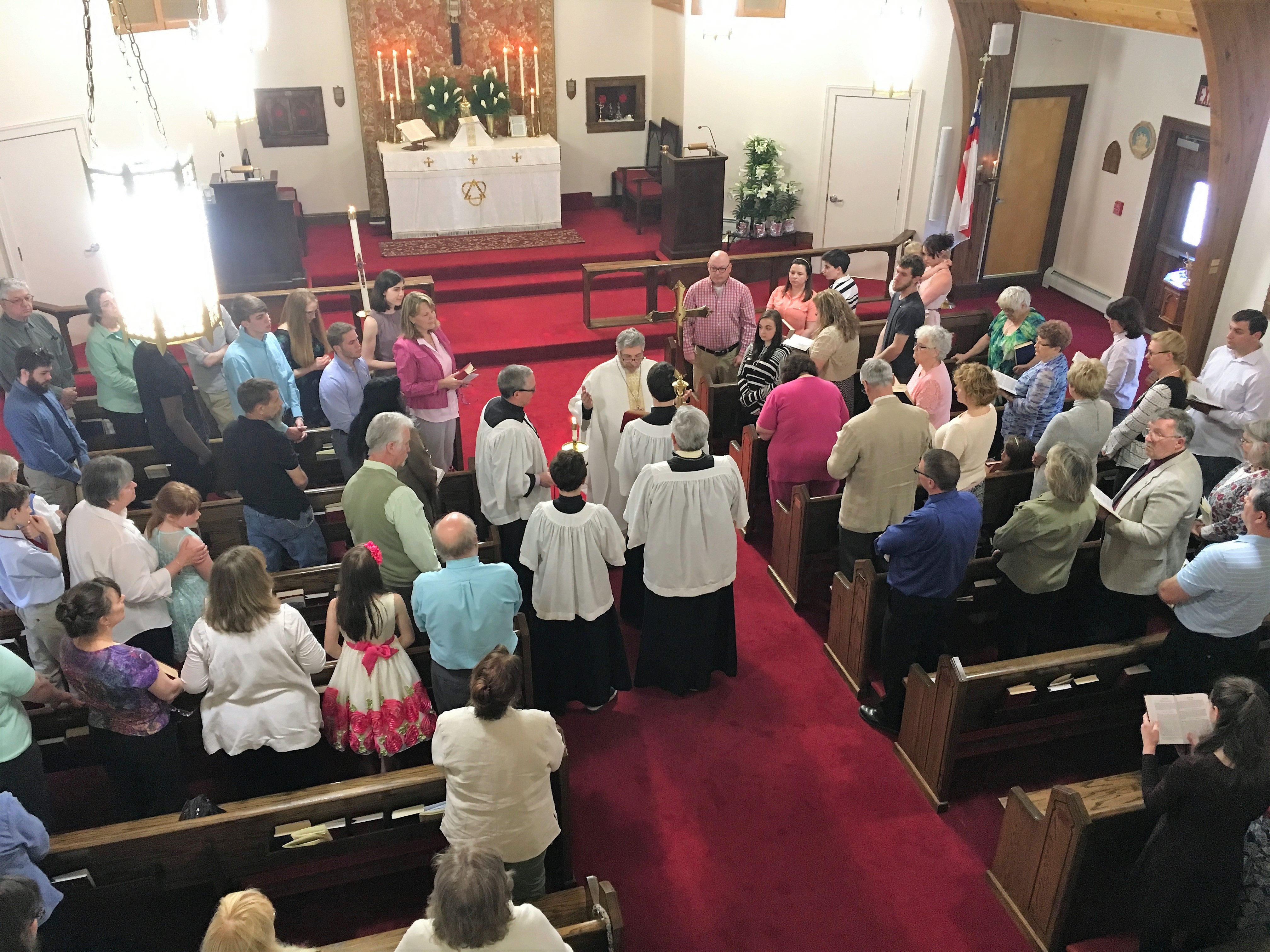
Anglicanism in America represents the historical evolution, theological expression, and contemporary presence of the Anglican Christian tradition within the United States. Tracing its roots to the Church of England’s colonial parishes, American Anglicanism today comprises distinct ecclesiastical bodies—most notably The Episcopal Church and the Anglican Church in North America—offering liturgical, sacramental worship rooted in historical episcopacy and common prayer.
Historical Origins: Colonial Beginnings to the American Revolution
The presence of Anglicanism in North America dates to the earliest English settlements in the early seventeenth century. The first permanent Church of England parish was established at Jamestown, Virginia, in 1607. Throughout the colonial period, Anglicanism served as the established state church in several southern colonies, including Virginia, Maryland, and the Carolinas, while maintaining a smaller, often contentious presence in New England and the Middle Colonies.
During the colonial era, Anglican churches in America operated under a unique structural handicap: there were no resident bishops on the continent. All colonial clergy fell under the ecclesiastical jurisdiction of the Bishop of London. Candidates for holy orders had to undertake the long, dangerous transatlantic voyage to England to receive ordination. Local parish governance was consequently dominated by lay vestries, creating a tradition of strong lay leadership that remains a hallmark of American Anglican governance today.
The American Revolutionary War (1775–1783) posed an existential crisis for the Church of England in the colonies. Anglican clergy were required by their ordination vows to pray for the British monarch in public liturgy—a stance that drew hostility from American revolutionaries. Many loyalist clergy fled to Canada or Great Britain, parishes were abandoned, and official state financial support for the church was dismantled following independence.
- Colonial Era (1607–1775)
- American Revolution (1775–1783)
- Consecration of Seabury (1784)
- Organization of PECUSA (1789)
To survive in the newly formed republic, American Anglicans had to reorganize as a self-governing church independent of the Crown and the British Parliament while maintaining historic apostolic succession.
The Consecration of Samuel Seabury and National Organization
The first step toward an independent American episcopate occurred when clergy in Connecticut selected Samuel Seabury to seek consecration as a bishop. Because English law required bishops to take an oath of allegiance to the British Crown—an oath Seabury could no longer take as an American citizen—English bishops were initially unable to consecrate him.
Seabury traveled to Scotland, where he was consecrated in Aberdeen on November 14, 1784, by three bishops of the non-juring Scottish Episcopal Church. In exchange, Seabury agreed to introduce elements of the Scottish Eucharistic liturgy—which emphasized an explicit invocation of the Holy Spirit (epiclesis)—into the American prayer book.
In 1789, representatives from across the states gathered in Philadelphia to form the Protestant Episcopal Church in the United States of America (PECUSA), now commonly known as The Episcopal Church. The convention adopted a federal constitution establishing a bicameral General Convention (consisting of a House of Bishops and a House of Deputies comprising clergy and laity) and ratified the 1789 American Book of Common Prayer.
The 19th and 20th Centuries: Expansion, Movement, and Tension
During the nineteenth century, American Anglicanism expanded westward alongside the growing nation, founding schools, colleges, and seminaries such as the General Theological Seminary in New York and Nashotah House in Wisconsin. Two major theological movements shaped the internal character of the church during this era:
- The Evangelical Movement: Emphasized personal conversion, the primacy of Biblical authority, low-church liturgical practices, and active cooperation with other Protestant denominations.
- The Oxford Movement (Tractarianism): Originating in England in the 1830s, this movement emphasized the Catholic identity of Anglicanism, the doctrine of apostolic succession, high-church ceremonial practices (such as the use of vestments, incense, and altar candles), and the centrality of the Eucharist.
These streams coexisted, often in tension, shaping a tradition that identified as both Catholic and Reformed—a via media (middle way) between Roman Catholicism and Protestantism.
The Late 20th Century and the Roots of Division
The mid-to-late twentieth century brought profound liturgical, theological, and social changes to American Anglicanism:
- Liturgical Revision: The adoption of the 1979 Book of Common Prayer introduced contemporary English options, restored the Eucharist as the primary Sunday service, and restructured baptismal theology. While widely praised for its liturgical scholarship, it alienated some traditionalists attached to the 1928 Book of Common Prayer.
- Ordination of Women: In 1976, the General Convention of The Episcopal Church voted to authorize the ordination of women to the priesthood and the episcopate (following the irregular ordination of eleven women, known as the "Philadelphia Eleven," in 1974).
- Social and Moral Theology: Growing debates emerged regarding biblical interpretation, human sexuality, and marriage standards within the church.
These developments led to the "Continuing Anglican Movement," sparked by the 1977 Congress of St. Louis, where dissenting traditionalists gathered to draft the Affirmation of St. Louis and establish independent Anglican jurisdictions separate from The Episcopal Church.
Realignment in the 21st Century: Modern Jurisdictions
The early twenty-first century saw a major structural realignment of Anglicanism in North America. Tensions within The Episcopal Church reached a turning point in 2003 following the election and consecration of V. Gene Robinson, an openly gay man in a same-sex relationship, as Bishop of the Episcopal Diocese of New Hampshire.
This event caused severe strain within the global Anglican Communion, a fellowship of over 85 million Christians across more than 40 autonomous regional or national churches (provinces) in historic communion with the See of Canterbury.
- Original American Anglican Tradition
- The Episcopal Church (TEC) — Recognized by Canterbury / Anglican Communion
- Continuing Anglican Churches — Formed post-1977 (e.g., ACC, APCK)
- Anglican Church in North America (ACNA) — Formed 2009 / Partnered with GAFCON
The Episcopal Church (TEC)
The Episcopal Church remains the historical, mainline province in North America officially recognized by the Archbishop of Canterbury and the Anglican Consultative Council. It operates dioceses across the United States, Latin America, Europe, and the Pacific.
- Theological Profile: Broadly progressive to moderate, emphasizing social justice, full inclusion of LGBTQ+ individuals in ordained ministry and sacramental marriage, and broad theological pluralism.
- Governance: Synodal governance led by the Presiding Bishop and the General Convention.
- Liturgical Standard: The 1979 Book of Common Prayer, alongside authorized trial liturgies.
The Anglican Church in North America (ACNA)
Formed in 2009 under the leadership of former Episcopal bishops and clergy, the Anglican Church in North America brought together several conservative groups, including former Episcopal dioceses (such as Fort Worth, Quincy, Pittsburgh, and South Carolina), evangelical Anglican networks, and the Reformed Episcopal Church.
- Theological Profile: Classical Anglican orthodoxy, traditional views on Christian marriage (defining marriage strictly as between one man and one woman), and an emphasis on biblical authority and evangelism.
- Communion Alignment: While not officially recognized by the Archbishop of Canterbury as a formal province of the Anglican Communion, ACNA is recognized as a full Anglican province by the Global Anglican Future Conference (GAFCON) and the Global South Fellowship of Anglican Churches (GSFA), which represent a significant majority of active Anglicans globally.
- Liturgical Standard: The 2019 Book of Common Prayer.
Continuing Anglican Jurisdictions
Separate from both TEC and ACNA are several smaller bodies formed during the 1970s and 1980s, such as the Anglican Catholic Church (ACC), the Anglican Province of Christ the King (APCK), and the United Episcopal Church of North America (UECNA). These churches adhere strictly to the 1928 Book of Common Prayer, reject the ordination of women, and maintain Anglo-Catholic or traditional High Church liturgical practices.
Comparing Major American Anglican Jurisdictions
The landscape of Anglicanism in the United States comprises multiple ecclesiastical structures. The table below outlines the primary distinctions between the dominant bodies operating today.
| Jurisdiction / Group | Formation Year | Anglican Communion Status | Primary Prayer Book | Theological & Social Stance | Ordination of Women |
|---|---|---|---|---|---|
| The Episcopal Church (TEC) | 1789 | Full member province recognized by Canterbury | 1979 Book of Common Prayer | Progressive / Mainline Protestant; affirms same-sex marriage | Yes (Deacons, Priests, Bishops) |
| Anglican Church in North America (ACNA) | 2009 | Recognized by GAFCON / GSFA; not officially by Canterbury | 2019 Book of Common Prayer | Confessional / Traditionalist; classical view of marriage | Varies by diocese (Deacons/Priests); no female Bishops |
| Reformed Episcopal Church (REC) | 1873 (Now sub-diocese of ACNA) | Recognized via ACNA alignment | 2003 / 2019 BCP editions | Classical Evangelical / Low Church Anglicanism | Male ordination only |
| Continuing Anglican Movement (ACC, APCK, UECNA) | 1977+ | Independent; self-governing traditional bodies | 1928 Book of Common Prayer | Traditional Anglo-Catholic / High Church traditionalism | Male ordination only |
Distinctive Theology, Liturgy, and Governance
Despite structural divisions, Anglicanism in America retains a unique theological identity built upon historic foundational documents and principles.
The Chicago-Lambeth Quadrilateral
Formulated in Chicago in 1886 by the House of Bishops of the Episcopal Church and adopted with minor modifications by the global Lambeth Conference in 1888, the Quadrilateral outlines four essential principles for Christian unity and Anglican identity:
The Holy Scriptures of the Old and New Testaments as "containing all things necessary to salvation," serving as the ultimate rule and standard of faith.
The Apostles' Creed as the Baptismal Symbol and the Nicene Creed as the sufficient statement of the Christian faith.
The Two Sacraments ordained by Christ Himself—Baptism and the Supper of the Lord—ministered with unfailing use of Christ's words of Institution, and of the elements ordained by Him.
The Historic Episcopate, locally adapted in the methods of its administration to the varying needs of the nations and peoples called of God into the Unity of His Church.
Holy Scripture (Ultimate Rule of Faith)
Nicene & Apostles' Creeds (Statements of Faith)
Two Dominical Sacraments (Baptism & Eucharist)
Historic Episcopate (Adapted locally)
The Book of Common Prayer (BCP)
Anglican spirituality is defined by lex orandi, lex credendi—the principle that the law of prayer establishes the law of belief. Rather than relying on a central confession of faith (like the Westminster Confession in Presbyterianism or the Augsburg Confession in Lutheranism), Anglicans express their unified belief through common liturgy.
The Book of Common Prayer contains the orders for Daily Morning and Evening Prayer, the Holy Eucharist, pastoral rites (such as confirmation, marriage, and funerals), and the ordinal for consecrating bishops and ordaining priests and deacons.
While the 1979 BCP remains the standard for The Episcopal Church, the 2019 BCP published by ACNA returned to more classical liturgical structures while modernizing language for contemporary congregations.
The "Three-Legged Stool" and the Via Media
Traditional Anglican theology describes its authority structure using the metaphor of a three-legged stool, popularized by the 16th-century theologian Richard Hooker:
- Scripture: The primary authority containing truth necessary for salvation.
- Tradition: The historical witness, creeds, ecumenical councils, and practices of the early Church.
- Reason: The human capacity, guided by the Holy Spirit, to read, interpret, and apply Scripture and Tradition in context.
This balanced framework allows American Anglican parishes to vary widely in worship style—ranging from "Low Church" contemporary or evangelical services focused on preaching, to "High Church" or "Anglo-Catholic" services characterized by elaborate ceremony, chanting, and incense.
Navigating an American Anglican Church: Practical Guide for Visitors
For individuals exploring Anglicanism in the United States, understanding parish dynamics and liturgical etiquette can help ease the first visit.
- Arrival & Usher Greeting
- Liturgy of the Word (Readings & Sermon)
- Liturgy of the Sacrament (Eucharist)
- Dismissal & Fellowship
Worship Structure
Most Sunday services follow the historic two-part Eucharistic pattern:
- Liturgy of the Word: Includes opening acclamations, the Collect of the Day, readings from the Old Testament, Psalms, Epistles, and Gospels, followed by the sermon, the recitation of the Nicene Creed, corporate prayers of the people, and a formal confession and absolution.
- Liturgy of the Sacrament: Begins with the Peace, followed by the offertory, the Great Thanksgiving (Eucharistic Prayer), the Lord's Prayer, the breaking of the bread, and the distribution of Communion.
Sacramental Participation
- Baptism: Recognized across all major Anglican bodies as the initiation into the Body of Christ. Trinitarian baptisms (water in the name of the Father, Son, and Holy Spirit) performed in other Christian denominations are fully accepted; individuals are not re-baptized upon joining an Anglican parish.
- Holy Communion: The Episcopal Church generally practices open communion, inviting all baptized Christians of any denomination to receive the Eucharist. Practices within ACNA and Continuing Anglican parishes vary; while most invite baptized Christians who are in good standing with their home churches and confess the Real Presence of Christ in the sacrament, some traditional Anglo-Catholic parishes practice closed communion.
Key Questions About Anglicanism in America
What is the main difference between an Episcopalian and an Anglican in America?
Historically, "Episcopalian" was simply the American term for an Anglican, as The Episcopal Church was the sole representative of the Anglican tradition in the U.S. for centuries. Today, while all Episcopalians are Anglicans by heritage, the term "Anglican" in North America often specifically designates members of non-TEC bodies like the Anglican Church in North America (ACNA) or Continuing Anglican churches that separated from The Episcopal Church over theological controversies.
Is The Episcopal Church part of the Roman Catholic Church?
No. The Episcopal Church is an independent Protestant and Catholic-heritage denomination separate from the Roman Catholic Church. It does not recognize the papal authority of the Pope in Rome. However, it preserves Catholic traditions, including the historic creeds, sacraments, and episcopal governance by bishops.
Which Prayer Book do American Anglicans use?
It depends on the jurisdiction. The Episcopal Church primarily uses the 1979 Book of Common Prayer. The Anglican Church in North America (ACNA) uses its authorized 2019 Book of Common Prayer. Continuing Anglican churches typically utilize the traditional 1928 American Book of Common Prayer.
How are Anglican churches governed in the United States?
American Anglican governance is synodical and episcopal. Individual parishes are led by a priest (often called the Rector) and a lay council elected by the congregation called the Vestry, headed by Senior and Junior Wardens. Parishes belong to a local geographical area called a Diocese, overseen by a Bishop. Regional or national decision-making occurs through legislative synods or conventions containing both clerical and lay delegates.
Finding a Local Parish and Next Steps
For those seeking to participate in or learn more about Anglican worship in the United States, several practical steps can assist in finding the appropriate church environment:
- Identify Jurisdiction Preferences: Determine whether your theological and social alignment aligns more closely with a progressive mainline tradition (The Episcopal Church), a confessional traditionalist tradition (ACNA), or a classical high-church tradition (Continuing Anglicans).
- Locate Congregations: Use official diocesan or jurisdictional locator tools, such as the Episcopal Church Parish Finder or the ACNA Parish Locator, to identify nearby churches.
- Review Parish Liturgical Styles: Examine parish websites or live stream services in advance. Look for indicators such as "Anglo-Catholic" (high liturgy, vestments, incense), "Evangelical/Low Church" (contemporary music, informal ceremony), or "Broad Church" (traditional hymnal music, balanced prayer book liturgy).
- Engage in Catechesis: Most Anglican parishes offer an "Inquirers' Class" or "Confirmation Class" (often utilizing texts like to be a Christian: An Anglican Catechism in ACNA or Equipping the Saints materials in TEC). These classes offer deep instruction in church history, prayer book theology, and Christian practice prior to formal reception or confirmation by a bishop.