The American Nurses Association (ANA) is a professional organization representing the interests of the United States' more than 5 million registered nurses. Founded in 1896, it serves as the primary voice for the profession, establishing nursing standards, providing continuing education, advocating for federal healthcare policy, and maintaining the Code of Ethics for Nurses that guides clinical practice nationwide.
Foundations and Historical Significance
Understanding the American Nurses Association requires looking at its inception in the late 19th century. Originally established as the Nurses Associated Alumnae of the United States and Canada, the organization was born out of a necessity to standardize nursing education and professional practice. At the time, nursing lacked a unified regulatory framework, leaving patient care inconsistent and the professional status of nurses precarious.
Over the last 130 years, the ANA has evolved from a small collective into a complex federation. It operates through a unique structure consisting of Constituent Nurses Associations (CNAs) in every state and territory. This structure allows the national body to maintain a pulse on local healthcare issues while exerting significant influence in Washington, D.C. The organization’s longevity is rooted in its ability to adapt to the changing landscape of medical technology, pandemic responses, and the shifting scope of practice for Advanced Practice Registered Nurses (APRNs).
Core Mission and Professional Standards
The ANA defines itself as the champion of the nursing profession. Its mission is multi-faceted, focusing on the promotion of high standards of nursing practice, the advancement of the economic and general welfare of nurses in the workplace, and the projection of a positive and realistic view of nursing.
Central to this mission is the establishment of the Nursing: Scope and Standards of Practice. This document is arguably the most critical technical contribution the ANA makes to the field. It defines the "who, what, where, when, why, and how" of nursing practice. For the practicing nurse, these standards serve as the benchmark against which their professional performance is evaluated. When legal questions arise regarding a nurse's actions, courts and state boards of nursing often look to these standards to determine if the nurse acted within the scope of their training and professional responsibility.
The Code of Ethics for Nurses
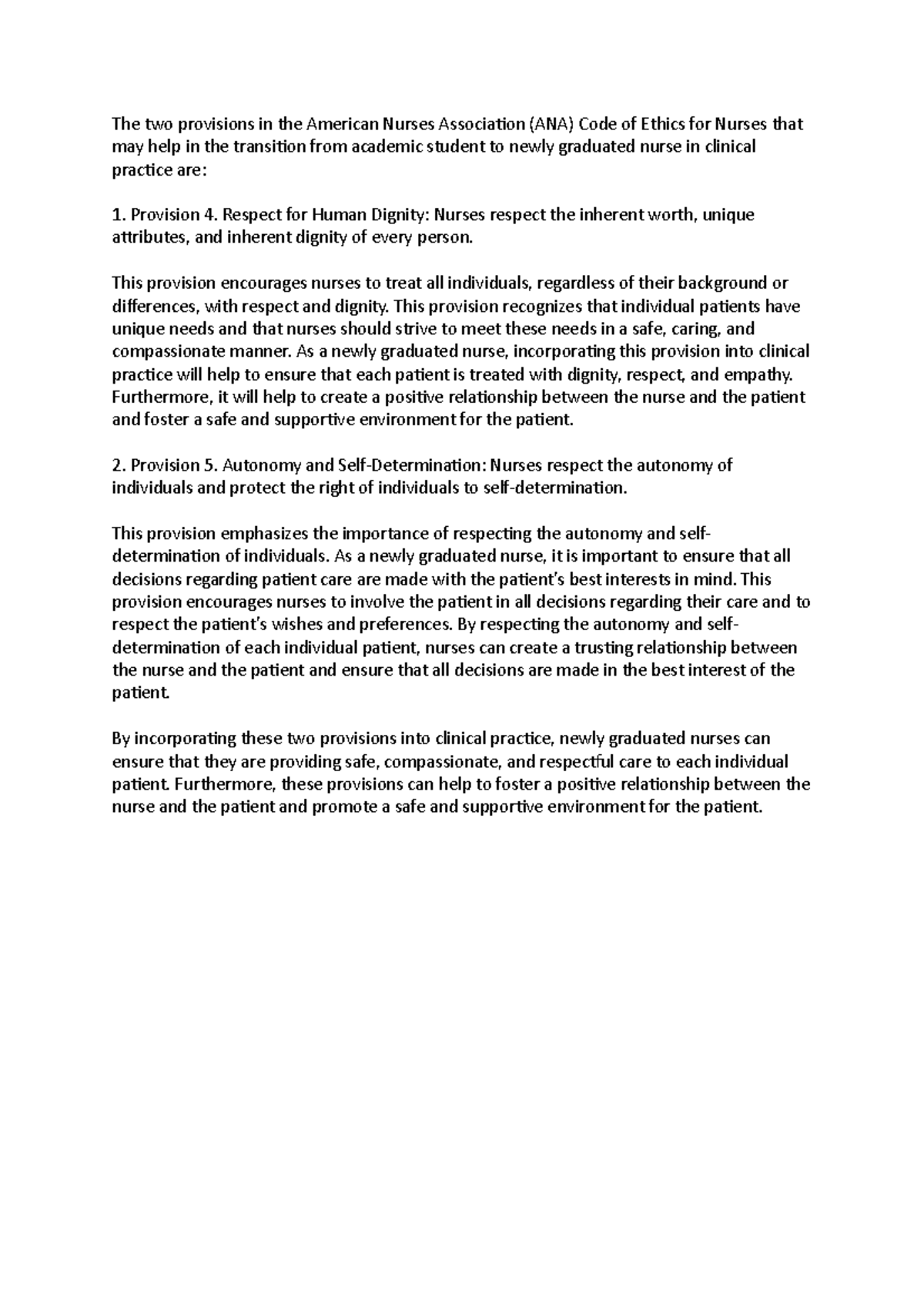
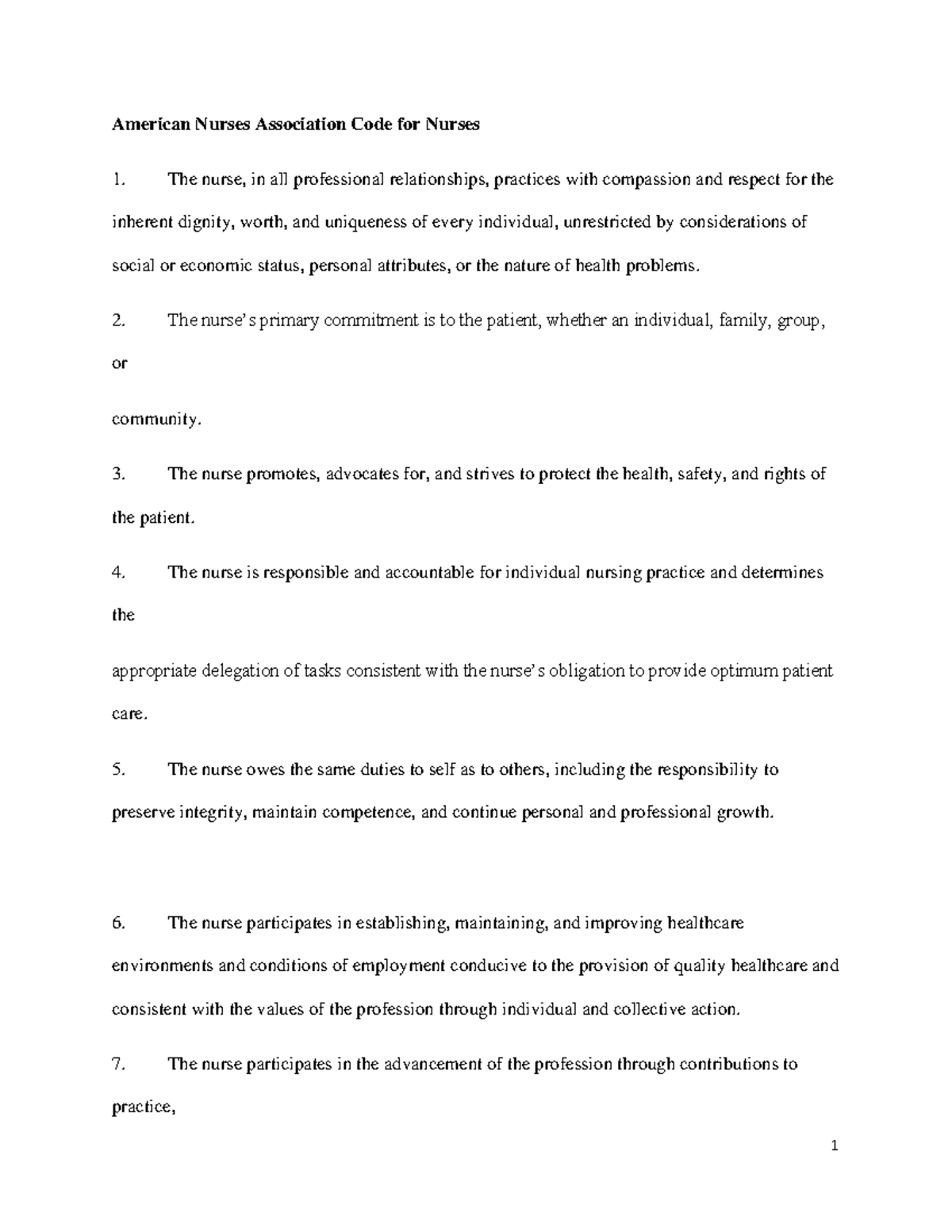
One of the most important components of the ANA’s institutional identity is the Code of Ethics for Nurses with Interpretive Statements. This document is not merely a collection of suggestions; it is a fundamental framework that underpins nursing practice in the United States.
The Code addresses the nurse's primary commitment to the patient, the preservation of integrity, and the maintenance of competence. It also addresses broader social responsibilities, such as the nurse's role in advocating for social justice and the protection of human rights in healthcare settings. By codifying these values, the ANA provides a moral compass for nurses navigating complex ethical dilemmas, such as end-of-life care, resource allocation during public health crises, and the balance between employer policies and patient advocacy.
Advocacy and Legislative Influence
The ANA is a potent lobbying force. Through its federal government affairs team, the association works to influence legislation that impacts both nurses and patient outcomes. Their advocacy efforts generally target several key pillars:
- Workplace Safety: Lobbying for federal standards regarding safe staffing ratios, workplace violence prevention, and access to proper personal protective equipment (PPE).
- Scope of Practice: Supporting legislation that allows APRNs to practice to the full extent of their education and training, often by removing restrictive state-level "collaborative practice" requirements.
- Healthcare Funding: Advocating for robust funding for nursing education programs, such as Title VIII of the Public Health Service Act, which provides financial support for nursing schools and student loans.
While the ANA is a professional association, it maintains a political action committee, ANA-PAC, which allows it to support candidates who prioritize the needs of the nursing workforce. This dual approach—policy expertise combined with political engagement—makes the ANA a central player in federal healthcare discussions.
Professional Development and Certification
For the individual nurse, the ANA provides resources that extend beyond advocacy. It acts as an accrediting body for continuing nursing education (CNE). Because most state boards of nursing require a specific number of CNE hours for license renewal, the ANA’s role as an approved provider is vital.
Furthermore, the ANA offers certification programs through the American Nurses Credentialing Center (ANCC), a subsidiary. These certifications are recognized nationally as the "gold standard" for validating a nurse's expertise in a specific specialty, such as informatics, medical-surgical nursing, or psychiatric-mental health.
| Feature | Description | Importance |
|---|---|---|
| Scope of Practice | National standards for nursing care | Defines legal limits and expected quality |
| Code of Ethics | Moral framework for the profession | Guides ethical decision-making |
| ANCC Certification | Specialty validation | Demonstrates advanced competence |
| Federal Lobbying | Advocacy in Washington, D.C. | Influences healthcare legislation |
| CNE Credits | Continuing education | Required for license maintenance |
Understanding the Structural Hierarchy
It is a common point of confusion for new nurses to distinguish between the national ANA and state-level nurses associations. The system is a federation. When a nurse joins their state nurses association, they typically gain automatic membership in the national ANA.
This model ensures that the national organization remains representative of the ground-level reality in every state. However, it also means that the ANA must navigate the diverse political and regulatory environments of 50 different states. For example, a nurse in a state with strong union protections and broad scope-of-practice laws may have different immediate priorities than a nurse in a state with more restrictive labor laws. The ANA attempts to synthesize these diverse regional needs into a cohesive national platform.
Membership Benefits and Professional Engagement
Membership in the ANA offers several practical benefits. Beyond the prestige of being part of a national professional body, members receive:
- Access to Clinical Resources: Subscription to journals and professional development modules that keep nurses updated on evidence-based practice.
- Discounts on Certification: Members often pay significantly lower fees for ANCC certification and renewal.
- Liability Insurance Partnerships: Access to specialized insurance programs designed to protect nurses against litigation.
- Networking Opportunities: Access to conferences and committee roles that allow nurses to shape the future of their profession.
Common Misconceptions
A frequently held misconception is that the ANA acts as a labor union for all nurses. While the ANA does support collective bargaining through its affiliated union arm—the National Nurses United (NNU) is a separate entity, and some state associations affiliated with the ANA do conduct collective bargaining—the national ANA itself acts primarily as a professional association. It focuses on the professional and educational advancement of the field rather than exclusively on contract negotiations or labor disputes.
Another misconception is that the ANA dictates nursing practice laws. In reality, nursing practice is regulated by state boards of nursing. The ANA provides the standards and recommendations, but the actual laws (the Nurse Practice Acts) are determined by state legislatures. The ANA influences these, but it does not have the legal authority to enact them.
Challenges in the Modern Era
As of 2026, the nursing profession faces significant challenges, including burnout, staffing shortages, and the integration of artificial intelligence into clinical workflows. The ANA is currently tasked with defining the ethical use of AI in nursing, ensuring that technology assists rather than replaces the critical judgment of a human clinician.
Furthermore, the association is heavily focused on the "nursing pipeline." With an aging workforce approaching retirement, the ANA is working to ensure that nursing school capacities are increased and that the work environment is sustainable enough to retain new graduates. The balance between maintaining professional prestige and addressing the harsh economic realities of the modern healthcare system remains the central tension of the organization’s current leadership.
Frequently Asked Questions
Is the ANA a regulatory agency? No. The ANA is a professional organization. Regulatory authority lies with individual State Boards of Nursing, which hold the legal power to license nurses and discipline practitioners.
Do I have to join the ANA to be a nurse? No. Membership is voluntary. While membership provides access to valuable professional resources, certification, and advocacy, it is not a legal requirement for holding a nursing license.
How does the ANA influence the daily life of a nurse? The ANA influences daily life primarily through its Standards of Practice. These standards define what a "competent" nurse does, which impacts how hospitals write their policies and how nurses are evaluated during their shifts.
What is the difference between the ANA and a nursing union? The ANA is a professional organization focused on education, ethics, and policy advocacy. While some state-level ANA affiliates act as unions, the national organization is primarily a policy and professional development body rather than a collective bargaining unit.
Can the ANA help me if I have a malpractice claim? The ANA provides resources and insurance information to help members understand their risks, but it does not provide legal representation for individual malpractice lawsuits. It recommends carrying individual professional liability insurance.
Next Steps for Professionals
If you are a registered nurse interested in professional growth, the first step is to visit the American Nurses Association website to identify your state’s constituent association. Membership provides immediate access to the current Scope and Standards of Practice and provides a mechanism to influence local healthcare policy. For those looking to specialize, exploring the American Nurses Credentialing Center (ANCC) certification catalog is recommended to see which credentials align with your current career trajectory. Engaging with the association at the local level offers the most direct path to participating in the policy-making processes that will define the nursing profession in the coming decade.