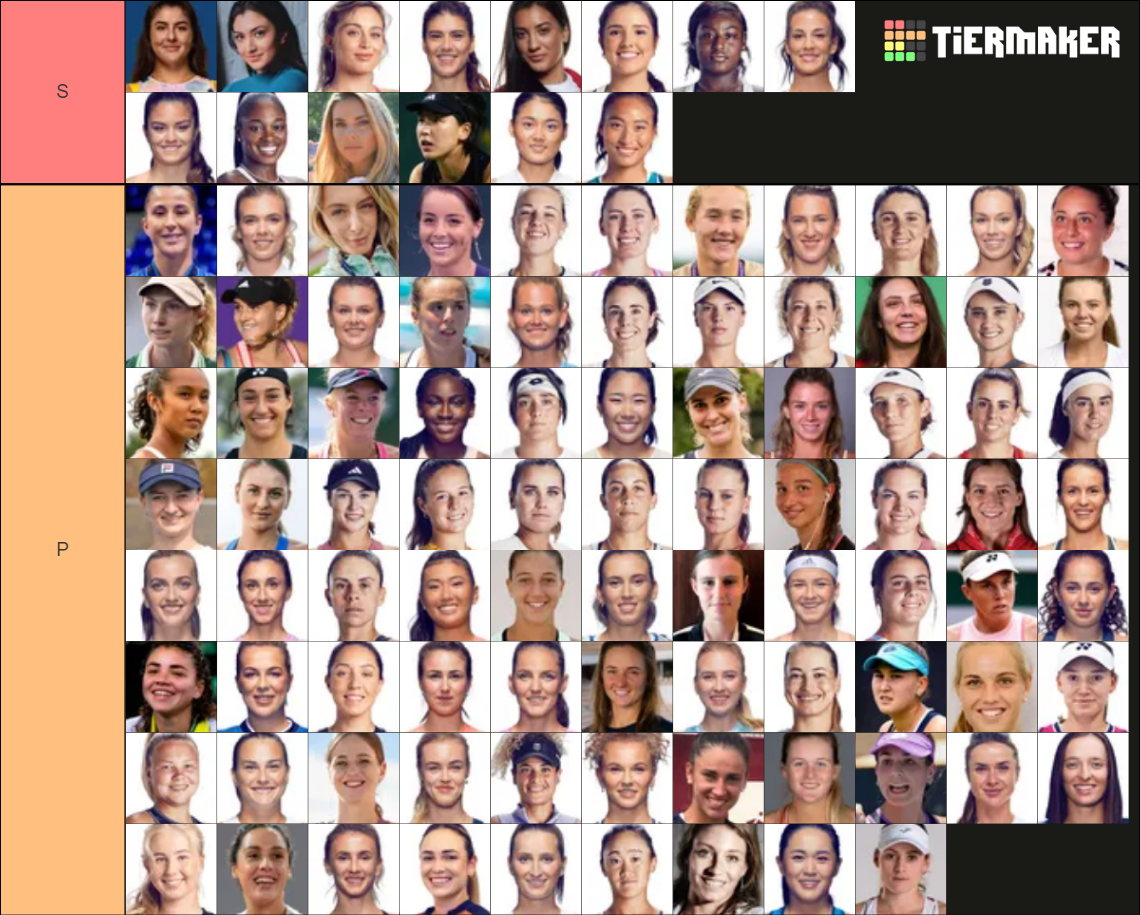
The surge of American female tennis players in the WTA rankings is fueled by a robust development pipeline, enhanced sports science integration, and the influence of iconic trailblazers who have redefined professional standards. This professional momentum, maintained throughout the 2026 season, reflects both individual athletic excellence and the efficacy of structured national tennis programming.
Professional tennis ranking systems are dynamic, fluctuating weekly based on performance at WTA-sanctioned events. For American players, the rise in these rankings is not a singular event but a multi-faceted process involving the accumulation of ranking points through consistent participation in Grand Slams, WTA 1000, 500, and 250 tournaments. Understanding this rise requires an examination of how players transition from collegiate or junior circuits into the professional tier, the financial prerequisites of the tour, and the technical benchmarks required to crack the top 100.
The Mechanism of the WTA Ranking System
To comprehend why American players are effectively climbing the leaderboard, one must first look at the Women’s Tennis Association (WTA) point distribution system. Rankings are determined by the points earned over the preceding 52 weeks. Points are awarded based on the level of the tournament and the round achieved.
For an American player, the "rise" involves a strategic calendar. Players must balance the physical toll of traveling to international clay, grass, and hard-court events with the need to defend points earned in the previous year. The ascent is often characterized by a "breakout" period where a player moves from the qualifying rounds of major tournaments into the main draw. This transition is critical, as it provides both the ranking points necessary to enter higher-tier events automatically and the prize money essential to sustain a professional coaching and travel team.
The Role of National Development and Collegiate Athletics
A defining feature of the American success story is the diversity of pathways to the professional tour. Unlike many European nations that rely heavily on centralized academies, the United States offers a hybrid model that heavily leverages the National Collegiate Athletic Association (NCAA).
Many high-ranking American women have utilized collegiate tennis to bridge the gap between junior competition and the professional tour. This environment provides:
- Structured Training: Daily access to high-level coaching and medical staff.
- Team Stability: Support systems that mimic the professional tour’s intensity.
- Financial Mitigation: Scholarships that alleviate the high costs of early-career travel and equipment.
By the time these players turn professional, they are often more physically mature and better prepared for the psychological demands of the tour compared to their teenage counterparts. This "college-to-pro" pipeline has consistently injected battle-tested athletes into the top 200 of the WTA rankings.
Impact of Sports Science and Load Management
Modern tennis is increasingly defined by physical longevity. As of 2026, the integration of advanced sports science—including biomechanical analysis, specialized nutrition, and recovery protocols—has allowed American players to sustain high performance over long stretches of the season.
Rising players now employ specialized teams to manage "load." This is the technical practice of monitoring physical output to prevent overtraining and injury. A player who remains healthy for a full 10-month season has a mathematical advantage in the rankings because they can accumulate points consistently, whereas competitors plagued by mid-season injuries inevitably slide down the ladder as their points expire.
Financial Requirements and Sponsorship Constraints
The climb to the top of the rankings is capital-intensive. Before a player can generate significant earnings from prize money, they must spend upwards of $150,000 to $250,000 annually on travel, coaching fees, physical therapy, and international lodging.
The rise of American players is often supported by early-stage sponsorships and grants from organizations like the USTA (United States Tennis Association). These entities provide wild-card entries into prestigious tournaments, which are effectively "golden tickets" that allow unranked or lower-ranked players to compete against the world’s best without having to play through grueling qualifying rounds.
Comparison of Career Pathways in Professional Tennis
| Pathway | Key Advantage | Primary Limitation |
|---|---|---|
| Collegiate (NCAA) | Financial stability and maturity | Delayed professional start |
| Direct-to-Pro (Teenage) | Faster entry into the top 100 | Higher financial risk and burnout |
| Academy-Based | Intensive technical focus | Isolated environment; high cost |
Addressing Challenges in the Rankings Climb
Despite the upward trajectory, players face systemic hurdles. The "middle-tier" of the tour—the gap between the top 50 and the top 200—is notoriously difficult to navigate. Players in this range often struggle with the "travel trap," where the cost of international flights and coaching exceeds the prize money earned at lower-tier ITF (International Tennis Federation) events.
Successful players resolve this by:
- Strategic Scheduling: Choosing tournaments based on surface specialization and draw probability rather than chasing high-profile events.
- Diversification: Supplementing tournament earnings with exhibition matches and regional endorsements.
- Coaching Optimization: Hiring coaches who specialize in the specific tactical adjustments needed for the WTA transition, rather than just general technique.
FAQs: Navigating the WTA Rankings
How many weeks does it take to see a significant jump in ranking? A significant jump usually follows a "swing" of high-performance events. If a player reaches the later rounds of a WTA 1000 tournament or a Grand Slam, they can jump dozens of spots in the rankings instantly due to the high volume of points awarded for those stages.
What is the minimum number of tournaments required to maintain a ranking? Technically, players must have points from at least one tournament to have a ranking. However, to remain relevant, most professional players participate in 18 to 22 tournaments per year to ensure they are defending enough points to avoid "ranking stagnation."
Do rankings expire if a player is injured? Yes, rankings are based on a rolling 52-week window. If a player is injured and cannot participate, their points from the previous year’s events will fall off the calculation, causing their ranking to drop. Some players can apply for a "Protected Ranking" under specific WTA medical rules to facilitate their return.
Is it harder for American players to rise compared to those from other countries? Not necessarily, but the competition is high. American players have the advantage of many home-soil events, such as the US Open and several WTA 500/1000 events, which allow them to compete without the fatigue of international travel.
How does collegiate success translate to professional ranking points? Collegiate success does not provide direct ATP or WTA ranking points. However, many USTA-sanctioned events and wild-card challenges associated with collegiate performance act as pathways to enter high-level professional tournaments where ranking points can be earned.
Recommended Next Steps for Aspiring Players
For players aiming to break into the top tier of the WTA, the path requires a transition from general competition to high-efficiency point management. The priority should be securing consistent access to top-tier coaching and medical support through established USTA channels or high-performance private programs.
Players should prioritize participation in professional-level events that offer the highest point-to-cost ratio. Before attempting to jump to the tour full-time, a period of evaluation—typically through the NCAA or high-level junior international circuits—is recommended to ensure that the physical, psychological, and financial infrastructure is in place to withstand the demands of the professional tennis season.