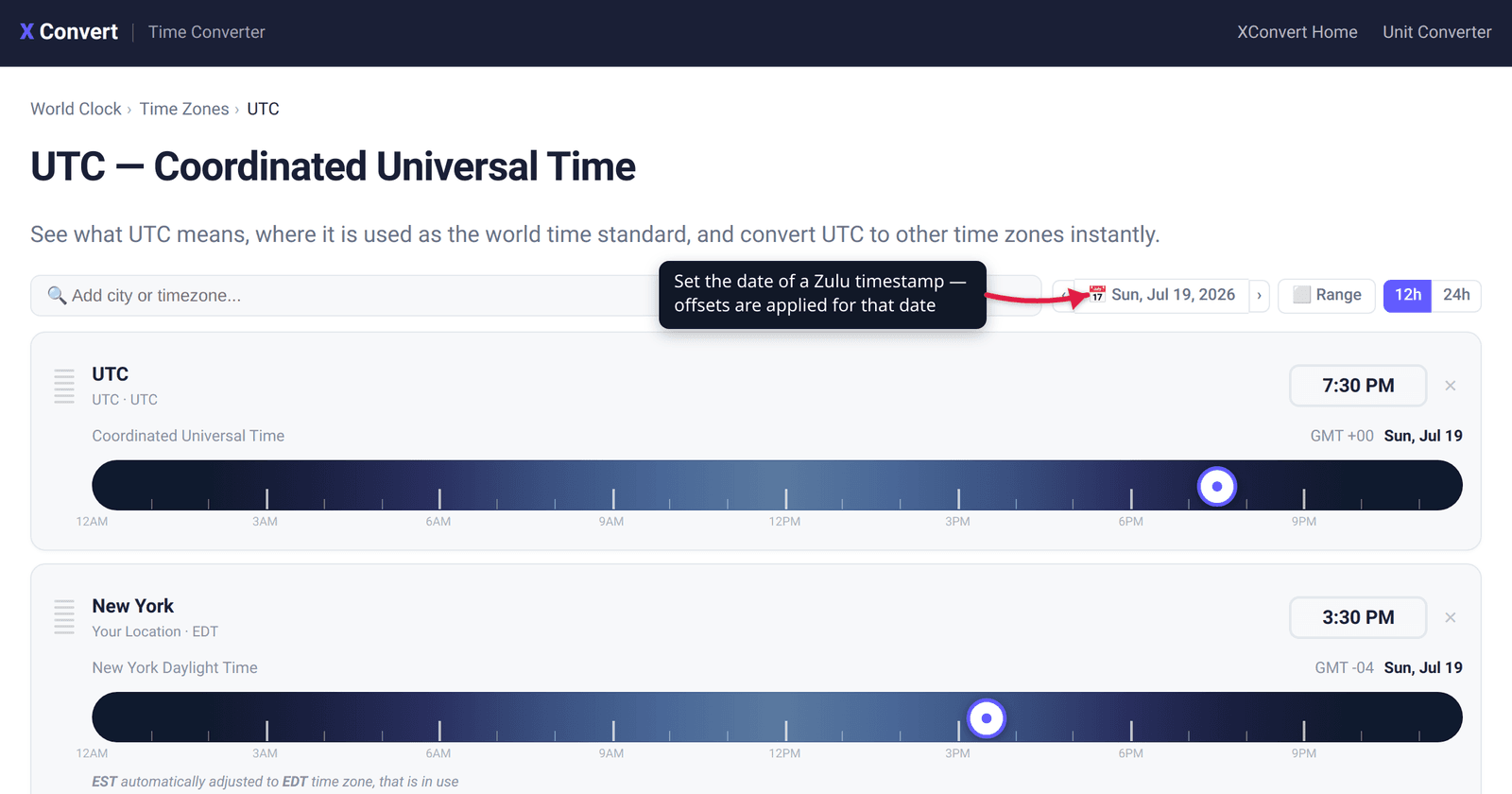
America’s relationship with UTC (Coordinated Universal Time) is defined by a series of negative offsets ranging from UTC-4 to UTC-10. These offsets represent how many hours a specific region is behind the primary global time standard. Because most of the United States observes Daylight Saving Time, these offsets shift by one hour twice a year, affecting everything from international business to digital server synchronization.
The concept of time in America can be deceptively complex. While most citizens refer to their local time as "Eastern," "Central," or "Pacific," these designations are actually geographical masks for a highly standardized system rooted in UTC. Understanding how America interacts with UTC is essential for anyone managing global teams, scheduling international travel, or configuring technical infrastructure in 2026.
Understanding the Foundation: What is UTC?
Before diving into specific American time zones, it is necessary to define the anchor: Coordinated Universal Time (UTC). Contrary to common belief, UTC is not a "time zone" in the traditional sense, but rather a high-precision atomic time scale that serves as the basis for civil time throughout the world.
The Shift from GMT to UTC
Historically, the world relied on Greenwich Mean Time (GMT), which was based on the rotation of the Earth and measured from the Royal Observatory in Greenwich, London. However, because the Earth’s rotation is slightly irregular, GMT was replaced by UTC in 1972 as the primary standard. UTC is maintained using ultra-stable atomic clocks (International Atomic Time) combined with astronomical measurements. In 2026, while many still use the terms GMT and UTC interchangeably in casual conversation, technical and legal standards almost exclusively reference UTC to ensure nanosecond accuracy across global networks.
The Offset Mechanism
All time zones in America are expressed as "UTC-X." The "minus" sign indicates that North America is located west of the Prime Meridian, meaning its local time is "behind" the global standard. For example, if it is 12:00 PM (noon) UTC, a region at UTC-5 would be at 7:00 AM local time.
The Primary US Time Zones and Their UTC Offsets
The United States spans a vast longitudinal range, necessitating several distinct time zones. In the contiguous U.S., there are four major zones, with additional zones covering Alaska, Hawaii, and various territories.
Eastern Time (ET)
The Eastern Time Zone is the most populous in the U.S., encompassing the Atlantic coast and major financial hubs like New York City and Washington, D.C.
- Standard Time (EST): UTC-5
- Daylight Time (EDT): UTC-4
Central Time (CT)
Moving westward, the Central Time Zone covers a large portion of the Midwest and the Gulf Coast, including cities like Chicago, Houston, and New Orleans.
- Standard Time (CST): UTC-6
- Daylight Time (CDT): UTC-5
Mountain Time (MT)
The Mountain Time Zone includes the Rocky Mountains and states like Colorado, Utah, and Montana. This zone is particularly interesting due to regional variations in Daylight Saving Time observance.
- Standard Time (MST): UTC-7
- Daylight Time (MDT): UTC-6
Pacific Time (PT)
The Pacific Time Zone covers the West Coast, including Los Angeles, San Francisco, and Seattle. It is the primary time zone for the tech industry and the entertainment capital of the world.
- Standard Time (PST): UTC-8
- Daylight Time (PDT): UTC-7
Alaska and Hawaii-Aleutian Time
Beyond the contiguous states, two additional zones are critical:
- Alaska Time (AKT): UTC-9 during Standard Time and UTC-8 during Daylight Time.
- Hawaii-Aleutian Time (HAT): UTC-10. Notably, Hawaii does not observe Daylight Saving Time, remaining at UTC-10 year-round.
The Impact of Daylight Saving Time (DST) in 2026
Daylight Saving Time significantly complicates the American UTC landscape. For approximately eight months of the year, most of the country shifts its clocks forward by one hour to extend evening daylight.
The 2026 DST Schedule
In 2026, the transition dates are:
- Spring Forward: Sunday, March 8, 2026 (Clocks move from 2:00 AM to 3:00 AM local time).
- Fall Back: Sunday, November 1, 2026 (Clocks move from 2:00 AM to 1:00 AM local time).
When the "Spring Forward" occurs, the UTC offset decreases. For instance, New York moves from UTC-5 (Standard) to UTC-4 (Daylight). When the "Fall Back" occurs in November, the offset increases back to UTC-5.
Technical and Physiological Challenges
The biannual shift is more than just a minor inconvenience. For technical systems, the "Spring Forward" creates a "missing hour" where no events occur between 2:00 AM and 3:00 AM. Conversely, the "Fall Back" creates a "duplicate hour" where 1:30 AM occurs twice. To solve this, developers and system administrators almost always store data in UTC, which is continuous and does not observe DST, only converting to local American time for the end-user display.
Regional Anomalies and Exceptions
America does not follow a perfectly uniform time policy. Several regions choose to opt out of the standard DST cycles or sit on the boundary of two zones.
Arizona: The Grand Canyon State Exception
With the exception of the Navajo Nation, the state of Arizona does not observe Daylight Saving Time. Because Arizona remains on Mountain Standard Time (UTC-7) year-round, its relative time compared to its neighbors changes. In the summer, Arizona is effectively synchronized with Pacific Daylight Time (also UTC-7). In the winter, it aligns with its Mountain Time neighbors (UTC-7).
The Navajo Nation and Hopi Reservation
The Navajo Nation, which extends into Arizona, New Mexico, and Utah, does observe DST to maintain consistency across its tribal lands. However, the Hopi Reservation, which is entirely surrounded by the Navajo Nation, follows Arizona’s lead and does not observe DST. This creates a "time sandwich" where driving across reservation borders can result in the time changing multiple times within a single hour of travel.
US Territories
US Territories follow their own UTC offsets and generally do not observe DST:
- Puerto Rico and US Virgin Islands: Atlantic Standard Time (UTC-4) year-round.
- Guam and Northern Mariana Islands: Chamorro Standard Time (UTC+10) year-round. Note that these are "ahead" of UTC because they are across the International Date Line.
- American Samoa: Samoa Standard Time (UTC-11) year-round.
2026 Reference Table: America Time Zones to UTC
The following table outlines the UTC offsets for the major American regions during both Standard Time and Daylight Saving Time for the 2026 calendar year.
| Time Zone Name | Standard Time Offset (Winter) | Daylight Time Offset (Summer) | Primary Cities |
|---|---|---|---|
| Eastern (ET) | UTC-5 | UTC-4 | New York, Miami, Atlanta |
| Central (CT) | UTC-6 | UTC-5 | Chicago, Dallas, Winnipeg |
| Mountain (MT) | UTC-7 | UTC-6 | Denver, Salt Lake City |
| Pacific (PT) | UTC-8 | UTC-7 | Los Angeles, Vancouver |
| Alaska (AKT) | UTC-9 | UTC-8 | Anchorage, Fairbanks |
| Hawaii-Aleutian | UTC-10 | UTC-10 (No DST) | Honolulu, Adak |
| Arizona | UTC-7 | UTC-7 (No DST) | Phoenix, Tucson |
| Atlantic (AST) | UTC-4 | UTC-4 (No DST) | San Juan (Puerto Rico) |
Why UTC is Vital for Modern Infrastructure
In 2026, the reliance on UTC in America is higher than ever, driven by the expansion of cloud computing, decentralized finance (DeFi), and autonomous logistics.
Aviation and Aerospace
The Federal Aviation Administration (FAA) and international flight controllers use UTC (often called "Z" or "Zulu" time) to coordinate all flight plans. If a flight departs Los Angeles at 10:00 AM PST (UTC-8) and arrives in New York five hours later, the local time would be 6:00 PM EST (UTC-5). By using UTC for all calculations, pilots and controllers avoid the risk of mathematical errors caused by crossing multiple time zone boundaries.
Computing and Logging
Most modern operating systems (Linux, macOS, Windows) maintain their internal system clock in UTC. The local time displayed on the taskbar is simply an offset applied for the user's convenience. This is critical for:
- Security Logs: Correlating a cyberattack that hits servers in both Virginia (UTC-5) and Oregon (UTC-8).
- Database Transactions: Ensuring that a bank deposit made at 11:59 PM in California is recorded in the correct chronological order relative to a withdrawal in Maine.
- API Integration: When a weather service sends data to a smart home device, it uses UTC to ensure the "current" conditions are accurately timed regardless of the device's location.
Global Business Synchronization
For remote teams spread across the U.S. and Europe, UTC serves as the "neutral ground." It is common for multinational corporations to schedule "all-hands" meetings based on UTC to avoid the confusion that arises when different countries switch to Daylight Saving Time on different weekends (Europe typically switches on a different schedule than the U.S.).
Common Mistakes When Calculating UTC in America
Despite its logic, many people struggle with UTC conversions. Here are the most frequent errors encountered:
- Forgetting DST: The most common mistake is assuming the offset is permanent. One must always verify if the date falls within the March-to-November window.
- The "Forward is Negative" Paradox: People often get confused by the math. To get from UTC to Local Time, you subtract the offset. To get from Local Time to UTC, you add the offset. For example, if it is 8:00 AM EST (UTC-5), you add 5 hours to find the UTC time (1:00 PM).
- The Midnight Boundary: When converting late-night US time to UTC, the date often changes. A Sunday night 10:00 PM EST (UTC-5) event is actually occurring on Monday at 3:00 AM UTC. This is a frequent cause of missed deadlines in international shipping and financial reporting.
Troubleshooting and Tools
If you are unsure of the current UTC offset for a specific American location in 2026, several authoritative resources can provide real-time verification:
- NIST (National Institute of Standards and Technology): The official U.S. timekeeper provides the time.gov portal, which shows the exact offset for every state.
- The IANA Time Zone Database: Used by almost all computer systems, this database (often called the Olson database) contains the historical and current rules for every time zone on Earth.
- Command Line Tools: On most computers, typing
date -uin a terminal will return the current UTC time immediately, allowing you to compare it to your local system clock.
FAQs
Is UTC the same as GMT?
While they share the same time for civil purposes, they are defined differently. GMT is a time zone based on Earth's rotation, while UTC is an atomic standard. In 2026, for almost all non-scientific purposes, they can be treated as identical, but UTC is the preferred term in technical and legal contexts.
Why doesn't the US just stay on UTC or a single time zone?
The U.S. spans roughly 3,000 miles from east to west. If the entire country used a single time zone, the sun would rise at 5:00 AM in New York and 9:00 AM in California. Time zones ensure that "noon" roughly aligns with the sun's highest point in the sky for each region, which is better for human circadian rhythms and energy consumption.
Does the "Sunshine Protection Act" affect America's UTC offset?
As of 2026, there have been various legislative attempts to make Daylight Saving Time permanent (The Sunshine Protection Act). If such a law were enacted, the U.S. would no longer "fall back" to Standard Time. This would mean the Eastern U.S. would stay at UTC-4 permanently, rather than switching to UTC-5 in the winter.
How do I convert UTC to my local time quickly?
The easiest way is to remember your "Standard" offset (e.g., Eastern is 5). During the winter, subtract that number from UTC. During the summer (DST), subtract one hour less (e.g., subtract 4 instead of 5).
What happens to UTC when there is a "Leap Second"?
Leap seconds were occasionally added to UTC to keep it within 0.9 seconds of solar time (UT1). However, international weight and measures bodies have moved toward phasing out leap seconds by 2035 to prevent disruptions in high-frequency trading and digital synchronization. In 2026, the UTC scale remains stable without significant leap second interference.
Which US states do not use Daylight Saving Time?
Hawaii and most of Arizona do not observe DST. Additionally, the territories of Puerto Rico, Guam, American Samoa, the US Virgin Islands, and the Northern Mariana Islands remain on Standard Time year-round.
Final Recommendation for 2026
For individuals and businesses operating in America in 2026, the most effective strategy for managing time is to adopt a "UTC-First" mindset. When scheduling meetings, setting server cron jobs, or timestamping important documents, always record the UTC time alongside the local time. This practice eliminates the ambiguity caused by the biannual Daylight Saving Time shifts and ensures that your records remain chronologically accurate, regardless of regional legislative changes or geographic location. If you are traveling or working across zones, use a dedicated world clock tool that specifically highlights the "UTC Offset" rather than just the zone name, as this provides the most reliable data for calculation.