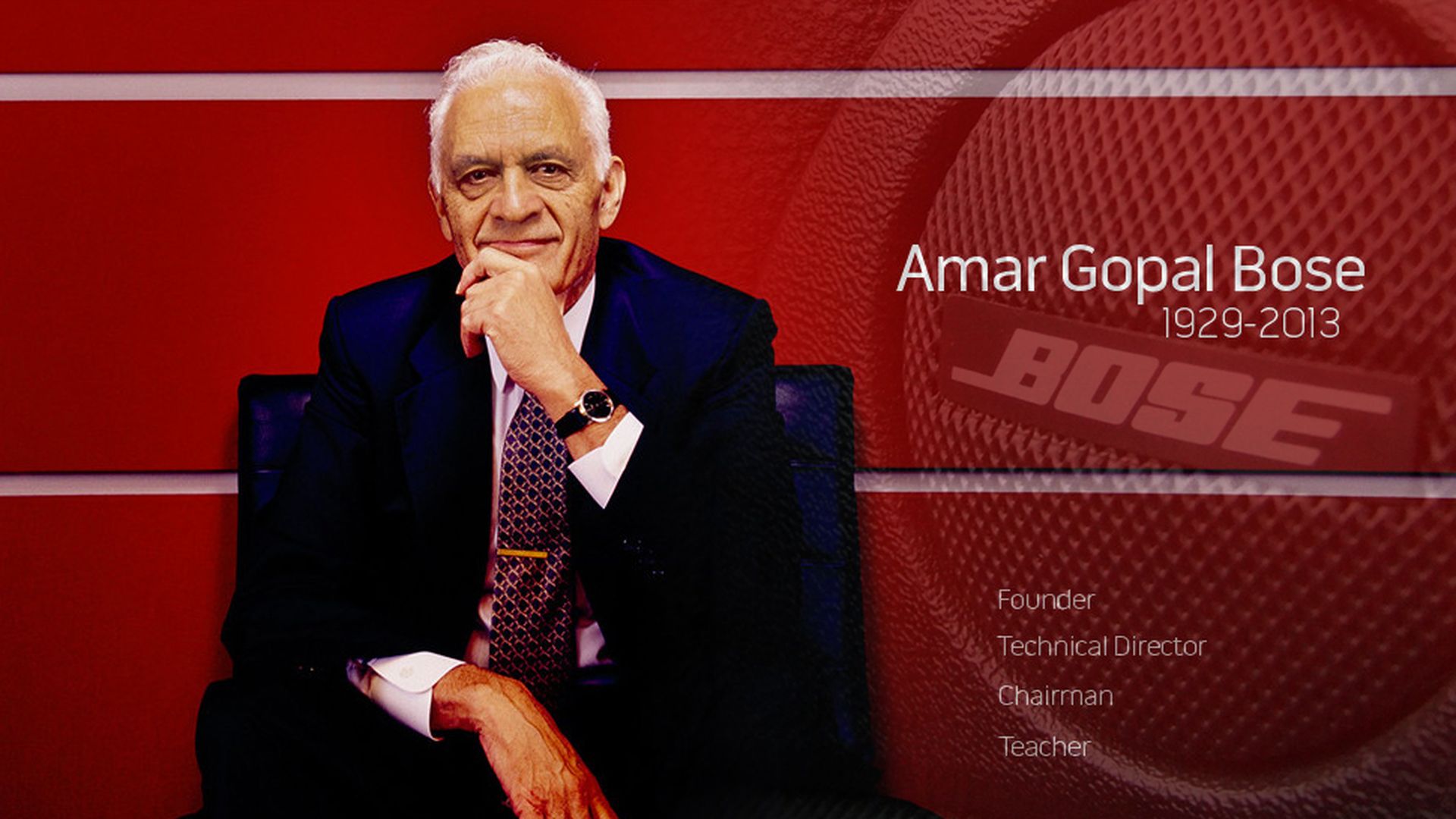
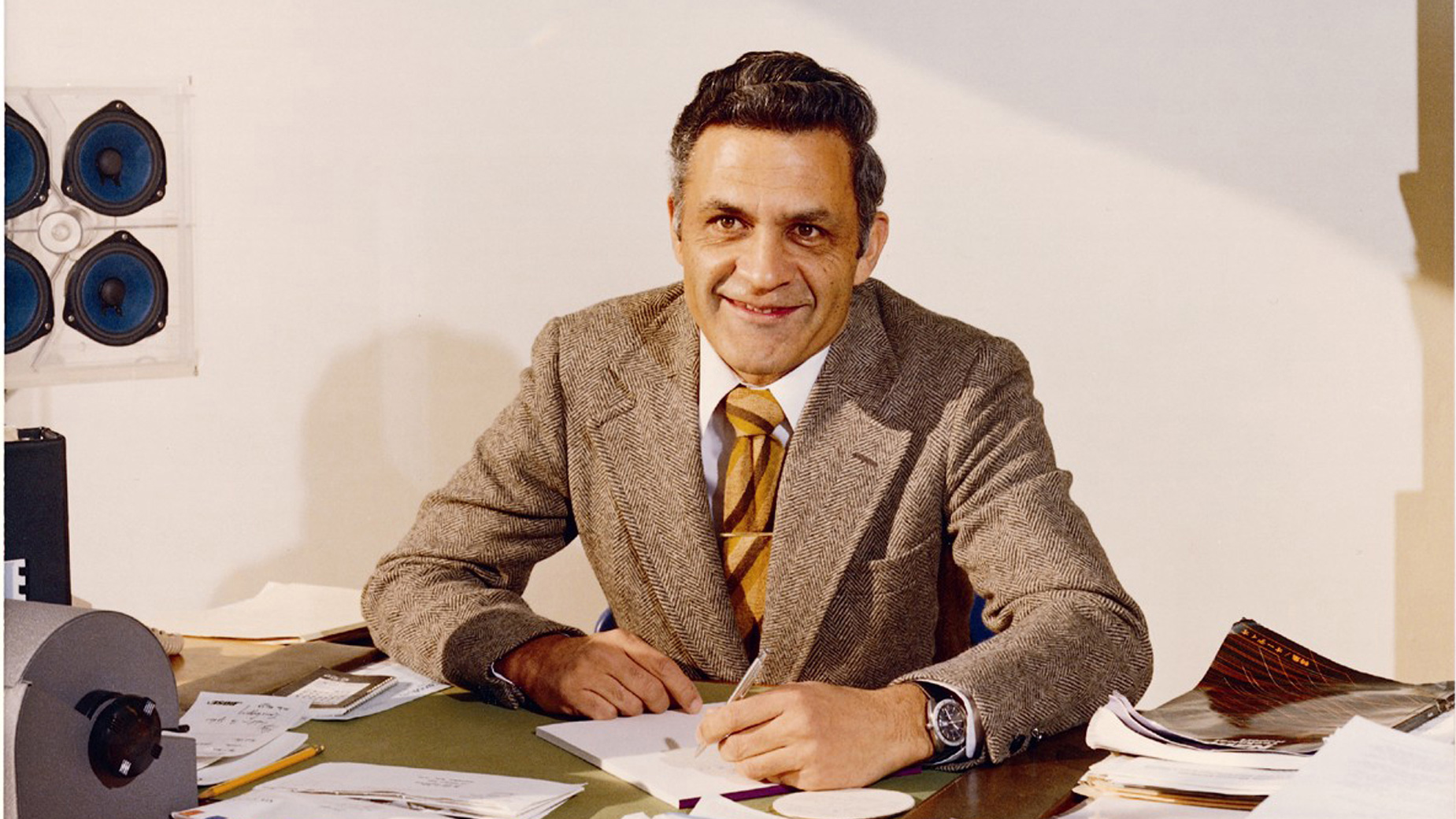
At the time of his passing in 2013, Amar Bose had a net worth estimated at approximately $1.0 billion, primarily derived from his ownership of the Bose Corporation. However, his financial story is defined less by accumulation and more by a 2011 decision to donate the majority of his company’s non-voting shares to the Massachusetts Institute of Technology (MIT), fundamentally altering his taxable estate and personal valuation.
To understand Amar Bose’s net worth in context, one must look beyond the standard billionaire rankings. Unlike tech founders who seek public offerings and liquidity, Dr. Bose famously resisted taking his company public. His wealth was inextricably tied to his philosophy that a private company could better serve the interests of long-term research and acoustics without the quarterly pressure of shareholders. By the time 2026 arrived, the legacy of this decision has become a landmark case study in how a founder’s net worth can be leveraged for institutional longevity rather than personal extravagance.
The Genesis of Wealth: Academic Innovation to Global Brand
The foundation of Amar Bose's wealth was not a desire for profit, but a frustration with existing technology. While a graduate student and later a professor at MIT in the 1950s, he purchased a high-end stereo system only to find that it failed to reproduce the realism of a live performance. This technical disappointment sparked a decade of research into psychoacoustics—the study of how humans perceive sound—and physical acoustics.
In 1964, encouraged by his mentor Dr. Y.W. Lee, Bose founded the Bose Corporation. The initial capital was modest, sourced from personal savings and small investments from friends and colleagues. Because he maintained a teaching position at MIT while building the company, he was able to reinvest early profits back into research and development. This cycle of "research-led growth" became the primary driver of the company’s valuation.
The company’s first major success, the 901 Direct/Reflecting speaker system released in 1968, revolutionized the industry. By using a series of small drivers to reflect sound off walls, it mimicked the spatial characteristics of a concert hall. The commercial success of the 901 series laid the financial groundwork for what would become a multi-billion dollar enterprise. By the late 20th century, Bose had expanded into automotive sound systems, aviation headsets, and noise-canceling technology, each vertical adding significant layers to Dr. Bose’s paper wealth.
The Billionaire Metric: Evaluating a Private Empire
Estimating the net worth of a founder of a private company is notoriously difficult. Unlike public figures whose wealth fluctuates daily with stock prices, Dr. Bose’s net worth was tied to the internal valuation of the Bose Corporation. For much of the early 2000s, Forbes and other financial outlets placed him on the list of the world's billionaires, usually hovering between $1.0 billion and $1.5 billion.
The revenue of Bose Corporation was the primary metric used for these estimations. By the mid-2000s, the company was generating annual revenues in excess of $2 billion. Standard industry multiples for electronics and consumer goods manufacturers would suggest a total company valuation of $3 billion to $5 billion. However, because Dr. Bose held the vast majority of the equity, his personal share was the dominant component of his net worth.
It is important to note that Dr. Bose never sought to monetize this wealth. He famously never took the company public, stating that if he had, he would have been fired long ago for his insistence on spending massive amounts of capital on "unprofitable" research that took decades to bear fruit—such as the development of electromagnetic suspension systems for vehicles or high-fidelity noise-canceling headphones for pilots.
The 2011 Pivot: The MIT Gift and Its Impact on Net Worth
The most significant event in the context of Amar Bose’s net worth occurred in 2011, two years before his death. In a move that surprised the corporate world, he donated the majority of Bose Corporation’s capital stock to MIT in the form of non-voting shares.
This transaction had several profound financial implications:
- Reduction of Personal Net Worth: By transferring these shares, Dr. Bose effectively moved the majority of his wealth out of his personal estate. While he remained the chairman and retained control through voting shares, his "on-paper" net worth for estate tax purposes and public rankings dropped significantly.
- Dividend Flow to Education: The gift was structured so that MIT receives annual dividends from the company’s profits. These funds are used to support research and education. MIT is restricted from selling the shares and cannot participate in the management of the company.
- Preservation of Private Status: The structure ensured that the Bose Corporation would remain a private entity. By giving the shares to an institution rather than selling them or taking the company public, Dr. Bose protected his research-centric mission from the volatility of the stock market.
In the context of 2026, this gift is recognized as one of the most unique philanthropic structures in history. It essentially turned a private corporation into a perpetual endowment for one of the world’s leading technical universities, while allowing the company to function as a competitive commercial entity.
Comparing Wealth Structures: Bose vs. Contemporary Tech Founders
To understand the "context" of Amar Bose's wealth, it is helpful to compare his financial trajectory with other industry titans.
| Feature | Amar Bose (Bose Corp) | Typical Public Tech Founder |
|---|---|---|
| Primary Asset | Private Equity (Non-voting to MIT) | Publicly Traded Stock (SEC Regulated) |
| Liquidity | Extremely Low (Reinvested in R&D) | High (Ability to sell shares on market) |
| Wealth Motivation | Research & Product Excellence | Market Cap & Shareholder Value |
| Exit Strategy | Institutional Gift (MIT) | IPO or Acquisition |
| Legacy Structure | Perpetual University Dividends | Charitable Foundation or Trust |
While founders like Jeff Bezos or Bill Gates saw their net worths climb into the hundreds of billions due to the multiplier effect of the public stock market, Dr. Bose’s wealth remained relatively stable and modest in comparison. His wealth was a "functional wealth"—it existed to fuel the laboratories at Bose Corp rather than to fund a diversified portfolio of global assets.
The Technical Depth of His Assets: Patents and IP
A significant portion of the value within the Bose Corporation—and by extension, Dr. Bose’s net worth—was held in intellectual property. Dr. Bose himself held numerous patents, but the company’s collective patent portfolio in acoustics and electronics was its true "moat."
- Active Noise Reduction (ANR): This technology, now standard in the QuietComfort line, took over 20 years and $50 million in research before it became a commercial success. The value of these patents alone represented a significant portion of the company's worth during the late 1990s and early 2000s.
- Psychoacoustic Modeling: The proprietary algorithms used to make small speakers sound "big" are guarded trade secrets. This IP allowed Bose to maintain high margins in a commoditized consumer electronics market, directly sustaining the company's valuation.
- The Bose Suspension System: Though not a commercial mainstay in the consumer car market, the research into linear electromagnetic motors showcased the depth of the company's technical assets.
From an SEO and financial analysis perspective, Dr. Bose’s net worth should be viewed as an "IP-heavy" valuation. He was a billionaire of ideas and technical implementation rather than a billionaire of financial engineering.
Life and Lifestyle: The Personal Context of Wealth
Despite his billionaire status, Amar Bose was known for a relatively modest lifestyle. He continued to teach at MIT for over 45 years, even while serving as the CEO and Chairman of a global corporation. His "salary" from the university and his compensation from the company were secondary to his interest in the classroom.
He famously stated that his goal was not to make money but to do things that had never been done before. This mindset is crucial context for his net worth. For Dr. Bose, money was a "byproduct" of successful engineering. This is why he never pursued the typical markers of extreme wealth, such as owning professional sports teams or high-profile real estate developments. His primary "extravagance" was the funding of research projects that had no immediate clear path to profitability.
The Enduring Impact in 2026
As of 2026, the Bose Corporation continues to operate under the unique ownership structure established by its founder. The dividends paid to MIT over the last decade and a half have funded countless research initiatives, scholarships, and laboratory upgrades.
The context of his net worth today is found in the MIT Bose Grants and the continued independence of the Bose brand. While many of his contemporaries' companies have been acquired, merged, or radically changed by activist investors, Bose remains a singular entity focused on audio innovation. This stability is the direct result of Dr. Bose prioritizing the distribution of his net worth over its preservation within a family dynasty.
Frequently Asked Questions
Did Amar Bose leave his wealth to his children?
While Dr. Bose certainly provided for his family, the vast majority of his most valuable asset—the equity in Bose Corporation—was donated to MIT. He believed that the company’s mission was better served by an institutional partnership that guaranteed its independence, rather than a traditional inheritance model that might lead to a sale of the company.
Is Bose Corporation owned by MIT?
MIT owns the majority of the stock, but they do not "own" the company in a traditional sense. They hold non-voting shares. This means MIT receives the financial benefits (dividends) but does not have the power to vote on board members or direct corporate strategy. The management of the company remains independent.
Why wasn't Amar Bose's net worth higher?
His net worth was "capped" by his refusal to go public. Public companies often trade at high price-to-earnings multiples, which can inflate a founder's net worth. By keeping Bose Corp private and reinvesting the vast majority of profits back into R&D, Dr. Bose kept his personal valuation tied to the actual book value and operational success of the company rather than market speculation.
How much did MIT receive from Amar Bose?
The exact dollar amount of the dividends varies annually based on the company’s performance. However, given that Bose Corporation generates billions in annual revenue, the cumulative contribution to MIT since 2011 is estimated to be in the hundreds of millions, if not surpassing the billion-dollar mark over time.
What happened to Amar Bose's voting shares?
Control of the company was maintained through a separate class of voting shares. These were structured to ensure that the leadership of the Bose Corporation remained committed to the founder's original principles of research-driven innovation, preventing a hostile takeover or a shift toward short-term profit seeking.
Final Recommendation: Lessons for the Modern Entrepreneur
For investors and entrepreneurs looking at "Amar Bose net worth in context," the takeaway is clear: Wealth can be a tool for institutional legacy. If you are building a venture focused on deep technology or long-term research, the Bose model suggests that staying private and aligning with a research institution can provide a level of stability and purpose that the public markets cannot offer.
In 2026, the "net worth" of Amar Bose is best measured not by the balance of a bank account, but by the number of students at MIT who benefit from his dividends and the millions of people who use noise-canceling technology—a field he essentially bankrolled into existence. For those evaluating their own financial legacy, the "Bose Structure" remains a gold standard for philanthropic corporate engineering.