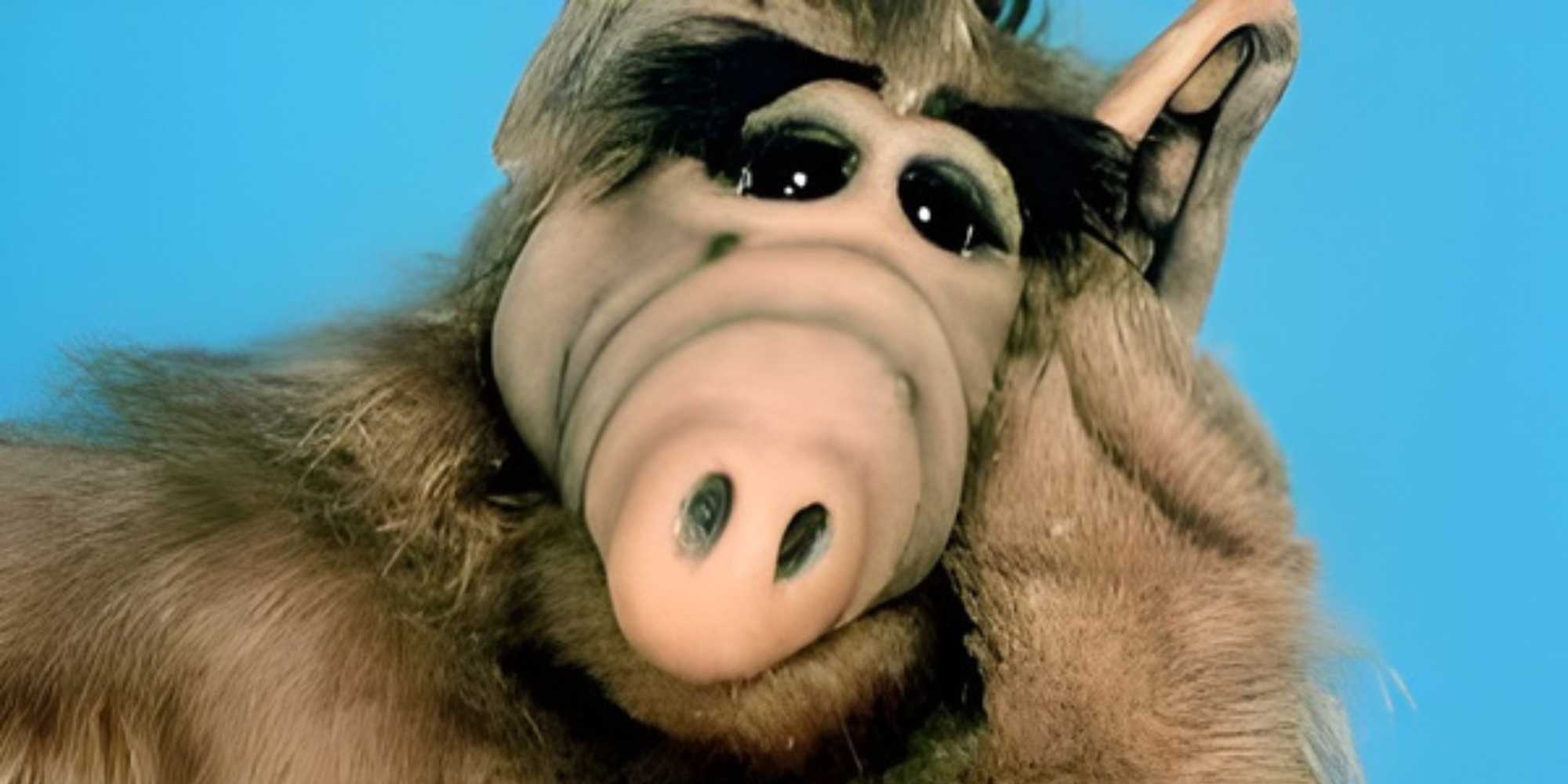
The 1986 debut of ALF marked a pivotal moment in television history, successfully blending the traditional domestic sitcom with high-concept science fiction. By placing a sarcastic, cat-craving alien from Melmac into a suburban household, the series proved that sci-fi comedy could achieve mainstream dominance, paving the way for future genre-bending hits like 3rd Rock from the Sun and Futurama.
The Genesis of Gordon Shumway: Bringing Melmac to Earth
In September 1986, NBC introduced audiences to Gordon Shumway, better known as ALF (Alien Life Form). Created by puppeteer Paul Fusco and Tom Patchett, the show was a radical departure from the slick, action-oriented science fiction that dominated the early 1980s. While films like E.T. the Extra-Terrestrial had humanized alien visitors, ALF was the first to give an extraterrestrial a cynical, Borscht Belt sense of humor and place him in the middle of a middle-class living room.
The premise was deceptively simple: ALF crashes his spaceship into the garage of the Tanner family in suburban Los Angeles. Instead of the military-industrial complex capturing the creature, the Tanners decide to hide him. This setup allowed the show to explore the "fish-out-of-water" trope with a literal alien, providing a unique lens through which to critique American consumerism, family dynamics, and social norms. As we look back from 2026, the show's ability to maintain a puppet as a believable, three-dimensional lead character remains a landmark achievement in television production.
The Technical Challenges of Domestic Sci-Fi
One of the most significant contributions of ALF to the rise of sci-fi comedy was its technical ambition. Unlike Mork & Mindy, which relied on Robin Williams' frenetic physical performance, ALF required a complex puppetry setup that fundamentally changed how sitcoms were filmed. The set was built on a raised platform four feet off the ground, with trap doors and trenches scattered throughout the floor to allow Paul Fusco and his team to operate the puppet from below.
This production environment was notoriously difficult. A single 22-minute episode often took 20 to 25 hours to film because of the precision required for the puppet’s movements and the technical resets between takes. The human actors—Max Wright, Anne Schedeen, Andrea Elson, and Benji Gregory—had to act against a piece of foam and fur, often standing on narrow walkways to avoid the "puppet pits."
Despite these hurdles, the technical success of ALF demonstrated to networks that high-maintenance visual effects and character designs could be integrated into a weekly sitcom format. This proof of concept was essential for the eventual development of more complex sci-fi comedies in the 1990s and 2000s, where CGI and practical effects would become more common.
Comparing Milestones in Sci-Fi Comedy Evolution
The rise of the genre was not an overnight phenomenon. It was a gradual shift from parody to genuine character-driven storytelling. The following table illustrates how ALF fits into the broader timeline of sci-fi comedy development through 2026.
| Era | Show/Property | Primary Sci-Fi Device | Contribution to Genre |
|---|---|---|---|
| Late 1970s | Mork & Mindy | Alien visitor (Humanoid) | Proved that aliens could lead a sitcom; focused on observational humor. |
| Mid 1980s | ALF | Alien visitor (Puppet) | Integrated non-humanoid puppets as lead characters; satire of suburbia. |
| Late 1980s | Red Dwarf | Deep space travel | Shifted the setting from Earth to space while maintaining sitcom tropes. |
| Mid 1990s | 3rd Rock from the Sun | Alien expedition team | Inverted the "lone alien" trope; used sci-fi to explore human sociology. |
| Late 1990s | Futurama | Cryogenics / Future setting | Combined animation with hard sci-fi concepts and workplace comedy. |
| 2010s-2020s | Rick and Morty | Multiverse / High Tech | Deconstructed sci-fi tropes with nihilistic, fast-paced humor. |
| 2020s-2026 | Resident Alien | Hidden Alien / Murder Mystery | Blended sci-fi comedy with dark procedural elements and small-town drama. |
Subverting the Family Sitcom: The Melmacian Perspective
What truly fueled the rise of sci-fi comedy during the ALF era was the subversion of the "perfect" American family. The Tanners were a traditional nuclear family, but the presence of a 229-year-old alien who ate cats and gambled on the stock market disrupted their equilibrium. ALF was not a "cute" mascot; he was often rude, selfish, and reckless.
This edge allowed the show to tackle topics that standard sitcoms of the time, like Growing Pains or The Cosby Show, might have handled with more sentimentality. When ALF felt lonely for Melmac (which had exploded due to a nuclear disaster), the show touched on themes of displacement and the loss of one's homeland. When he tried to navigate the legalities of Earth, it highlighted the absurdity of human bureaucracy.
This "outsider looking in" perspective became the blueprint for the genre. By using an alien character, writers could voice criticisms of contemporary society that might have seemed too preachy coming from a human character. This tradition continued with 3rd Rock from the Sun, where the High Commander (Dick Solomon) constantly misunderstood the nuances of human emotion and social etiquette, providing a mirror for the audience to see their own eccentricities.
The Darker Side of Sci-Fi Humor
While ALF is often remembered for its catchphrases like "No problem!" and its vibrant 80s aesthetic, it also introduced a sense of cosmic dread that would later define modern sci-fi comedy. The series finale, "Consider Me Gone," is one of the most infamous in television history. ALF is finally about to be rescued by his fellow Melmacians, only to be intercepted and captured by the Alien Task Force.
The show ended on a cliffhanger that suggested a dark fate for the protagonist—dissection or imprisonment. While this was later resolved in the 1996 television movie Project: ALF, the original ending shocked audiences and proved that sci-fi comedy didn't always have to end with a "lesson learned" and a laugh track. This willingness to embrace stakes and consequences influenced later shows like Futurama, which frequently balanced slapstick humor with profound emotional tragedy and high-stakes space-time paradoxes.
From Puppets to Animation: The Legacy of the 1990s
Following the conclusion of ALF's original run in 1990, the genre began to branch out. The success of the "alien in a house" format made networks more comfortable with riskier premises. In the mid-90s, 3rd Rock from the Sun refined the formula by featuring a group of aliens attempting to blend in, focusing heavily on the physical comedy and social satire that ALF had pioneered.
However, the most significant evolution occurred in the realm of animation. The Simpsons had already laid the groundwork for adult-oriented animated comedy, but Futurama (premiering in 1999) took the baton from ALF and sprinted into the future. Futurama used the 31st-century setting to tell stories that were impossible in a live-action sitcom budget, yet it maintained the cynical, blue-collar humor that ALF had introduced to the sci-fi landscape.
As of 2026, we see this legacy in the popularity of "meta" sci-fi comedies. Shows today often reference the very tropes that ALF helped establish. The idea of the "disruptive houseguest from another world" has been deconstructed and rebuilt countless times, but the core appeal remains the same: using the extraordinary to highlight the ordinary.
The Cultural Impact and 2026 Retrospective
In 2026, ALF is experiencing a cultural renaissance, driven largely by nostalgia and the show’s availability on streaming platforms. The character has moved beyond being a mere TV protagonist and has become a verified pop culture icon, appearing in commercials, video game cameos, and digital media.
The "Rise of Sci-Fi Comedy" that began in the mid-80s has reached a point of saturation where the genre is now a staple of every major network and streaming service. We no longer view sci-fi comedy as a niche "gimmick" show. Instead, it is a sophisticated vehicle for storytelling that can handle complex narratives about artificial intelligence, multiversal travel, and the future of humanity, all while keeping the audience laughing.
The durability of ALF lies in its heart. Despite the chaotic production and the often-cynical humor, the bond between the Tanners and their alien guest was genuine. This emotional core is what separates lasting sci-fi comedy from mere parody. Whether it's the friendship between Fry and Bender in Futurama or the complex family dynamics in Rick and Morty, the blueprint was drawn in that Tanner garage in 1986.
Frequently Asked Questions
Why was ALF so popular in the 1980s?
ALF hit a "sweet spot" in 1980s culture by combining the booming interest in space (post-Star Wars and E.T.) with the safety of the family sitcom. It appealed to children through the puppet and to adults through the character's sharp, often adult-leaning wit. It was one of the few shows that a whole family could watch together while finding humor at different levels.
How did the production of ALF differ from other sitcoms?
Most sitcoms are filmed on "flat" stages with three cameras. ALF required a specially built stage with trenches and pits for the puppeteers. This meant the human actors had to be extremely careful where they stepped and often had to perform scenes multiple times to get the puppet's eye contact and mouth movements perfectly synchronized with the live dialogue.
Is ALF considered "Hard Sci-Fi" or "Soft Sci-Fi"?
ALF is firmly "Soft Sci-Fi." It does not focus on technical accuracy or the "hard" physics of space travel. Instead, it uses sci-fi elements as a metaphor for social commentary and character development. The "science" in ALF is largely used for comedic effect, such as the explanation that Melmac was made of lint or that gold was a worthless material on his home planet.
What happened to the cast of ALF after the show ended?
The cast had a complicated relationship with the show due to the grueling filming schedule. Max Wright (Willie Tanner) went on to have a successful career in theater and other television roles but remained vocal about the difficulties of filming the show. Anne Schedeen and the younger cast members largely stepped away from the spotlight in later years, though they have participated in various retrospectives and reunions.
Are there any modern reboots of ALF planned as of 2026?
While various production companies have explored the idea of a reboot or a CGI-animated revival over the years, the original series remains the definitive version for fans. In 2026, the focus has shifted more toward preserving the original episodes through high-definition restorations and celebrating the practical puppetry that made the original Gordon Shumway so unique.
Future Outlook: The Enduring Charm of the Puppet
For those looking to explore the roots of sci-fi comedy, revisiting ALF is an essential task. It provides a masterclass in how to balance high-concept ideas with relatable human emotions. The next step for fans is to look beyond the surface-level humor and appreciate the technical craftsmanship that went into bringing an alien to life in an era before digital effects were the norm.
The rise of sci-fi comedy didn't just happen; it was built one trap door and one "No problem!" at a time. As television continues to evolve, the lessons of ALF—that even the strangest creature can feel like family—remain as relevant today in 2026 as they were forty years ago.