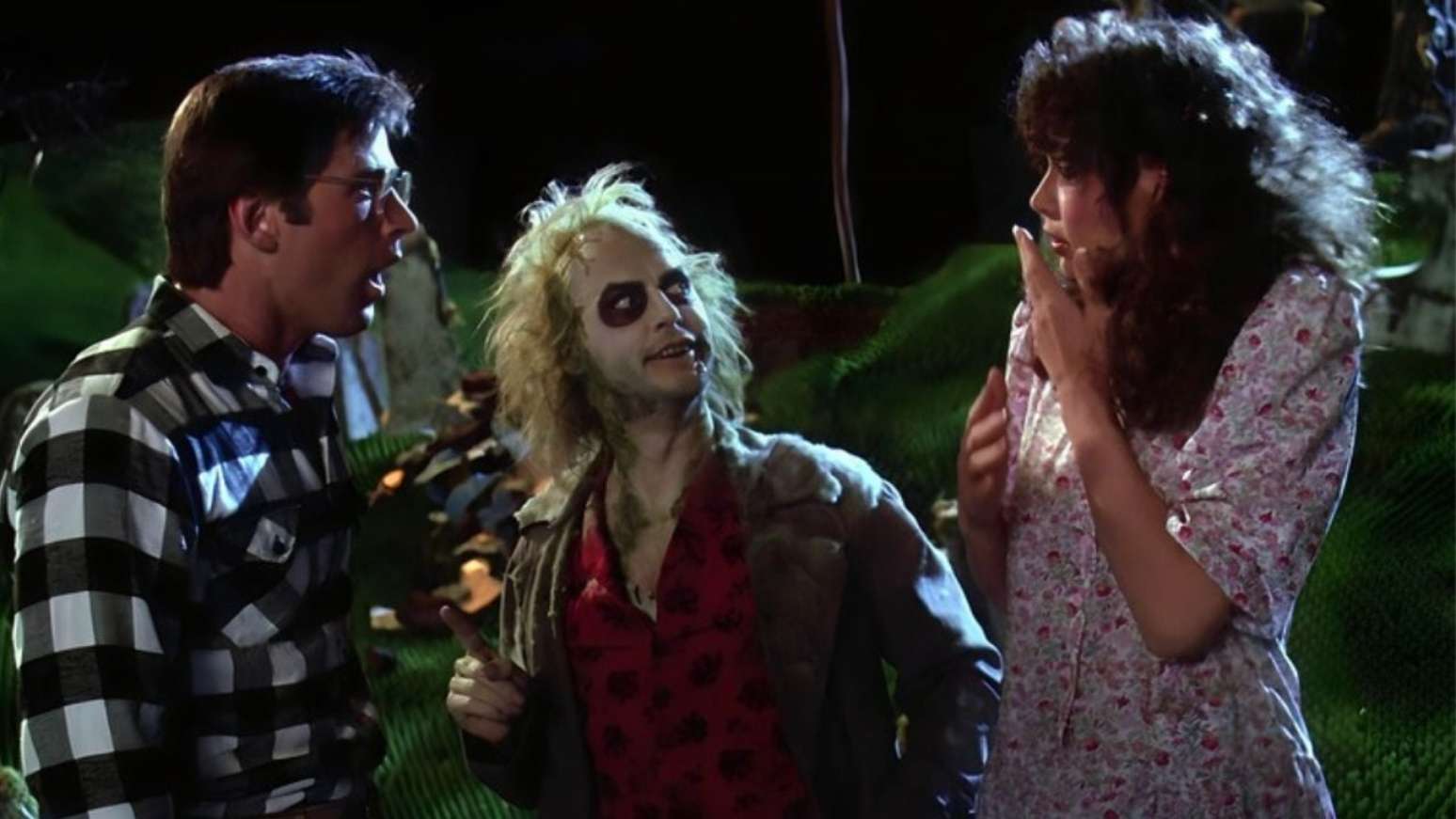
Alec Baldwin played Adam Maitland, the gentle, model-building protagonist and recently deceased husband, in the 1988 cult classic film Beetlejuice. Starring alongside Geena Davis, Baldwin portrayed one-half of a suburban couple who must navigate the bureaucratic complexities of the afterlife while defending their beloved home from an eccentric New York family and a malevolent "bio-exorcist."
Defining Adam Maitland: The Heart of the Afterlife
In the pantheon of Tim Burton characters, Adam Maitland stands out as a uniquely grounded figure amidst a landscape of surrealist horror and dark comedy. As we look back from the vantage point of 2026, Baldwin’s portrayal remains a foundational element of the Beetlejuice mythos. Adam is introduced not as a hero, but as an ordinary man with a passion for meticulous detail, evidenced by the massive, hand-crafted model of his town, Winter River, Connecticut, which occupies the attic of his home.
Adam’s character is defined by his earnestness and his relative lack of preparedness for the supernatural. When he and his wife, Barbara, die in a sudden car accident, they return to their home as ghosts, only to find that being dead is significantly more complicated than they anticipated. Unlike the chaotic energy of Michael Keaton’s Betelgeuse, Adam represents the "straight man" in a world gone mad. His primary motivation throughout the film is the preservation of his domestic peace and the protection of his wife, making him the emotional anchor of the story.
The Character Arc: From Modeler to Protector
Adam’s progression in the film is one of gradual realization. Initially, he is paralyzed by the rules of the Handbook for the Recently Deceased, a technical manual for the afterlife that is famously written in dense, incomprehensible prose. His journey involves moving from a state of passive confusion—waiting in the bureaucratic limbo of the Neitherworld—to taking active, albeit clumsy, steps to scare away the Deetz family.
The model of the town serves as a potent metaphor for Adam’s character. It represents his desire for control and his love for the familiar. Ironically, it is within this very model that Betelgeuse is first discovered, suggesting that even the most controlled environments are susceptible to chaos. By the film's climax, Adam learns that his "life" as a ghost requires a different kind of strength, eventually finding a way to coexist with Lydia Deetz, the only living person who truly sees and understands him and Barbara.
Alec Baldwin’s Performance and Career Trajectory in 1988
To understand the significance of Alec Baldwin playing Adam in Beetlejuice, one must consider the state of his career in the late 1980s. Before becoming a household name through The Hunt for Red October or his long-standing association with Saturday Night Live, Baldwin was a rising dramatic and comedic talent transitioning from soap operas and television movies to the silver screen.
Transitioning from Television to Hollywood Leading Man
In 1988, Baldwin was in the midst of a breakout year. In addition to Beetlejuice, he appeared in Married to the Mob, Working Girl, and Talk Radio. However, Beetlejuice offered him a unique opportunity to play a character that lacked the traditional "tough guy" or "charismatic shark" traits he would later become known for in films like Glengarry Glen Ross.
As Adam Maitland, Baldwin displayed a soft-spoken, almost nerdy charm. His chemistry with Geena Davis was instrumental in making the audience care about the Maitlands' plight. While Michael Keaton’s performance was explosive and scene-stealing, Baldwin provided the necessary counterweight. Without the genuine vulnerability Baldwin brought to the role, the film's darker elements might have felt hollow. His performance demonstrated an early range, proving he could hold the center of a high-concept, visual-effects-heavy production without being overshadowed by the spectacle.
Technical Artistry: Bringing Adam Maitland to Life (and Death)
The production of Beetlejuice is legendary for its reliance on practical effects, a hallmark of Tim Burton’s early career. Alec Baldwin had to interact with a variety of complex puppets, animatronics, and prosthetic setups that defined the visual language of the afterlife.
Practical Effects and Prosthetic Innovations
One of the most iconic sequences involving Baldwin is the "scary face" scene. In an attempt to frighten the Deetzes, Adam and Barbara use their ghostly powers to physically distort their features. For Baldwin, this involved a famous prosthetic "long face" where his eyes were relocated to his mouth. These effects were achieved through a combination of hand-sculpted prosthetics and mechanical rigs, rather than the digital manipulation that would become standard in later decades.
Working within these constraints required a specific type of physical acting. Baldwin had to convey Adam’s personality through heavy makeup and in environments—like the sandy desert of Saturn inhabited by "Sandworms"—that were created on soundstages using forced perspective and oversized props. This technical depth adds a layer of appreciation for his performance; he wasn't just acting against a green screen but was physically immersed in the "low-tech" yet highly imaginative world Burton had constructed.
The Maitland Legacy in the Beetlejuice Franchise
Despite being the primary protagonists of the original film, the Maitlands have had a complex legacy within the broader franchise. As the character of Betelgeuse (Beetlejuice) grew into a pop-culture icon, the focus often shifted away from the quiet couple who started it all.
Why the Maitlands Were Absent in the 2024 Sequel
With the release of Beetlejuice Beetlejuice in late 2024, many fans wondered why Alec Baldwin and Geena Davis did not reprise their roles. Narratively, the film explained their absence by suggesting they had found a "loophole" to move on from the house, or simply that ghosts in the Burton-verse eventually cross over.
From a production standpoint, the decision was largely practical. Director Tim Burton and the writers noted that because ghosts are not supposed to age, casting the original actors nearly 40 years later would have required extensive—and potentially distracting—digital de-aging or a narrative explanation that might have cluttered the story. Furthermore, Baldwin's career had moved into a different phase, and the sequel chose to focus on the generational story of the Deetz women. Nevertheless, the absence of Adam Maitland was felt by longtime fans, underscoring how vital his character was to the heart of the original 1988 story.
Analyzing the Dynamics: The Maitlands vs. Betelgeuse
The conflict between Adam Maitland and Betelgeuse is a classic study in order versus chaos. Adam represents the "old world"—traditional, quiet, and respectful. Betelgeuse is the "new world" (or perhaps the "underworld")—crude, loud, and predatory.
Adam’s reluctance to use Betelgeuse’s services is the central tension of the second act. He realizes early on that the cure might be worse than the disease. This moral compass is what prevents Beetlejuice from becoming a standard horror film. Adam’s primary goal is never malice toward the living Deetzes; it is simply a desire to return to his peaceful status quo. This nuanced motivation is a testament to the writing and Baldwin’s interpretation of the role.
| Feature | Adam Maitland (Alec Baldwin) | Betelgeuse (Michael Keaton) |
|---|---|---|
| Primary Motivation | Peace, home preservation, and Barbara. | Chaos, release from his curse, and marriage. |
| Temperament | Mild-mannered, cautious, and methodical. | Explosive, manic, and manipulative. |
| Skill Set | Model building, carpentry, and research. | Magic, shapeshifting, and "bio-exorcism." |
| Afterlife Status | "Newbie" ghost, still learning the rules. | Ancient entity, veteran of the Neitherworld. |
| Relationship to Lydia | Parental, protective, and compassionate. | Predatory, opportunistic, and exploitative. |
Comparative Look at Alec Baldwin's Early Film Career (1987–1990)
To see where Beetlejuice fits into Baldwin’s filmography, it is helpful to look at the roles he took on around the same time. This era defined him as one of the most versatile actors in Hollywood, capable of jumping between genres with ease.
- Forever, Lulu (1987): An early leading role that showcased his classic "leading man" looks.
- Beetlejuice (1988): His most significant foray into genre-bending comedy/horror.
- Married to the Mob (1988): Played "Cucumber" Frank de Marco, showing his ability to play a comedic "tough guy."
- Working Girl (1988): Played Mick Dugan, the unfaithful boyfriend to Melanie Griffith's character.
- The Hunt for Red October (1990): His definitive transition to a major action/thriller lead as Jack Ryan.
In this context, Adam Maitland remains perhaps his most "innocent" character. Most of Baldwin's later roles involved a degree of cynicism or authority, whereas Adam was a character defined by his lack of authority over his own situation.
The Cultural Impact of the Maitland House and Model
The "Winter River" model created by Adam Maitland has become an iconic piece of cinema history. It serves as a literal plot device (where Betelgeuse is buried) and a symbolic one (Adam’s obsession with the past). In the years since the film's release, the model has been featured in museum exhibits and has been painstakingly recreated by fans and hobbyists.
Baldwin’s performance sold the idea that Adam was a man who lived through his hands. The way he handled the miniatures and the pride he took in the model’s accuracy informed the audience's understanding of his character long before he spoke his first lines of dialogue. This attention to detail in the performance helped ground the fantastical elements of the movie in a recognizable reality.
FAQs About Alec Baldwin in Beetlejuice
Did Alec Baldwin actually build the model in the movie?
No, the model was constructed by the film’s art department and miniature effects team. However, Baldwin spent time on set familiarizing himself with the layout to ensure his movements as Adam—the supposed creator—looked natural and practiced. The model was designed to look like a scaled-down version of the actual house and town used for filming in East Corinth, Vermont.
How did the makeup team transform Alec Baldwin into a ghost?
To achieve the "dead" look for the Maitlands, the makeup department, led by Ve Neill, used a very pale, almost translucent base makeup. The goal was to make Adam and Barbara look slightly "off" or "faded" compared to the vibrant, living Deetzes. For the more extreme scenes, Baldwin wore prosthetic appliances that were applied over several hours to distort his features while still allowing for facial expression.
Why was Alec Baldwin’s character called "Adam"?
The name Adam carries biblical connotations of being the "first man," which fits his role as the first character the audience follows into the afterlife of the Beetlejuice universe. Alongside Barbara, he serves as the audience surrogate, experiencing the confusion and wonder of the Neitherworld for the first time.
Was Alec Baldwin the first choice for the role of Adam?
While several actors were considered for the roles in Beetlejuice, Tim Burton was specifically looking for a couple that felt like the quintessential "American Gothic" pair—wholesome and slightly old-fashioned. Baldwin and Davis were cast because they possessed a natural, believable chemistry that made the Maitlands' love for each other the emotional core of the film.
Does Alec Baldwin have a cameo in the 2024 sequel?
As of 2026, it is confirmed that Alec Baldwin did not appear in the 2024 sequel Beetlejuice Beetlejuice. The film focuses on the return of Michael Keaton, Winona Ryder, and Catherine O'Hara, introducing a new generation of characters played by Jenna Ortega and others. The Maitlands' story is considered complete within the context of the original film.
What happened to the Maitland characters after the first movie?
In the animated series that followed the movie, the Maitlands were largely absent, as the show focused on the friendship between Lydia and a more heroic version of Beetlejuice. In the Broadway musical adaptation, the Maitlands remain central characters, though they were portrayed by different actors (originally Rob McClure and Kerry Butler) who captured the same "earnest" energy Baldwin and Davis established.
Final Perspective on the Maitland Legacy
Alec Baldwin’s performance as Adam Maitland is a masterclass in the "straight man" role within a surrealist comedy. By providing a grounded, relatable human element, he allowed Tim Burton’s wilder visual ideas to flourish without losing the audience's emotional investment. Whether he was squinting through his glasses at the Handbook for the Recently Deceased or frantically trying to save Barbara from a giant Sandworm, Baldwin made the afterlife feel profoundly human.
For those looking to explore the roots of Alec Baldwin's career or the origins of the Beetlejuice franchise, revisiting his performance as Adam Maitland is essential. It remains a testament to a specific era of filmmaking where practical effects and character-driven storytelling merged to create something truly timeless.