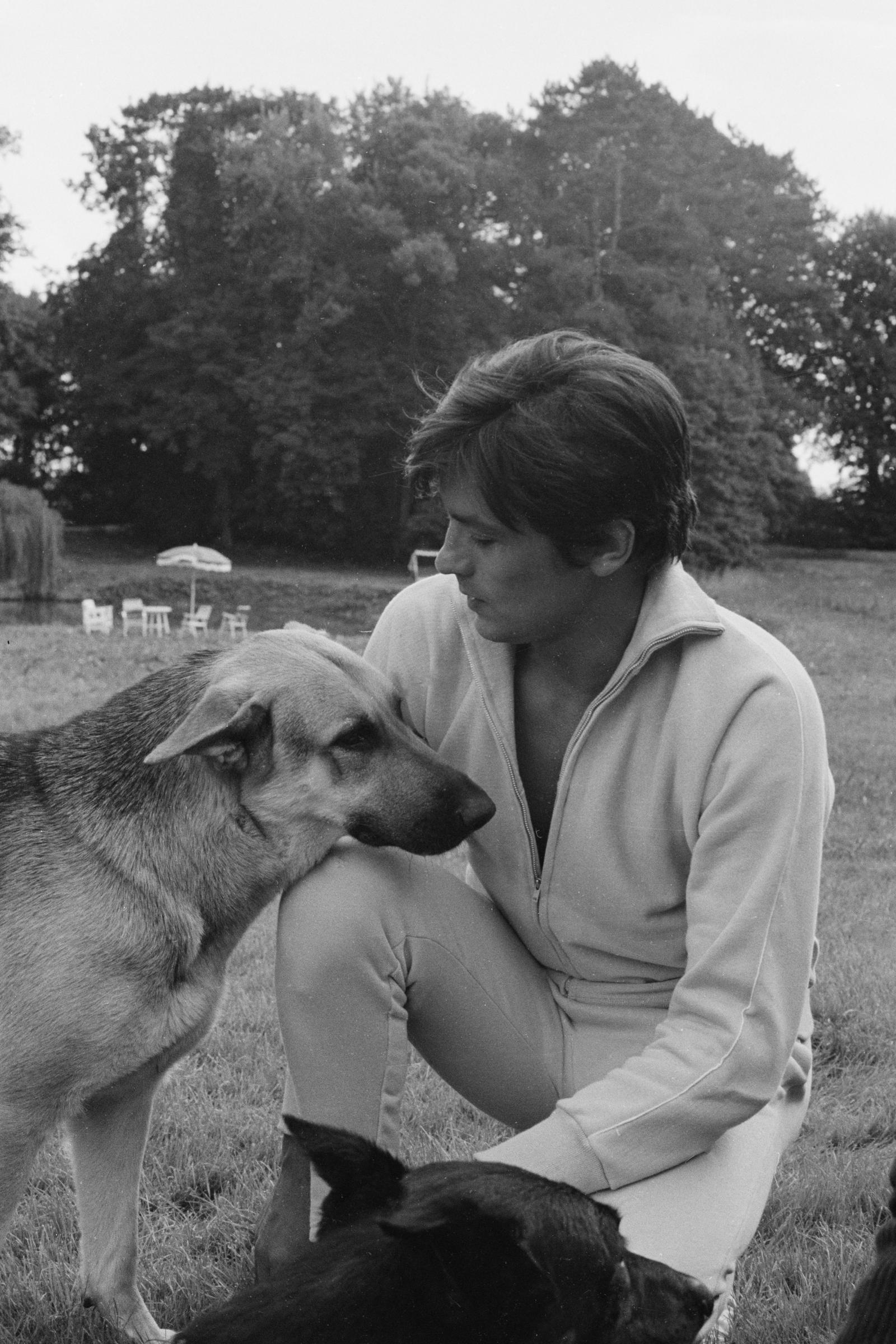
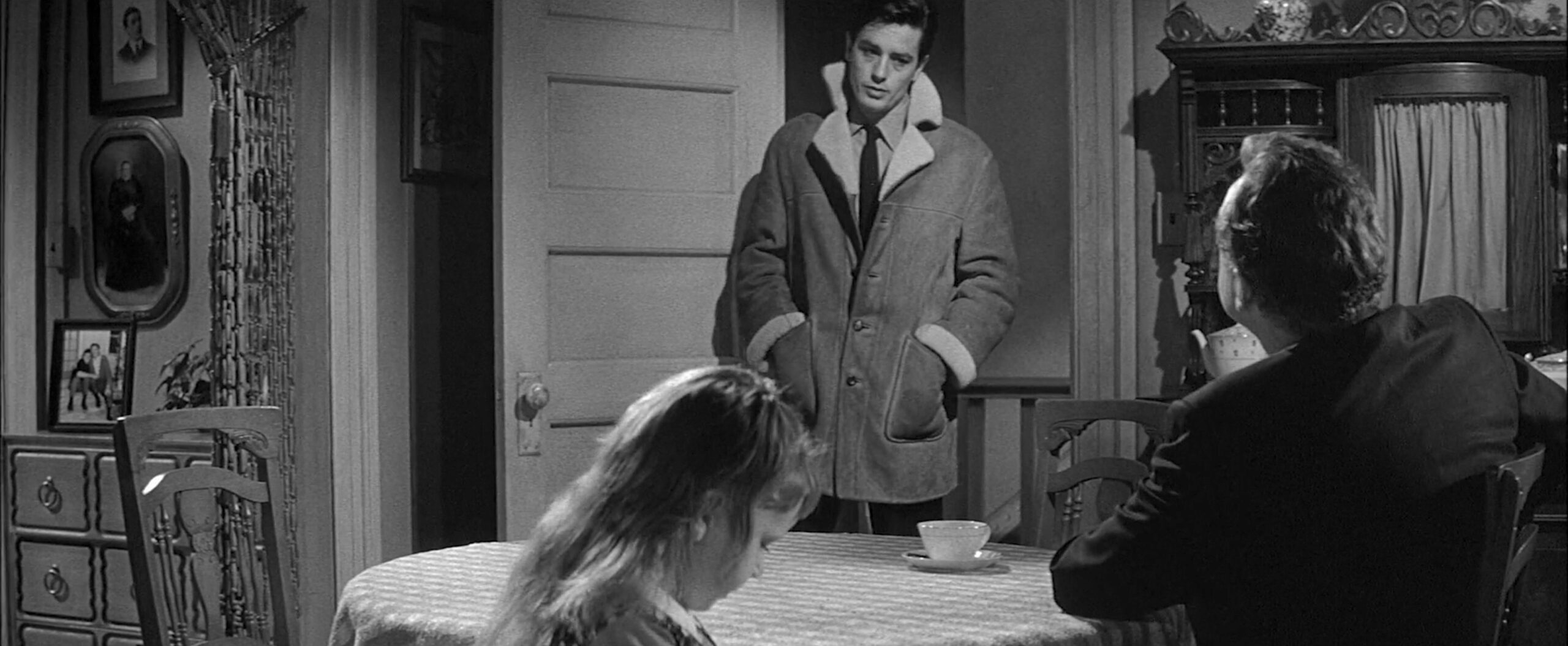
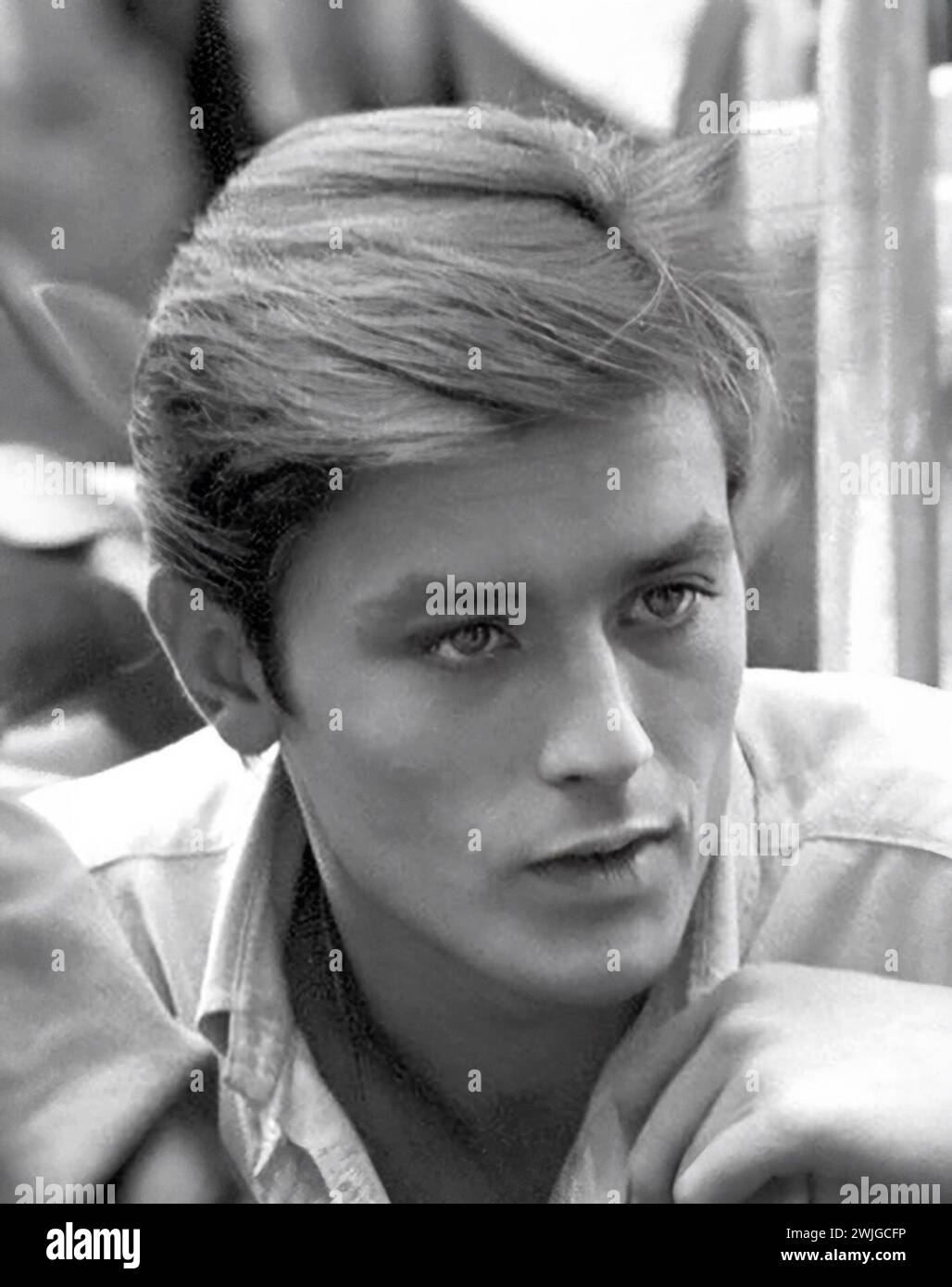
Alain Delon embraced a political identity rooted in Gaullism, characterized by nationalism, traditionalism, and a fierce commitment to law and order. While he maintained a long-standing friendship with Jean-Marie Le Pen, he identified primarily as a "man of the right," advocating for a strong, sovereign France while frequently criticizing modern social shifts.
Alain Delon was more than a cinematic icon; he was a polarizing cultural force whose political leanings were as sharp and uncompromising as his onscreen persona. From his early military service to his later years as a vocal critic of modern society, Delon’s politics were defined by a nostalgic vision of French grandeur and a rejection of the liberal progression that reshaped Europe in the late 20th and early 21st centuries. Understanding the politics he embraced requires looking past the "Le Samouraï" mask and into a world of traditionalism, military discipline, and right-wing convictions.
The Formative Years: Military Service and the Indochina Influence
To understand the political DNA of Alain Delon, one must look at his youth. Long before he was the "prettiest man in cinema," Delon was a soldier. At the age of 17, he joined the French Navy and served as a paratrooper in the First Indochina War. This period was foundational to his worldview.
The experience of the Indochina War (1946–1954) instilled in Delon a deep-seated respect for military hierarchy, discipline, and the concept of national honor. He was part of a generation of Frenchmen who witnessed the painful contraction of the French Empire. This exposure to colonial conflict and the harsh realities of military life created a lifelong affinity for "strongmen" and a belief that authority was necessary to prevent chaos.
When he returned to France, he didn't just bring back a rugged exterior; he brought a political sensitivity that favored the military's role in national identity. Throughout his life, Delon frequently referenced his time in the service as the period that "made" him, often lamenting that modern youth lacked the structure and patriotic fervor that the military once provided.
Gaullism: The "Certain Idea of France"
If there was one political North Star for Alain Delon, it was General Charles de Gaulle. Delon was a self-described Gaullist, an adherent to the political ideology based on the actions and principles of the founder of the French Fifth Republic.
Sovereignty and Grandeur
Gaullism is centered on the idea that France must remain a great power and maintain its independence from both the United States and the Soviet Union (during the Cold War). Delon embraced this "certain idea of France"—a nation that is sovereign, proud, and culturally distinct. For Delon, De Gaulle represented the ultimate father figure and the pinnacle of French leadership. He saw in Gaullism a way to preserve the dignity of the nation against the encroaching tides of globalization and Americanization.
The Cult of the Leader
Delon’s politics were inherently tied to the "Great Man" theory of history. He believed that France functioned best under a singular, charismatic leader who could transcend petty party politics. This is why he often expressed disappointment in the leaders who followed the Gaullist era, feeling they lacked the "stature" or "balls" (as he would often put it in his characteristically blunt style) to lead the country properly.
The Right-Wing Continuum: From Giscard to Sarkozy
While Gaullism was his bedrock, Delon’s practical politics were firmly situated on the French right. He was never a man of the center, and certainly never a man of the left.
- Valéry Giscard d’Estaing: In the 1970s, Delon supported Giscard d’Estaing, the center-right president who sought to modernize France. While Giscard was more socially liberal than De Gaulle, Delon saw him as the necessary bulwark against the rising socialist tide led by François Mitterrand.
- Nicolas Sarkozy: Fast forward to 2007, and Delon found a new champion in Nicolas Sarkozy. He was drawn to Sarkozy’s "rupture" rhetoric and his focus on "karcherizing" (cleaning out) crime-ridden suburbs. Sarkozy’s emphasis on national identity and meritocracy resonated with Delon’s own values of hard work and law and order.
Delon’s support for these figures was rarely about specific policy white papers. Instead, it was about an alignment of values: the defense of the family, the protection of the police, and the promotion of a meritocratic society where "you get what you work for."
The Controversy of the National Front and Jean-Marie Le Pen
The most contentious aspect of Alain Delon’s political life was his long-standing friendship with Jean-Marie Le Pen, the founder of the far-right Front National (now Rassemblement National). This relationship often led the media to label Delon as a far-right extremist, a claim he frequently disputed while simultaneously stoking the fire.
Friendship vs. Membership
Delon was adamant that while he was a friend of Le Pen, he was not a member of his party. Their friendship dated back to the 1950s, rooted in their shared military backgrounds and mutual acquaintances from the Indochina era. Delon defended this friendship for decades, stating that he did not drop friends because of their political views.
The 2013 "Encouragement" Comment
In 2013, Delon caused a national stir in an interview with the Swiss newspaper Le Matin. He stated that he "approved" and "perfectly understood" the rise of the National Front. He argued that for years, the French people had been "pushed aside" and that the growth of the far-right was a natural reaction to a political class that had failed to address issues of immigration and security.
This endorsement led to his resignation as the honorary president of the Miss France committee after the organization distanced itself from his comments. Delon, true to form, did not apologize. He viewed his comments not as an endorsement of racism, but as a pragmatic observation of a "sick" society seeking a cure.
Social Conservatism and the "Against Nature" Controversy
As the 21st century progressed, Delon became increasingly vocal about social issues, often positioning himself as a relic of a bygone era—a stance he took with a mixture of pride and bitterness.
LGBTQ+ Rights
Delon’s most controversial social commentary came in 2013 during a television interview on C à vous. When asked about same-sex marriage and adoption, he described homosexuality as "against nature." While he clarified that he didn't care if people were gay, he was vehemently opposed to same-sex couples adopting children, arguing that a child needs a mother and a father.
These comments cemented his reputation among the French left and younger generations as a reactionary figure. To Delon, however, he was simply defending the "natural order" of the traditional family unit, which he saw as the foundational cell of a stable society.
The Death Penalty
Delon was a vocal critic of the abolition of the death penalty in France (which occurred in 1981). He argued that certain crimes were so heinous that they forfeited the perpetrator’s right to live. This "eye for an eye" philosophy was consistent with his law-and-order persona and his belief that a state must be feared to be respected.
Comparison of Political Alignments and Values
The following table outlines the key pillars of Delon's political identity compared to the prevailing French political movements of his era.
| Political Pillar | Delon's Stance | Alignment | Rationale |
|---|---|---|---|
| National Sovereignty | High - France first | Gaullism | Belief in French "Grandeur" and independence from global blocs. |
| Law and Order | Strict / Pro-Death Penalty | Conservative Right | Viewed authority and punishment as essential for social stability. |
| Social Issues | Traditionalist / Reactive | Traditional Right | Opposed same-sex adoption; viewed traditional family as "natural." |
| Immigration | Restrictive / Critical | Far-Right (Overlap) | Concerned with the preservation of French cultural identity. |
| Economic View | Meritocratic | Center-Right | Believed in rewards for hard work and individual effort. |
| Leadership Style | Strongman / Charismatic | Bonapartism/Gaullism | Preferred singular, powerful leaders over parliamentary consensus. |
The "Decline of France" Narrative
In his final years, especially leading up to his passing in 2024, Delon’s political rhetoric was increasingly colored by a sense of decadence and decline. He frequently spoke about how he "hated" the modern world and would leave it without regret.
He believed that France had lost its soul, its manners, and its standing in the world. This narrative of "Le Grand Déclassement" (the great decline) is a common theme in French right-wing thought. Delon felt that the dilution of French culture through mass immigration, the loss of sovereignty to the European Union, and the erosion of traditional values had turned France into a shadow of its former self.
His politics in his sunset years were less about campaigning for a candidate and more about mourning a lost civilization. He saw himself as one of the last "monuments" of a France that no longer existed—a France of De Gaulle, of elegant cinema, and of clear moral certainties.
FAQ: Understanding Alain Delon’s Political Impact
Was Alain Delon ever a member of a political party?
No, Alain Delon never officially joined a political party. While he was a staunch supporter of Gaullist candidates and center-right figures like Nicolas Sarkozy, he preferred to remain an independent "free electron." He valued his independence and the ability to critique any side of the political spectrum, though his critiques were almost exclusively leveled at the left.
Did his politics affect his acting career?
In the later stages of his career, his politics certainly colored his public reception. While he remained a legendary figure in French cinema, his controversial statements on the National Front and LGBTQ+ rights led to protests at film festivals, most notably at the 2019 Cannes Film Festival when he was awarded an honorary Palme d'Or. However, his status as a "sacred monster" of cinema usually insulated him from total cancellation.
What was his relationship with the French Left?
It was largely antagonistic. Delon was the antithesis of the "Left Bank intellectual" archetype. He mocked the "bobo" (bourgeois-bohemian) culture of Paris and was frequently attacked by left-leaning publications like Libération. He viewed the French Left as responsible for the "laxity" in the justice system and the perceived moral decay of the country.
Did he support Marine Le Pen as he did her father?
Delon’s relationship with Marine Le Pen was more complicated than his friendship with her father, Jean-Marie. While he recognized the Rassemblement National as a legitimate political force, he occasionally expressed skepticism about Marine’s efforts to "de-toxify" the party, sometimes feeling it lost some of the "edge" that her father possessed. Nonetheless, his ideological sympathies remained far closer to her camp than to the centrist or leftist parties.
How did Delon view the European Union?
Delon was a staunch "sovereigntist." He was highly skeptical of the European Union, viewing it as a bureaucratic entity that stripped France of its power and identity. His Gaullist roots made him a proponent of a "Europe of Nations" rather than a federalized European state.
Practical Recommendation: Navigating the Delon Legacy
For researchers and fans looking to separate the actor from the political figure, the best approach is to view Delon as a cultural reactionary. When analyzing his interviews or his political endorsements, keep these three contexts in mind:
- The Military Context: Always view his desire for authority through the lens of his service in Indochina.
- The Gaullist Context: Understand that his nationalism was rooted in a 1950s/60s vision of French prestige.
- The Provocateur Context: Delon enjoyed the reaction his bluntness caused. He often used "politically incorrect" language to reinforce his image as a man who refused to be silenced by modern social norms.
To truly understand the politics he embraced, one should watch his films alongside reading his late-life interviews. The solitude and rigid code of honor seen in Le Samouraï or Le Cercle Rouge are the cinematic expressions of the very same conservative, individualistic, and disciplined politics he advocated for in the real world.