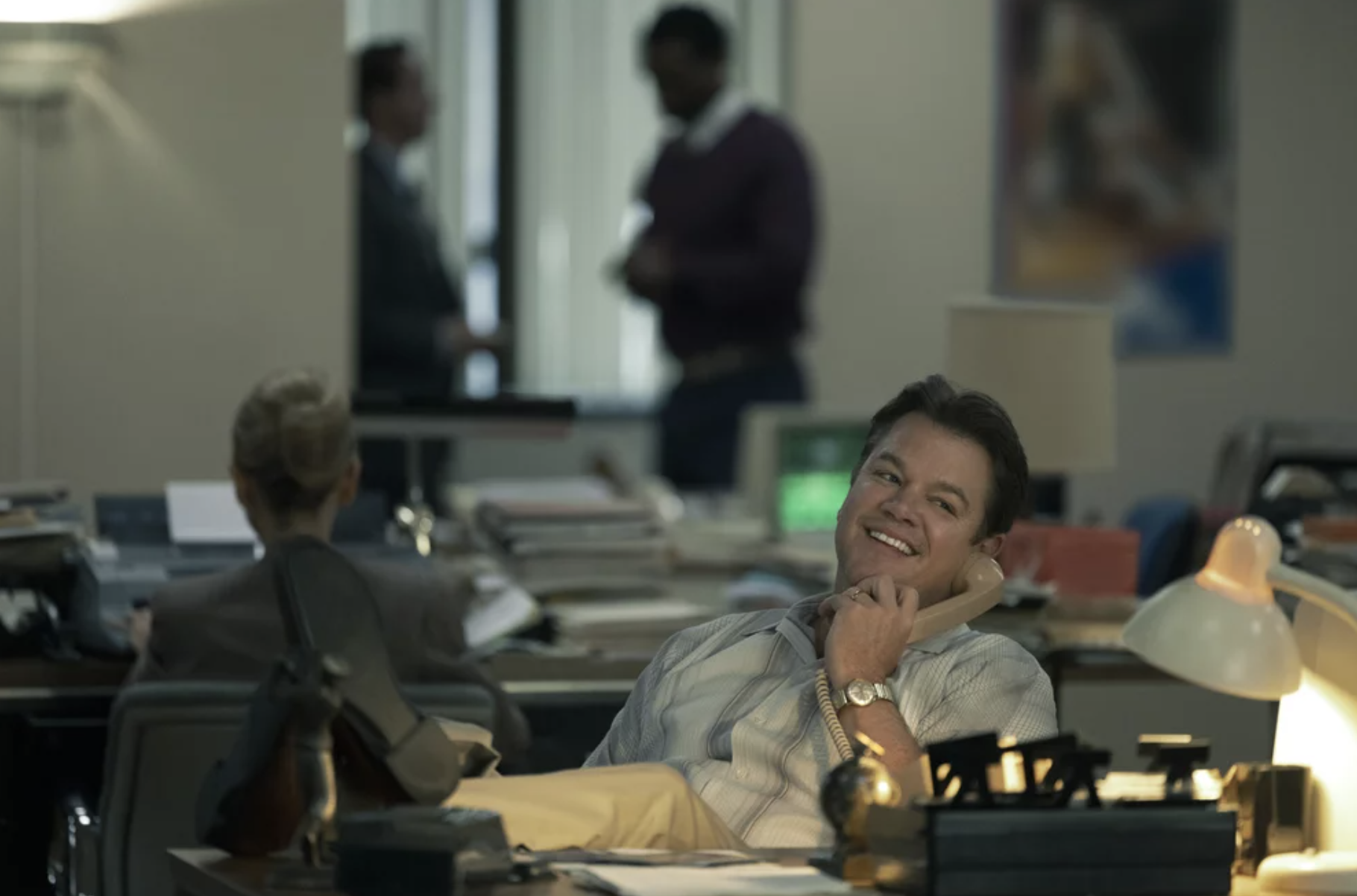
The 2023 film Air, directed by Ben Affleck, tells the high-stakes story of how Nike’s basketball division, led by talent scout Sonny Vaccaro, pursued a rookie Michael Jordan in 1984. The film focuses on the revolutionary deal that birthed the Air Jordan brand, a partnership that forever changed the relationship between professional athletes and corporate sponsorship.
The Cultural Landscape of 1984: Nike’s Upstream Battle
To understand the weight of the events depicted in the movie Air, one must first understand the precarious position Nike occupied in the early 1980s. In 2026, we view Nike as a global juggernaut, but in 1984, the company was primarily known as a running shoe brand. Their basketball division was struggling, trailing significantly behind industry leaders Converse and Adidas.
Converse held the "official" status of the NBA, boasting a roster that included superstars like Magic Johnson and Larry Bird. Adidas, meanwhile, was the brand of choice for urban culture and European style, often preferred by players for its aesthetic appeal. Nike was viewed as "the white guy’s running shoe," a perception that made it difficult to recruit top-tier basketball talent.
The film meticulously captures this desperation. The basketball department, managed by Rob Strasser (played by Jason Bateman) and overseen by co-founder Phil Knight (Ben Affleck), was facing budget cuts and a potential shutdown. It was within this atmosphere of impending failure that Sonny Vaccaro (Matt Damon) proposed a "sink or swim" strategy: instead of signing three or four mid-level players with their $250,000 budget, Nike would bet the entire amount on a single rookie—Michael Jordan.
Sonny Vaccaro and the Vision for the "Signature Athlete"
The central conflict of the movie is not just about a shoe; it is about a paradigm shift in marketing. Before the Air Jordan, athletes were merely endorsers. They wore the shoes the company made, and in return, they received a flat fee. Sonny Vaccaro’s vision was different. He believed that the shoe should be an extension of the player’s identity—a concept we now call the Signature Brand.
Vaccaro’s obsession with Michael Jordan stemmed from watching his game-winning shot for North Carolina in the 1982 NCAA Championship. While other scouts saw a talented player, Vaccaro saw a "singular" force who could transcend the sport. The movie highlights Vaccaro's journey as he travels to North Carolina to meet Jordan's parents, bypassing the traditional agent-first protocol, a move that was both professionally risky and socially unconventional at the time.
This pursuit required Vaccaro to convince Phil Knight to abandon his conservative business instincts. Knight, portrayed as a quirky, Buddhist-philosophy-quoting CEO, was hesitant to gamble the company's remaining resources on an unproven rookie who had publicly stated his preference for Adidas. The tension between Vaccaro’s "gut feeling" and Knight’s "corporate responsibility" provides the narrative engine for the film’s first act.
The Power of Deloris Jordan: A Revolution in Contract Law
While the film is titled Air, many critics and historians argue that its emotional heart is Deloris Jordan, Michael’s mother, played by Viola Davis. Michael Jordan himself reportedly requested that Davis play his mother, recognizing the pivotal role she played in the negotiations.
The movie accurately depicts the "Nike Pitch" meeting, where the Jordan family visited the Oregon headquarters. While Michael remained mostly silent (and is notably never shown in full face during the film to maintain a sense of mythic presence), Deloris was the primary negotiator. She recognized that her son’s value exceeded a simple endorsement fee.
The climax of the film centers on a phone call between Vaccaro and Deloris Jordan. She delivers a demand that was unheard of in 1984: Michael must receive a percentage of every shoe sold under his name. This "revenue share" model is the foundation of the modern "influencer" and "superstar" economy. It transformed Michael Jordan from an employee of a brand into a partner of the brand. By 2026, this deal has resulted in Jordan earning billions of dollars, far exceeding his total career earnings from NBA salaries.
Designing the Icon: Peter Moore and the Air Jordan 1
A significant portion of the film is dedicated to the technical and aesthetic creation of the shoe itself. Peter Moore (played by Matthew Maher), Nike’s creative director at the time, was tasked with creating a shoe that looked like nothing else on the market.
The technical specifications of the original Air Jordan 1 were revolutionary for the time:
- Air Technology: The shoe utilized Nike's patented pressurized gas system in the sole to provide superior cushioning and impact protection.
- Color Blocking: Unlike the mostly white shoes required by the NBA’s "uniformity of dress" rule, the Air Jordan 1 featured bold red and black panels.
- The "Wings" Logo: Moore famously sketched the original "Wings" logo on a cocktail napkin during a flight, symbolizing Jordan’s ability to "fly" to the hoop.
The movie highlights the "Banned" narrative, which became a cornerstone of Nike's marketing. The NBA sent a letter to Nike stating that the red and black shoes violated the league’s rules and that Jordan would be fined $5,000 every time he wore them on the court. Rather than backing down, Nike paid the fines and created a commercial stating: "The NBA threw them out of the game. Fortunately, the NBA can't stop you from wearing them." This transformed the shoe from a piece of athletic equipment into a symbol of rebellion and cool.
Comparison of the 1984 Basketball Shoe Market Leaders
The following table illustrates the market position and primary strategy of the major players during the period depicted in the movie.
| Brand | Primary Market Perception (1984) | Lead Athletes | Key Marketing Strategy |
|---|---|---|---|
| Converse | The "Standard" of the NBA | Magic Johnson, Larry Bird | Mass-market saturation and institutional reliability. |
| Adidas | The "Cool" and Urban Brand | Patrick Ewing (later), Kareem Abdul-Jabbar | Focus on style, European craftsmanship, and hip-hop tie-ins. |
| Nike | The Running/Track Brand | Moses Malone, Sonny Stevens | Innovation-led performance, but perceived as "boring" in basketball. |
| Air Jordan | The "Rebel" Signature Brand | Michael Jordan | Direct player-to-product identity; revenue sharing; defiance of authority. |
Historical Accuracy vs. Cinematic Dramatization
As with any historical drama, Air takes certain liberties for the sake of narrative tension. While the core of the story is factual, some elements were heightened for the screen:
- The Role of Sonny Vaccaro: While Vaccaro was undeniably instrumental in the deal, some former Nike executives, including Phil Knight, have suggested that the signing was a collaborative effort involving Rob Strasser and George Raveling. The movie places Vaccaro as the sole "prophet" of Jordan's greatness.
- The Timeline of the Design: The design of the Air Jordan 1 was a more iterative process than the "overnight miracle" suggested in the film. Peter Moore worked on several prototypes before landing on the final version.
- The "Banned" Shoe: Technically, the shoe that the NBA banned was the Nike Air Ship, a predecessor to the Jordan 1 that looked similar. Nike used the controversy to market the Air Jordan 1, which was released shortly after. The movie simplifies this for the audience.
- Michael Jordan’s Input: The film focuses on the executives because Michael Jordan is such a larger-than-life figure that portraying him as a young man with a full speaking role might have broken the "mystique." The movie effectively treats Jordan as the "sun" that everyone else is orbiting.
The Long-Term Impact: Why the Movie Matters in 2026
In 2026, the legacy of the deal depicted in Air is more relevant than ever. The "Jordan Brand" is now its own subsidiary within Nike, generating over $5 billion in annual revenue. This single partnership saved Nike from its 1980s slump and propelled it to become the most valuable sports brand in the world.
Furthermore, the movie serves as a case study for business and marketing students. It illustrates several key principles:
- The Power of Personalization: Brands are more successful when they tell a human story rather than just listing product features.
- Risk Tolerance: Nike’s willingness to spend its entire budget on one person is a classic example of "calculated risk" that defines successful entrepreneurship.
- Equity and Empowerment: The revenue-sharing clause paved the way for the current "NIL" (Name, Image, and Likeness) era in college sports, where athletes are finally able to monetize their own brands.
Frequently Asked Questions (FAQs)
Does Michael Jordan appear in the movie Air?
No, Michael Jordan does not appear as a speaking character shown from the front. Director Ben Affleck chose to use archival footage of the real Michael Jordan and cast a stand-in (Damian Delano Young) who is seen only from the back or in shadow. Affleck felt that Jordan was "too big" for any actor to convincingly portray, and he wanted the audience to focus on the executives' perspective.
Is the movie Air a true story?
Yes, the movie is based on the true events of 1984. It accurately portrays the key figures (Sonny Vaccaro, Phil Knight, Deloris Jordan) and the central conflict regarding Nike's attempt to sign Michael Jordan. While some dialogue and specific scenes are dramatized, the business outcome—the creation of the Air Jordan brand and the revenue-sharing deal—is historically accurate.
Why did Michael Jordan want to sign with Adidas instead of Nike?
In the early 1980s, Adidas was considered the "cooler" brand. They had a strong presence in the burgeoning hip-hop scene and produced shoes that were sleeker than Nike’s bulky running-focused designs. Jordan famously liked the fact that Adidas shoes were "lower to the ground." He only agreed to the Nike meeting at his mother's insistence.
Where can I watch the movie Air in 2026?
As of 2026, Air remains a flagship title for Amazon MGM Studios. It is primarily available for streaming on Amazon Prime Video. It can also be purchased or rented on various digital platforms like Apple TV and Google Play, and it is available on physical media (Blu-ray/4K UHD).
What was the "revenue share" mentioned in the film?
The revenue share was a clause in Michael Jordan's contract that gave him a percentage of the profit for every pair of Air Jordans sold. At the time, this was completely unprecedented. Typically, athletes were paid a flat endorsement fee. This clause is what eventually made Jordan a billionaire, as the brand’s popularity grew exponentially over the decades.
Practical Recommendation: Exploring the Legacy
If you are a fan of the movie Air or a sneaker enthusiast, the best next action is to visit the Nike World Headquarters in Beaverton, Oregon, or a major sneaker museum like the Bata Shoe Museum in Toronto. These locations often house original prototypes of the Air Jordan 1 and historical documents related to the deal. Additionally, watching the documentary series The Last Dance (2020) provides an excellent companion piece to the film, offering the perspective of Michael Jordan himself on his early years and the growth of his brand.