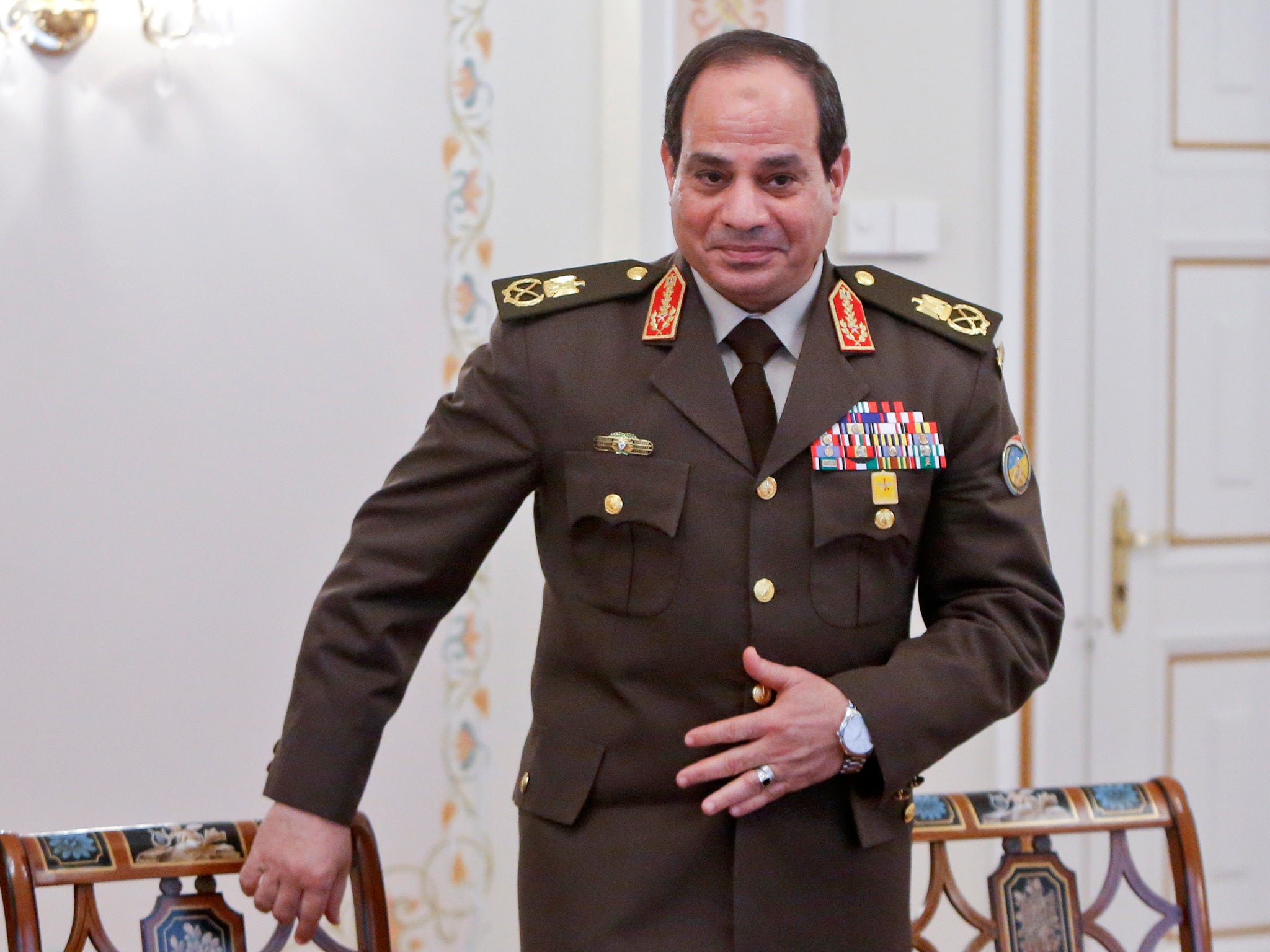
Determining the net worth of Abdel Fattah el-Sisi involves navigating a landscape where official financial disclosures for Egyptian executive leadership are not publicly accessible in the format common to Western democracies. Consequently, estimates regarding the President's personal wealth remain speculative, often conflated with state budgets, national infrastructure projects, and the economic oversight of the Egyptian Armed Forces.
The Challenge of Assessing Executive Wealth in Egypt
In many nations, the head of state is required to file annual financial disclosures that are open to public scrutiny. In Egypt, the regulatory framework governing the financial transparency of high-ranking officials is rooted in laws that prioritize national security and institutional integrity over individual disclosure.
When researchers or financial analysts examine the net worth of political figures in the Middle East, they often encounter a structural barrier: the blurring of lines between personal assets and state-controlled resources. For a career military officer like Abdel Fattah el-Sisi, who rose through the ranks of the Egyptian Armed Forces to serve as Director of Military Intelligence and Minister of Defense before assuming the presidency in 2014, his career has been entirely institutional. His compensation, housing, and logistical support have historically been managed under the auspices of the Ministry of Defense, rather than through private sector earnings.
Institutional vs. Private Wealth
The distinction between the Egyptian state’s treasury and the personal finances of its leaders is frequently misunderstood. Egypt operates under a system where the military maintains a significant footprint in the national economy, managing infrastructure projects, manufacturing, and service industries. Because the President acts as the commander-in-chief and a central figure in the state's economic development initiatives, critics and external observers sometimes attribute the scale of these state-managed projects to individual leadership. However, from an accounting and legal perspective, these assets belong to the state or the military institution, not to an individual's private portfolio.
Understanding the "Context" of Presidential Assets
To understand why a definitive "net worth" figure for Abdel Fattah el-Sisi is elusive, one must look at the legal and cultural context of wealth reporting in the region. There is no publicly available registry that lists the President’s private investments, real estate holdings, or liquid assets.
Historically, public discussions regarding the wealth of Egyptian leaders have been fueled by political discourse rather than verified financial audits. In the absence of tax filings or SEC-style disclosures, external estimates often rely on fragmented reports or assumptions about salary and benefits. In the context of 2026, it is important to distinguish between three types of financial categorization:
- State-Allocated Benefits: These include the use of presidential palaces, security details, and transportation, which are funded by the state budget. These are not personal assets; they are functions of the office.
- Institutional Alignment: This refers to the President’s role in directing national projects (e.g., the New Administrative Capital or the expansion of the Suez Canal). While these projects involve massive capital, the funds are managed through government agencies, ministries, and the Sovereign Fund of Egypt, not private accounts.
- Personal Remuneration: Like other public officials, the President receives a salary determined by law. While this is public knowledge in terms of pay scales for high-ranking government officials, it represents only a fraction of what would constitute a high "net worth" in the private sector.
Comparative Framework: Public Servants and Financial Disclosure
The difficulty in assessing the President’s wealth is not unique to Egypt; it is a common characteristic in political systems where transparency laws are developing. To contextualize this, we can look at the typical components that are absent in the Egyptian public record compared to other systems.
| Category | Typical Disclosure (Global Standards) | Egyptian Context (Verified Status) |
|---|---|---|
| Annual Tax Returns | Required for all senior officials | Not subject to public disclosure |
| Investment Portfolio | Must be placed in blind trusts | No public record of private trusts |
| Spousal/Family Assets | Often included in reporting | Generally excluded from public record |
| State Palace Usage | Itemized in budget audits | Classified as state property/security |
The Role of Financial Oversight
Egypt does have institutions like the Administrative Control Authority (ACA), which monitors the conduct of public officials. However, the mandate of the ACA is focused on anti-corruption, efficiency, and verifying that officials do not abuse their power for financial gain. The findings of such internal audits are not public, and therefore do not provide a basis for public net-worth estimates. When international media outlets publish "net worth" figures, they are frequently extrapolation-based estimates that lack an evidentiary trail—they should be treated as conjecture rather than financial fact.
Economic Policy and the "State-Led Growth" Model
A primary driver for the curiosity surrounding the President’s wealth is the highly visible "state-led growth" model implemented during his tenure. The construction of the New Administrative Capital (NAC) and the massive expansion of the road and infrastructure network have cost hundreds of billions of dollars.
To an outside observer, the sheer scale of this spending can lead to questions regarding who controls these resources. The economic philosophy behind these projects is designed to jump-start the Egyptian economy through "mega-projects" that create employment and attract foreign direct investment. Because the military is often the executor of these projects, it provides a stable, centralized project management layer that the government trusts to execute rapid development. This operational reality is often misinterpreted as the "accumulation of wealth" by individuals, when in reality, it is the execution of state policy.
Evaluating Risk and Oversight
In 2026, international investors and institutions like the International Monetary Fund (IMF) monitor Egypt's economic stability closely. These organizations require detailed reporting on debt, foreign currency reserves, and fiscal deficits. The focus of these audits is the health of the national balance sheet. They do not report on the "net worth" of political leaders because, from a macroeconomic perspective, the leader’s personal wealth is statistically irrelevant to the country's sovereign risk.
Addressing Common Misconceptions
When navigating this topic, it is essential to distinguish between confirmed economic reality and unsubstantiated claims often found on social media or sensationalist reporting.
1. The Myth of Personal Ownership of Projects
A common error is the assumption that because a leader inaugurates a project or directs its funding, they own the proceeds. In the context of Egyptian law, public projects are state property. There is no legal mechanism for a sitting president to claim these as personal assets, nor has there been any evidence of such diversion.
2. Misinterpretation of Salary and Benefits
Public officials in Egypt receive salaries that are public, but these are modest relative to global standards. Comparing these figures to the "net worth" of Western corporate executives or political leaders who have accumulated wealth through private business prior to taking office often leads to confusion. A career in the military and public service typically precludes the accumulation of the kind of wealth that would result in a "high net worth" index.
3. Verification of Foreign Assets
Periodically, reports circulate regarding foreign properties or bank accounts. These claims are frequently unverified and often originate from anonymous sources. In the context of financial investigation, "net worth" must be based on audited evidence, not anonymous claims. As of 2026, no authoritative body or reputable financial publication has produced a documented, verifiable financial statement that would substantiate such claims.
Frequently Asked Questions (FAQ)
What is the official salary of the President of Egypt?
The President’s salary is fixed by law and is considered a public record within the context of the Egyptian civil service and government pay scales. While specific, periodically adjusted figures are available in the state gazette, they reflect standard government compensation for high-ranking executive positions, not personal investment income.
Are Egyptian presidential financial records public?
No, there is no mandatory law in Egypt that requires the President or other high-ranking officials to publish detailed personal financial disclosures for public viewing. The regulatory oversight remains within the internal governmental apparatus, primarily handled by the Administrative Control Authority.
Why do some sources estimate a high net worth for Abdel Fattah el-Sisi?
Estimates found in tabloid media or non-verified sources usually conflate the national budget, state-controlled infrastructure projects, and the assets of the Egyptian military with the personal bank accounts of the President. These estimations lack a foundation in accounting principles and do not distinguish between state assets and individual property.
Does the military’s role in the economy affect the President’s personal wealth?
The military's involvement in the economy is a matter of national policy. While the President is the Supreme Commander of the Armed Forces, his relationship to the economy is one of oversight and policy-making. This does not equate to ownership of military-affiliated industrial or commercial entities.
How does the current Egyptian legal system protect against the enrichment of public officials?
The legal system relies on the Administrative Control Authority and the Illicit Gains Authority. These bodies are empowered to investigate public officials for potential corruption or the unexplained acquisition of wealth. Their existence serves as the institutional check on the enrichment of the political class.
Recommendation for Further Research
For those looking to understand the financial reality of the Egyptian state, it is recommended to focus on macroeconomic reports rather than personal wealth estimates. Sources like the Central Bank of Egypt, the Ministry of Planning and Economic Development, and the World Bank provide audited data on the country’s fiscal health, which is the only reliable metric for assessing the economic trajectory of the nation.
If you are conducting professional research into the financial transparency of global leaders, prioritize data from the Extractive Industries Transparency Initiative (EITI) or similar global standards for governance, which emphasize systemic transparency over individual asset tracking. Understanding the structural, legal, and institutional frameworks of the Egyptian state is the most effective way to gain clarity on this subject, as individual wealth is not the driver or the indicator of the nation’s economic direction.