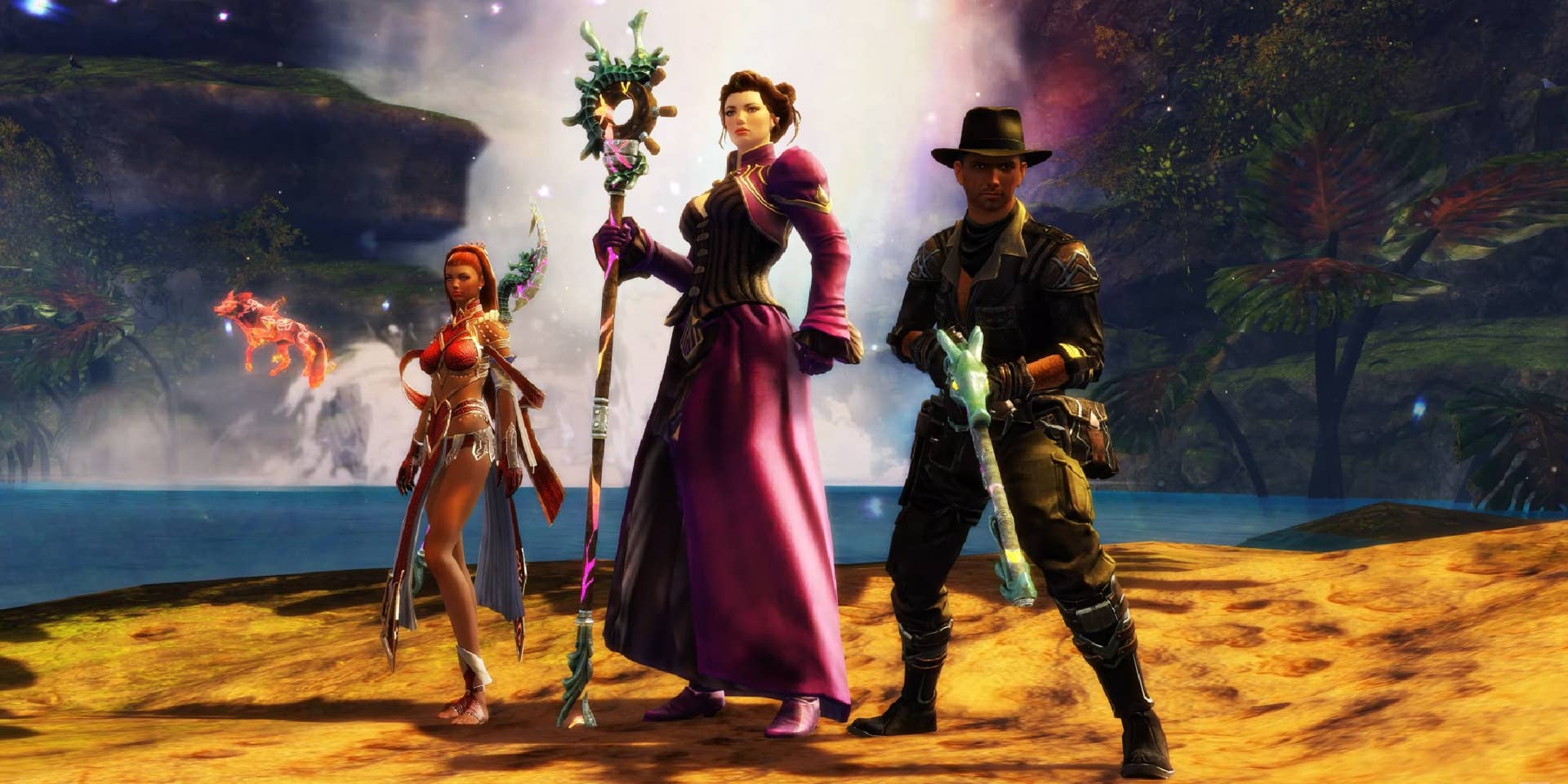
In Guild Wars 2, elite specializations are advanced sub-classes unlocked at level 80 that fundamentally transform a profession's core mechanics. By investing Hero Points, players gain access to new weapons, unique profession skills, and powerful utility types, allowing characters to fulfill specialized roles like dedicated healing, offensive support, or high-intensity damage dealing.
The evolution of the Guild Wars 2 combat system has reached a sophisticated peak in 2026. While the core professions provide the foundation, it is the elite specializations—introduced across the Heart of Thorns, Path of Fire, End of Dragons, and expanded through Secrets of the Obscure and Janthir Wilds—that define the modern meta. These specializations do more than just add skills; they often replace the profession’s core "F1–F5" mechanics with entirely new systems.
Understanding these specializations is critical for navigating high-level content such as Fractals of the Mists, Strike Missions, Raids, and World vs. World (WvW). This guide explains eight of the most impactful and mechanically distinct specializations in the game today, providing a deep look into how they function and where they excel.
The Architecture of Elite Specializations
Before analyzing specific specializations, it is essential to understand the structural requirements. To unlock an elite specialization, a character must be level 80 and have fully trained all core specializations and skills. Each elite spec requires 250 Hero Points to fully unlock, which are primarily gathered through "Hero Challenges" found in expansion maps.
In the current 2026 landscape, the "Weapon Mastery" and "Expanded Weapon Proficiency" updates have decoupled some weapon restrictions, but the core identity of an elite specialization remains tied to its unique profession mechanic (the bar above the weapon skills) and its specific trait lines.
1. Firebrand (Guardian)
The Firebrand, introduced in the Path of Fire expansion, remains one of the most versatile and dominant specializations in Guild Wars 2. It transforms the Guardian’s traditional "Virtues" into "Tomes." Instead of simple instant-effect buttons, the Firebrand pulls out literal books of lore that replace their weapon skills with five unique spells per tome.
Mechanics and Playstyle
The Firebrand's power lies in its flexibility. By opening the Tome of Justice, the player becomes a condition-damage powerhouse, spreading burning to multiple enemies. The Tome of Resolve provides intense burst healing and condition cleanse, while the Tome of Courage offers stability, aegis, and damage reduction.
In 2026, the Firebrand is the premier "Quickness" provider. Through the "Mantra" utility skills and specific traits, they can maintain a 100% uptime on the Quickness boon, significantly increasing the attack speed of their entire 5-man or 10-man group. This makes them indispensable in organized PvE.
Role Suitability
- Best For: Group support, offensive utility, and flexible "carry" potential.
- Weaponry: Traditionally uses an Axe and Torch, though modern builds often incorporate the Spear or Pistol for varied engagement ranges.
2. Mechanist (Engineer)
Released with End of Dragons, the Mechanist replaced the Engineer’s complex "Tool Belt" skills with a massive, customizable autonomous robot known as the Jade Mech CJ-1. This specialization is famous for its "Low Intensity" (LI) playstyle, allowing players to achieve high performance with fewer inputs compared to the frantic "piano-playing" style of core Engineer.
Mechanics and Playstyle
The Jade Mech inherits a portion of the player’s stats and can be commanded to perform specific attacks. The specialization's traits allow you to customize the Mech for three distinct roles:
- Power DPS: Focusing on the Mech’s physical slams and projectile attacks.
- Condition DPS: Utilizing the Mech’s jade-fire cannons and chemical spills.
- Alacrity Support: Providing the Alacrity boon (which reduces skill cooldowns) and massive amounts of Barrier (temporary health) to allies.
The Shift Signet is a core component of this spec, allowing the player and the Mech to teleport simultaneously, providing both mobility and a way to reposition the AI robot quickly during boss encounters.
Role Suitability
- Best For: Players who prefer a pet-management style or those looking for high-impact results with simplified rotations.
- Weaponry: Primarily uses the Mace and Shield for support, or Rifle for ranged DPS.
3. Virtuoso (Mesmer)
The Virtuoso is a departure from the Mesmer’s traditional reliance on "clones." In the End of Dragons expansion, the Mesmer stops creating illusions that stand on the battlefield and instead generates Psychic Blades. These blades float behind the character, acting as a resource that can be fired like magical daggers.
Mechanics and Playstyle
By removing clones, the Virtuoso solves the Mesmer’s historical "target-switching" problem. In older specs, if a target died, all clones vanished. For a Virtuoso, the blades stay with the player until they are spent using Bladesongs (the F1–F4 skills).
This specialization excels at "Power" damage and "Condition" damage (specifically bleeding) from a safe distance. Its "Bladesong Dissonance" provides significant crowd control (CC), and its ability to pierce through multiple enemies makes it a king of "cleave" damage in dense encounters.
Role Suitability
- Best For: High-pressure DPS roles where positioning and target switching are frequent.
- Weaponry: Daggers are the signature weapon, often paired with a Sword or Focus.
4. Scourge (Necromancer)
The Scourge (from Path of Fire) trades the Necromancer’s "Death Shroud" (a second health bar) for the ability to summon Sand Shades. These shades act as conduits for the Necromancer's life force, pulsing damage, fear, and—most importantly—Barrier to allies.
Mechanics and Playstyle
The Scourge is the "master of mitigation." Rather than healing damage after it happens, the Scourge prevents it by layering massive amounts of Barrier on the group. In the 2026 meta, the Scourge remains one of the best "clutch" classes because of its ability to revive downed allies from a distance using the "Transfusion" trait.
Offensively, the Scourge is a condition-damage titan. It applies massive amounts of Torment and Cripple, punishing enemies for moving or simply existing within its sand-covered zones. It is highly sought after in WvW for its "corrupt" mechanics, which turn enemy boons (like Protection) into debilitating conditions (like Vulnerability).
Role Suitability
- Best For: Carry-potential in difficult strikes/raids and dominating large-scale WvW combat.
- Weaponry: Scepter and Torch remain the standard for damage, while the Spear has become a popular addition for hybrid builds.
5. Soulbeast (Ranger)
The Soulbeast (Path of Fire) allows the Ranger to merge with their pet, entering a state known as Beastmode. In this state, the Ranger gains the pet’s stats and three unique skills based on the pet’s family (Stout, Deadly, Ferocious, etc.).
Mechanics and Playstyle
Soulbeast is the pinnacle of burst damage. By merging with a "Ferocious" pet (like a Smokescale or Owl), the Ranger gains massive offensive bonuses. The "One Wolf Pack" elite skill allows every hit to strike twice for a short duration, leading to some of the highest opening burst numbers in the game.
Unlike other specs where the mechanic is always "on," the Soulbeast must decide when to stay merged for damage and when to unmerge to allow their pet to tank or provide utility. This tactical flexibility is what keeps the Soulbeast relevant in both solo open-world play and competitive raiding.
Role Suitability
- Best For: Solo play, burst-heavy encounters, and players who want the Ranger theme without the "pet AI" baggage.
- Weaponry: Dagger, Axe, and Greatsword are the staples of the "Power Soulbeast."
6. Herald (Revenant)
Introduced in Heart of Thorns, the Herald taps into the legendary dragon Glint. This specialization is the definition of a "Boon Bot." It uses a "facets" system where the player activates an aura that drains energy over time but pulses powerful buffs like Might, Fury, and Protection to everyone nearby.
Mechanics and Playstyle
The Herald's gameplay revolves around Energy Management. You must balance the consumption of energy for your facets against the need to use active weapon skills. The "Draconic Echo" trait is a cornerstone of the build, allowing the boons to persist even after the facets are toggled off.
In 2026, the Quickness Herald is one of the most popular support roles because it provides nearly every essential boon in the game with a relatively simple rotation. It is also exceptionally tanky thanks to its high natural armor and the "Infuse Light" skill, which converts all incoming damage into healing.
Role Suitability
- Best For: Players who want to be the backbone of a group’s survivability and offensive buffs.
- Weaponry: Sword/Sword for DPS, or Mace/Axe for condition builds. Shield is the signature off-hand for defense.
7. Berserker (Warrior)
The Berserker (Heart of Thorns) is the embodiment of raw, unrelenting aggression. It replaces the Warrior’s standard "Adrenaline" bar with a Berserk Mode. When activated, the Warrior enters a frenzied state that unlocks "Primal Burst" skills—faster, harder-hitting versions of their standard burst attacks.
Mechanics and Playstyle
The Berserker is all about "uptime." The goal is to stay in Berserk Mode as long as possible by generating adrenaline and using skills that extend the duration. It is one of the fastest-paced specializations, requiring the player to constantly cycle through skills to keep the rage going.
While it can be played as a Power DPS, the Berserker is world-renowned for its "King of Fires" condition build. By using "Rage" utility skills, the Berserker can trigger massive fire explosions, coating the battlefield in burning stacks.
Role Suitability
- Best For: Players who enjoy high-intensity, "glass cannon" offensive styles.
- Weaponry: Greatsword or dual Axes for power; Sword and Torch (or Longbow) for condition builds.
8. Weaver (Elementalist)
The Weaver (Path of Fire) is widely considered one of the most complex and rewarding specializations in the game. While a normal Elementalist can tune into one element at a time, a Weaver can tune into two at once. Your first two weapon skills come from your primary element, and your last two come from your secondary element, with a unique "Dual Attack" in the middle.
Mechanics and Playstyle
Playing a Weaver is akin to learning a musical composition. You are constantly cycling through Fire/Air, Air/Earth, or Water/Fire to access specific dual skills. This provides an immense toolkit but requires a high degree of "muscle memory."
The Weaver excels at sustained damage and has significant "evasive" potential. Skills like "Primordial Stance" allow the Weaver to pulse damage based on their current attunement, while their "Sword" skills provide numerous leaps, teleports, and blocks.
Role Suitability
- Best For: Advanced players looking for a high skill ceiling and a very flashy, fast-paced combat rhythm.
- Weaponry: Sword is the primary elite weapon, though Scepter and Staff remain viable for specific encounters.
Summary Comparison of Elite Specializations
The following table compares the primary roles and expansion requirements for the eight specializations discussed.
| Specialization | Profession | Expansion | Primary Role | Key Boon | Difficulty |
|---|---|---|---|---|---|
| Firebrand | Guardian | Path of Fire | Support/DPS | Quickness | Moderate |
| Mechanist | Engineer | End of Dragons | DPS/Support | Alacrity | Low |
| Virtuoso | Mesmer | End of Dragons | Pure DPS | N/A | Low |
| Scourge | Necromancer | Path of Fire | Support/Condi | Barrier | Moderate |
| Soulbeast | Ranger | Path of Fire | Burst DPS | N/A | Moderate |
| Herald | Revenant | Heart of Thorns | Support | Quickness | Moderate |
| Berserker | Warrior | Heart of Thorns | Pure DPS | N/A | High |
| Weaver | Elementalist | Path of Fire | Pure DPS | N/A | Very High |
Frequently Asked Questions
Can I use multiple elite specializations at once?
No, you can only equip one elite specialization at a time. This must be placed in the third (bottom) specialization slot in your Hero Panel. Equipping an elite specialization trait line is what grants you access to the new weapon and profession mechanics.
Do I lose my core profession skills when I specialize?
In most cases, you keep your core utility skills, but your "F-key" mechanics are often replaced. For example, a Druid (Ranger) still has their pet, but a Soulbeast merges with it. A Firebrand loses the passive "click" effects of Virtues in exchange for the active Tomes.
How do I get enough Hero Points for these specializations?
While core world Hero Challenges give 1 point each, expansion maps (Heart of Thorns, Path of Fire, etc.) give 10 Hero Points per challenge. Completing about 25 challenges in an expansion zone will fully unlock a specialization. Many players join "Hero Point Trains" in the LFG (Looking For Group) tool to clear these quickly.
Is it necessary to have the specific expansion for a specialization?
Yes. Elite specializations are hard-locked to their respective expansions. You cannot play a Mechanist without owning End of Dragons, nor a Weaver without Path of Fire. However, as of the 2026 game state, many bundles allow you to purchase multiple expansions together.
Which specialization is the best for a beginner?
The Mechanist is widely regarded as the most beginner-friendly due to the Jade Mech's ability to tank damage and the simplicity of the signet-based utility skills. Virtuoso is also excellent for beginners who want to play a "caster" without the complexity of traditional Mesmer clone management.
Final Recommendation for 2026
If you are just starting your journey into elite specializations in 2026, your choice should depend on your preferred playstyle rather than just "meta" rankings. For those who enjoy helping others and being the MVP of a group, Firebrand or Herald are the most reliable choices. If you prefer to see large damage numbers with a clear, rhythmic rotation, Virtuoso or Soulbeast will provide the most satisfaction. Regardless of your choice, remember that Guild Wars 2 encourages experimentation; once you have the Hero Points, you can swap between unlocked specializations freely whenever you are out of combat.
For official documentation on class balance and the latest patch notes for 2026, visit the Guild Wars 2 Official Wiki or the ArenaNet News Portal.