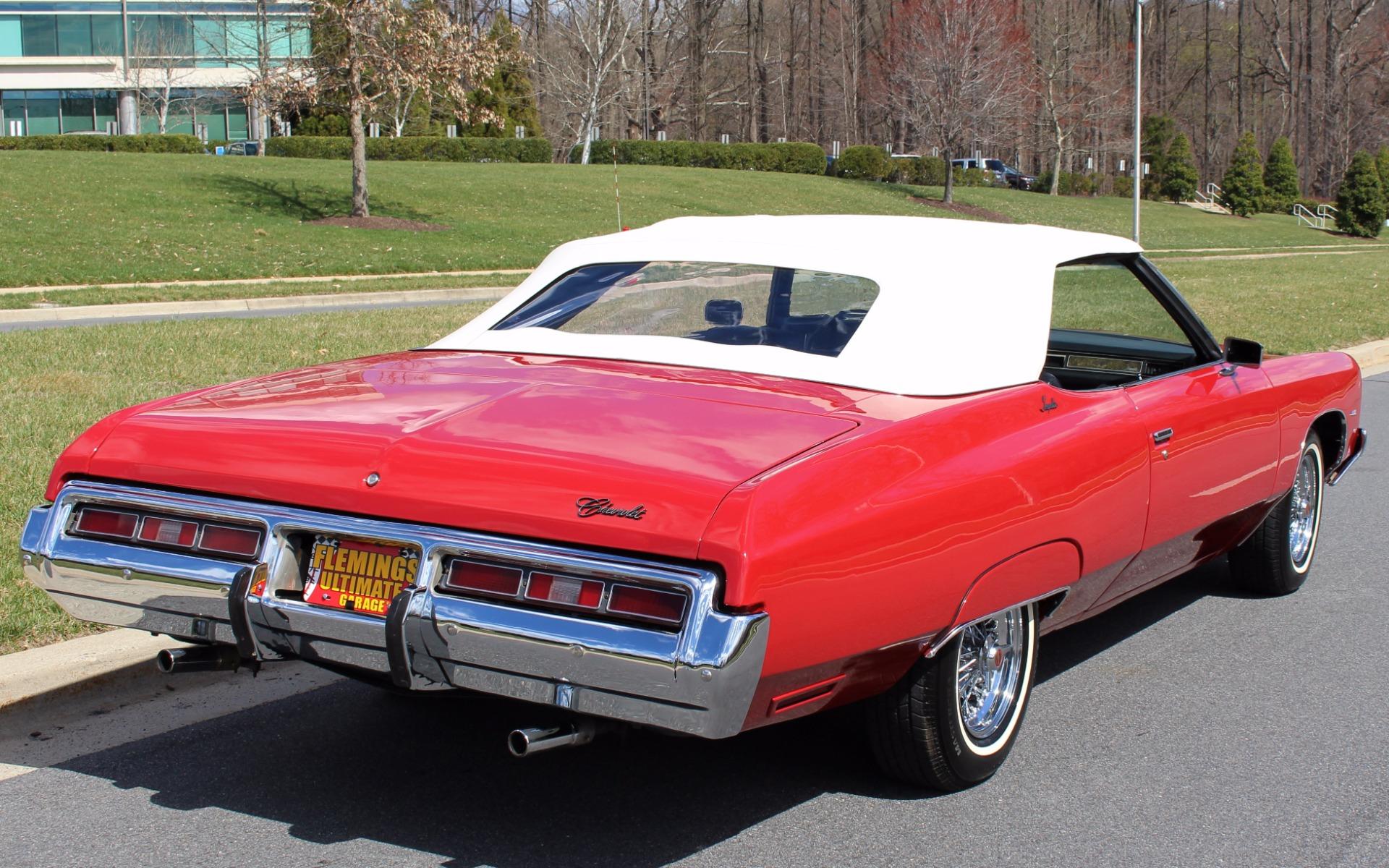
The 1972 Ford LTD Convertible represents the pinnacle of American "land yacht" luxury from an era when sheer size and smooth V8 power defined the open-road experience. As the final year of the second-generation LTD and the last full-size convertible Ford would produce for over a decade, this vehicle occupies a unique space in automotive history, blending 1970s opulence with a disappearing style of open-air motoring.
In 2026, the 1972 Ford LTD Convertible has transitioned from a used-car staple to a highly sought-after classic. For collectors and enthusiasts, it offers a distinct "pre-bumper" aesthetic—referring to the period before the 1973 federal mandates required heavy 5-mph impact bumpers—making it the most refined and visually cohesive version of the early '70s Fords. This guide explores the technical specifications, historical significance, and current ownership considerations for this iconic American machine.
Historical Significance: The End of an Era
By 1972, the American automotive landscape was shifting. Increasing safety concerns and the looming threat of rollover standards led many manufacturers to phase out convertibles. The LTD, which stood for "Luxury Trim Decor," had supplanted the Galaxie 500 as Ford’s premier full-size offering.
The 1972 model year was significant because it was the last time a buyer could walk into a Ford dealership and order a full-size, six-passenger convertible. While the Mustang convertible would survive for one more year (1973), the "big" Ford drop-top vanished after '72, not returning to the lineup in any full-size capacity. Production was relatively limited compared to the coupes and sedans; only 6,301 LTD convertibles were produced for the 1972 model year, making them considerably rarer than their hardtop counterparts.
Technical Specifications and Powertrain Options
The 1972 Ford LTD was built on a massive 121-inch wheelbase, with an overall length exceeding 218 inches. This footprint provided the "magic carpet" ride quality that Ford marketed heavily at the time. Under the hood, the 1972 model year saw a transition in how power was measured and delivered. This was the year the industry shifted from SAE gross to SAE net horsepower ratings, and compression ratios were lowered to accommodate the move toward unleaded gasoline.
Engine Lineup
Buyers in 1972 had several V8 options, as the inline-six had long been discarded for the heavy LTD chassis:
- 351-2V V8 (Cleveland or Windsor): The standard engine for the LTD. While reliable, the 1972 versions were tuned more for torque than high-speed horsepower, producing roughly 161 net hp.
- 400-2V V8: Part of the 335-series engine family, the 400 was a popular choice for the convertible. It offered more low-end grunt (approx. 172 net hp) to move the vehicle's 4,200-pound curb weight.
- 429-4V V8: The "Thunder Jet" big block. By 1972, this engine was a shadow of its former high-compression self but still produced a respectable 208 net hp and significant torque, making it the preferred choice for those intending to use the LTD for long-distance highway cruising.
Transmission and Mechanicals
All 1972 LTD convertibles came equipped with the SelectShift Cruise-O-Matic three-speed automatic transmission. The suspension featured a coil-spring design at all four corners—an "Angle-Pied" front suspension and a three-link rear setup—which prioritized vibration isolation and ride softness over cornering ability. Power front disc brakes were standard, which was a necessary safety feature given the vehicle's substantial mass.
Design and Interior Amenities
The styling of the '72 LTD was characterized by its "Coke bottle" profile and a massive, prominent front grille. One of the most distinctive features of the LTD trim (as opposed to the Galaxie 500) was the hidden headlamps. These vacuum-operated doors flipped up to reveal the quad headlights, giving the car a cleaner, more expensive look when the lights were off.
The Convertible Top
The power-operated top was a marvel of the era. It featured a "clear-vision" sewn-in glass rear window, which was a significant upgrade over the plastic windows found in cheaper convertibles that tended to yellow and crack over time. The top mechanism used a hydraulic pump located behind the rear seat, powered by a dedicated electric motor.
Interior Luxury
Inside, the LTD lived up to its name. The "Flight Bench" front seat was standard, often upholstered in "Brougham" cloth or optional vinyl. Buyers could opt for:
- Comfortweave Vinyl: A perforated material that allowed for better airflow, a crucial feature in a convertible without air conditioning.
- SelectAire Conditioning: While it seems counterintuitive for a convertible, many LTDs were equipped with AC to keep occupants comfortable when the top was up during humid summers.
- Power Features: Power windows, power seats, and a power trunk release were common options that pushed the LTD into the territory of Lincoln-Mercury luxury.
1972 Ford LTD Convertible Key Specifications
| Feature | Specification |
|---|---|
| Wheelbase | 121.0 inches |
| Overall Length | 218.4 inches |
| Width | 79.5 inches |
| Curb Weight | ~4,250 lbs (Varies by engine) |
| Fuel Capacity | 22.5 Gallons |
| Standard Engine | 351 cu in V8 |
| Top Production | 6,301 units |
| Brakes | Power Front Disc / Rear Drum |
| Steering | Power-Assisted Recirculating Ball |
Ownership and Restoration Challenges in 2026
Owning a 1972 Ford LTD Convertible in 2026 comes with a specific set of technical challenges. While the mechanical components (engines and transmissions) are famously robust and share many parts with other Ford trucks and cars of the era, the body and trim-specific items are increasingly difficult to source.
The Vacuum System
The hidden headlamps are the most common failure point. The system relies on a vacuum reservoir and a series of hoses connected to the engine intake manifold. Over decades, the rubber diaphragms in the headlight actuators dry out and leak. When this happens, the doors may "wink" (one opens slower than the other) or fail to open at all. Enthusiasts in 2026 often retrofit these with electric actuators for better reliability, though purists still prefer the original vacuum setup.
Frame and Body Integrity
Like most cars of this vintage, rust is the primary enemy. In particular, the rear frame rails near the bumper mounts and the floor pans are susceptible to corrosion if the convertible top seals have leaked. Because the LTD is a body-on-frame design, structural integrity is paramount. Prospective buyers should inspect the "torque boxes"—the areas where the frame widens near the wheels—as these are critical for the car's rigidity.
Parts Availability
While engine parts are plentiful through retailers like RockAuto or specialized Ford vendors, "LTD-only" trim pieces are rare. The 1972-specific grille, the headlight covers, and the rear tail light bezels are not currently being reproduced in high volume. Finding high-quality chrome or "New Old Stock" (NOS) trim often requires scouring specialized forums or sites like Hemmings.
Market Value and Investment Potential
As of 2026, the market for "big" convertibles has seen a steady rise. For years, these cars were overshadowed by the Mustang and Torino, but the "land yacht" movement has gained traction among younger collectors who value the "cruiser" lifestyle over raw muscle car performance.
- Condition #1 (Concours): $45,000 – $60,000. These are museum-quality examples with documented histories and flawless restorations.
- Condition #2 (Excellent): $30,000 – $42,000. High-quality drivers that look great at local car shows.
- Condition #3 (Good/Fair): $15,000 – $25,000. Functional cars that may need cosmetic work or have non-original interior materials.
Vehicles equipped with the 429 V8 engine and high-option packages (like the "Brougham" interior) command a 15-20% premium over the base 351-powered models.
Maintenance and Care Tips
For those currently maintaining a '72 LTD, modern fluids are essential. Since these engines were designed during the transition to unleaded fuel, the valve seats can suffer from wear if driven hard. Using a lead substitute or ensuring the heads have been rebuilt with hardened valve seats is a common 2026 best practice.
- Convertible Top Hygiene: Never stow the top while it is wet. This leads to mildew and can rot the stitching. Use a dedicated vinyl cleaner and protectant with UV blockers to prevent the "skin" from shrinking.
- Hydraulic Fluid: The top motor uses Type F or Dexron automatic transmission fluid. Check the reservoir in the trunk every season to ensure there are no leaks in the lift cylinders.
- Tire Selection: To maintain the original ride quality, many owners opt for period-correct white-wall radial tires. Brand names like Coker Tire provide modern radial constructions that mimic the look of the original bias-ply tires.
Frequently Asked Questions
Is the 1972 LTD the same as a Galaxie 500?
While they share the same chassis, body shell, and engines, they are different trim levels. The LTD was the top-tier luxury model, featuring hidden headlights, upgraded interior fabrics, and more extensive sound insulation. In 1972, the convertible was only offered in the LTD trim, as the Galaxie 500 convertible had been discontinued after 1970.
How do I fix the hidden headlights if they won't open?
Start by checking the vacuum hoses for cracks. The most common culprit is the vacuum check valve or the headlight switch itself, which acts as a diverter. If the hoses are good, the internal rubber seal in the large canister actuators has likely failed.
Can I run modern E10 or E15 fuel in a 1972 LTD?
E10 (10% ethanol) can be used, but it is hard on original rubber fuel lines and carburetor gaskets. It is highly recommended to replace old fuel lines with ethanol-compatible hoses. Avoid E15 or E85, as the high ethanol content can cause significant corrosion in the original zinc-alloy carburetors and fuel tanks.
What is the most desirable color for this model?
While subjective, "Ivy Glow" (a metallic green) and "Bright Red" were very popular in 1972. White interiors were often paired with darker exterior colors and are highly prized today for their striking contrast, though they are more difficult to keep clean.
Final Recommendations for Buyers
If you are looking to purchase a 1972 Ford LTD Convertible in 2026, prioritize body integrity over mechanical perfection. A smoking engine can be rebuilt easily and affordably, but a rusted-out frame or missing trim pieces can turn a restoration into a multi-year "money pit."
The '72 LTD is a vehicle designed for the journey, not the destination. It is a car that demands a slow pace, a scenic route, and a full bench seat of friends. As one of the last true full-size convertibles of the 20th century, it remains a rolling testament to an era of American automotive excess that we are unlikely to see again.