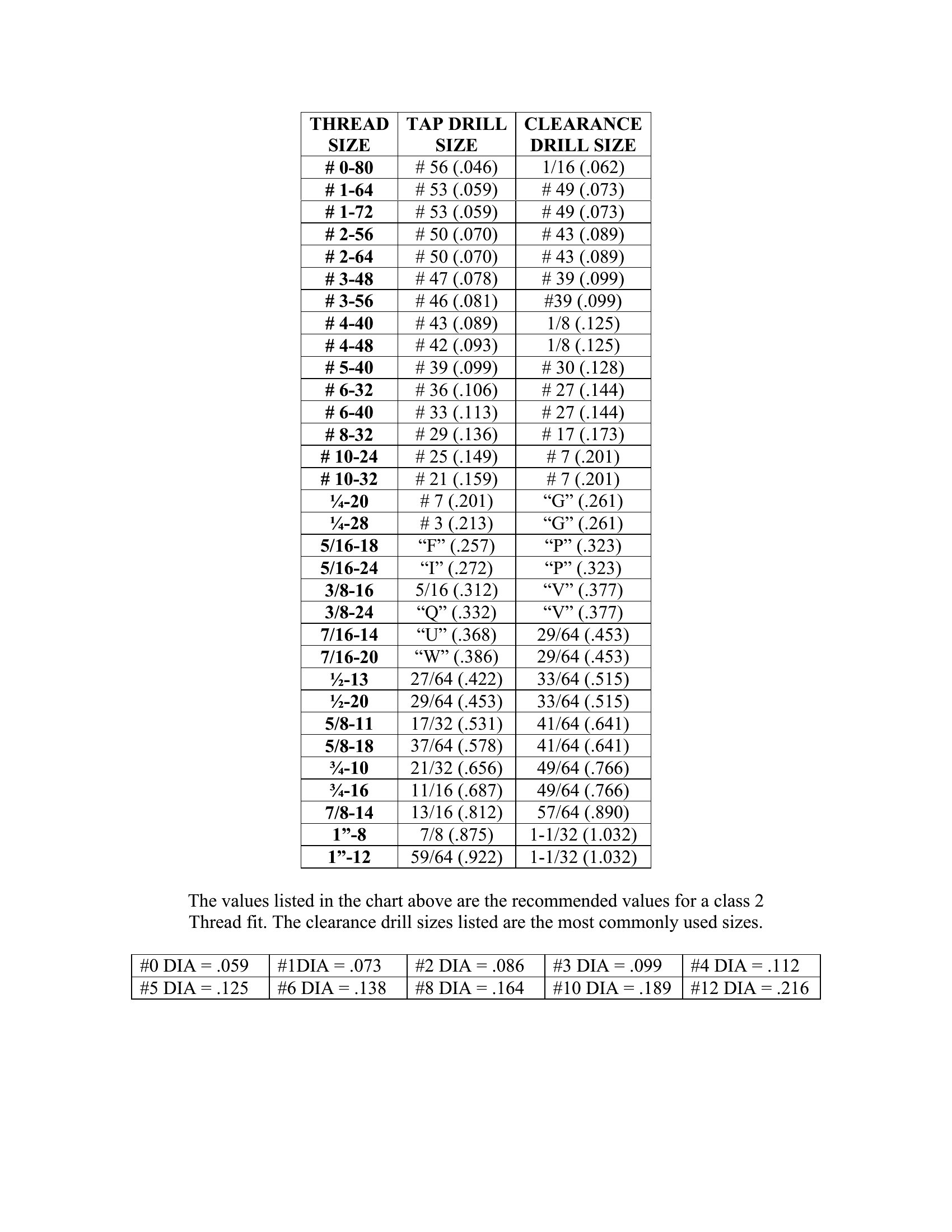
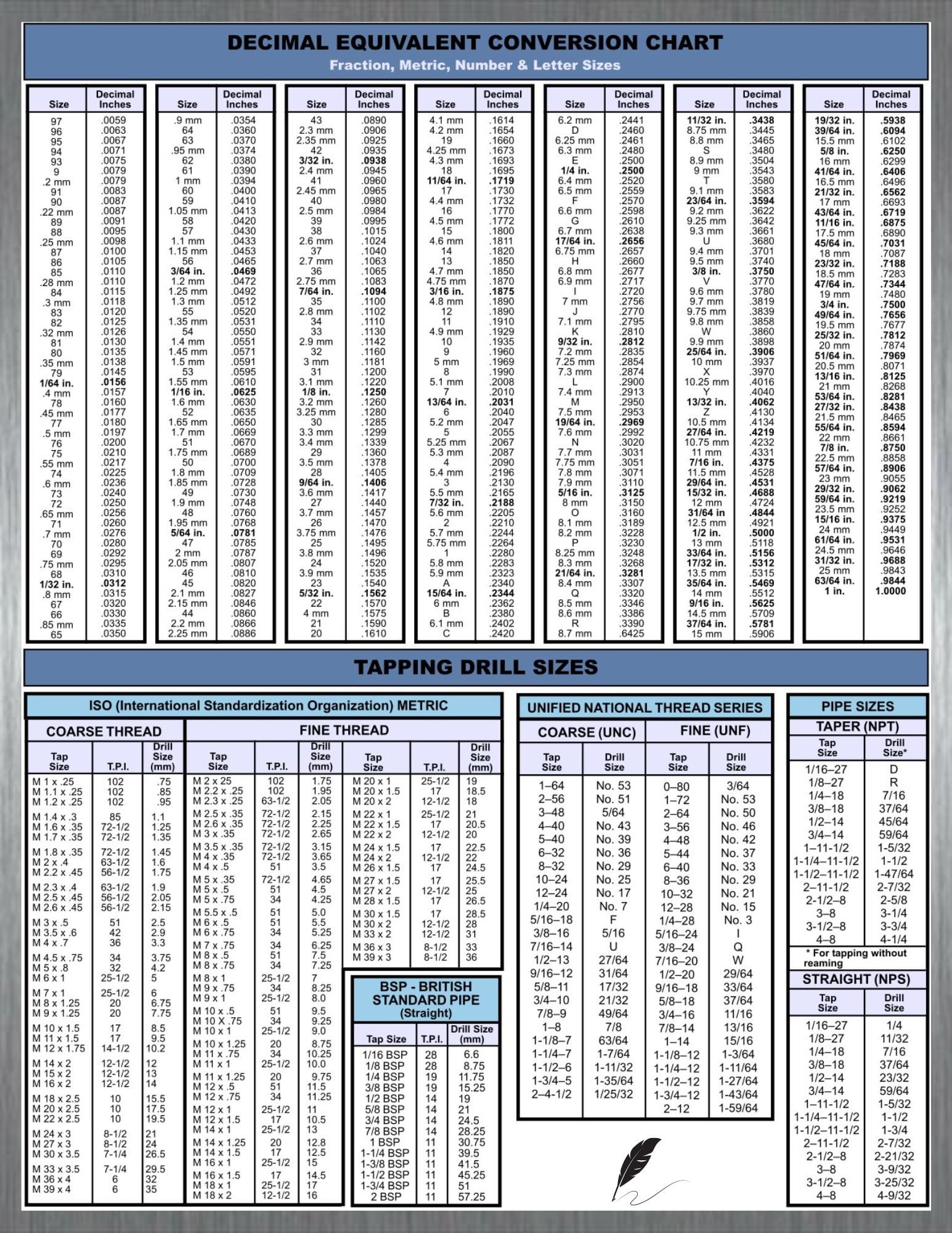
The standard drill size for a #6-40 UNF (Unified National Fine) tap is a #33 drill bit, which has a decimal diameter of 0.1130 inches (approximately 2.87 mm). This specific drill size is engineered to produce approximately 75% thread engagement, providing an optimal balance between mechanical strength and ease of tapping in most common metals.
Understanding the #6-40 UNF Thread Specification
Before selecting a drill bit or a tap, it is essential to understand the nomenclature of the fastener. In the American Unified Thread Standard (UTS), a #6-40 designation provides two critical pieces of information: the size of the screw and the density of the threads.
The "6" refers to the machine screw size. In the UTS system, for sizes smaller than 1/4 inch, a numbering system is used. The major diameter of a #6 screw is calculated by the formula: Diameter = (Screw Number × 0.013") + 0.060". For a #6 screw, this results in a major diameter of 0.1380 inches.
The "40" indicates the number of Threads Per Inch (TPI). A TPI of 40 classifies this as a "Fine" thread (UNF), whereas the "Coarse" counterpart (UNC) for a #6 screw is 6-32. Fine threads like the 6-40 are preferred in applications where vibration resistance is necessary or where finer adjustments are required. Because the threads are shallower and more frequent, they provide a higher tensile strength and allow for thinner wall thicknesses in the receiving material.
The Importance of the Correct Drill Size
Selecting the correct tap drill is perhaps the most critical step in the threading process. If the hole is too small, the tap must remove an excessive amount of material. This increases the torque required to turn the tap, which often leads to tool breakage—a particular risk with smaller taps like the #6-40. If the hole is too large, the resulting threads will be shallow, leading to "stripped" threads that cannot hold the required load.
The 75% Thread Engagement Standard
In the machining industry as of 2026, the gold standard for general-purpose internal threading remains 75% thread engagement. This means that 75% of the theoretical full thread depth is formed. Engineering studies have consistently shown that increasing thread engagement from 75% to 100% only increases the strength of the assembly by about 5%, yet it triples the amount of torque required to drive the tap. For most industrial and hobbyist applications, 75% offers the best tool life and structural integrity.
Mathematical Formula for Tap Drill Selection
While drill charts are convenient, understanding the underlying math allows you to make adjustments for specialized materials. The basic formula for determining a tap drill size for a 75% thread is:
Drill Size = Major Diameter - (0.9743 / TPI)
For a 6-40 tap:
- Major Diameter = 0.1380"
- TPI = 40
- Calculation: 0.1380 - (0.9743 / 40) = 0.1380 - 0.0243 = 0.1137"
The closest standard wire gauge drill bit to 0.1137" is the #33 (0.1130").
Comprehensive 6-40 Tap Drill Size Chart
The following table provides various drill bit options based on the desired percentage of thread engagement. As of 2026, these measurements adhere to the latest ASME B1.1 standards for Unified Inch Screw Threads.
| Drill Size (Gauge/Metric) | Decimal Equivalent (Inches) | Thread Engagement % | Recommendation/Material |
|---|---|---|---|
| #35 | 0.1100" | 86% | Soft plastics or very thin sheet metal only. |
| 2.80 mm | 0.1102" | 85% | Metric alternative for high-engagement needs. |
| #34 | 0.1110" | 81% | High-strength applications in aluminum. |
| #33 | 0.1130" | 75% | Standard/General Purpose (Steel, Brass). |
| 2.90 mm | 0.1142" | 71% | Ideal for tough alloys and stainless steel. |
| #32 | 0.1160" | 65% | Hard materials (Tool steels) to prevent breakage. |
| 1/8" | 0.1250" | 37% | NOT RECOMMENDED (Threads will likely strip). |
Material-Specific Tool Selection
The "perfect" drill size can vary depending on the material you are tapping. Material density, ductility, and work-hardening characteristics play a significant role in how the tap interacts with the pre-drilled hole.
Tapping in Aluminum and Soft Metals
Aluminum (such as 6061-T6) is ductile and tends to "flow" slightly during the tapping process. While a #33 drill is standard, some machinists prefer a #34 if they require maximum thread strength, as the material will yield slightly without snapping the tap. However, lubrication is vital to prevent "galling," where aluminum chips weld themselves to the tap's cutting edges.
Tapping in Stainless Steel and Tough Alloys
Materials like 304 or 316 Stainless Steel work-harden rapidly. If the drill bit is dull or the feed rate is too slow, the walls of the hole will become harder than the tap itself. For these materials, it is often wise to use a 2.90 mm or even a #32 drill bit. Reducing the thread engagement to 65-70% significantly reduces friction and heat, which are the primary causes of tool failure in stainless steel applications.
Tapping in Plastics and Composites
For materials like Delrin (Acetal) or G10/FR4, the material has a tendency to "rebound" or shrink slightly after the drill is removed. In these cases, using a smaller drill like a #34 or #35 is often necessary to ensure the final thread dimensions meet the required Class 2B or 3B fit.
Selecting the Right Tap Style
Choosing the drill is only half the battle; selecting the appropriate 6-40 tap style is equally important for a successful outcome. Taps are categorized by their chamfer (the taper at the tip) and their flute design.
Taper, Plug, and Bottoming Taps
- Taper Taps: These have a long, gradual lead-in (usually 8 to 10 threads). They are the easiest to start straight and are ideal for difficult materials, but they cannot thread to the bottom of a hole.
- Plug Taps: The most common type used in 2026. They have 3 to 5 chamfered threads. They are versatile and can be used for both through-holes and blind holes where the thread does not need to reach the absolute bottom.
- Bottoming Taps: These have only 1 to 2 chamfered threads. They are designed to cut threads as deep as possible into a blind hole. They should always be preceded by a taper or plug tap.
Flute Designs
- Spiral Point (Gun Taps): Designed for through-holes. The "point" of the tap shoots the chips forward, ahead of the tool. This prevents chip clogging.
- Spiral Flute Taps: Designed for blind holes. The helical flutes pull the chips up and out of the hole, much like a drill bit. This is the preferred choice for 6-40 threads in deep blind holes.
Best Practices for Tapping 6-40 Threads
Precision threading requires a disciplined approach. Even with the correct #33 drill bit, poor technique can result in a ruined workpiece.
1. Ensure Perpendicularity
The hole must be drilled perfectly straight. If using a hand drill, a drill guide is highly recommended. In a machine shop environment, using a drill press or mill is standard. If the tap enters the hole at even a slight angle, the unequal pressure on the flutes will cause the tap to snap.
2. Use High-Quality Lubrication
Never tap dry. For steel, a sulfur-based cutting oil is preferred. For aluminum, specialized fluids like Tap Magic or even kerosene can prevent galling. In 2026, many eco-friendly synthetic lubricants are available that offer superior heat dissipation without the fumes of traditional oils.
3. The "Break the Chip" Technique
When hand-tapping, do not simply turn the tap continuously. The standard procedure is to turn the tap forward (clockwise) until you feel resistance (usually 1/2 to 1 full turn), then rotate it backward (counter-clockwise) about 1/4 turn. You will often hear a small "click"—this is the chip breaking away. This prevents long, stringy chips from nesting in the flutes and jamming the tool.
4. Clearing the Hole
For deep holes, remove the tap entirely every few turns to clear the chips and re-apply lubricant. This is especially important for #6-40 threads because the small flute volume of a #6 tap can fill up very quickly.
Troubleshooting Common Issues
What to do if the Tap Breaks
If a 6-40 tap breaks off inside the workpiece, it is a significant problem because the tool is hardened steel.
- Tap Extractors: These tools have "fingers" that slide into the flutes of the broken tap to back it out.
- EDM (Electrical Discharge Machining): For high-value parts, a "tap burner" or EDM machine can disintegrate the tap without damaging the surrounding material.
- Alum Solution: For aluminum workpieces, a concentrated solution of Alum (Potassium Aluminum Sulfate) and water can be used to slowly dissolve a steel tap over several days without harming the aluminum.
Oversized Holes
If the #33 hole was drilled poorly (e.g., the drill wobbled), the hole may be oversized. If a "Go" gauge enters too easily or the screw feels loose, you may need to use a thread repair insert (like a Heli-Coil). Note that a 6-40 Heli-Coil will require a completely different, larger drill size and a specialized STI (Screw Thread Insert) tap.
Advanced Tooling: HSS vs. Cobalt
When purchasing tools in 2026, you will likely choose between High-Speed Steel (HSS) and Cobalt (M42).
- HSS: Excellent for general-purpose use in mild steel, brass, and plastics. It is more flexible than cobalt, making it slightly more forgiving if your hand is not perfectly steady.
- Cobalt: Harder and more heat-resistant. Essential for stainless steel and high-tensile alloys. However, cobalt is more brittle; it will not bend—it will simply snap if misaligned.
Frequently Asked Questions
Can I use a 1/8" drill bit for a 6-40 tap?
No. A 1/8" drill bit is 0.1250 inches. Since the major diameter of a #6 screw is 0.1380", a 1/8" hole would only leave 0.0065" of material per side for the threads. This results in roughly 37% thread engagement, which is insufficient for almost any mechanical load. The screw will likely pull right out of the hole.
What is the difference between 6-32 and 6-40 drill sizes?
The 6-32 (UNC) is a coarser thread and requires a #36 drill (0.1065"). The 6-40 (UNF) is a finer thread and requires a #33 drill (0.1130"). Because the 6-40 has more threads per inch, the threads are shallower, allowing for a larger initial hole.
Is there a metric equivalent for the #33 drill?
The closest metric equivalent is a 2.9 mm drill (0.1142"). This will result in approximately 71% thread engagement. It is a very safe and effective alternative, particularly in harder materials where a slightly larger hole reduces the risk of tap breakage.
Why is 6-40 less common than 6-32?
The 6-32 is the standard for most consumer electronics and electrical boxes. However, the 6-40 is superior in precision instruments and aerospace applications because the finer pitch allows for more precise tensioning and better resistance to loosening under vibration.
When should I use a spiral point "gun" tap?
Use a spiral point tap whenever you are threading a "through-hole" (a hole that goes all the way through the material). It is much stronger than a standard hand tap and handles high-speed machine tapping far better because it clears chips out the bottom of the hole.
Final Recommendation
For the vast majority of projects involving a 6-40 tap, the #33 high-speed steel drill bit is the correct tool. Always verify your drill size with a micrometer or caliper before starting, as many drill bits in "bargain" sets may be mislabeled or manufactured to loose tolerances. If you are working with stainless steel or other tough alloys, consider stepping up to a 2.9 mm drill and using a high-quality cobalt tap with dedicated cutting fluid to ensure a clean, professional finish.