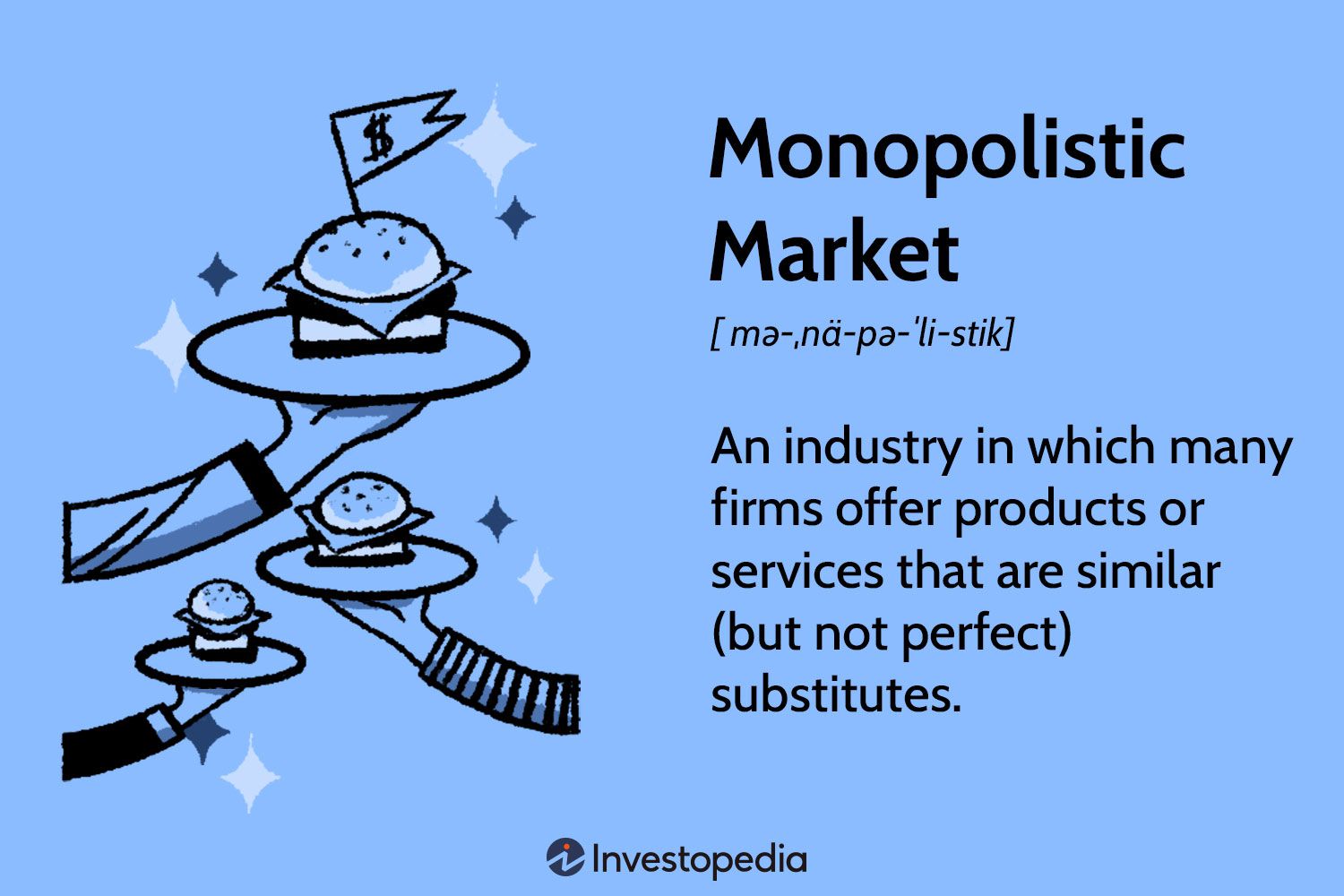
Monopolistic competition is a market structure where many producers sell products that are differentiated from one another by branding, quality, or location. While these products are substitutes, they are not perfect substitutes, allowing firms to retain some degree of market power over their pricing despite low barriers to entry.
In the global economy of 2026, monopolistic competition remains the most prevalent market structure for consumer goods and services. It sits in the middle ground between the theoretical extremes of perfect competition—where products are identical—and a pure monopoly, where a single firm controls the entire supply. By understanding how firms differentiate themselves, consumers and business owners can better navigate a world where choice is abundant but brand loyalty remains a powerful economic force.
Defining the Characteristics of Monopolistic Competition
To identify real-world examples, we must first establish the economic pillars that define this structure. Monopolistic competition is characterized by four primary features that distinguish it from other market types like oligopolies or perfect competition.
1. Large Number of Small Firms
In this market, hundreds or even thousands of firms compete for the same customer base. No single firm has a significant enough market share to influence the entire industry’s price level independently. Unlike an oligopoly (such as the commercial aircraft or cellular service industries), the actions of one firm do not drastically trigger a direct retaliatory response from all others.
2. Product Differentiation
This is the most critical element. While the core function of the product is the same, firms use "non-price competition" to make theirs stand out. This differentiation can be:
- Physical: Differences in design, features, or materials.
- Marketing: Branding, celebrity endorsements, and packaging.
- Service: Superior customer support or extended warranties.
- Location: Convenience and proximity to the customer.
3. Low Barriers to Entry and Exit
In 2026, starting a business—especially in the digital or service sectors—is relatively accessible. There are no massive capital requirements or government protections (like patents in a monopoly) that prevent new entrepreneurs from entering the market if they see potential for profit. Conversely, if firms lose money, they can exit the industry with minimal catastrophic loss compared to high-investment sectors like steel manufacturing.
4. Some Control Over Price
Because their products are unique in the eyes of the consumer, these firms are "price makers" rather than "price takers." If a local cafe raises the price of its latte by 50 cents, it won't lose all its customers to the shop next door because some customers prefer that specific cafe’s ambiance or bean roast. However, this power is limited; if the price rises too high, consumers will eventually switch to a substitute.
5 Real World Examples of Monopolistic Competition
1. The Restaurant and Fast Food Industry
The restaurant industry is perhaps the most cited example of monopolistic competition. In any given city in 2026, there are thousands of dining options. While they all provide the same basic service—prepared food—they are far from identical.
How Differentiation Works: A burger from McDonald’s is fundamentally different from a burger at Five Guys or a local gourmet bistro. McDonald's competes on speed, consistency, and low price. Five Guys competes on freshness and customizability. The local bistro competes on atmosphere, unique ingredients, and specialized chef skills.
Economic Impact: Because entry is easy (thousands of new restaurants open every year), the market is highly competitive. Restaurants must constantly innovate their menus or invest in loyalty apps to keep customers. In the long run, most restaurants earn "normal profit" because the presence of so many substitutes prevents them from maintaining high "supernormal profits" over time.
2. The Apparel and Clothing Industry
The clothing market is vast and highly fragmented. From high-end luxury brands to "fast fashion" giants and independent boutique labels, the sheer variety of choices defines monopolistic competition.
How Differentiation Works: A plain white T-shirt can cost $5 at a discount retailer or $150 from a luxury designer. The difference isn't just the quality of the cotton; it's the brand's prestige, the fit, the ethical sourcing of the materials, and the marketing message. In 2026, sustainability has become a major differentiator, with brands like Patagonia or smaller eco-conscious startups commanding higher prices based on their environmental certifications.
Barriers and Competition: While it is easy to start a clothing line today via e-commerce platforms, the competition is fierce. Thousands of brands compete for the same "eyeballs" on social media. This forces firms to spend a significant portion of their revenue on advertising to maintain their unique "brand identity."
3. Coffee Shops and Specialized Cafes
The coffee industry perfectly illustrates how location and "vibe" create monopolistic power. While a consumer could get caffeine from a home machine, a gas station, or a vending machine, they often choose to visit a specific shop.
How Differentiation Works:
- Starbucks: Focuses on the "third place" experience (not home, not work), digital convenience, and a standardized menu.
- Dunkin’: Focuses on speed and value for the working professional.
- Local Artisan Roasters: Focus on "single-origin" beans, expert brewing techniques (like pour-overs), and a community atmosphere.
In 2026, many coffee shops have integrated AI-driven personalization into their loyalty programs, offering bespoke discounts to keep customers from wandering to the shop across the street. This creates "artificial" switching costs that strengthen their monopolistic position within a competitive landscape.
4. The Hair Salon and Personal Care Industry
Barbershops, hair salons, and nail spas operate in a classic monopolistic competition model. The service provided is the same (cutting or styling hair), but the execution is highly individualized.
How Differentiation Works: Consumers rarely choose a hair salon based solely on the lowest price. Instead, they choose based on the skill of a specific stylist, the reputation of the salon, the amenities provided (like complimentary beverages), and the physical location. A stylist builds a "monopoly" over their specific client base through personal relationships and proven results.
If a preferred stylist moves to a new salon, the client often follows them, demonstrating that the product (the haircut) is not a commodity but a differentiated service. However, because new salons can open easily, no single salon can dominate the entire market.
5. Cosmetics and Beauty Products
The beauty industry is a multi-billion dollar sector characterized by intense branding and perceived product differences. Whether it is skincare, makeup, or fragrances, the market is filled with thousands of competing labels.
How Differentiation Works: Companies like L'Oréal, Estée Lauder, and Fenty Beauty spend billions on research and development to claim their formulas are superior. They use "celebrity equity" and influencer marketing to create a psychological preference in the consumer's mind. Even if two lipsticks have nearly identical chemical compositions, a consumer might be willing to pay a 300% premium for the one with the "prestigious" logo.
In 2026, the rise of "clean beauty" and "personalized skincare" (based on DNA or skin-scanning apps) has further fragmented this market, allowing even small startups to carve out a niche and exercise pricing power over a specific segment of the population.
Comparison Table: Market Structures at a Glance
To better understand where monopolistic competition sits, it is helpful to compare it against other economic models.
| Feature | Perfect Competition | Monopolistic Competition | Oligopoly | Monopoly |
|---|---|---|---|---|
| Number of Firms | Very Many | Many | Few (2-10) | One |
| Product Type | Identical (Homogeneous) | Differentiated | Differentiated or Standardized | Unique (No substitutes) |
| Price Control | None (Price Taker) | Some (Price Maker) | Significant | Absolute (Regulated) |
| Barriers to Entry | None | Low | High | Very High / Blocked |
| Examples | Wheat, Milk, Corn | Restaurants, Clothing | Airlines, Soft Drinks | Local Utilities, Patents |
| Marketing Need | None | Extremely High | High | Low (Informational) |
The Role of Advertising and "Excess Capacity"
In monopolistic competition, advertising is not just an expense—it is a survival mechanism. Because products are so similar, firms must convince consumers that their product is "better" or "cooler."
The Cost of Variety
Economists often point to "excess capacity" as a downside of this market structure. Because firms are not producing at the absolute lowest point of their Average Total Cost (ATC) curve—as they would in perfect competition—resources are arguably "wasted." For example, a street with four different pizza places might have enough ovens and staff to feed the whole town twice over. This redundancy is the price society pays for variety.
Consumer Benefit
While monopolistic competition might be less "efficient" in a strictly mathematical sense, it provides immense value through consumer choice. If the world were perfectly competitive, we might only have one type of standardized clothing or one flavor of coffee. Monopolistic competition ensures that products evolve to meet specific, diverse human preferences.
Economic Equilibrium: Short Run vs. Long Run
Understanding the lifecycle of a firm in this environment is crucial for business strategy.
- The Short Run: A firm can earn significant "supernormal" profits if it introduces a unique innovation (e.g., a new trendy ingredient in a skincare line). For a brief period, they act almost like a mini-monopoly.
- The Long Run: Because there are low barriers to entry, those high profits attract new competitors. These new firms will mimic the innovation or offer a similar product at a lower price. This shifts the demand curve for the original firm to the left until they are only earning "normal profit" (where revenue equals total cost, including the opportunity cost of the owner’s time).
According to research from the Federal Reserve Bank, market dynamics in service-heavy economies tend to gravitate toward this long-run equilibrium quickly due to the rapid spread of information online.
Frequently Asked Questions
What is the main difference between an oligopoly and monopolistic competition?
The primary difference is the number of firms and their interdependence. In an oligopoly (like the smartphone market with Apple and Samsung), the actions of one firm directly impact the others. In monopolistic competition, there are so many firms that the actions of one (like a single local boutique) go largely unnoticed by the market as a whole.
Is monopolistic competition good for the economy?
It is generally considered beneficial for consumers because it fosters innovation and variety. While it leads to higher prices than perfect competition (due to marketing costs and brand premiums), it prevents the stagnation and lack of choice associated with monopolies.
How do firms in monopolistic competition stay profitable in the long run?
To stay ahead, firms must engage in continuous differentiation. This means constantly updating products, improving service, or rebranding. If a firm stops innovating, competitors will eventually erode its profit margins to the point where it only breaks even.
Why are prices higher in monopolistic competition than in perfect competition?
Prices are higher because firms spend money on product differentiation (R&D and marketing) and because they produce at a lower volume than is technically "efficient" to maintain their unique brand positioning. This is known as the "mark-up" over marginal cost.
Can a firm move from monopolistic competition to a monopoly?
It is rare but possible through massive consolidation or if a firm develops a revolutionary technology that is protected by patents. However, in most consumer sectors, the low barriers to entry eventually invite competition back into the space.
Final Recommendation for 2026
For entrepreneurs entering a monopolistic competition market in 2026, the key to success is niche mastery. Trying to compete on price alone is a "race to the bottom" that most small firms will lose. Instead, focus on high-level differentiation through community building, hyper-personalized service, or radical transparency in your supply chain. In a world of infinite choices, the most successful firms are those that provide a unique "story" alongside their product.