To drive sustainable organizational growth, employee development goals must align individual aspirations with high-level business objectives. Effective goals focus on AI-driven digital fluency, cross-functional leadership, specialized technical mastery, emotional intelligence, and strategic business acumen. By setting these specific, measurable targets, companies ensure their workforce remains resilient, innovative, and highly productive in an increasingly automated and competitive global market.
The Strategic Shift in Employee Development for 2026
As we navigate the business landscape of 2026, the definition of "growth" has evolved. It is no longer sufficient for an employee to merely perform their job description; they must actively contribute to the evolution of the role itself. The half-life of professional skills has shortened significantly, making continuous learning a prerequisite for survival rather than a secondary perk.
Organizations that prioritize development see a direct correlation with employee retention and bottom-line revenue. According to recent talent surveys from organizations like the Society for Human Resource Management (SHRM), professional development remains a top three factor for high-performing employees when choosing to stay with a company. In 2026, this development is characterized by a "human-plus-machine" philosophy, where technical prowess is balanced by uniquely human "soft" skills that AI cannot replicate.
Setting development goals is a collaborative process between a manager and an employee. It requires an honest assessment of current capabilities, a clear understanding of the company’s five-year trajectory, and a commitment to providing the necessary resources—time, budget, and mentorship—to achieve these milestones. The following five examples provide a blueprint for high-impact development in the current era.
1. Goal: Digital Fluency and AI Integration Mastery
In 2026, every role is a technical role to some extent. The primary goal for employees across all departments—from Marketing to Finance—should be to move beyond basic digital literacy and achieve digital fluency. This specifically involves the ethical and efficient integration of Artificial Intelligence (AI) into daily workflows.
The Objective
The employee will identify, test, and implement at least three AI-driven or automated workflows that reduce manual administrative time by 20% by the end of the fiscal year. This is not about replacing the human element but enhancing it through "prompt engineering" and "algorithm oversight."
Why This Drives Growth
Efficiency is the cornerstone of growth. When employees automate repetitive tasks, they free up mental bandwidth for high-level problem-solving and creative strategy. Furthermore, an AI-fluent workforce allows the company to scale operations without a proportional increase in headcount costs, providing a significant competitive advantage.
Actionable Steps
- Skill Acquisition: Complete a certified course in Advanced Generative AI and Data Governance.
- Audit: Conduct a "time-sink" audit to identify processes that can be automated via LLMs (Large Language Models) or RPA (Robotic Process Automation).
- Implementation: Pilot one automated workflow per quarter, documenting the time saved and the accuracy of the output.
- Knowledge Sharing: Host a monthly "Lunch and Learn" to demonstrate these tools to the wider team, fostering a culture of technical curiosity.
2. Goal: Cross-Functional Leadership and Collaborative Influence
Traditional hierarchical structures are giving way to agile, project-based "squads." Consequently, the ability to lead and influence across departments—even without formal authority—is a critical development goal. This is often referred to as lateral leadership.
The Objective
Lead a cross-functional project involving at least three different departments (e.g., Sales, Product, and Customer Success) to successful completion, resulting in a measurable improvement in inter-departmental communication or project delivery speed.
Why This Drives Growth
Siloes are the enemy of innovation. When employees understand the challenges and priorities of other departments, they make better decisions. Cross-functional leadership goals break down these barriers, leading to faster product launches, more cohesive marketing campaigns, and a more unified customer experience.
Actionable Steps
- Stakeholder Mapping: Identify key stakeholders in adjacent departments and schedule monthly "sync-ups" to understand their KPIs.
- Project Management: Volunteer to lead a multi-departmental initiative, such as an updated onboarding process or a new CRM implementation.
- Conflict Resolution Training: Attend workshops focused on negotiation and influence-based leadership to manage diverse viewpoints effectively.
- Feedback Loop: Implement a post-project "360-degree review" to evaluate the effectiveness of the collaboration.
3. Goal: Specialized Technical Mastery (Deep Upskilling)
While being a "generalist" is helpful for management, the 2026 market demands "T-shaped" professionals: individuals with broad general knowledge and a deep, specialized mastery of a specific niche. This goal focuses on closing the skills gap in high-demand technical areas relevant to the employee’s specific field.
The Objective
Achieve an advanced-tier professional certification or mastery in a high-demand niche skill (e.g., Quantum Computing fundamentals for IT, Sustainable Supply Chain Management for Logistics, or Behavioral Economics for Marketing) within the next 12 months.
Why This Drives Growth
Specialization allows an organization to offer premium services and tackle complex problems that competitors cannot. An employee who is a recognized expert in a niche field acts as a magnet for new business and a mentor for junior staff, raising the overall technical floor of the company.
Actionable Steps
- Gap Analysis: Use a skills-gap assessment tool to identify which specialized skill is most needed by the organization.
- Formal Education: Enroll in an accredited program or university-led certification.
- Practical Application: Apply the new skill to a live business challenge within the company to prove its ROI.
- Internal Consulting: Act as the internal "Subject Matter Expert" (SME) for that specific skill, advising on strategy and policy.
4. Goal: Emotional Intelligence (EQ) and Cognitive Flexibility
As automation handles more technical tasks, "soft skills" have become the new "hard skills." Emotional Intelligence (EQ) and cognitive flexibility—the ability to adapt to rapid change without losing productivity—are essential for maintaining team cohesion in hybrid and remote work environments.
The Objective
Increase "Team Health" scores (measured via internal surveys) by 15% through the implementation of inclusive communication strategies and proactive conflict management.
Why This Drives Growth
High-EQ environments have lower turnover and higher employee engagement. When team members feel heard and supported, they are more likely to contribute innovative ideas and go the "extra mile." Cognitive flexibility allows the team to pivot during market downturns or sudden industry shifts without experiencing burnout.
Actionable Steps
- Self-Assessment: Take a baseline EQ assessment to identify areas for improvement (e.g., empathy, self-regulation).
- Active Listening: Practice active listening techniques in all meetings, ensuring all voices are heard before a decision is made.
- Resilience Training: Participate in workshops focused on managing stress and maintaining focus during periods of organizational change.
- Mentorship: Mentor a junior colleague, focusing specifically on their professional well-being and interpersonal skills.
5. Goal: Strategic Business Acumen and "Intrapreneurship"
Employees often fail to see how their daily tasks impact the company’s bottom line. Developing business acumen helps them think like owners—a concept known as intrapreneurship. This involves understanding the P&L (Profit and Loss), market positioning, and revenue drivers.
The Objective
Identify a new revenue stream, a cost-saving measure, or a market opportunity that results in a projected 5% increase in departmental profitability or a 10% reduction in operational waste.
Why This Drives Growth
When every employee thinks about "value creation," growth becomes exponential. Intrapreneurs are the ones who find the "hidden gems" in the market or the "invisible leaks" in the budget. This goal shifts the mindset from "working for a paycheck" to "growing a business."
Actionable Steps
- Financial Literacy: Attend internal or external training on corporate finance and how to read financial statements.
- Market Research: Spend four hours a month researching competitor moves and emerging market trends.
- Proposal Development: Draft a formal business case for a new initiative, including costs, risks, and expected ROI, and present it to senior leadership.
- Resource Optimization: Review current vendor contracts or software subscriptions to identify underutilized resources.
Comparing Development Goal Categories
To help managers and employees choose the right focus, the table below compares the five goals based on their primary impact area and the typical timeframe for achievement.
| Development Goal Category | Primary Impact Area | Difficulty Level | Typical Timeframe | Primary Metric for Success |
|---|---|---|---|---|
| Digital Fluency | Operational Efficiency | Medium | 6–9 Months | Hours saved via automation |
| Cross-Functional Leadership | Collaboration & Culture | High | 12+ Months | Project delivery speed/NPS |
| Specialized Mastery | Innovation & Quality | High | 12–18 Months | Certification/Expert output |
| Emotional Intelligence | Retention & Well-being | Medium | Ongoing | Team engagement scores |
| Business Acumen | Revenue & Profitability | High | 9–12 Months | ROI of proposed initiatives |
How to Set Effective Goals: The SMART and FAST Frameworks
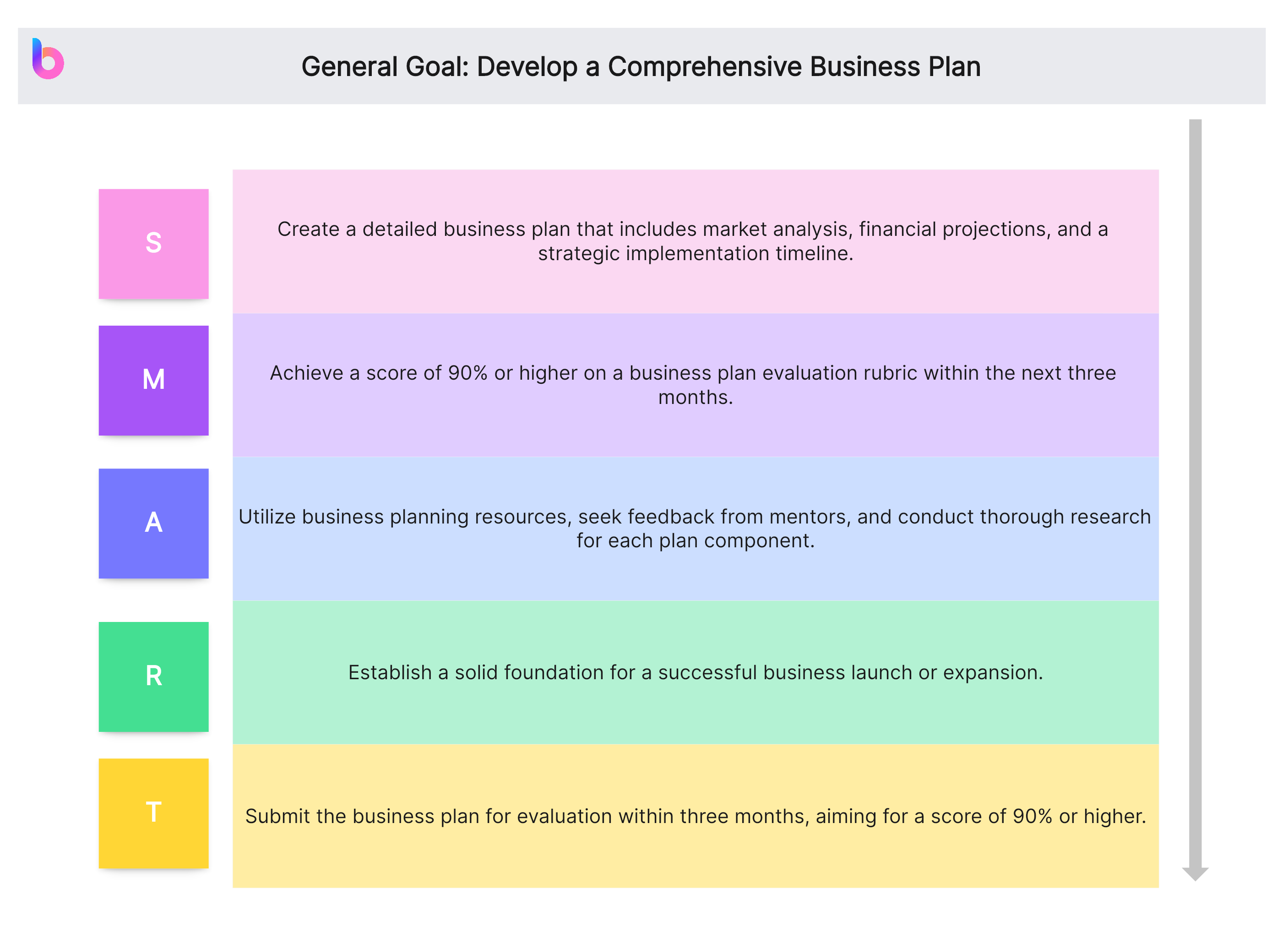
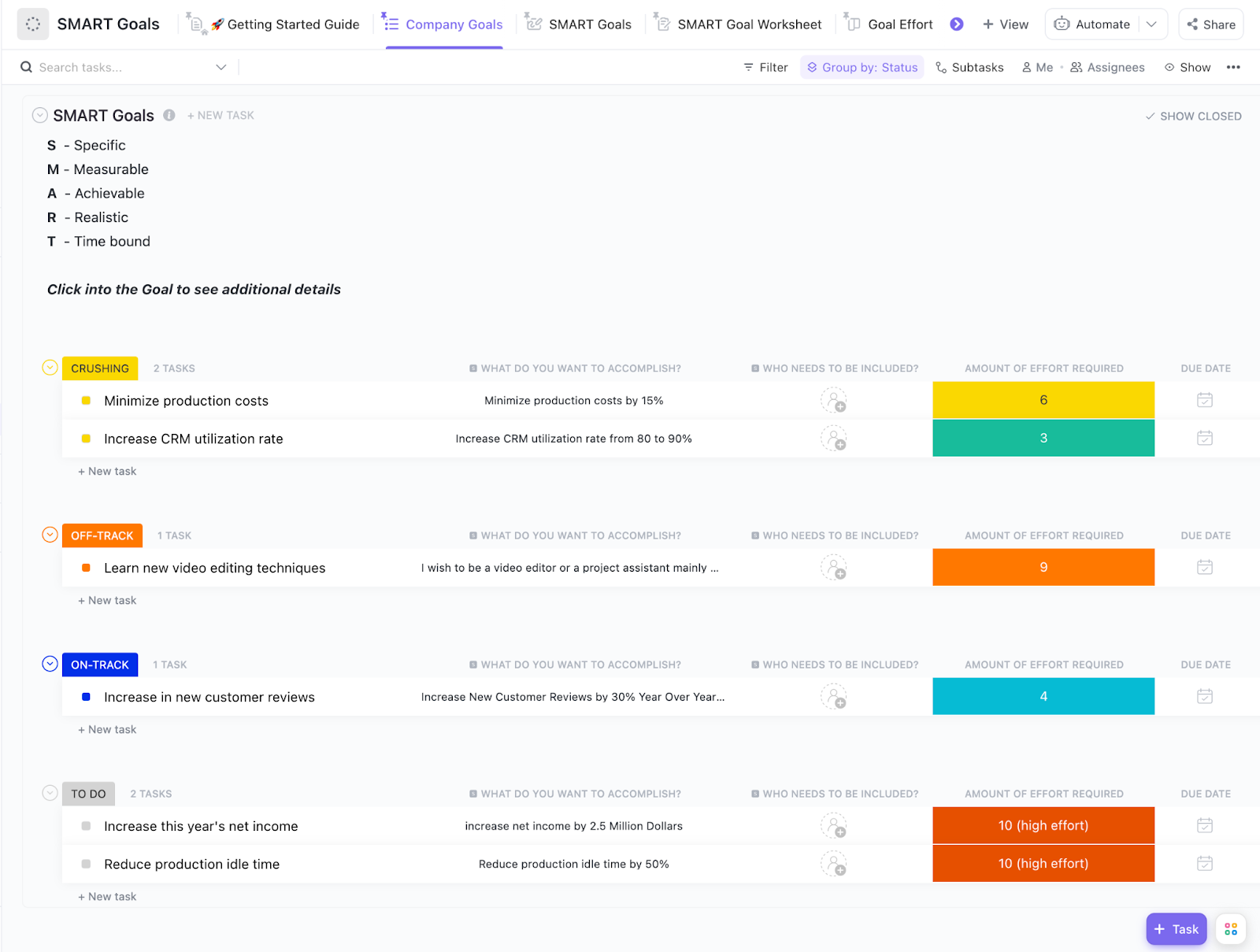
While the examples above provide the "what," the "how" is equally important. Most organizations use the SMART framework, but in the fast-paced environment of 2026, many are adding the FAST framework for more dynamic results.
The SMART Framework
- Specific: Clearly define the outcome. Instead of "Improve at AI," use "Complete an AI certification."
- Measurable: Use numbers. "Reduce errors by 10%."
- Achievable: Ensure the employee has the resources to succeed.
- Relevant: Align the goal with the company’s mission.
- Time-bound: Set a hard deadline.
The FAST Framework
- Frequently discussed: Goals should be reviewed in weekly 1-on-1s, not just once a year.
- Ambitious: They should stretch the employee’s capabilities.
- Specific: Similar to SMART, focus on clear metrics.
- Transparent: Goals should be visible to the team to encourage accountability and collaboration.
Common Mistakes in Employee Goal Setting
Even with the best intentions, development goals can fail if they are poorly structured or unsupported.
- Setting Too Many Goals: Focus on 2–3 high-impact goals. Setting five or more leads to "goal fatigue" and fragmented effort.
- Lack of Resource Allocation: You cannot expect an employee to achieve "Specialized Mastery" if you do not give them five hours a week for study and a budget for the course.
- Goals as Punishments: Development goals should be for everyone, not just "underperformers." They should be framed as an investment in the employee's future.
- Ignoring the "Why": If an employee doesn't see how a goal benefits their career or the company, they will only provide the minimum effort required.
- Static Goals: In 2026, market conditions change monthly. Goals should be flexible enough to be adjusted if the business's priorities shift.
Troubleshooting Growth Stagnation
If an employee is not meeting their development goals, it is rarely a matter of simple "laziness." Usually, there is a systemic issue at play.
- Check for Burnout: If the daily workload is 110%, there is no room for development. Growth requires "slack" in the system.
- Verify Alignment: Is the goal actually relevant to the employee's career path? If a creative designer is forced into a "Business Acumen" goal they hate, performance will suffer.
- Examine the Feedback Loop: Are you providing constructive, timely feedback? Development is a journey, and employees need "mile markers" to know they are on the right track.
- Assess Tools: Does the employee have the necessary software, data access, or mentorship to reach their target?
Frequently Asked Questions
What is the difference between a performance goal and a development goal?
A performance goal focuses on what an employee does for the company (e.g., "Sell $1M in product"), while a development goal focuses on what the employee learns or how they grow (e.g., "Master advanced negotiation techniques"). Performance goals look at past and present output; development goals look at future potential.
How often should development goals be reviewed in 2026?
The annual review is largely obsolete. In a modern high-growth environment, development goals should be discussed at least once a month. This allows for "micro-pivots" and ensures the goal remains relevant to the current business climate.
Should development goals be tied to compensation?
It is a delicate balance. While achieving a goal that adds significant value (like a new revenue stream) should be rewarded, tying every learning goal to a bonus can discourage employees from taking risks. It is often better to tie performance goals to bonuses and development goals to long-term career progression and salary increases.
How do I set goals for remote or hybrid employees?
The goals remain the same, but the "Actionable Steps" might change. For a remote employee, "Cross-Functional Leadership" might involve mastering virtual collaboration tools or flying in for quarterly strategy sessions. The emphasis on "Emotional Intelligence" is also higher for remote workers to prevent isolation and miscommunication.
Can development goals be team-based?
Yes. "Squad goals" are highly effective for fostering collaboration. For example, a whole team might have a shared goal of "Achieving 100% Digital Fluency in New CRM Software." This encourages peer-to-peer mentoring and shared accountability.
Final Recommendation for Managers and Employees
To drive growth in 2026, move beyond generic goals and embrace the specific. Start by selecting one of the five examples provided—Digital Fluency, Cross-Functional Leadership, Specialized Mastery, Emotional Intelligence, or Business Acumen—that aligns most closely with the current business needs. Create a three-month pilot for this goal, provide the necessary resources, and hold a monthly check-in to measure progress. Development is not an event; it is a continuous cycle of learning, applying, and refining that ultimately transforms an average workforce into a powerhouse of innovation and growth.