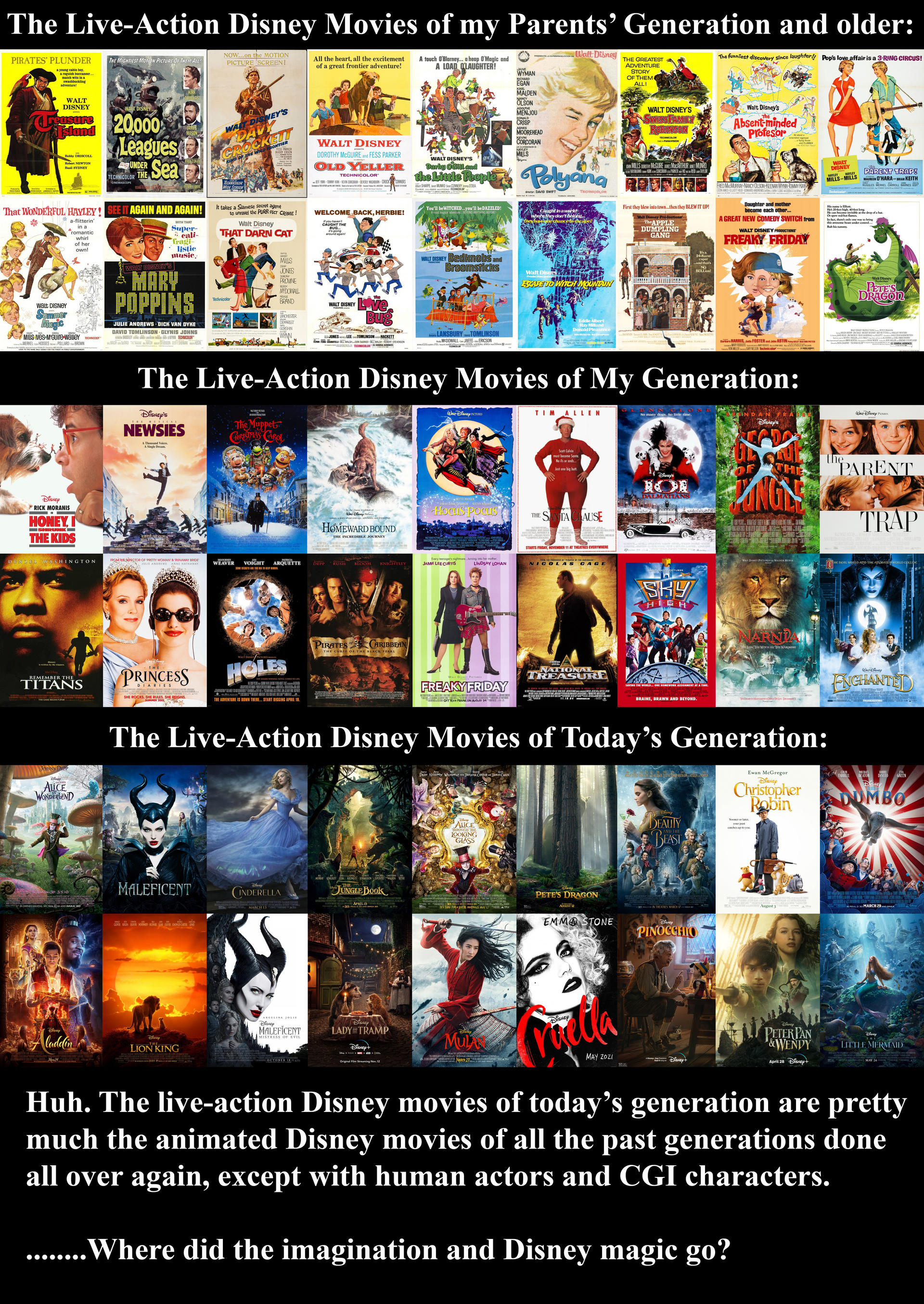
The most influential classic pre-1980 live-action Disney movies include Treasure Island (1950), 20,000 Leagues Under the Sea (1954), Old Yeller (1957), The Parent Trap (1961), and Mary Poppins (1964). These films represent the studio's transition from animation to a dominant force in live-action family cinema and technical special effects.
The Evolution of Disney’s Live-Action Ambitions
While Walt Disney is primarily remembered for pioneering feature-length animation, the 1950s marked a pivotal shift toward live-action production. This transition was driven by both creative curiosity and financial necessity. Following World War II, Disney had significant funds "frozen" in the United Kingdom due to currency regulations. To utilize these assets, the studio began producing live-action films in Britain, starting a legacy that would eventually rival its animated output.
By 2026, these films are no longer viewed merely as "family movies" but as foundational texts in cinematic history. They pioneered visual effects techniques—such as the Sodium Vapor Process—that remained industry standards for decades. Understanding these five classics requires looking beyond their narratives to the technical breakthroughs and cultural impacts that defined the era.
1. Treasure Island (1950)
Released in 1950, Treasure Island holds the distinction of being Walt Disney’s first entirely live-action feature film. Directed by Byron Haskin, the film was a faithful adaptation of Robert Louis Stevenson’s classic novel. The production was a significant gamble for the studio, which had previously only blended live action with animation in films like Song of the South (1946).
The Performance of Robert Newton
The film's lasting legacy is largely tied to Robert Newton’s portrayal of Long John Silver. Newton’s "West Country" accent, characterized by rolled "R"s and seafaring colloquialisms, became the archetype for the modern "pirate voice." This performance was so influential that it shaped almost every subsequent pirate-themed media, from stage plays to blockbuster franchises.
Production Context
Filmed at Denham Studios in Buckinghamshire, England, the production utilized the "frozen funds" mentioned earlier. The sets were meticulously designed to evoke the 18th-century maritime atmosphere. For Disney, the success of Treasure Island proved that the studio's brand of storytelling could translate to human actors without losing the "magic" associated with their animated features. It paved the way for the studio to become a year-round production house rather than one that released a feature only every few years.
2. 20,000 Leagues Under the Sea (1954)
If Treasure Island was an experiment, 20,000 Leagues Under the Sea was a statement of power. Based on the Jules Verne novel, this 1954 epic was one of the most expensive films ever made at the time, with a budget exceeding $5 million. It was also Disney's first film shot in CinemaScope, a widescreen process that required massive, detailed sets.
Technical Prowess and the Nautilus
The star of the film was arguably the Nautilus, the futuristic submarine designed by Harper Goff. Unlike the sleek, sterile spaceships of 1950s sci-fi, the Nautilus was "steampunk" before the term existed—full of Victorian rivets, velvet upholstery, and brass fixtures.
The most famous sequence, the battle with the giant squid, is a masterclass in practical effects. The crew originally filmed the sequence during a calm "sunset" scene, but the mechanical squid looked fake in the clear light. Walt Disney insisted on a reshoot, moving the battle to a violent storm. The rain, spray, and darkness masked the mechanical limitations, creating one of the most terrifying and effective action sequences in 1950s cinema.
Critical and Commercial Reception
Starring James Mason as Captain Nemo and Kirk Douglas as Ned Land, the film won two Academy Awards: Best Art Direction and Best Special Effects. It established Disney as a studio capable of handling mature, high-stakes adventure and remains a benchmark for science fiction filmmaking according to the American Film Institute.
3. Old Yeller (1957)
In 1957, Disney released Old Yeller, a film that would become the quintessential "boy and his dog" story. Directed by Robert Stevenson (who would later direct Mary Poppins), the film is set in the Texas Hill Country in the late 1860s. It focuses on Travis Coates, a young boy left to look after the family farm, and the stray Yellow Black Mouth Cur that helps him.
Emotional Resonance and Realism
Unlike many family films of the era that avoided harsh realities, Old Yeller is remembered for its unflinching ending. The film deals with themes of responsibility, the transition to manhood, and the devastating nature of loss. The decision to keep the tragic ending from Fred Gipson’s novel was a bold move for Disney, but it solidified the film’s place in the American cultural consciousness.
Casting and Production
The film featured "Disney regulars" Tommy Kirk and Kevin Corcoran, who would go on to star in numerous other live-action hits. The dog, Spike, was a shelter animal trained by Frank Weatherwax. The film’s success led to a boom in "frontier" and "wilderness" films for the studio, proving that small-scale, character-driven dramas were just as profitable as high-budget spectacles.
4. The Parent Trap (1961)
The early 1960s saw Disney mastering the "gimmick" film through high-level technical execution. The Parent Trap, starring Hayley Mills, utilized cutting-edge split-screen and matte technology to allow the actress to play identical twins, Susan and Sharon, interacting seamlessly on screen.
The Sodium Vapor Process
While many studios used the "blue screen" process (the ancestor of today’s green screen), Disney utilized the Sodium Vapor Process, often called "Yellow Screen." This involved a prism in the camera that split the light into two paths: one for the film and one for a background matte. This technique was significantly more precise than blue screen, allowing for finer details like individual strands of hair to be captured without a "halo" effect.
Cultural Impact and Music
The film was a massive hit, earning two Academy Award nominations for editing and sound. It also featured the song "Let's Get Together," which became a Top 10 hit on the Billboard charts. The success of the film led to three sequels and a highly successful 1998 remake, but the 1961 original remains the definitive version for many due to Mills' dual performance and the charm of its mid-century aesthetic.
5. Mary Poppins (1964)
Mary Poppins is widely considered the crown jewel of the pre-1980 live-action Disney era. Released in 1964 and based on the books by P.L. Travers, it was the only film released during Walt Disney’s lifetime to receive a Best Picture nomination at the Academy Awards.
Integration of Live Action and Animation
The "Jolly Holiday" sequence, where the characters jump into a chalk drawing, represented the peak of Disney’s ability to merge two different mediums. By 1964, the studio had perfected the use of the Sodium Vapor Process and matte paintings (primarily by artist Peter Ellenshaw) to create a stylized, Edwardian London that felt both real and magical.
Awards and Legacy
The film won five Academy Awards, including Best Actress for Julie Andrews in her feature film debut. It was a cultural phenomenon that validated Walt Disney's "total entertainment" philosophy—combining music, technology, heart, and humor. In 2013, the film was selected for preservation in the United States National Film Registry by the Library of Congress for being "culturally, historically, or aesthetically significant."
Technical Comparison of Featured Classics
The following table compares the primary technical and commercial attributes of these five films as they are categorized in the modern era.
| Film Title | Release Year | Primary Innovation / Feature | Lead Actor(s) | Academy Awards |
|---|---|---|---|---|
| Treasure Island | 1950 | First all-live-action Disney feature | Robert Newton, Bobby Driscoll | 0 |
| 20,000 Leagues Under the Sea | 1954 | CinemaScope and Steampunk effects | James Mason, Kirk Douglas | 2 |
| Old Yeller | 1957 | Frontier realism and drama | Tommy Kirk, Fess Parker | 0 |
| The Parent Trap | 1961 | Sodium Vapor "Yellow Screen" split-screen | Hayley Mills | 0 (2 Noms) |
| Mary Poppins | 1964 | Advanced live-action/animation hybrid | Julie Andrews, Dick Van Dyke | 5 |
The Role of Matte Paintings and Practical Effects
A common thread across all five of these films is the use of matte paintings. Before the advent of digital sets, studios employed artists to paint backgrounds on glass. These paintings were then combined with live-action footage.
In 20,000 Leagues Under the Sea, many of the wide shots of Vulcania and the underwater vistas were actually paintings. This technique allowed Disney to create worlds that would have been impossible or prohibitively expensive to build. The mastery of these "invisible" effects is why these films hold up so well in 2026; because they rely on physical properties of light and paint, they often look more "real" than poorly executed modern CGI.
Viewing and Preservation in 2026
As of 2026, these films are more accessible than ever, but their presentation has changed. The Disney+ streaming service provides 4K restorations of all five films, often including "making-of" documentaries that highlight the work of the Disney Imagineers and the studio's technical staff.
For collectors, physical media remains the gold standard. High-definition Blu-ray and 4K Ultra HD releases often include the original mono or stereo audio tracks, preserving the films exactly as they were heard in theaters decades ago. Scholars and fans alike often point to the "Special Edition" releases of Mary Poppins and 20,000 Leagues Under the Sea as essential for understanding the transition from the "Old Hollywood" studio system to the modern era.
Frequently Asked Questions
What was the first live-action Disney movie?
While Treasure Island (1950) was the first film to be 100% live-action, the studio had experimented with live-action segments in earlier films. Song of the South (1946) and So Dear to My Heart (1948) featured significant live-action footage but were still categorized by their animated segments. Treasure Island marked the total departure from the drawing board for a single feature.
Why is the "Sodium Vapor Process" important?
The Sodium Vapor Process was a method of "keying" (separating an actor from a background) that was much cleaner than the industry-standard blue screen. It used a specific wavelength of light (589 nanometers) that only a specialized prism could see. This allowed for incredibly sharp edges, which is why the characters in Mary Poppins don't have the fuzzy blue outlines common in other films from the 1960s.
Are these films still appropriate for modern audiences?
Generally, yes. These films were designed for family audiences and adhere to the strict production codes of their time. However, viewers in 2026 should be aware that films like Treasure Island and Old Yeller reflect the cultural norms and historical settings of the eras they depict.
Did Walt Disney direct these movies?
No. Walt Disney served as the producer and "creative head" for these films, but he did not direct them. He was heavily involved in the storyboarding and technical planning, often making final calls on casting and special effects, but the actual directing was handled by veterans like Robert Stevenson, Byron Haskin, and Richard Fleischer.
Why did Disney stop making movies like these after 1980?
The studio didn't stop, but it evolved. By the late 1970s and early 1980s, audience tastes shifted toward higher-concept sci-fi (like Star Wars) and edgier family fare. Disney attempted to adapt with films like The Black Hole (1979) and Tron (1982), but the "Classic Era" style of live-action filmmaking largely ended with the reorganization of the studio in the mid-80s.
Practical Recommendations for Viewers
If you are looking to experience these classics for the first time or revisit them in 2026, follow these steps for the best experience:
- Prioritize Remastered Versions: Look for the "Signature Collection" or 4K Ultra HD versions. These have undergone significant digital cleanup to remove film grain and color degradation.
- Watch the Bonus Features: Most of these films have "The Making of..." specials. Watching the segment on the "Giant Squid" for 20,000 Leagues or the "Step in Time" choreography for Mary Poppins adds immense value to the viewing experience.
- Note the Character Actors: Keep an eye out for recurring actors like Kevin Corcoran or David Tomlinson. Disney had a "stable" of actors that gave the live-action films a consistent, familiar feel across different genres.
- Start with Mary Poppins: If you only have time for one, Mary Poppins represents the absolute peak of the studio's technical and narrative powers during this era.