Securing a competitive car loan in Texas for 2026 requires understanding current regional interest rates, comparing local credit unions with national lenders, and preparing your credit profile to qualify for the lowest available Annual Percentage Rates (APRs). Texas drivers face a diverse financing market shaped by state-specific economic factors, making targeted research essential for lowering monthly payments and reducing total interest costs over the life of a vehicle loan.
Choosing the right auto financing option in the Lone Star State involves balancing introductory rates against loan terms, dealer markups, and institutional fees. Whether you are purchasing a brand-new electric vehicle, a certified pre-owned sedan, or refinancing an existing high-interest balance, identifying top-tier lenders helps you secure favorable terms. This guide examines the leading auto loan providers operating in Texas, details the structural mechanics of regional financing, and outlines the precise steps required to maximize your borrowing power.
Understanding the Texas Auto Loan Landscape
The automotive financing environment in Texas reflects broader macroeconomic conditions, state-specific lending regulations, and competitive pressures among hundreds of banks, credit unions, and online platforms. When evaluating auto loan rates in Texas, borrowers must account for how credit scores, debt-to-income ratios, and vehicle age influence the final APR offered by lenders.
Interest rates are fundamentally tied to federal benchmark rates, but regional lending institutions often provide competitive adjustments to capture market share in high-growth metropolitan areas like Houston, Dallas-Fort Worth, Austin, and San Antonio. Furthermore, Texas law permits documentary fees and vehicle sales tax rules that directly impact the total financed amount. Keeping the financed principal as low as possible by making a substantial down payment remains one of the most effective strategies for securing a lower interest rate, regardless of the lending institution.
The Role of Credit Unions vs. National Banks
Credit unions consistently rank among the most competitive sources for auto loans in Texas. Because credit unions operate as member-owned, non-profit financial cooperatives, they frequently pass savings back to members in the form of lower APRs and flexible repayment terms. Major Texas-based credit unions often undercut the base rates offered by national commercial banks.
Conversely, national banks offer digital convenience, seamless mobile application interfaces, and nationwide branch networks. However, national banks may enforce stricter underwriting guidelines or higher credit score minimums to qualify for their advertised promotional rates. Online lenders add another layer of competition by utilizing automated underwriting systems that provide rapid pre-qualification decisions without harming your credit score.
Top 5 Auto Loan Providers and Financing Options in Texas
Navigating the multitude of lending options can be overwhelming. To simplify your search, the following breakdown highlights five standout financing avenues and institutions known for competitive rates, transparent terms, and robust customer service for Texas residents.
1. RBFCU (Randolph-Brooks Federal Credit Union)
RBFCU stands out as one of the premier credit unions in Texas, boasting extensive membership eligibility across major regions like San Antonio, Austin, and Dallas-Fort Worth. Known for highly competitive new and used car loan rates, RBFCU offers streamlined digital applications and rapid pre-approvals. Their financing programs often feature zero application fees and flexible terms stretching up to 84 months for qualified buyers.
2. Texas Dow Employees Credit Union (TDECU)
Serving hundreds of thousands of members primarily across the Houston and Brazoria County areas, TDECU provides specialized auto financing solutions tailored to Texas drivers. They feature competitive used and new car loan rates, along with dedicated car-buying concierge services that help members negotiate vehicle prices directly with dealerships. TDECU also provides specialized refinancing options designed to lower monthly payments for individuals locked into higher-interest dealer loans.
3. Capital One Auto Finance
For borrowers seeking a national lender with a robust digital presence in Texas, Capital One offers reliable pre-qualification tools that let you check your potential rate and monthly payment without affecting your credit score. Capital One partners with a massive network of dealerships across the state, making it straightforward to apply your approved financing directly at the point of sale. Their rates are tiered transparently based on creditworthiness, making them an excellent benchmark for comparison against local credit unions.
4. Navy Federal Credit Union
While membership is restricted to active-duty military, veterans, and their immediate families, Navy Federal is an exceptional choice for qualifying Texans. They routinely offer some of the lowest auto loan rates nationwide, coupled with specialized customer service and flexible repayment structures. Their loan terms accommodate everything from standard purchases to motorcycle and recreational vehicle financing, backed by zero early payoff penalties.
5. LightStream (Truist)
As an online lending division of Truist, LightStream specializes in unsecured, low-rate auto loans for borrowers with good-to-excellent credit. Unlike traditional auto lenders that place a lien on the vehicle title, LightStream issues unsecured funds directly to your bank account, giving you cash-buyer status at the dealership. This approach allows Texas buyers to negotiate vehicle purchases without coordinating complex lender drafts, provided they meet strict credit score and financial stability criteria.
Comparison of Texas Auto Financing Options
To evaluate which lending route aligns with your financial strategy, review the comparative matrix below, which outlines key characteristics of prominent Texas-focused and national auto lenders.
| Lender/Institution | Primary Advantage | Typical APR Range | Membership/Eligibility Requirement | Best For |
|---|---|---|---|---|
| RBFCU | Low base rates, rapid digital approval | Competitive local rates | Texas residency or employment within service footprint | General new and used car purchases |
| TDECU | Car-buying concierge, flexible refinancing | Varies by tier | Open to individuals who live, work, or worship in covered Texas areas | Houston-area residents and car-buying assistance |
| Capital One | No-impact pre-qualification, vast dealer network | Tiered by credit score | Open to all US citizens/residents meeting credit criteria | Shoppers seeking national online convenience |
| Navy Federal | Industry-leading low rates, zero fees | Lowest tier available | Military service members, veterans, and family | Military families wanting maximum savings |
| LightStream | Unsecured loans, direct cash funding | Fixed low rates | Excellent credit history and financial profile | Cash-equivalent buying power at dealerships |
Key Factors That Influence Your Car Loan Rate
Securing the best car loan rates in Texas requires understanding the core metrics lenders examine during underwriting. Lenders do not offer a single uniform rate to every applicant; instead, they assess individual financial risk profiles to determine your specific APR.
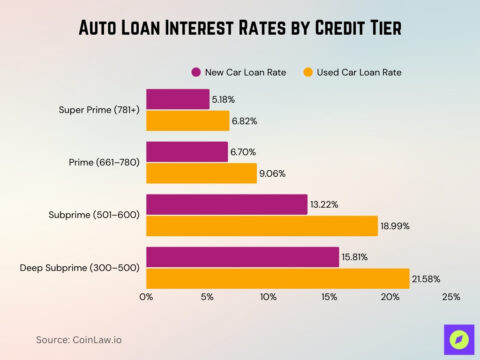
- Credit Score and History: Borrowers with credit scores above 740 typically unlock the lowest advertised promotional rates. Lenders evaluate your payment history, credit utilization ratio, and length of credit history to measure default risk.
- Loan-to-Value (LTV) Ratio: The size of your down payment directly affects your LTV ratio. Putting down 10% to 20% reduces the lender's exposure and often qualifies you for a lower interest rate, while zero-down financing carries higher risk and increased APRs.
- Vehicle Age and Mileage: New vehicles generally qualify for lower interest rates than used vehicles because they carry factory warranties and present lower mechanical risk. Used cars—especially those over five years old—frequently feature higher interest rates.
- Loan Term Length: Shorter loan terms (such as 36 or 48 months) typically feature lower interest rates than extended terms (72 or 84 months). While longer terms decrease monthly payments, they substantially increase the total interest paid over the life of the loan.
Step-by-Step Guide to Securing Your Texas Auto Loan
To maximize your chances of securing a low-interest auto loan in Texas, follow a structured, proactive approach before visiting a dealership or finalizing an online purchase.
- Check Your Credit Report: Obtain a free copy of your credit report from AnnualCreditReport.com and review it for errors. Dispute any inaccuracies well in advance of applying for a loan.
- Get Pre-Approved Locally: Apply for pre-approval with at least one credit union (such as RBFCU or TDECU) and one national lender. Pre-approval gives you a concrete interest rate baseline and strengthens your negotiating position.
- Calculate Your Budget: Factor in Texas-specific vehicle costs, including state sales tax (6.25% on standard retail vehicle sales), local title and registration fees, and mandatory auto insurance coverage.
- Shop the Dealership Financing: Once you have your pre-approval offer, present it to the dealership's finance and insurance (F&I) manager. Give them an opportunity to beat your rate, a practice known as indirect lending competition.
- Finalize the Paperwork: Review all loan disclosures, making sure there are no hidden dealer add-ons, prepayment penalties, or inflated documentation fees before signing the final contract.
Common Mistakes to Avoid When Financing a Vehicle
Navigating the auto loan market involves several pitfalls that can cost buyers thousands of dollars over time. Being aware of these missteps helps protect your financial health.
Focusing exclusively on the monthly payment is a frequent trap. Dealerships can easily manipulate monthly payments by stretching loan terms to 84 or 96 months, resulting in you paying significantly more in cumulative interest and potentially ending up "upside down" (owing more than the car is worth) on the loan. Always evaluate the total cost of the vehicle and the APR, rather than just the monthly installment.
Another common error is failing to shop around. Accepting the first financing offer provided by a dealership without checking credit union rates leaves money on the table. Finally, avoid applying for multiple hard credit inquiries across dozens of institutions over a prolonged period. Consolidating your auto loan applications within a focused 14-to-45-day window typically counts as a single inquiry on your credit report under modern scoring models, protecting your credit score from artificial drops.
Frequently Asked Questions About Texas Auto Loans
What is the average car loan rate in Texas?
Car loan rates fluctuate based on Federal Reserve policies and individual credit profiles. In 2026, top-tier borrowers with excellent credit can secure promotional rates starting around 5% to 6% APR for new cars, while average borrowers may see rates ranging from 7% to 11% or higher depending on credit score and vehicle age.
Can I get a car loan in Texas with bad credit?
Yes, many lenders in Texas specialize in subprime auto loans. Credit unions, online lenders, and specialized dealership financing programs work with lower credit scores, though you should expect higher interest rates and a required down payment to offset lender risk.
Does Texas have a state-specific vehicle sales tax?
Texas levies a 6.25% motor vehicle sales tax on the purchase price of a vehicle, minus any trade-in value. This tax is typically calculated and paid at the time of registration or through your dealership financing agreement.
Is it better to finance through a bank or a dealership?
Financing through a credit union or bank via pre-approval provides an objective baseline rate. Dealerships often partner with captive finance companies (like Ford Credit or Toyota Financial Services) that offer zero-percent or low-APR promotional incentives for buyers with exceptional credit. Comparing both options guarantees the best deal.
How does loan refinancing work in Texas?
If interest rates drop or your credit score improves after purchasing a vehicle, you can apply to refinance your auto loan through a Texas credit union or online lender. Refinancing replaces your existing high-rate loan with a new loan featuring a lower APR or adjusted payment terms, reducing your overall borrowing costs.
Conclusion and Next Actions
Finding the best car loan rates in Texas for 2026 demands a disciplined approach centered on credit preparation, institutional comparison, and disciplined budgeting. By evaluating member-owned credit unions like RBFCU and TDECU alongside competitive national lenders, you can secure financing that minimizes interest charges. Begin your process by pulling your credit report, securing a pre-approval letter before visiting a dealership, and treating dealer financing as a competitive arena rather than your only choice.