The Supplemental Security Income (SSI) check schedule under Title 42 of the United States Code dictates that benefit payments are distributed on the first calendar day of every month by the Social Security Administration (SSA). When the first day falls on a weekend or federal holiday, payments are delivered on the immediately preceding business day, resulting in dual payment months.
What Is the Title 42 SSI Check Schedule?
The term "Title 42 SSI check schedule" refers to the statutory payment distribution rules governing Supplemental Security Income (SSI), a federal assistance program authorized under Title 42 of the United States Code (42 U.S.C. § 1381 et seq., Subchapter XVI of the Social Security Act). Title 42 outlines public health and welfare laws, establishing the legal framework for SSI to provide basic financial support to low-income individuals who are aged (65 or older), blind, or living with qualifying disabilities.
Unlike Social Security Disability Insurance (SSDI) or retirement benefits—which are financed through payroll taxes under Title II of the Social Security Act—SSI is financed through general federal tax revenues. Because of this administrative distinction, the payment calendar for SSI follows strict, uniform rules separate from traditional Social Security benefit schedules.
Under federal regulations (20 CFR § 416.502), the Social Security Administration disburses monthly SSI payments on the first day of the month for which the benefit is due. However, federal payment processing standards require that funds be available to beneficiaries before a weekend or legal holiday if the first of the month falls on a non-business day.
Understanding this schedule is essential for financial planning. Because payment dates shift when the first of the month falls on a Saturday, Sunday, or federal holiday, beneficiaries frequently see months with two SSI direct deposits followed by months with no payments.
Official 2026 SSI Payment Schedule and Calendar
The 2026 calendar year includes several months where the standard payment date (the 1st of the month) falls on a weekend or federal holiday. When this occurs, the Social Security Administration payment schedule shifts the deposit date to the prior business day.
Below is the complete 2026 distribution calendar for Supplemental Security Income benefits, outlining the target benefit month, the standard due date, the actual payment release date, and the regulatory reason for any adjustments.
| Benefit Month | Standard Due Date | Actual Payment Date | Reason for Schedule Shift |
|---|---|---|---|
| January 2026 | January 1, 2026 | Wednesday, Dec 31, 2025 | New Year’s Day Federal Holiday |
| February 2026 | February 1, 2026 | Friday, Jan 30, 2026 | Feb 1 falls on a Sunday |
| March 2026 | March 1, 2026 | Friday, Feb 27, 2026 | Mar 1 falls on a Sunday |
| April 2026 | April 1, 2026 | Wednesday, Apr 1, 2026 | Regular schedule (Business day) |
| May 2026 | May 1, 2026 | Friday, May 1, 2026 | Regular schedule (Business day) |
| June 2026 | June 1, 2026 | Monday, Jun 1, 2026 | Regular schedule (Business day) |
| July 2026 | July 1, 2026 | Wednesday, Jul 1, 2026 | Regular schedule (Business day) |
| August 2026 | August 1, 2026 | Friday, Jul 31, 2026 | Aug 1 falls on a Saturday |
| September 2026 | September 1, 2026 | Tuesday, Sep 1, 2026 | Regular schedule (Business day) |
| October 2026 | October 1, 2026 | Thursday, Oct 1, 2026 | Regular schedule (Business day) |
| November 2026 | November 1, 2026 | Friday, Oct 30, 2026 | Nov 1 falls on a Sunday |
| December 2026 | December 1, 2026 | Tuesday, Dec 1, 2026 | Regular schedule (Business day) |
| January 2027 | January 1, 2027 | Thursday, Dec 31, 2026 | New Year’s Day Federal Holiday |
Detailed Breakdown of Monthly Payment Distributions in 2026
Analyzing the 2026 distribution cycle reveals specific payment patterns that beneficiaries must account for when budgeting:
- January 2026: The benefit for January 2026 is disbursed on December 31, 2025, because January 1 is a designated federal holiday (New Year’s Day). On January 30, 2026, beneficiaries receive their February 2026 payment.
- February & March 2026: The March benefit is delivered early on Friday, February 27, 2026, because March 1 is a Sunday. Consequently, no SSI payment is issued during the calendar month of March 2026.
- April through July 2026: Benefits follow the standardized schedule, arriving on the first business day of April, May, June, and July.
- July & August 2026: Beneficiaries receive two payments in July: the regular July benefit on July 1 and the August benefit early on Friday, July 31 (since August 1 falls on a Saturday). No SSI payment is released during August 2026.
- October & November 2026: October features two payment deposits: the regular October benefit on October 1 and the November benefit on Friday, October 30 (since November 1 falls on a Sunday). No SSI payment is issued in November 2026.
- December 2026: December features two payments: the standard December 1 benefit and the advance payment for January 2027, issued on Thursday, December 31, 2026.
Federal Rules Governing Early SSI Payments
The early delivery of SSI payments is governed by specific administrative regulations designed to prevent low-income households from experiencing payment interruptions over weekends or legal holidays.
The Preceding Business Day Rule
Under 20 CFR § 416.502, if the first day of a month is a Saturday, Sunday, or official federal holiday, the payment must be made on the first preceding day that is not a Saturday, Sunday, or legal holiday.
Federal legal holidays recognized by the Social Security Administration include:
- New Year’s Day (January 1)
- Martin Luther King Jr. Day (Third Monday in January)
- Washington’s Birthday / Presidents' Day (Third Monday in February)
- Memorial Day (Last Monday in May)
- Juneteenth National Independence Day (June 19)
- Independence Day (July 4)
- Labor Day (First Monday in September)
- Columbus Day (Second Monday in October)
- Veterans Day (November 11)
- Thanksgiving Day (Fourth Thursday in November)
- Christmas Day (December 25)
When any of these holidays or a regular weekend aligns with the first day of the month, the automated financial systems of the U.S. Department of the Treasury's Bureau of the Fiscal Service adjust the payment execution date backward to the previous business day.
Impact of Early Payments on Asset Resource Limits
SSI eligibility includes strict statutory resource limits: $2,000 for an individual and $3,000 for an eligible couple. A common point of concern among beneficiaries is whether receiving two payments in a single calendar month—such as in July, October, or December 2026—will cause them to exceed these resource thresholds.
Under Social Security Administration policy (POMS SI 01110.600), early benefit payments issued on the last business day of a month are not counted as resources for that month. Because an advance payment issued on October 30 is legally designated as the November benefit, the SSA does not evaluate those funds against the October end-of-month resource limit. However, beneficiaries must ensure that unspent funds intended for living expenses do not push their liquid bank balances over the resource limit at the end of subsequent evaluation periods.
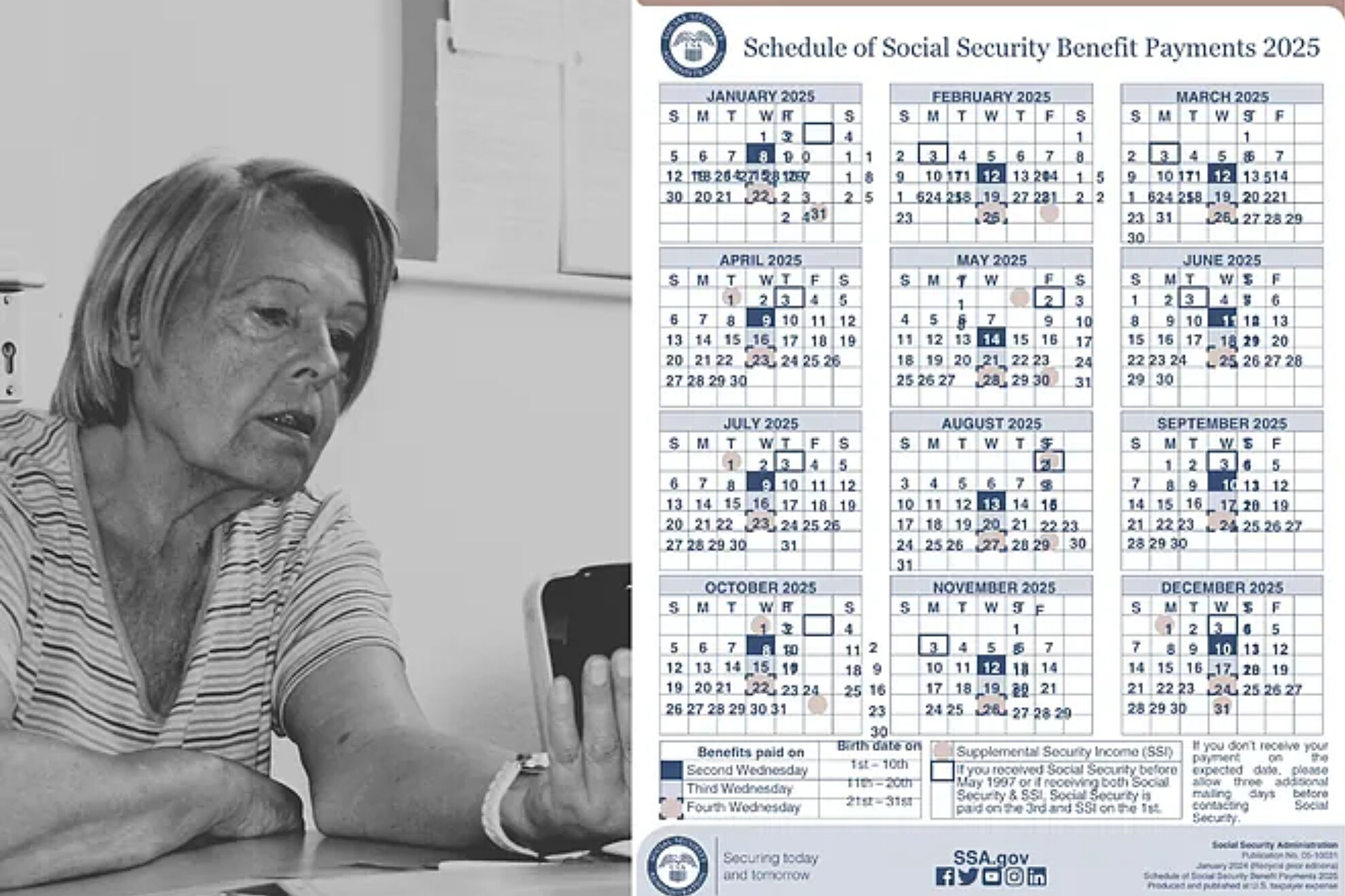
SSI vs. Title II Social Security Payment Schedules
A frequent source of confusion among benefit recipients is the difference between Title 42 SSI checks and Title II Social Security Disability Insurance (SSDI) or Retirement benefits. While both programs are administered by the Social Security Administration, their payment distribution rules differ significantly.
| Program / Claimant | SSA Benefit Payment Timeline |
|---|---|
| SSI (Title XVI) | Always paid on the 1st of the month (or prior business day if 1st falls on a weekend/holiday). |
| Title II (Pre-1997) | Paid on the 3rd of every month (or prior business day). |
| Title II (Post-1997) | Paid on 2nd, 3rd, or 4th Wednesday based on birth date:- Birth 1st-10th: 2nd Wednesday- Birth 11th-20th: 3rd Wednesday- Birth 21st-31st: 4th Wednesday |
| Concurrent Claimants | SSI arrives on 1st; Title II arrives on the 3rd. |
Direct Comparison: SSI vs. SSDI Payment Rules
| Feature | Title 42 Supplemental Security Income (SSI) | Title II Social Security (SSDI / Retirement) |
|---|---|---|
| Primary Statutory Basis | Title XVI of Social Security Act (42 U.S.C. § 1381) | Title II of Social Security Act (42 U.S.C. § 401) |
| Funding Source | General Federal Tax Revenues | Federal Insurance Contributions Act (FICA) Taxes |
| Standard Payment Date | 1st day of the calendar month | 2nd, 3rd, or 4th Wednesday (based on birth day) |
| Weekend/Holiday Shift | Shifted to the preceding business day | Shifted to the preceding business day |
| Concurrent Recipients | Paid on the 1st of the month | Paid on the 3rd of the month |
How Concurrent Claimants Receive Payments
Beneficiaries who qualify for both SSI and Title II Social Security benefits (known as concurrent beneficiaries) follow a split schedule:
- The SSI check is released on the 1st of the month (or the preceding business day if the 1st is a weekend/holiday).
- The Title II (SSDI or Retirement) check is released on the 3rd of the month (or the preceding business day if the 3rd falls on a weekend or holiday).
This structure ensures that dual-eligible individuals receive their primary welfare assistance at the start of the month, followed by their earned insurance benefits shortly thereafter.
How to Track, Manage, and Troubleshoot SSI Checks
Managing SSI disbursements requires keeping banking details up to date and knowing how to track electronic payments.
- Check Official SSA Payment Calendar
- Verify Bank Deposit / Direct Express
- Wait 3 Business Days After Date
- Contact Bank or Call SSA 1-800-772-1213
Electronic Payment Methods
By federal law, the U.S. Department of the Treasury requires all federal benefit payments—including SSI—to be delivered electronically. Beneficiaries can choose from two primary electronic delivery methods:
- Direct Deposit: Payments are transferred directly into a beneficiary's personal checking or savings account at a bank or credit union. This is the fastest and most secure method.
- Direct Express® Debit MasterCard®: Designed for individuals without a traditional bank account, funds are loaded directly onto a prepaid debit card issued by Comerica Bank as the Treasury’s financial agent.
Paper checks are issued only under limited statutory waiver exceptions granted by the Department of the Treasury (such as severe mental impairment or living in remote geographic locations lacking electronic financial infrastructure).
Step-by-Step Guidance for Tracking Payments Online
Beneficiaries can monitor their payment status and historical disbursements using official SSA digital tools:
- Create or Log into a personal Account: Visit the official portal at my Social Security to establish a secure login via Login.gov or ID.me.
- Review Benefit and Payment Details: Navigate to the "Payment History" tab to view scheduled payment amounts, processing status, direct deposit routing details, and pending deposit dates.
- Verify Address and Financial Details: Ensure that banking institutions or contact details are updated before the 15th of the month to take effect for the following month's disbursement cycle.
What to Do If an SSI Check Is Delayed
If an expected SSI deposit does not appear on the scheduled payment date, follow these troubleshooting protocols:
- Wait Three Business Days: The SSA requests that beneficiaries wait three business days after the scheduled payment date before reporting a missing payment. Banking institutions and payment clearinghouses may occasionally experience processing delays.
- Verify Financial Institution Processing: Contact your bank or Direct Express customer service to check if there are pending ACH transfers or account holds.
- Contact the Social Security Administration: If three business days pass without payment delivery, report the missing payment by calling the national toll-free number at 1-800-772-1213 (TTY: 1-800-325-0778) or contacting your local Social Security field office.
- Report Stolen or Lost Paper Checks: If you receive paper checks under an approved waiver and the check is missing, notify the SSA immediately to initiate a check tracer and request a replacement draft (Form SSA-735).
Supplemental Security Income Rate Structure and State Supplements
While the Title 42 check schedule establishes when payments are delivered, federal standards and individual state policies govern how much a recipient receives.
Federal Benefit Rates (FBR)
The Federal Benefit Rate sets the maximum monthly federal SSI payment standard across the United States. Adjusted annually via Cost-of-Living Adjustments (COLA) based on the Consumer Price Index (CPI-W), the FBR serves as the baseline before calculating countable income deductions.
Countable income—which includes earned income (wages), unearned income (such as SSDI or pensions), and in-kind support—is deducted from the maximum FBR to determine a beneficiary's actual monthly payout.
State Supplementary Payments (SSP)
Many states provide additional funding beyond the federal rate through State Supplementary Payments (SSP). Depending on the state, these additional funds may be combined into the standard federal SSI check or issued as a separate payment on a different schedule:
- Federally Administered State Supplements: States like California, New Jersey, and New York have the SSA administer their state supplements. In these jurisdictions, the state extra is combined into the primary federal SSI payment and disbursed according to the official Title 42 SSI schedule.
- State-Administered Supplements: States like Alabama, Colorado, and Texas administer their supplemental programs independently. Beneficiaries in these states may receive their state payment on a separate calendar date via a state agency check or direct deposit.
Frequently Asked Questions
Why did I receive two SSI checks in one month?
You received two payments in one month because the first day of the following month falls on a Saturday, Sunday, or official federal holiday. Under federal regulations, the Social Security Administration releases your next month's payment early on the last business day of the current month. This is an advance delivery of your regular benefit, not a bonus or double payment.
What time of day is an SSI direct deposit credited to my bank account?
Electronic funds transfers for SSI are processed through the Federal Reserve’s Automated Clearing House (ACH) network. Most financial institutions post SSI direct deposits between 12:00 AM and 6:00 AM local time on the scheduled payment date. Some online banks offer early access programs that post funds up to two days early, though this depends entirely on individual bank policies.
What happens to the payment schedule if a state holiday occurs on the 1st?
The SSI check schedule is governed strictly by federal law and the federal official holiday calendar. State-specific holidays (such as Patriots' Day in Massachusetts or Admission Day in California) do not alter the federal release date for national SSI payments. However, local bank branch closures on state holidays may affect over-the-counter cash withdrawals.
Does Title 42 apply to SSDI payments as well?
Title 42 of the United States Code contains the legal statutory provisions for both Social Security insurance benefits and Supplemental Security Income (SSI). However, the specific rules for the monthly payment schedule of SSDI (Disability Insurance) are established under Title II provisions, which distribute funds on designated Wednesdays of the month based on the beneficiary's day of birth, rather than on the 1st of the month.
How do I change my direct deposit banking information for SSI?
You can update your direct deposit routing and account details online by logging into your personal my Social Security account. Alternatively, you can call the SSA at 1-800-772-1213 or visit a local field office. Submit bank account changes at least 30 days before the next scheduled payment date to ensure funds are routed to your new account without interruption.
Practical Recommendations for Managing Your SSI Calendar
- Mark Early-Payment Months on Your Budget Calendar: Identify months in 2026 with dual payments—specifically January, July, October, and December. Remember that early payments released at the end of these months are intended to cover the expenses of the upcoming month.
- Account for "Zero-Payment" Months: Because payments for March, August, and November 2026 are delivered early at the end of the preceding months, no SSI checks will arrive during the calendar months of March, August, or November. Reserve your advance funds accordingly.
- Enroll in Direct Deposit: Ensure your payments arrive securely on schedule without mail delays by enrolling in direct deposit or obtaining a Direct Express debit card through the Social Security Administration.
- Monitor Account Balances Near Month-End: If you receive an advance payment on the 30th or 31st of a month, remember that the SSA does not count that early payment toward your $2,000 (individual) or $3,000 (couple) resource limit for that month. However, plan unspent funds carefully so that accumulated savings do not violate eligibility thresholds in subsequent months.