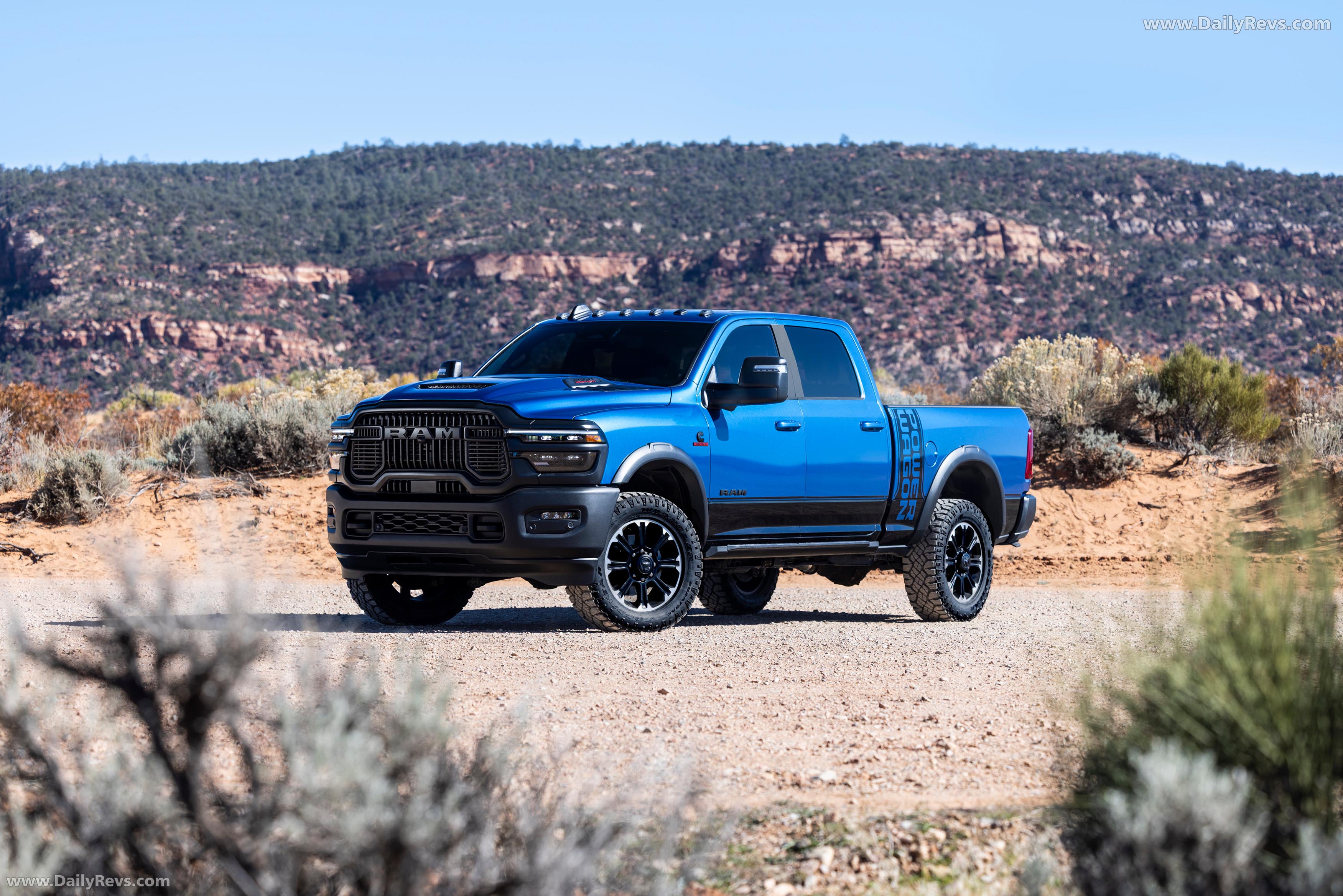
The 350 horsepower (hp) rating for the 2016 Ram 2500 indicates a vehicle equipped with the 6.7L Cummins inline-six engine and the G56 six-speed manual transmission. This specific output was electronically limited from the factory to 660 lb-ft of torque to preserve the longevity of the manual clutch system, distinguishing it from the higher-output automatic variants.
In 2026, the 2016 Ram 2500 remains a cornerstone of the heavy-duty truck market, particularly for those who prioritize mechanical engagement over sheer electronic automation. While modern trucks have pushed horsepower figures toward the 500 mark, the "unpacked" reality of the 350 hp Cummins reveals a platform built for durability, consistent thermal management, and long-term serviceability. Understanding this truck requires looking beyond the peak numbers and into the specific engineering choices made by Ram and Cummins for the 2016 model year.
The Identity of the 350 HP Rating: The Manual Transmission Factor
The most critical detail regarding the 350 hp 2016 Ram 2500 is that this power level is inseparable from the G56 manual transmission. During the 2016 production cycle, Ram offered the 6.7L Cummins in three distinct power tiers. The 350 hp / 660 lb-ft version was the "entry" output, specifically mated to the manual gearbox.
The reason for this "detune" (as compared to the 370 hp or 385 hp automatic versions) was not a limitation of the engine block itself, but rather a protective measure for the manual transmission’s clutch and the dual-mass flywheel. Cummins engines are known for their massive low-end torque. Without the electronic intervention of an automatic transmission’s torque converter and complex shift logic, a manual clutch faces significant stress when 800+ lb-ft of torque is applied at low RPMs. By capping the output at 350 hp and 660 lb-ft, Ram ensured that the G56 could reliably reach 200,000 miles and beyond without catastrophic failure under standard towing conditions.
Technical Specifications of the 6.7L Cummins I6
The heart of the 2016 Ram 2500 is the 6.7-liter inline-six turbo diesel engine. By 2016, this engine had been refined significantly since its 2007.5 debut. The engine features a cast-iron block and head, which provides the rigidity necessary to handle high combustion pressures over hundreds of thousands of miles.
Engine Architecture and Fueling
The 6.7L Cummins utilizes a 4.21-inch bore and a 4.88-inch stroke. This "undersquare" design—where the stroke is longer than the bore—is the secret to the engine’s torque production. Longer strokes allow for greater leverage on the crankshaft, producing high force at lower engine speeds.
Fuel delivery is managed by a Bosch high-pressure common-rail (HPCR) system. In 2016, this system operated at pressures exceeding 29,000 PSI, allowing for multiple injection events per combustion cycle. These pilot and post-injection events soften the "diesel clatter" and optimize the burn for both power and emissions compliance.
The Holset Variable Geometry Turbocharger (VGT)
One of the defining components of the 350 hp Cummins is the Holset HE351VE turbocharger. This VGT uses a sliding nozzle ring to vary the exhaust gas flow across the turbine blades. At low RPMs, the nozzle narrows to speed up the air, reducing turbo lag and providing immediate throttle response. At high RPMs, it opens to allow maximum flow.
Crucially for towers, the VGT doubles as an integrated exhaust brake. By restricting exhaust flow during deceleration, the engine creates backpressure that helps slow the vehicle. On the 2016 manual models, this feature is highly effective, as the direct mechanical link of the G56 transmission allows for aggressive engine braking that saves the service brakes on long mountain descents.
The G56 Manual Transmission: A Dying Breed
By 2026, the 2016 Ram 2500 is viewed as one of the last "real" trucks by enthusiasts because it was among the final years Ram offered a manual transmission. The G56 is a Mercedes-sourced six-speed gearbox with an aluminum case.
Ratios and Driving Dynamics
The G56 features a 5.94:1 first gear ratio, which is essential for getting heavy loads moving from a standstill. However, it is an "overdrive" transmission, with a 0.74:1 ratio in sixth gear. Because the G56 has a slightly different final drive feel compared to the 68RFE automatic, many 350 hp Ram 2500s were equipped with 3.42 rear-end gears to balance highway fuel economy with towing capability.
The Dual-Mass Flywheel (DMF)
The factory 350 hp setup includes a dual-mass flywheel designed to absorb the torsional vibrations inherent in a large-displacement diesel engine. While the DMF makes the truck smoother and quieter to drive, it is a known wear item. By 2026, many owners of these trucks have "unpacked" this component by replacing it with a solid-mass flywheel and a heavy-duty ceramic or organic clutch, often as a precursor to increasing the engine's power beyond the stock 350 hp.
Chassis and Suspension: The Ram 2500 Difference
A common misconception is that the 2500 and 3500 share the same chassis. While the front ends are nearly identical, the rear suspension on the 2016 Ram 2500 is unique.
Five-Link Coil Rear Suspension
Unlike the traditional leaf springs found on the 3500 (and competitors from Ford and GM), the 2016 Ram 2500 utilizes a five-link coil spring rear suspension. This was a revolutionary change for the segment, focusing on ride quality. The coil springs significantly reduce the "unloaded bounce" typical of heavy-duty trucks, making the 350 hp Ram 2500 a more viable daily driver.
Towing and Payload Ratings
Despite having "only" 350 hp, the 2016 Ram 2500 is a powerhouse. When properly equipped, the manual version can typically tow between 15,000 and 17,000 pounds, depending on the cab configuration and rear-axle ratio. The payload capacity generally hovers around 2,000 to 2,500 pounds. While the automatic versions have higher maximum tow ratings on paper, the manual version is often preferred for livestock or sensitive loads where the driver wants total control over gear selection and power delivery.
2016 Power Tier Comparison
To understand where the 350 hp model sits, it is helpful to compare it to the other engine/transmission combinations available in the 2016 Ram lineup.
| Feature | 350 HP Cummins (Manual) | 370 HP Cummins (Automatic) | 385 HP Cummins (Aisin) |
|---|---|---|---|
| Transmission | G56 6-Speed Manual | 68RFE 6-Speed Auto | AS69RC Aisin Auto |
| Peak Horsepower | 350 hp @ 2,800 RPM | 370 hp @ 2,800 RPM | 385 hp @ 2,800 RPM |
| Peak Torque | 660 lb-ft @ 1,500 RPM | 800 lb-ft @ 1,600 RPM | 900 lb-ft @ 1,700 RPM |
| Chassis | 2500 / 3500 | 2500 / 3500 | 3500 Only |
| Primary Use | Driver Control / Enthusiast | General Towing | Max-HD Towing |
| Rear Suspension | Coil Spring (2500) | Coil Spring (2500) | Leaf Spring |
Emissions Systems and Maintenance in 2026
The 2016 model year falls squarely into the era of Selective Catalytic Reduction (SCR) and Diesel Particulate Filters (DPF). This truck requires Diesel Exhaust Fluid (DEF) to meet NOx emission standards.
DPF and SCR Management
Ten years into its lifecycle, the emissions system on a 2016 Ram 2500 requires specific attention. The DPF captures soot, which is then burned off during a "regeneration" cycle. For the 350 hp manual model, it is vital that the truck is driven at highway speeds occasionally to allow these cycles to complete. Frequent short trips can lead to soot buildup, eventually requiring a manual "parked regen" or professional cleaning of the filter.
Critical Maintenance Points
- Fuel Filters: The 2016 model uses a two-stage filtration system (one under the hood and one near the rear axle). Replacing both every 15,000 miles is non-negotiable for protecting the Bosch injectors.
- CCV Filter: The Crankcase Ventilation filter, located on top of the valve cover, should be replaced every 67,500 miles to prevent oil carry-over into the turbocharger.
- Grid Heater Bolt: A known issue for this generation is the potential for the grid heater's power stud to degrade and fall into the intake manifold. Many owners in 2026 choose to inspect or replace this with an aftermarket solution to prevent engine failure.
Performance Modifications: Unlocking the 350 HP Platform
Because the 350 hp rating is a software limitation rather than a hardware one, the 2016 Ram 2500 is a prime candidate for performance tuning. However, "unpacking" more power comes with significant prerequisites.
The "Weight Loss" and Tuning Path
In the aftermarket world, many owners use electronic programmers to increase the output to match or exceed the 385 hp "High Output" ratings. It is common to see these trucks reaching 450–500 hp with simple software changes. However, if the stock G56 clutch is not upgraded first, it will almost certainly slip under the increased torque load.
Transmission Reinforcement
For those sticking with the 350 hp factory rating but wanting more reliability, "shimming" the G56 or using a higher-viscosity fluid (such as a 50W synthetic manual transmission fluid) can help with heat dissipation. The G56 case is aluminum, and under high-torque, high-heat scenarios, the case can stretch slightly, leading to gear misalignment. Upgraded girdle plates are a common 2026-era modification for high-mileage units.
Common Problems and Troubleshooting
Despite the legendary Cummins reputation, the 2016 Ram 2500 has specific areas that require monitoring as the vehicles age toward the 10-year mark.
- Front End Wear: Often referred to as "death wobble," the front-end components (track bar, tie rod ends, and steering damper) can wear out, leading to violent shaking at highway speeds. Using high-quality greasable joints is the standard 2026 fix.
- Water Pump Failures: Some 2013-2017 models were subject to recalls regarding water pumps that could leak or potentially catch fire due to bearing failure. Verification of the updated part is essential.
- Actuator Failure: The VGT turbocharger uses an electronic actuator to move the internal nozzle. These actuators can fail due to heat and soot. Symptoms include a loss of boost or the exhaust brake failing to engage.
Frequently Asked Questions
Can the 350 hp manual version tow as much as the automatic?
Technically, the manual version has a lower maximum towing capacity than the 68RFE or Aisin automatics. This is due to the clutch’s torque rating and the heat generated by the G56 during heavy launches. However, for most trailers under 16,000 lbs, the 350 hp manual is more than capable and offers superior descent control.
Is the 2016 Ram 2500 350 hp model fuel efficient?
Diesel fuel economy varies wildly based on load and driving style. Unloaded, the 350 hp Ram 2500 can achieve 17–20 MPG on the highway. When towing a heavy 5th-wheel trailer, this usually drops to 10–12 MPG. The manual transmission offers a slight advantage in "hypermiling" for experienced drivers who can optimize shift points.
Does this truck require DEF (Diesel Exhaust Fluid)?
Yes, all 2016 Ram 2500 Cummins trucks require DEF. The tank is roughly 5.5 gallons, and for most drivers, it lasts between 3,000 and 5,000 miles, depending on how hard the engine is working. The truck will enter a "limp mode" with restricted speeds if the DEF tank is allowed to run dry.
Why did Ram stop making the manual transmission?
Ram discontinued the manual transmission after the 2018 model year. The primary reasons were low take rates (fewer customers buying them) and the increasing difficulty of making a manual gearbox handle the 1,000+ lb-ft of torque produced by modern "High Output" Cummins engines without significantly increasing the size and weight of the transmission.
Is the 350 hp Cummins "underpowered" for a 2500?
Not in a practical sense. While 350 hp sounds low compared to 2026 figures, the 660 lb-ft of torque is what actually moves the load. This truck has more than enough power to merge into highway traffic with a trailer and maintain speed on grades. The lower horsepower rating actually contributes to lower internal cylinder pressures and potentially longer engine life.
Practical Recommendation for Owners and Buyers
For those looking at a 350 hp 2016 Ram 2500 in the current year of 2026, the focus should be on maintenance documentation and clutch health. This truck is a "forever" vehicle if the emissions system is kept healthy and the front end is tight.
If you are buying one, prioritize a truck that has been used for highway towing rather than short-distance city driving, as the Cummins engine thrives under load and heat. Check for any signs of the "grid heater bolt" modification and ensure the water pump recall was performed. If the truck still has its original dual-mass flywheel and you plan to tow heavily, budget for a high-quality solid-mass flywheel conversion and a clutch kit. This "unpacks" the full potential of the platform, allowing you to enjoy the rare combination of a 6.7L Cummins and a manual gearbox for another decade of service.