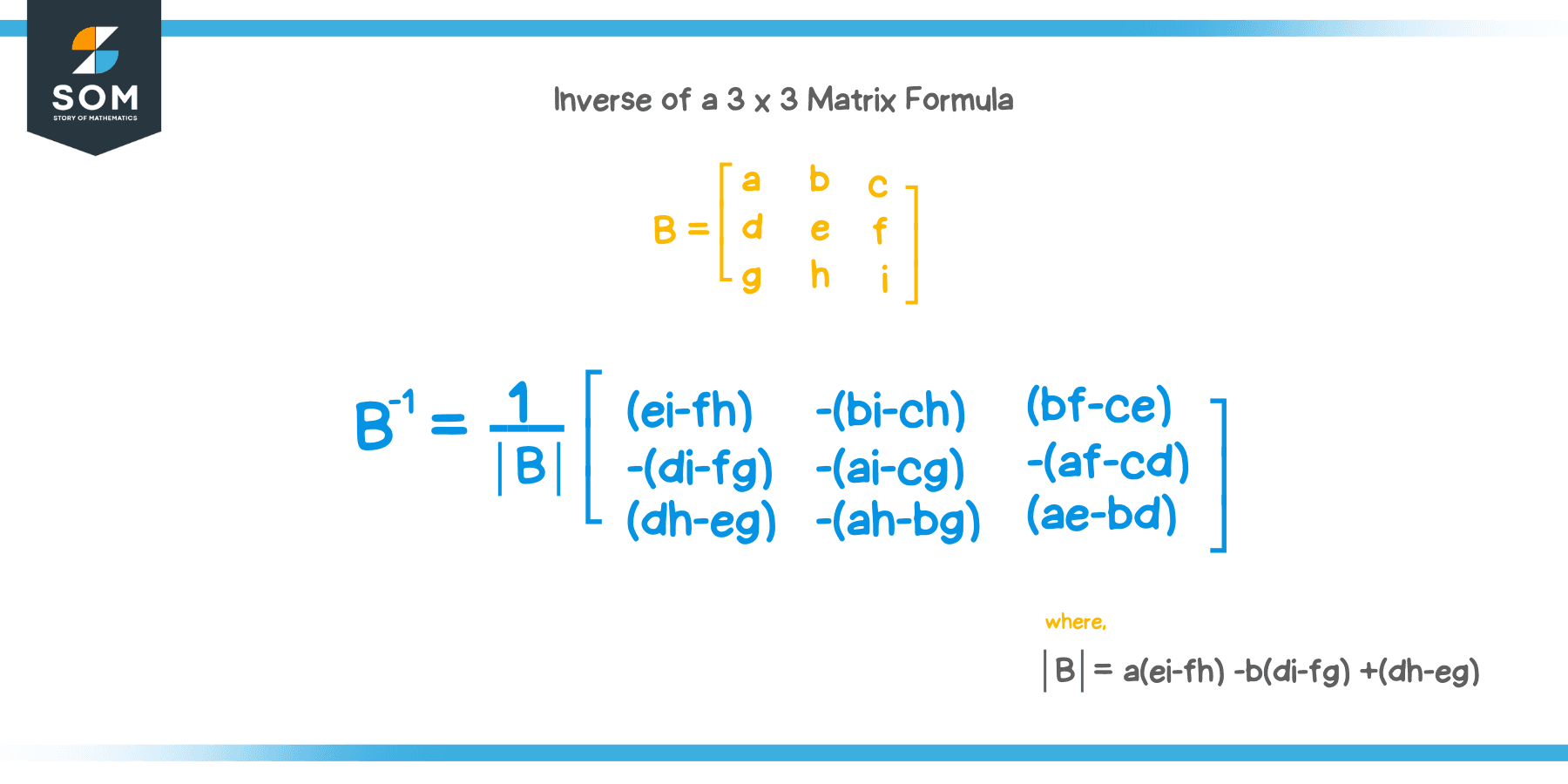
To compute the inverse of a 3x3 matrix, you must first calculate the determinant to ensure it is not zero. If the determinant is non-zero, find the matrix of minors, convert it into a cofactor matrix, transpose that matrix to create the adjugate, and finally divide every element by the determinant.
Calculating the inverse of a 3x3 matrix is a fundamental operation in linear algebra, essential for solving systems of linear equations, performing transformations in 3D computer graphics, and optimizing algorithms in data science. As of 2026, while automated software handles massive datasets, understanding the manual step-by-step process remains vital for debugging, theoretical verification, and academic mastery.
Prerequisites and the Necessity of the Inverse
Before attempting to find the inverse, one must understand what an inverse matrix actually represents. For a square matrix A, its inverse A⁻¹ is a unique matrix such that when multiplied by A, the result is the Identity matrix (I). The Identity matrix for a 3x3 system is a matrix with ones on the main diagonal and zeros elsewhere.
The most critical prerequisite is the determinant. A matrix can only be inverted if it is "non-singular," meaning its determinant is not equal to zero. If the determinant is zero, the matrix is "singular," and it possesses no inverse. This occurs because the process of finding the inverse involves dividing by the determinant; division by zero is undefined in standard arithmetic.
Step 1: Calculate the Determinant of the 3x3 Matrix
The first phase of the operation is finding the determinant, often denoted as det(A) or |A|. For a 3x3 matrix, the most common method is expansion by cofactors along the first row.
Consider a matrix A:
| a b c | | d e f | | g h i |
The formula for the determinant is: det(A) = a(ei − fh) − b(di − fg) + c(dh − eg)
Understanding the Determinant Calculation
To arrive at this formula, you take the first element of the first row (a) and multiply it by the determinant of the 2x2 matrix that remains when you "hide" the first row and first column. You then move to the second element (b), but you must subtract this term. Finally, you move to the third element (c) and add its product with the remaining 2x2 determinant.
If the resulting value is zero, stop here. The matrix cannot be inverted. If the value is any other number (positive or negative), proceed to the next step.
Step 2: Create the Matrix of Minors
The matrix of minors is a new 3x3 matrix where each element is the determinant of a specific 2x2 sub-matrix. For every element in the original matrix, you must temporarily ignore its row and its column, leaving four remaining numbers.
- For element (1,1): Ignore row 1 and column 1. Calculate the determinant of the remaining 2x2 matrix.
- For element (1,2): Ignore row 1 and column 2. Calculate the determinant of the remaining 2x2 matrix.
- Repeat for all 9 positions: This requires nine separate 2x2 determinant calculations.
This step is where most arithmetic errors occur. It is helpful to write out each 2x2 matrix clearly before calculating $(ad - bc)$ for each one. The result of this step is a new 3x3 matrix filled with these "minors."
Step 3: Transform the Minors into a Matrix of Cofactors
Once you have the matrix of minors, you must apply a specific sign pattern to the elements. This pattern is often called the "checkerboard" or "sign matrix."
The sign pattern for a 3x3 matrix is:
+ - + - + - + - +
To find the cofactor matrix, you simply multiply each element of your matrix of minors by the sign in the corresponding position of the checkerboard.
- The elements at (1,1), (1,3), (2,2), (3,1), and (3,3) keep their original signs (multiply by +1).
- The elements at (1,2), (2,1), (2,3), and (3,2) flip their signs (multiply by -1).
It is a common mistake to think "flipping the sign" means making the number negative. If the minor was already negative (e.g., -5), flipping the sign makes it positive (+5).
Step 4: Transpose the Cofactor Matrix to find the Adjugate
The next step is to find the Adjugate (also known as the Adjoint) of the matrix. Transposing a matrix involves swapping its rows with its columns.
- The first row of your cofactor matrix becomes the first column of the adjugate.
- The second row of your cofactor matrix becomes the second column of the adjugate.
- The third row of your cofactor matrix becomes the third column of the adjugate.
Mathematically, the element at position (i, j) moves to position (j, i). This step is purely organizational and does not involve any arithmetic calculations, but it is vital for the final formula.
Step 5: Multiply by 1/Determinant
The final step is to multiply every single element in your Adjugate matrix by the reciprocal of the determinant you found in Step 1.
A⁻¹ = (1 / det(A)) * adj(A)
If your determinant was 5, you multiply every element in the adjugate by 1/5 (or divide by 5). If your determinant was a fraction, such as 1/2, you would multiply by its reciprocal, 2. After this step, you have successfully computed the inverse of the 3x3 matrix.
Comparison of Methods: Adjoint vs. Gauss-Jordan
While the adjugate (cofactor) method described above is the most common manual approach, another popular method exists: Gauss-Jordan elimination. Each has its own strengths depending on the context of the problem.
| Feature | Adjoint Method (Cofactors) | Gauss-Jordan Elimination |
|---|---|---|
| Primary Use | Manual calculations for 3x3 or smaller. | Large matrices (4x4 and up) or computer algorithms. |
| Complexity | High arithmetic repetition (9 minors). | Requires understanding of row operations. |
| Determinant | Calculated first as a gatekeeper. | Determinant is not strictly required to start. |
| Error Risk | High risk of sign errors in cofactors. | High risk of compounding row-operation errors. |
| Result Format | Often results in clear fractions. | Can lead to messy decimal values early on. |
Practical Example Walkthrough
Let us apply these steps to a specific matrix A:
| 1 2 3 | | 0 1 4 | | 5 6 0 |
1. Calculate the Determinant
det(A) = 1(0 - 24) - 2(0 - 20) + 3(0 - 5) det(A) = 1(-24) - 2(-20) + 3(-5) det(A) = -24 + 40 - 15 = 1
Since the determinant is 1, an inverse exists.
2. Matrix of Minors
- Minor (1,1): det |1 4| |6 0| = (0 - 24) = -24
- Minor (1,2): det |0 4| |5 0| = (0 - 20) = -20
- Minor (1,3): det |0 1| |5 6| = (0 - 5) = -5
- Minor (2,1): det |2 3| |6 0| = (0 - 18) = -18
- Minor (2,2): det |1 3| |5 0| = (0 - 15) = -15
- Minor (2,3): det |1 2| |5 6| = (6 - 10) = -4
- Minor (3,1): det |2 3| |1 4| = (8 - 3) = 5
- Minor (3,2): det |1 3| |0 4| = (4 - 0) = 4
- Minor (3,3): det |1 2| |0 1| = (1 - 0) = 1
Matrix of Minors:
| -24 -20 -5 | | -18 -15 -4 | | 5 4 1 |
3. Cofactor Matrix
Apply the sign pattern (+ - +, - + -, + - +):
- -24 stays -24
- -20 becomes 20
- -5 stays -5
- -18 becomes 18
- -15 stays -15
- -4 becomes 4
- 5 stays 5
- 4 becomes -4
- 1 stays 1
Cofactor Matrix:
| -24 20 -5 | | 18 -15 4 | | 5 -4 1 |
4. Adjugate Matrix (Transpose)
Swap rows and columns:
| -24 18 5 | | 20 -15 -4 | | -5 4 1 |
5. Final Inverse
Multiply by 1/det(A). Since det(A) = 1, the matrix remains unchanged. If the determinant were 2, we would divide every number by 2.
A⁻¹ =
| -24 18 5 | | 20 -15 -4 | | -5 4 1 |
How to Verify Your Result
Verification is a crucial step in matrix algebra. To confirm that your inverse is correct, multiply the original matrix A by your calculated inverse A⁻¹. The result must be the Identity matrix I.
Matrix multiplication involves taking the dot product of the rows of the first matrix and the columns of the second. For the example above: (Row 1 of A) ⋅ (Col 1 of A⁻¹) = (1*-24) + (220) + (3-5) = -24 + 40 - 15 = 1. This corresponds to the "1" in the top-left corner of the Identity matrix. Repeating this for all elements should result in the 3x3 Identity matrix. If any element does not match, there was likely an error in the cofactor signs or the 2x2 determinant calculations.
Frequently Asked Questions
Can every 3x3 matrix be inverted?
No. Only square matrices with a non-zero determinant can be inverted. If a matrix has a row or column of all zeros, or if two rows/columns are multiples of each other, the determinant will be zero, and the matrix is singular (non-invertible).
Why do I have to transpose the cofactor matrix?
The transposition step is required because of the way the Adjugate matrix is defined in the fundamental theorem of linear algebra. Without transposition, the multiplication A * adj(A) would not result in det(A) * I. The transpose aligns the cofactors with the correct elements for the inverse operation.
Is there a faster way to find the inverse than the Adjoint method?
For manual calculations of 3x3 matrices, the Adjoint method is usually the most structured. However, for 2x2 matrices, there is a very fast shortcut. For 4x4 and larger matrices, Gauss-Jordan elimination or software-based LU decomposition is significantly faster and less prone to manual error.
What are the real-world applications of a 3x3 matrix inverse in 2026?
In 2026, 3x3 matrix inverses are ubiquitous in robotics for inverse kinematics, in augmented reality (AR) to map virtual objects onto real-world coordinates, and in cryptography. They are also used in economic modeling to solve systems of equations involving three variables, such as supply, demand, and price across different sectors.
What is a common mistake to avoid?
The most frequent error is neglecting the negative signs in the cofactor matrix. Remember that the "checkerboard" pattern applies to the position, not the value. If you have a negative minor in a negative position, the result must be positive.
Recommendations for Mastery
To master 3x3 matrix inversion, it is recommended to practice with matrices that have small integer determinants (like 1 or -1) to keep the arithmetic clean while learning the steps. Once the process is internalized, try matrices that result in fractional elements. Consistent verification by multiplying A and A⁻¹ will help you identify exactly where in the process your calculations might be failing. For complex engineering projects in 2026, always use a verified computational library (like NumPy or MATLAB) to perform these operations on large-scale data, using the manual method primarily for logic checks and theoretical proofs.