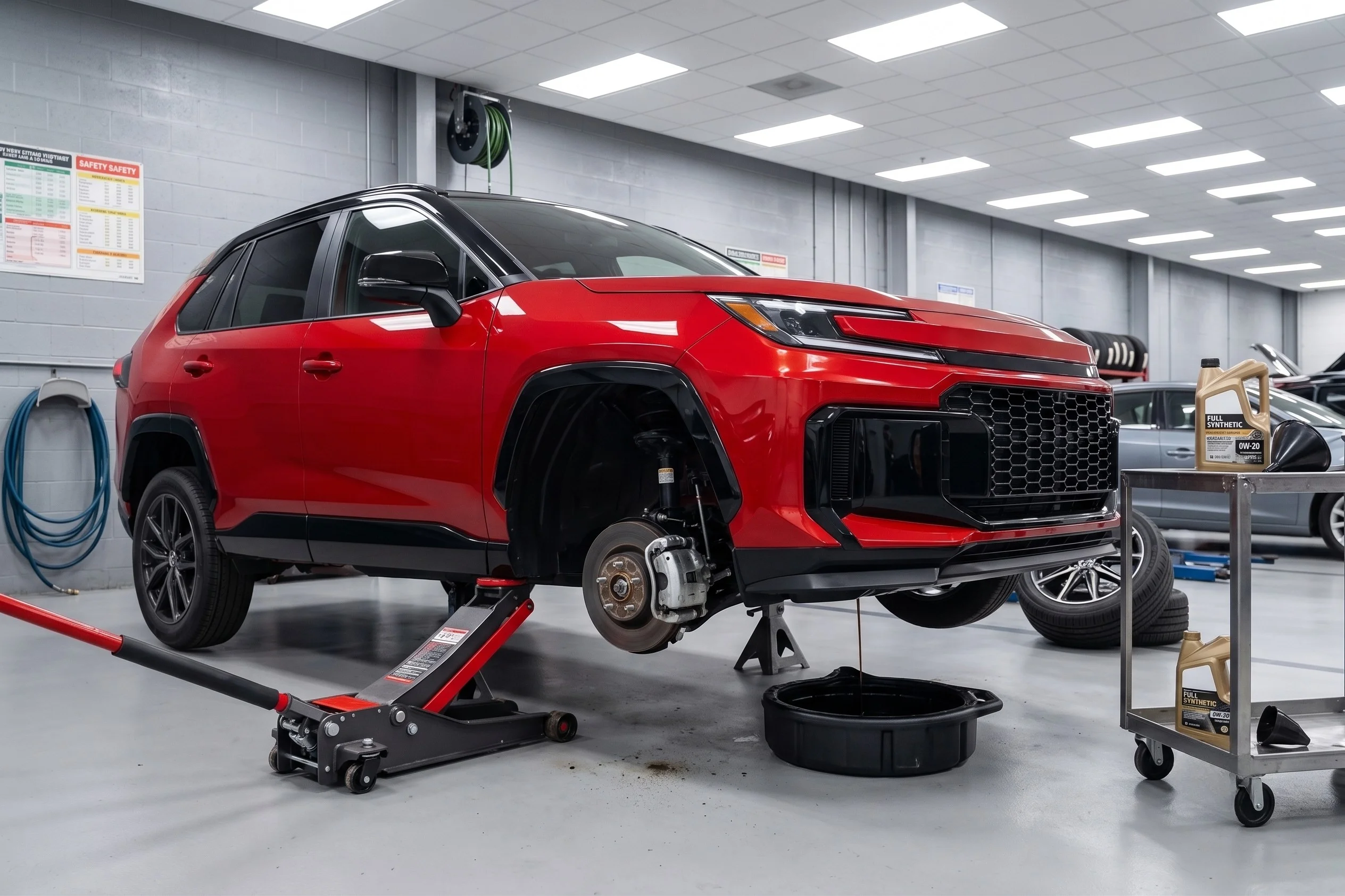
The 2011 Toyota RAV4 with the 3.5L V6 engine (2GR-FE) requires 6.4 US quarts (6.1 liters) of oil when performing a standard oil and filter change. If you are performing a service without replacing the oil filter, the capacity is 6.0 US quarts (5.7 liters). Toyota recommends using SAE 5W-30 viscosity motor oil.
Owning a 2011 Toyota RAV4 V6 in 2026 means you are likely driving a high-mileage vehicle that has proven its durability over 15 years. To maintain the longevity of the 2GR-FE engine—a powerhouse known for its performance in the RAV4, Camry, and various Lexus models—understanding the specific lubrication requirements is essential. This guide provides an in-depth look at oil capacities, viscosity choices, the cartridge filter system, and technical tips for ensuring your V6 stays in peak condition.
Understanding the 3.5L 2GR-FE V6 Engine
The 2GR-FE engine found in the 2011 RAV4 is a 3.5-liter, 24-valve DOHC V6. In the context of the 2011 model year, this engine was the performance leader for the compact SUV segment, producing 269 horsepower. Because this engine utilizes a timing chain rather than a belt, and features a sophisticated Dual Variable Valve Timing with intelligence (VVT-i) system, the quality and volume of oil are paramount.
The oil in this engine doesn't just lubricate moving parts; it acts as a hydraulic fluid for the VVT-i actuators and provides critical cooling for the pistons. With a total capacity of 6.4 quarts, the 2GR-FE holds significantly more oil than its 4-cylinder counterpart (the 2.5L 2AR-FE, which takes about 4.7 quarts). This larger volume helps manage heat and extends the life of the oil additives, which is particularly important if the vehicle is used for towing or heavy commuting.
2011 RAV4 V6 Oil Capacity Specifications
When preparing for an oil change, it is important to distinguish between the "refill" capacity and the "dry" capacity. For standard maintenance, you will always use the refill capacity.
| Component / Condition | US Quarts | Liters |
|---|---|---|
| With Filter Replacement (Standard Change) | 6.4 Quarts | 6.1 Liters |
| Without Filter Replacement | 6.0 Quarts | 5.7 Liters |
| Total Dry Fill (After Engine Overhaul) | 7.4 Quarts | 7.0 Liters |
| Oil Drain Plug Torque | 30 ft-lbs | 40 N·m |
| Oil Filter Cap Torque | 18 ft-lbs | 25 N·m |
While the manual states 6.4 quarts, many technicians recommend purchasing 7 individual quarts. This ensures you have enough to reach the "Full" mark on the dipstick and a small amount remaining for future top-offs, as older engines may consume a negligible amount of oil between service intervals.
Oil Viscosity and Type Recommendations
For the 2011 RAV4 V6, Toyota specifies SAE 5W-30 oil. This is a multi-grade oil designed to provide a balance between easy starting in cold temperatures (the 5W) and consistent protection at high operating temperatures (the 30).
Synthetic vs. Conventional Oil
In 2011, many Toyota models were transitioning to 0W-20 synthetic oil, which allowed for 10,000-mile drain intervals. However, the 3.5L V6 engine in the 2011 RAV4 was still factory-specified for 5W-30. While you can use conventional 5W-30, synthetic oil is highly recommended in 2026 for several reasons:
- Oxidation Resistance: Synthetic oil breaks down much slower under the high heat generated by a V6 engine.
- Sludge Prevention: The 2GR-FE is a complex engine; synthetic oils help keep the VVT-i oil passages clear of carbon deposits.
- Cold Start Protection: In winter months, synthetic 5W-30 flows faster to the overhead cams than conventional oil.
If you choose to use synthetic oil, you may follow a 7,500 to 10,000-mile interval, though many enthusiasts prefer a 5,000-mile interval for maximum engine protection on high-mileage blocks.
The Cartridge Filter System: A Technical Overview
Unlike many older vehicles that use a "spin-on" metal canister filter, the 2011 RAV4 V6 uses a cartridge-style oil filter. This system consists of a permanent plastic or aluminum housing located on the bottom of the engine, into which a replaceable paper element is inserted.
Essential Tools for the V6 Oil Change
To service this filter, you cannot use a standard strap wrench. You will need:
- 64mm 14-Flute Oil Filter Wrench: This fits the notches on the bottom of the filter housing.
- 3/8-inch Drive Extension: Needed to remove the small metal drain plug on the bottom of the filter housing before unscrewing the whole unit.
- Replacement Kit: A standard kit (such as Toyota OEM 04152-YZZA1) includes the paper element, a large O-ring, a small O-ring, and a plastic drain tool.
The "Drain First" Method
The cartridge housing features a small metal cap at the very bottom. Removing this allows you to insert a plastic tool (included with the new filter) to drain the oil out of the filter housing before you unscrew it. This prevents the "oil shower" common with older cartridge designs. If you skip this step, expect about half a quart of oil to spill out as soon as the housing seal is broken.
Step-by-Step Oil Change Procedure
1. Preparation
Ensure the engine is warm but not hot. A warm engine allows the oil to flow more freely, carrying away more contaminants. Park on a level surface and engage the parking brake.
2. Draining the Oil Pan
Locate the 14mm drain bolt on the rear of the oil pan. Place a drain pan (capable of holding at least 7 quarts) underneath. Remove the bolt and let the oil drain completely. Check the condition of the crush washer on the bolt; if it is flattened or distorted, replace it to prevent leaks.
3. Servicing the Filter
- Remove the small metal cap on the filter housing using a 3/8" drive.
- Snap the plastic drain pipe into the housing to empty the filter's contents.
- Use the 64mm wrench to unscrew the entire housing.
- Clean the housing thoroughly. Replace the large O-ring, ensuring it sits in its specific groove (not at the very top of the threads).
- Insert the new paper element.
- Lubricate the O-rings with a dab of fresh oil and reinstall the housing. Torque it to 18 ft-lbs.
4. Refilling and Level Check
Pour in approximately 6.0 quarts of fresh 5W-30 oil. Start the engine and let it run for one minute to circulate oil through the new filter. Turn off the engine and let it sit for 5 minutes to allow the oil to settle back into the pan. Pull the dipstick, wipe it clean, reinsert it, and check the level. Add the final 0.4 quarts (or as much as needed) to bring the level exactly to the upper dot.
High-Mileage Considerations for 2011 Models
By 2026, most 2011 RAV4s will have crossed the 150,000-mile mark. At this stage, you should transition to a High Mileage 5W-30 synthetic oil. These oils contain seal conditioners that help swell hardened gaskets (like the valve cover gaskets) to prevent external leaks. They also contain extra anti-wear additives like zinc and phosphorous to protect older internal components.
One known issue with early 2GR-FE engines was a rubber VVT-i oil line that could burst. By 2011, Toyota had largely transitioned to a solid metal line. However, during your oil change, it is wise to inspect the passenger side of the engine for any signs of oil spray, which could indicate a failing VVT-i line or timing cover leak.
Common Mistakes to Avoid
- Over-tightening the Filter Housing: Because the housing is often plastic, over-torquing can cause it to crack or become nearly impossible to remove during the next service.
- O-ring Placement: If the large O-ring is placed at the very top of the housing threads instead of in the designated groove, it will get pinched and cause a massive oil leak.
- Confusing the V6 and I4 Capacities: Never assume the 4-cylinder and V6 capacities are the same. Adding only 4.7 quarts to a V6 will leave the engine nearly 2 quarts low, risking oil starvation during hard cornering.
- Neglecting the Crush Washer: Toyota uses a blue, non-metallic coated crush washer. Reusing it multiple times eventually leads to a slow drip from the drain plug.
Frequently Asked Questions
Can I use 5W-20 or 0W-20 in my 2011 RAV4 V6?
While newer Toyotas use thinner oils for fuel economy, the 2011 V6 was engineered with tolerances specifically for 5W-30. Using a thinner 20-weight oil in a 15-year-old V6 engine may lead to increased engine noise and insufficient lubrication film thickness at high temperatures. Stick to the manufacturer's 5W-30 recommendation.
How often should I change the oil in my 2011 RAV4 V6 in 2026?
Given the age of the vehicle, a 5,000-mile or 6-month interval (whichever comes first) is the gold standard for longevity. If you drive primarily on the highway in a temperate climate, you can extend this to 7,500 miles with high-quality synthetic oil, but frequent short trips or extreme weather dictate more frequent changes.
Why is my oil capacity higher than 6.4 quarts on the dipstick?
Oil capacity can vary slightly based on how much old oil was successfully drained. If the front of the car was significantly higher than the rear during the drain process, some old oil might remain in the pan. Always trust the dipstick "Full" mark over the measured volume in the bottle.
Does the 2011 RAV4 V6 have an oil life monitor?
The 2011 RAV4 features a "MAINT REQD" light on the dashboard. This is a simple odometer-based timer that triggers every 5,000 miles. It does not actually "monitor" the quality or chemistry of the oil. To reset it, set the odometer to "Trip A," turn the ignition off, then hold the odometer button while turning the ignition back to the "On" position.
What happens if I overfill the oil?
Overfilling beyond the 6.4-quart capacity can cause the crankshaft to "whip" the oil, turning it into a foam. Aerated oil does not lubricate effectively and can lead to increased pressure on seals, potentially causing leaks. If you are more than half a quart over the full line, it is best to drain the excess.
Final Recommendation
For the best results in 2026, use a Full Synthetic High-Mileage 5W-30 motor oil and an OEM Toyota Oil Filter (04152-YZZA1). Keeping your oil level at exactly 6.4 quarts ensures that your timing chains and VVT-i system remain lubricated, preventing costly repairs and keeping your 2011 RAV4 V6 on the road for years to come. Always perform a visual inspection of the oil cooler lines and the timing cover for leaks whenever you are under the vehicle for service.