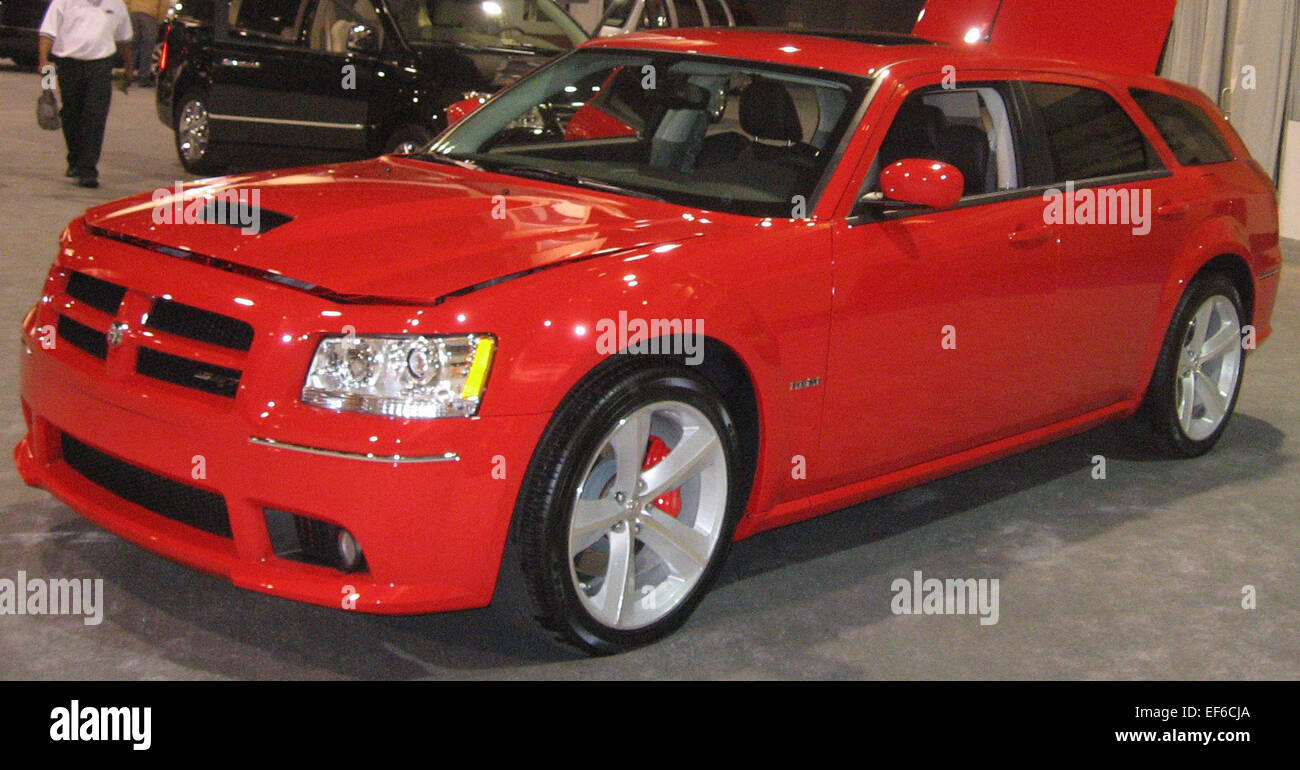
The 2008 Dodge Magnum SRT stands as a singular achievement in automotive history, representing the final production year of a high-performance wagon that combined muscle-car aesthetics with utilitarian versatility. In 2026, it is considered a modern classic, sought after by collectors for its limited production numbers and the brute force of its 6.1-liter HEMI V8 engine.
The Legacy of the Magnum SRT8
The Dodge Magnum, introduced for the 2005 model year, was Chrysler’s bold attempt to redefine the American station wagon. By moving the platform to the LX architecture—shared with the Chrysler 300 and Dodge Charger—Dodge created a rear-wheel-drive vehicle that prioritized performance over traditional cargo-hauling apathy. The SRT (Street and Racing Technology) variant was the pinnacle of this lineup.
By 2008, the model had reached its zenith. It featured the 6.1-liter HEMI V8, producing 425 horsepower and 420 lb-ft of torque. Unlike the base models, the SRT8 featured a lowered, performance-tuned suspension, massive Brembo brakes, and unique exterior styling cues like the deep front fascia, functional hood scoop, and 20-inch forged aluminum wheels.
For the 2008 model year, Dodge refreshed the interior and exterior, providing the Magnum with a more modern dashboard, upgraded materials, and revised tail lamps. However, this would also be its swan song, as production ceased midway through the 2008 calendar year, making the final-year SRT8 one of the rarest production vehicles of the modern Mopar era.
Market Dynamics in 2026
In 2026, the 2008 Dodge Magnum SRT occupies a specialized niche in the secondary vehicle market. It is no longer viewed merely as a used car but as an appreciating asset. While high-mileage examples can still be found for moderate prices, low-mileage, well-maintained specimens have transitioned into the realm of enthusiast auctions and private collections.
Several factors drive the current market valuation:
- Production Scarcity: Because 2008 was the final year, the total volume of production was significantly lower than in previous years.
- Platform Synergy: Parts availability for the drivetrain is excellent due to the high volume of other LX-platform vehicles (Chargers and 300s) produced during the same period.
- The "Unicorn" Factor: The combination of a Hemi V8 and a wagon body style has not been successfully replicated by domestic manufacturers in the years since the Magnum’s discontinuation, cementing its status as a cult classic.
Technical Specifications and Performance Expectations
Understanding the technical foundation of the 2008 Magnum SRT is essential for any prospective buyer or owner looking to maintain the vehicle to investment-grade standards.
| Feature | Specification |
|---|---|
| Engine | 6.1L HEMI V8 |
| Horsepower | 425 hp @ 6,200 rpm |
| Torque | 420 lb-ft @ 4,800 rpm |
| Transmission | 5-speed automatic (W5A580) |
| Drive Type | Rear-Wheel Drive |
| 0-60 MPH | ~5.1 Seconds |
| Braking (60-0 mph) | ~110 feet |
The 6.1L engine is a robust powerplant, but it requires diligent maintenance, specifically regarding oil change intervals and the quality of synthetic lubricants used. The transmission, a Mercedes-Benz derived unit, is known for its durability but can be sensitive to fluid degradation if pushed hard during high-speed performance driving.
Pre-Purchase Inspection and Verification
If you are looking to acquire a 2008 Dodge Magnum SRT in 2026, the inspection process must be rigorous. Because these vehicles were engineered for performance, many were driven aggressively.
1. Mechanical Integrity
Check for evidence of "valve drop," a known, albeit rare, issue in the early-to-mid 6.1L Hemi engines where a valve seat can become loose. While common in earlier 5.7L iterations, it is a point of concern that requires a borescope inspection of the cylinders. Additionally, listen for "Hemi Tick," which is often attributed to exhaust manifold leaks or, more seriously, camshaft/lifter wear.
2. Suspension and Braking
The Brembo brake system is expensive to service. Verify the thickness of the rotors and the condition of the pads. If the vehicle has factory self-leveling rear shocks, these are often near their end-of-life cycle by 2026. Replacing them with OEM components is expensive, and many owners opt for high-quality coilover conversions.
3. Electronics and Interior
The 2008 interior featured an upgraded MyGig infotainment system. Verify that the hard drive is still functional, as these units are prone to failure after two decades. Check the dash pad for warping—a common issue in high-heat climates—and ensure that all power features, including the heated seats and sunroof, function without error.
Cost Considerations and Financial Planning
The cost of ownership in 2026 goes beyond the initial purchase price. You must account for specialized insurance and fuel efficiency.
- Insurance: Because the vehicle is approaching or has reached "classic" status, traditional daily-driver insurance policies may not provide adequate coverage. Enthusiast or "stated value" insurance policies are recommended to ensure that in the event of a total loss, the payout reflects the current market value rather than a depreciated book value.
- Fuel and Maintenance: The 6.1L Hemi is not fuel-efficient. Budgeting for premium-grade gasoline is mandatory. Furthermore, tires for the 20-inch wheels can be costly, and the high-performance alignment needs to be maintained to prevent premature wear on the inner treads.
Comparative Landscape: The Magnum vs. Alternatives
Prospective buyers often weigh the Magnum SRT against other performance wagons of the era.
- Mercedes-Benz E63 AMG (W211): Provides superior luxury and refinement but comes with significantly higher maintenance costs and more complex electronics that are harder to service in 2026.
- Audi S6 Avant (C6): Offers all-wheel-drive capability, which the Magnum lacks, but the V10 engine presents unique, high-cost service requirements.
- Dodge Charger SRT8: Shares the exact same mechanical DNA as the Magnum but is more common. The Magnum remains the more distinctive "lifestyle" choice due to its rarity and wagon silhouette.
Maintenance and Preservation Strategy
To preserve the value of a 2008 Dodge Magnum SRT, owners should adhere to a strict preservation schedule.
- Fluid Management: Change engine oil every 3,000 to 5,000 miles. Use the viscosity specified in the original manual (typically 0W-40 synthetic). Flush the cooling system every three years to prevent the buildup of deposits that can clog the radiator and cooling passages.
- Body Preservation: The lower rocker panels and the rear wheel wells are prone to surface corrosion, especially in salt-belt states. A thorough undercarriage cleaning and the application of a high-quality rust preventative is vital.
- Documentation: Keep a meticulous binder of all service records. In the collector market, a well-documented history of service—supported by receipts—can add thousands of dollars to the resale value.
Frequently Asked Questions
Are parts still available for the 2008 Dodge Magnum SRT? Yes. Because the vehicle shares its mechanical architecture with the Chrysler 300C SRT8 and Dodge Charger SRT8, the vast majority of engine and transmission parts are readily available. Interior trim pieces and exterior body panels are more difficult to source and may require hunting through salvage yards or specialized enthusiast forums.
Is this vehicle reliable enough to be a daily driver in 2026? While the mechanical components are robust, age-related degradation of plastic, rubber, and electronic components can make daily use challenging. If you choose to use it as a daily driver, expect to address common issues like suspension bushings, sensor failures, and cooling system hoses within the first year of ownership.
What is the best way to determine the value of a specific example? Review sold listings on reputable enthusiast auction sites such as Bring a Trailer or Cars & Bids. These platforms offer transparent historical data that reflects the current market sentiment more accurately than generic vehicle valuation guides.
Should I modify my Magnum SRT? Modifications can be a double-edged sword. While bolt-on performance parts like cold-air intakes or exhaust systems are generally accepted, extensive modifications (forced induction, engine internals, or heavy body modifications) often decrease the vehicle’s value to collectors. Keep any removed stock parts to include with the vehicle for future sale.
Are there known safety limitations with this model? The 2008 Magnum SRT meets the safety standards of its time, including front and side-curtain airbags and electronic stability control. However, it lacks the advanced active safety features—such as automatic emergency braking, blind-spot monitoring, or lane-keep assist—found in modern vehicles. Drive defensively, acknowledging that the vehicle’s technology is nearly two decades old.
Recommendation
If you are in the market for a 2008 Dodge Magnum SRT, your priority should be finding a well-documented, accident-free example that has been stored indoors. Do not be discouraged by higher mileage if the service history is impeccable, as the 6.1L Hemi is capable of high mileage if treated with respect. Before finalizing a purchase, perform a pre-purchase inspection with a mechanic familiar with the LX-platform SRT vehicles to ensure the suspension and valve train are in peak condition. As we move further into 2026, these vehicles are increasingly becoming the "modern muscle" investment of choice.