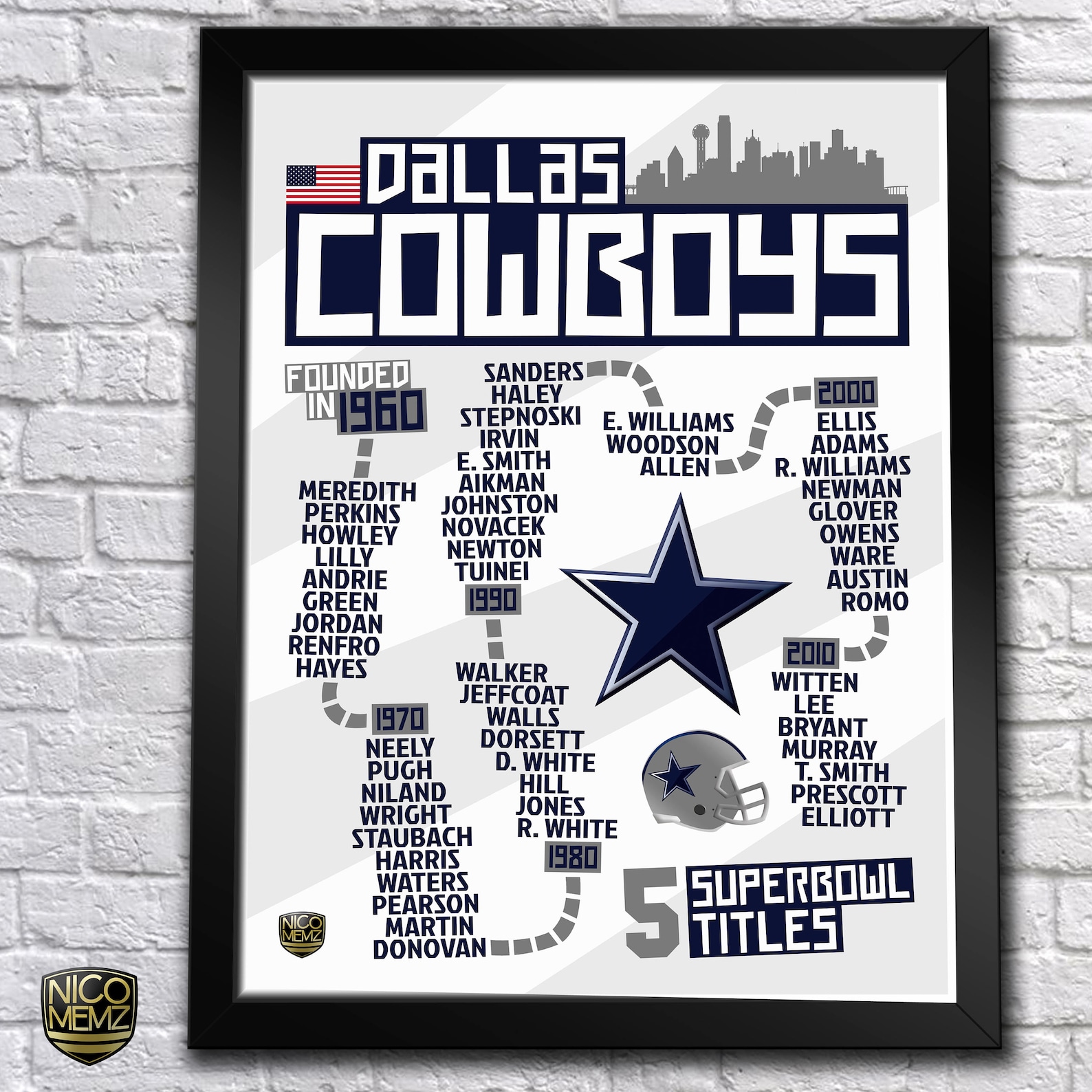
The 1995 Dallas Cowboys finished the regular season with a 12-4 record, capturing the NFC East title before embarking on a historic postseason run. Led by the "Triplets"—Troy Aikman, Emmitt Smith, and Michael Irvin—and bolstered by the high-profile signing of Deion Sanders, the team culminated their season by defeating the Pittsburgh Steelers 27-17 in Super Bowl XXX.
The Landscape of the 1995 Dallas Cowboys Season
As we look back from the vantage point of 2026, the 1995 season remains a definitive chapter in NFL history. It represented the peak of the Dallas Cowboys' 1990s dynasty, marking their third Super Bowl championship in a four-year span. However, the road to the title was far from smooth. Entering the second year of the Barry Switzer era following the departure of Jimmy Johnson, the team faced immense pressure to maintain their dominant status amidst a changing league landscape and the rise of fierce rivals like the San Francisco 49ers and the Green Bay Packers.
The 1995 campaign was characterized by high-octane offensive production and a defense that welcomed arguably the greatest "shutdown corner" in the history of the game, Deion Sanders. While the Cowboys began the season as favorites, the internal and external narratives focused on whether Barry Switzer could lead a locker room full of legendary personalities to the ultimate prize. The timeline of this season serves as a masterclass in managing elite talent and navigating the grueling physical and psychological demands of a 16-game schedule and the subsequent playoffs.
Preseason and the Signing of Deion Sanders
The 1995 timeline truly began in the offseason with a move that shook the foundations of the NFL. On September 9, 1995, just after the season had technically begun, the Cowboys signed cornerback Deion Sanders to a massive seven-year, $35 million contract. Sanders had just helped the rival San Francisco 49ers win the Super Bowl the previous year, and his move to Dallas was seen as a decisive strike in the arms race between the two NFC powerhouses.
The acquisition was not merely about talent; it was about psychological warfare. By bringing "Prime Time" to Arlington, the Cowboys not only upgraded their secondary but also deprived their primary rival of a generational playmaker. This move set the tone for a season where anything less than a championship would be considered a catastrophic failure.
1995 Regular Season Timeline: Month-by-Month Breakdown
The 1995 regular season was a journey of dominant streaks followed by moments of vulnerability. The Cowboys utilized a balanced attack that relied on Troy Aikman's precision passing, Michael Irvin's physical dominance at wide receiver, and Emmitt Smith's relentless rushing.
September: A Dominant Start
The Cowboys opened the 1995 campaign with a statement of intent. They began the season on Monday Night Football against the New York Giants, securing a convincing 35-0 shutout. This performance immediately validated the preseason hype.
- September 4 vs. Giants: A 35-0 victory where Emmitt Smith rushed for 163 yards and four touchdowns.
- September 10 vs. Broncos: A 31-13 win that showcased the defense's ability to stifle John Elway.
- September 17 vs. Vikings: A hard-fought 23-17 overtime victory at Three Rivers Stadium.
- September 24 vs. Cardinals: A 34-20 win that moved the team to 4-0.
By the end of September, the Cowboys looked invincible. Emmitt Smith was on a record-breaking pace for touchdowns, and the offensive line, known as the "Great Wall of Dallas," was providing Troy Aikman with unparalleled protection.
October: Navigating the Middle Stretch
After an early-season bye in Week 5, the Cowboys faced their first true test of adversity. While they remained winning, the cracks in the armor began to show against high-caliber opponents.
- October 8 vs. Packers: A 34-24 win at Texas Stadium. This game was significant as it solidified the rivalry with a young Brett Favre, who was beginning his ascent to MVP status.
- October 15 vs. Chargers: A 23-17 victory where the defense proved its mettle in the fourth quarter.
- October 22 at Falcons: A 28-13 win that marked Deion Sanders' first game back in Atlanta.
- October 29 vs. Eagles: A 28-12 victory that asserted dominance over a division rival.
November: The Reality Check
November featured the most anticipated game of the decade: a rematch with the San Francisco 49ers. The hype surrounding this game was immense, but the result was a sobering reminder that the road to the Super Bowl would not be a cakewalk.
- November 6 vs. Eagles: A 34-12 win that swept the seasonal series with Philadelphia.
- November 12 vs. 49ers: A 38-20 loss. Despite the presence of Deion Sanders, the Cowboys' defense struggled to contain the 49ers' West Coast offense. This loss raised questions about the team's ability to beat elite competition.
- November 19 at Raiders: A 34-21 bounce-back win in Oakland.
- November 23 vs. Chiefs: A Thanksgiving Day classic resulting in a 24-12 victory.
December: Stumbling into the Postseason
The final month of the regular season was surprisingly turbulent. The Cowboys suffered two losses to the Washington Redskins, a team that finished the season with a losing record.
- December 3 at Redskins: A 24-17 loss. The rivalry intensified as the underdog Redskins found ways to disrupt the Cowboys' rhythm.
- December 10 at Eagles: A 20-17 loss famously remembered for the "Fourth and One" decision by Barry Switzer. Attempting to convert a fourth-down rush in their own territory, the Cowboys were stuffed, leading to an Eagles field goal. This decision brought heavy criticism upon Switzer.
- December 17 vs. Giants: A 21-20 win that secured the division but felt underwhelming.
- December 25 at Cardinals: A 37-13 victory to close the season on a high note.
Complete 1995 Dallas Cowboys Schedule and Results
The following table provides a comprehensive look at every game of the 1995 season, including the regular season and the championship-winning playoff run.
| Week | Date | Opponent | Result | Score | Record |
|---|---|---|---|---|---|
| 1 | Sep 4, 1995 | @ New York Giants | W | 35–0 | 1–0 |
| 2 | Sep 10, 1995 | Denver Broncos | W | 31–13 | 2–0 |
| 3 | Sep 17, 1995 | @ Minnesota Vikings | W | 23–17 (OT) | 3–0 |
| 4 | Sep 24, 1995 | Arizona Cardinals | W | 34–20 | 4–0 |
| 5 | — | BYE WEEK | — | — | 4–0 |
| 6 | Oct 8, 1995 | Green Bay Packers | W | 34–24 | 5–0 |
| 7 | Oct 15, 1995 | @ San Diego Chargers | W | 23–17 | 6–0 |
| 8 | Oct 22, 1995 | @ Atlanta Falcons | W | 28–13 | 7–0 |
| 9 | Oct 29, 1995 | Philadelphia Eagles | W | 28–12 | 8–0 |
| 10 | Nov 6, 1995 | @ Philadelphia Eagles | W | 34–12 | 9–0 |
| 11 | Nov 12, 1995 | San Francisco 49ers | L | 20–38 | 9–1 |
| 12 | Nov 19, 1995 | @ Oakland Raiders | W | 34–21 | 10–1 |
| 13 | Nov 23, 1995 | Kansas City Chiefs | W | 24–12 | 11–1 |
| 14 | Dec 3, 1995 | @ Washington Redskins | L | 17–24 | 11–2 |
| 15 | Dec 10, 1995 | @ Philadelphia Eagles | L | 17–20 | 11–3 |
| 16 | Dec 17, 1995 | New York Giants | W | 21–20 | 12–3 |
| 17 | Dec 25, 1995 | @ Arizona Cardinals | L | 31–37 | 12–4 |
| Divisional | Jan 7, 1996 | Philadelphia Eagles | W | 30–11 | 13–4 |
| NFC Champ | Jan 14, 1996 | Green Bay Packers | W | 38–27 | 14–4 |
| Super Bowl | Jan 28, 1996 | Pittsburgh Steelers | W | 27–17 | 15–4 |
The Postseason: A Path to Glory
Despite a shaky December, the Cowboys entered the playoffs as the number one seed in the NFC. The postseason required them to face familiar foes and overcome the emerging threat of the Green Bay Packers.
NFC Divisional Playoff: Decimating the Eagles
In a third meeting with the Philadelphia Eagles, the Cowboys left no room for doubt. They controlled the line of scrimmage and exploited an Eagles defense that had no answer for Michael Irvin. The 30-11 victory was a return to the dominant form seen in September, silencing critics who suggested the team had peaked too early.
NFC Championship: The Battle with Green Bay
The 1995 NFC Championship Game is remembered as one of the most exciting matchups of the era. The Green Bay Packers, led by Brett Favre, presented a vertical passing threat that challenged the Cowboys' secondary. However, the Cowboys' experience in big games proved decisive. Emmitt Smith's three touchdowns and Troy Aikman's poise under pressure led to a 38-27 victory, securing Dallas's third Super Bowl appearance in four years.
Super Bowl XXX: Sealing the Dynasty
On January 28, 1996, at Sun Devil Stadium in Tempe, Arizona, the Cowboys faced the Pittsburgh Steelers. While the Cowboys' offense started strong, the game is best remembered for the defensive contributions of cornerback Larry Brown. Brown recorded two crucial interceptions, both of which set up short touchdown drives for the Dallas offense.
The Steelers mounted a comeback in the second half, but the Cowboys' defense held firm. The 27-17 victory made the Dallas Cowboys the first team to win three Super Bowls in four years, cementing their place as the "Team of the 90s."
Statistical Leaders and Individual Achievements
The success of the 1995 season was driven by individual performances that bordered on the historic. Emmitt Smith, in particular, had a season for the ages.
- Emmitt Smith (RB): Smith led the league with 1,773 rushing yards and set a then-NFL record with 25 rushing touchdowns. He was the engine of the offense, providing the consistency needed for the passing game to flourish.
- Michael Irvin (WR): Irvin recorded 111 receptions for 1,603 yards and 10 touchdowns. His ability to make contested catches and pick up yards after the catch was instrumental in high-leverage situations.
- Troy Aikman (QB): While his raw numbers (3,304 yards, 16 TDs) might seem modest in the modern era of 2026, Aikman’s efficiency and leadership were unparalleled. He finished the season with a passer rating of 93.6.
- Larry Brown (CB): Though not the biggest star on the defense, his performance in Super Bowl XXX earned him the MVP award, making him one of the few defensive backs to ever achieve that honor.
The Cultural Legacy of the 1995 Team
The 1995 Dallas Cowboys were more than just a football team; they were a cultural phenomenon. Known as "America's Team," they were a constant presence in the media. The combination of winning, star power, and occasional controversy made them the most talked-about organization in sports.
However, the 1995 season also marked the beginning of the end. It was the final championship of the dynasty. In the years following Super Bowl XXX, the effects of the salary cap, aging veterans, and coaching changes began to erode the team's dominance. Looking back from 2026, the 1995 season is viewed with nostalgia by fans who haven't seen the team reach similar heights in the decades since.
Frequently Asked Questions
What was the Cowboys' record in 1995?
The Dallas Cowboys finished the 1995 regular season with a 12-4 record. Including the postseason, their total record for the year was 15-4. This record secured them the NFC East title and the top seed in the NFC playoffs.
Who was the MVP of Super Bowl XXX?
Cornerback Larry Brown was named the MVP of Super Bowl XXX. He earned the award by intercepting two passes from Steelers quarterback Neil O'Donnell, both of which led to Dallas touchdowns and were instrumental in the 27-17 victory.
Did Deion Sanders play for the Cowboys in 1995?
Yes, Deion Sanders signed with the Dallas Cowboys early in the 1995 season. After recovering from an injury, he played a vital role in the secondary for the remainder of the season and throughout the playoffs, helping the team secure the championship.
How many touchdowns did Emmitt Smith score in 1995?
Emmitt Smith scored 25 rushing touchdowns during the 1995 regular season, which set a new NFL single-season record at the time. This record stood until it was broken by Priest Holmes in 2003.
Who did the Cowboys beat in the 1995 playoffs?
During the 1995-96 postseason, the Cowboys defeated the Philadelphia Eagles in the Divisional Round (30-11), the Green Bay Packers in the NFC Championship (38-27), and the Pittsburgh Steelers in Super Bowl XXX (27-17).
Summary of the 1995 Campaign
The 1995 Dallas Cowboys season remains a benchmark for excellence in professional football. It was a year where a collection of legendary talent overcame significant pressure and internal shifts to reach the pinnacle of the sport. While the regular season record of 12-4 featured moments of doubt, the team's performance when it mattered most—the playoffs—solidified their legacy. For fans and historians alike, the timeline of this season is a reminder of a time when the Cowboys truly reigned supreme over the NFL landscape.
For those looking to explore more about the history of the Dallas Cowboys or the specific statistics of the 1990s dynasty, reviewing the official NFL archives or team-specific historical documentaries remains the best next step for gaining a deeper appreciation of this era.