A 100 to 1 odds payout means that for every single unit of currency wagered, a successful bettor will receive 100 units in profit, alongside the return of their initial stake. In sports betting and casino gambling, these longshot odds represent low-probability events that offer massive potential returns, reflecting the high risk and statistical unlikelihood of the outcome actually occurring.
The Mechanics of 100 to 1 Odds
In the landscape of sports betting and wagering, understanding how odds function is the foundational prerequisite for evaluating risk and potential return. Odds of 100 to 1 signify an extreme outlier event. Whether expressed in fractional, decimal, or American formats, these figures carry precise mathematical definitions that govern how bookmakers pay out winning tickets.
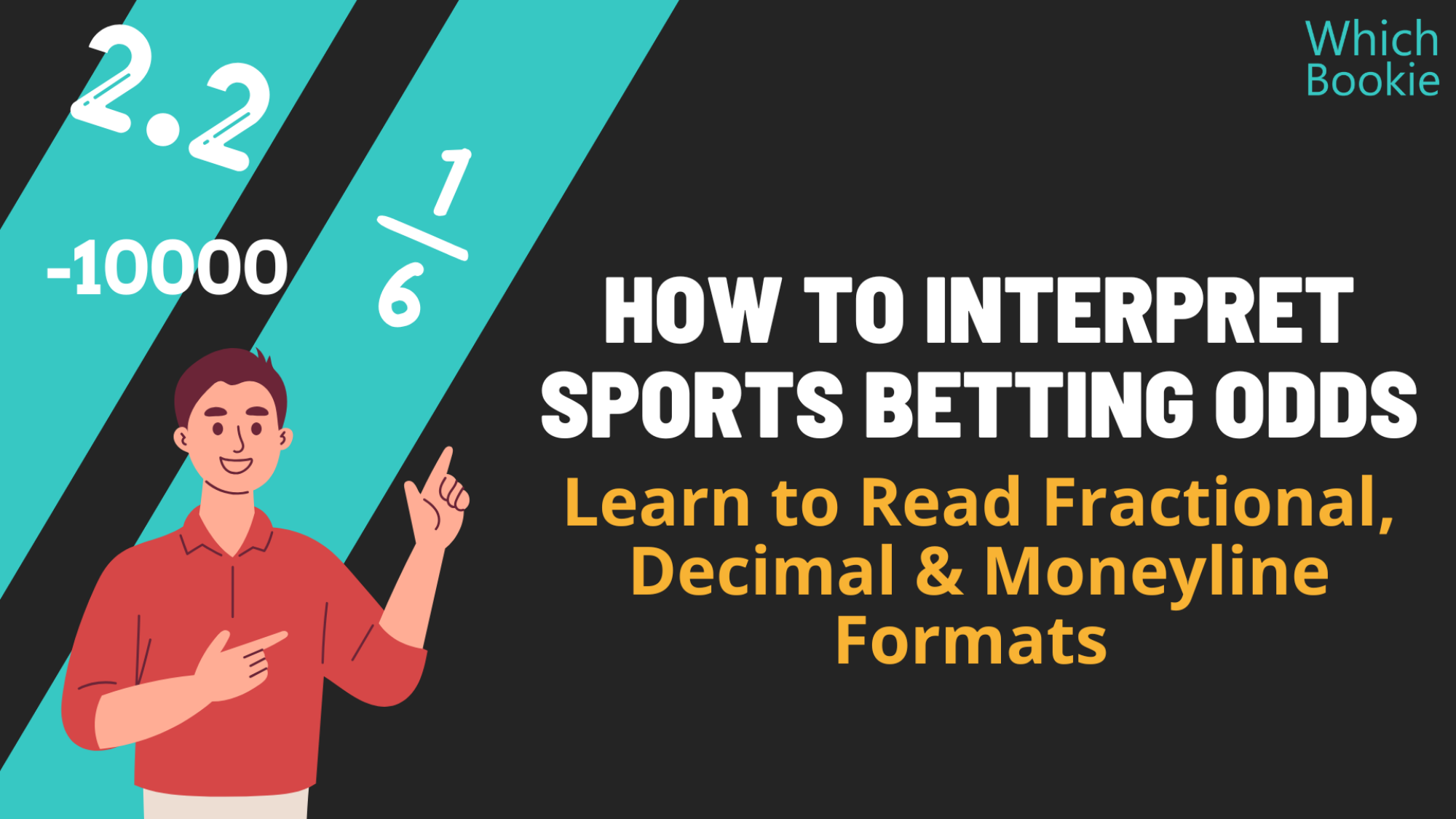
Fractional, Decimal, and American Formats
Different global markets present odds in distinct visual formats, yet all of them convey the exact same mathematical proposition for a 100 to 1 payout:
- Fractional Odds: Written as 100/1, this traditional British and Irish format explicitly shows the ratio of profit to the stake. For every $1 you bet, you win $100 in profit.
- Decimal Odds: Common across Europe, Canada, and Australia, 100 to 1 is represented as 101.00. Unlike fractional odds, decimal odds multiply your total stake (profit plus original wager). A $10 bet returns $1,010 total ($1,000 in profit plus your $10 back).
- American (Moneyline) Odds: Expressed as +10000 for positive odds, the plus sign denotes an underdog. The number following the plus indicates the exact profit won on a $100 baseline wager. Therefore, a $100 bet yields $10,000 in profit.
Probability and Implied Probability
Bookmakers convert probability into odds to build their pricing models. The implied probability of any given wager represents the frequency with which that bet must win to break even over the long term, excluding the bookmaker's margin or "vig."
To calculate the implied probability of fractional or American positive odds, use the standard formula:
$$\text{Implied Probability} = \frac{\text{Stake}}{\text{Stake} + \text{Profit}}$$
For 100 to 1 odds:
$$\text{Implied Probability} = \frac{1}{1 + 100} = \frac{1}{101} \approx 0.0099 \text{ or } 0.99%$$
This mathematical reality demonstrates that a 100 to 1 shot is priced by oddsmakers to occur roughly once every 101 attempts, accounting for true probability and market liabilities.
100 to 1 Odds Across Different Gambling Sectors
Longshot wagers appear across nearly every vertical of the gambling industry, though their mechanics and house edges vary significantly between sportsbooks, horse racing tracks, and casino floors.
Sports Betting Futures and Prop Bets
In traditional sports betting, 100 to 1 odds are rarely attached to single-game spreads or moneylines involving evenly matched teams. Instead, they typically appear in two major categories:
- Futures Markets: Wagers placed far in advance on season-long outcomes, such as a longshot NFL franchise winning the Super Bowl before the season begins, or an unheralded golfer winning a major tournament.
- Exotic Prop Bets: Multi-leg parlays, same-game parlays, or specific micro-events (e.g., a specific defensive lineman scoring two touchdowns in a single game).
Horse Racing
Horse racing is the historical home of the longshot. Parimutuel wagering systems dynamically shift odds based on the total pool of money wagered by the public. When a horse opens or drifts out to 100 to 1—often referred to in track parlance as a "century" or a "bomb"—it indicates that the general betting public and morning-line makers view the horse's chances of winning against the field as negligible.
Casino Games and Lotteries
On the casino floor, 100 to 1 payouts are carefully engineered features of table games and electronic terminals:
- Roulette: A straight-up bet on a single number pays 35 to 1, but certain side bets or specialized multi-wheel variants offer 100 to 1 or higher.
- Craps: Certain hard-way bets or field-bet variations can reach high multipliers, though standard bets rarely hit this exact threshold.
- Slot Machines and Video Poker: Progressive jackpots and rare bonus triggers routinely offer payouts exceeding 100 to 1, governed by strict random number generator (RNG) probabilities approved by gaming commissions.
| Gambling Sector | Common 100 to 1 Market Example | Typical House Edge / Margin | Primary Risk Factor |
|---|---|---|---|
| Sports Futures | Pre-season championship winner | Variable (5% to 15%) | Long duration of tied-up capital |
| Horse Racing | Win pool on a longshot entrant | 15% to 25% (Parimutuel take) | Late track condition changes |
| Casino Side Bets | Specialized poker or blackjack bonus | 5% to 20%+ | High house advantage |
| Lottery / Keno | Multi-spot matched draws | 25% to 40%+ | Fixed mathematical disadvantage |
Evaluating Risk, Variance, and Bankroll Management
Chasing 100 to 1 odds introduces extreme variance into a gambling strategy. Variance measures how wildly a bankroll swings above and below its expected value over a given sample size. Because a 100 to 1 bet wins less than 1% of the time, bettors must endure long losing streaks.
The Gambler's Fallacy and Probability Misconceptions
A frequent psychological trap for bettors examining longshot odds is the gambler's fallacy—the mistaken belief that if a low-probability event has not occurred in a long time, it is "due" to happen. Each independent sporting event or spin of a wheel stands on its own merits. A team priced at 100 to 1 has the same underlying mathematical chance of winning whether they have lost their last fifty matches or their last five.
Bankroll Management for Longshots
Because the failure rate on 100 to 1 wagers is exceptionally high (over 99%), standard staking plans like the Kelly Criterion or flat-unit systems require strict discipline:
- Fractional Unit Sizing: Bettors focusing on longshots typically risk a microscopic fraction of their total bankroll (e.g., 0.1% to 0.25% per wager) to absorb inevitable multi-game or multi-month losing streaks.
- Entertainment Budgeting: Treat 100 to 1 wagers strictly as speculative entertainment rather than an investment vehicle. Expect the stake to be lost entirely, treating any hit as an outlier bonus.
Legal and Regulatory Considerations
Sports betting and commercial gambling are heavily regulated activities. The legal framework governing wagers at 100 to 1 odds depends entirely on the jurisdiction in which the bet is placed.
Jurisdiction and Licensing
In regulated markets (such as legal state-by-state sports betting jurisdictions in the United States, or licensed operations regulated by the UK Gambling Commission), sportsbooks and casinos must adhere to strict consumer protection laws. These regulations ensure that:
- Bookmakers maintain sufficient liquidity reserves to pay out massive 100 to 1 winning tickets.
- Terms and conditions regarding maximum payout caps are clearly displayed. Some sportsbooks enforce strict limits on how much a single ticket can win, which can occasionally truncate the full value of a massive longshot parlay.
Responsible Gambling and Support
The allure of turning a small stake into a massive fortune via 100 to 1 odds can encourage problematic chasing behavior. Reputable gaming operators provide self-exclusion tools, deposit limits, and clear links to support organizations such as the National Council on Problem Gambling (NCPG) or GamCare. Setting rigid loss limits before engaging with high-variance markets is essential for maintaining control.
Frequently Asked Questions
What does a $10 bet win at 100 to 1 odds?
A $10 bet at 100 to 1 odds yields $1,000 in pure profit. In addition to that profit, the sportsbook or track returns your original $10 stake, resulting in a total payout handed to you of $1,010.
Are 100 to 1 sports bets negotiable or subject to payout caps?
Many sportsbooks establish maximum payout limits per bet or per day. If a multi-leg parlay or longshot futures ticket calculates out to a payout that exceeds the sportsbook's house limit, the bookmaker will typically cap the winnings at that maximum threshold, regardless of the raw mathematical odds. Always check the operator's house rules before placing high-multiplication wagers.
How do bookmakers calculate 100 to 1 odds?
Bookmakers assess the probability of an event occurring based on historical data, statistical models, power rankings, and public betting volume. When an event is deemed to have roughly a 0.99% chance of happening—while factoring in the bookmaker's profit margin—they price the market at 100 to 1 (or +10000 in American odds).
Is it possible to hedge a 100 to 1 futures bet?
Yes. If you place a 100 to 1 futures bet before a season begins—such as a team reaching the championship game—and that team advances to the final matchup, the opposing team will likely be heavily favored. This creates an opportunity to guarantee a profit by betting against your original selection on the opposite side of the matchup, locking in a positive return regardless of the final outcome.
Do online casinos offer 100 to 1 odds on table games?
While standard bets in games like blackjack or baccarat do not reach 100 to 1, side bets, progressive jackpots, and specialized roulette configurations frequently offer payouts at or above this level. However, these side bets invariably carry a significantly higher house edge than the foundational game rules.
Conclusion and Next Actions
Navigating 100 to 1 odds requires a clear understanding of mathematical probability, strict bankroll management, and realistic expectations regarding variance. Before placing any longshot wager, verify the sportsbook's maximum payout limits, assess your bankroll's tolerance for extended losing streaks, and ensure you are betting through a licensed, regulated operator. Treat high-odds wagers as speculative entertainment rather than a predictable strategy, and always prioritize responsible gambling practices.