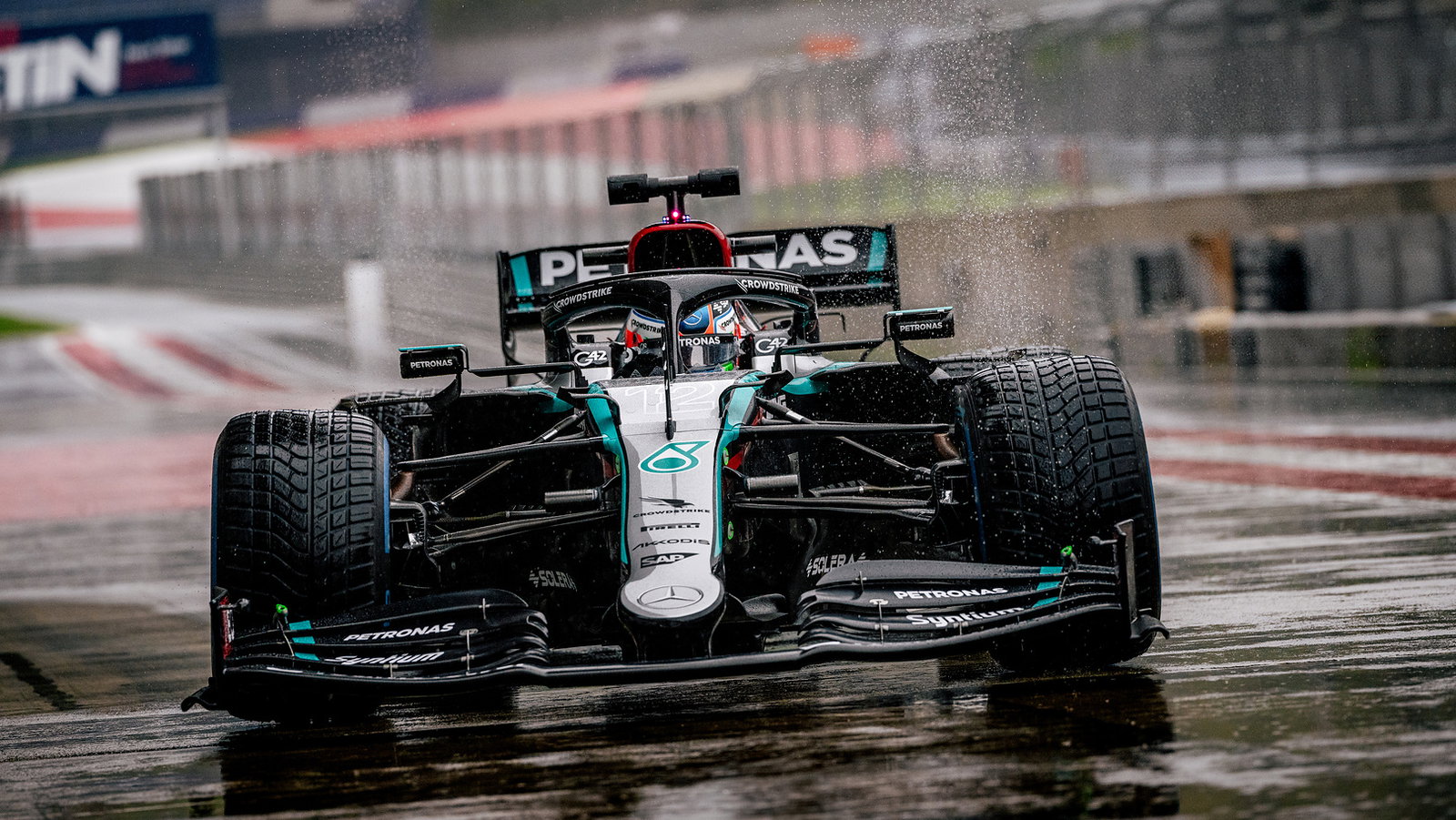
The single most consequential insight into the evolution of Mercedes Formula 1 racers is the paradigm shift from prioritizing brute internal combustion power to engineering holistic aerodynamic-chassis synergy. This transformation allowed the team to dominate the V6 turbo-hybrid era by treating the car as a unified thermodynamic and aerodynamic ecosystem rather than a collection of isolated performance components.
Introduction to the Mercedes F1 Engineering Philosophy
Formula 1 engineering is an exercise in perpetual optimization. Over the decades, few teams have documented a technical metamorphosis as profound as that of Mercedes-Benz in modern motorsport. While casual observers often attribute the Silver Arrows' legendary success to sheer engine dominance, a deeper examination of the team's engineering lineage reveals a far more complex reality. The core insight into the evolution of Mercedes F1 racers lies in their transition from mechanical and power-unit-centric dominance to an obsessive focus on integrated aerodynamic platform stability and holistic thermal management.
To understand this evolution, one must trace the trajectory of Mercedes-Benz as a constructor and engine supplier, looking beyond the gloss of championship trophies to examine the physical blueprints, wind tunnel data, and suspension philosophies that defined eras from 2010 through the ground-effect regulatory reset. This comprehensive exploration analyzes how Mercedes redefined modern Formula 1 design, the challenges they faced when regulations shifted, and the technical principles that continue to govern their pursuit of competitive perfection.
The Foundations of the Modern Silver Arrows (2010–2013)
When Mercedes-Benz returned to Formula 1 as a full works team by acquiring Brawn GP in late 2009, the organization inherited a chassis architecture built under emergency constraints for the 2009 regulatory overhaul. The initial years of the modern factory team—featuring the MGP W01 through the W04—were characterized by a struggle to scale up a boutique racing operation into a Tier-1 manufacturer while mastering complex tire degradation models.
During this formative era, the primary bottleneck for Mercedes racers was not power-unit output, but rear-tire management and aerodynamic consistency. Pirelli’s introduction in 2011 brought high-deg compounds that punished cars with unpredictable aerodynamic platforms. The W02 and W03 racers suffered from what engineers termed "thermal degradation overload," where the transitional load transfer through high-speed corners overwhelmed the contact patch of the rear tires.
Key Technical Challenges of the Early Factory Era
- Aero-Mechanical Mismatch: Suspension kinematics failed to maintain a stable floor-to-ground distance, causing sudden losses of downforce mid-corner.
- Packaging Limitations: The transition to tightly integrated gearbox casings often compromised cooling efficiency, forcing compromises in bodywork profiling.
- Data Correlation Deficits: Wind tunnel data did not consistently match on-track telemetry, leading to costly development dead-ends during the 2012 season.
Despite these hurdles, this period served as an aggressive R&D phase. Engineers laid the groundwork for the 2014 power-unit regulations, quietly channeling significant resources into the High Performance Powertrains (HPP) facility in Brixworth, Oxfordshire, while refining chassis dynamics at Brackley.
The Turbo-Hybrid Revolution and Power-Unit Supremacy (2014–2016)
The implementation of the 1.6-liter V6 turbo-hybrid regulations in 2014 marked the definitive turning point in Mercedes F1 evolution. The masterstroke of this era was the split-turbo architecture utilized in the Mercedes PU106A power unit. By separating the compressor and the turbine and placing them at opposite ends of the V6 engine block via a connecting shaft, Mercedes engineers eliminated the massive turbo lag plaguing competitors while optimizing weight distribution and packaging compactness.
This mechanical innovation shifted the focal point of the car's performance equation. The Mercedes W05 Hybrid and its immediate successors possessed a power unit that delivered unmatched thermal efficiency—surpassing 50% thermal efficiency by the late 2010s—and energy recovery capabilities through the MGU-K (Motor Generator Unit-Kinetic) and MGU-H (Motor Generator Unit-Heat).
| Component / System | Strategic Advantage in the Early Turbo-Hybrid Era |
|---|---|
| Split-Turbo Layout | Reduced turbo lag, tighter packaging, improved weight dist. |
| MGU-H Integration | Infinite energy recovery from exhaust gases without drag |
| Intercooler Packaging | Liquid-to-air intercooling maximizing air density safely |
| Dual-Clutch Transmission | Seamless gear changes preserving momentum through corners |
With such a decisive horsepower and reliability advantage, the chassis design philosophy focused primarily on drag reduction and high-speed cornering stability. The cars were designed with a relatively long wheelbase, which maximized floor area for aerodynamic downforce and provided stable platform behavior on long straights, though at the expense of agility in slow-speed tight circuits like Monaco.
The Long-Wheelbase Era and Aero Dominance (2017–2021)
As rival manufacturers gradually caught up in power-unit output, the battleground shifted back to aerodynamic efficiency and tire operating windows. From the W08 EQ Power+ (2017) to the W12 (2021), Mercedes embraced a low-rake, long-wheelbase aerodynamic philosophy.
Unlike Red Bull Racing, which favored a high-rake concept (lifting the rear of the car significantly to seal the floor and generate diffuser downforce), Mercedes kept their cars flat. This approach maximized the underfloor surface area, turning the entire bottom of the chassis into a massive downforce generator. However, it required absolute precision in ride-height control.
The Role of Suspension Kinematics
To maintain this delicate aerodynamic platform, Mercedes pioneered advanced hydraulic suspension systems. These systems replicated the banned active suspension behavior within the bounds of the regulations, controlling pitch and roll dynamically under braking, acceleration, and cornering loads.
- Heave Dampers: Used to manage vertical displacement independently of roll, keeping the aerodynamic floor at a constant distance from the asphalt.
- Inertial Dampers: Absorbed high-frequency chassis vibrations, preserving tire contact patches over bumps and curbing.
This era proved that the evolution of Mercedes F1 racers was no longer just about raw engine thrust; it was about masterclass integration between mechanical compliance and aerodynamic stability. When the car operated within its narrow "sweet spot," it was virtually unbeatable. When it fell out of that window—often referred to by engineers as a "diva" car—troubleshooting setup issues required extensive correlation work between trackside telemetry and the factory simulator.
The Ground-Effect Reset and Modern Challenges (2022–Present)
The sweeping regulatory changes of 2022 upended the Formula 1 landscape. The reintroduction of ground-effect aerodynamics—where downforce is primarily generated by underfloor Venturi tunnels rather than upper-body wings—forced every team to completely redesign their racers from scratch.
For Mercedes, the transition to the W13 and subsequent iterations exposed the limitations of their previous design paradigms. The most infamous manifestation of this was "porpoising"—high-frequency aerodynamic bouncing caused by the floor stalling and sealing against the track surface at high speeds.
| Aerodynamic Concept | Primary Characteristic & Impact on Mercedes Evolution |
|---|---|
| Low-Rake Philosophy | Maximized floor area; excelled on smooth, high-speed tracks. |
| High-Rake Alternative | Ramped floor sealing; favored by competitors for agility. |
| Venturi-Tunnel Ground Eff. | Relies on precise ride height; susceptible to porpoising. |
| Zero-Sidepod Geometry | Ultra-slim cooling inlets; abandoned due to flow instability. |
The initial embrace of the radical "zero-sidepod" concept on the W13 was an attempt to maximize upper-body clean air to the rear wing and diffuser by minimizing sidepod volume. However, this design proved hypersensitive to ride-height changes and floor flexing. The engineering evolution required a humbling pivot: abandoning the zero-sidepod architecture mid-2023 and adopting a more conventional sidepod geometry to widen the operating window and improve airflow predictability into the Venturi tunnels.
Comparative Analysis of Mercedes F1 Design Philosophies Across Eras
To fully grasp how Mercedes F1 racers have evolved, comparing their technical characteristics across three distinct regulatory periods highlights the shifting priorities of their engineering department.
| Engineering Parameter | V8 Era (2010–2013) | Hybrid Dominance (2014–2021) | Ground-Effect Era (2022–2026) |
|---|---|---|---|
| Primary Power Source | 2.4L Naturally Aspirated V8 | 1.6L V6 Turbo-Hybrid + MGU-K/H | 1.6L V6 Turbo-Hybrid + Enhanced Electric |
| Aero Concept | Conventional high-drag/downforce | Low-rake, long wheelbase | Venturi tunnels, flexible sidepods |
| Suspension Focus | Mechanical grip and tire wear | Hydraulic heave/roll control | Porpoising mitigation, platform stability |
| Chassis Weight | Lower baseline weight | Moderate (increasing due to safety) | Heavier due to PU complexity & safety structures |
| Development Bottleneck | Thermal degradation & correlation | Packaging and cooling limits | Flow instability and ride-height sensitivity |
This progression illustrates that adaptation is the true hallmark of championship-winning engineering. When a concept reaches its physical limit, successful teams must possess the institutional agility to unlearn past successes and pivot toward new aerodynamic and mechanical paradigms.
Frequently Asked Questions
Why did Mercedes abandon the zero-sidepod design?
The zero-sidepod concept, introduced in 2022, severely restricted the development window for underfloor airflow. Because the sidepods played a crucial role in sealing the Venturi tunnels and managing wheelwake, the ultra-slim design left the floor too vulnerable to airflow separation and bouncing, forcing the team to adopt conventional sidepods.
What made the 2014 Mercedes power unit superior to competitors?
The primary advantage was the split-turbo layout. By separating the turbine and compressor, Mercedes eliminated turbo lag, optimized weight distribution, and achieved superior thermal and energy recovery efficiency through the MGU-H system.
How did low-rake car design work for Mercedes?
A low-rake car keeps the floor of the chassis parallel and close to the ground. This maximizes the total surface area available for creating underfloor downforce, but it requires exceptionally sophisticated suspension to prevent the car from bottoming out at high speeds.
What is porpoising and how did Mercedes solve it?
Porpoising is an aerodynamic phenomenon where a ground-effect car generates so much downforce that the floor touches the ground, stalls the downforce, causes the car to rise, and repeats the cycle rapidly. Mercedes mitigated this through floor redesigns, stiffened plank regulations, and adjusted suspension kinematics.
How do modern F1 regulations impact Mercedes' chassis development?
Current regulations enforce strict cost caps and wind-tunnel testing restrictions based on championship standing. This forces Mercedes to be highly efficient in their R&D pipeline, prioritizing simulation accuracy over trial-and-error physical testing.
Strategic Takeaways for Technical Analysts
Analyzing the evolution of Mercedes F1 racers provides a masterclass in organizational learning and technical iteration. The central insight remains clear: sustained success in motorsport does not stem from mastering a single innovative component, but from achieving seamless integration between power delivery, mechanical compliance, and aerodynamic platform control. As technical regulations continue to evolve, the ability to rapidly diagnose systemic limitations and pivot engineering philosophies stands as the definitive metric of a championship-caliber constructor.