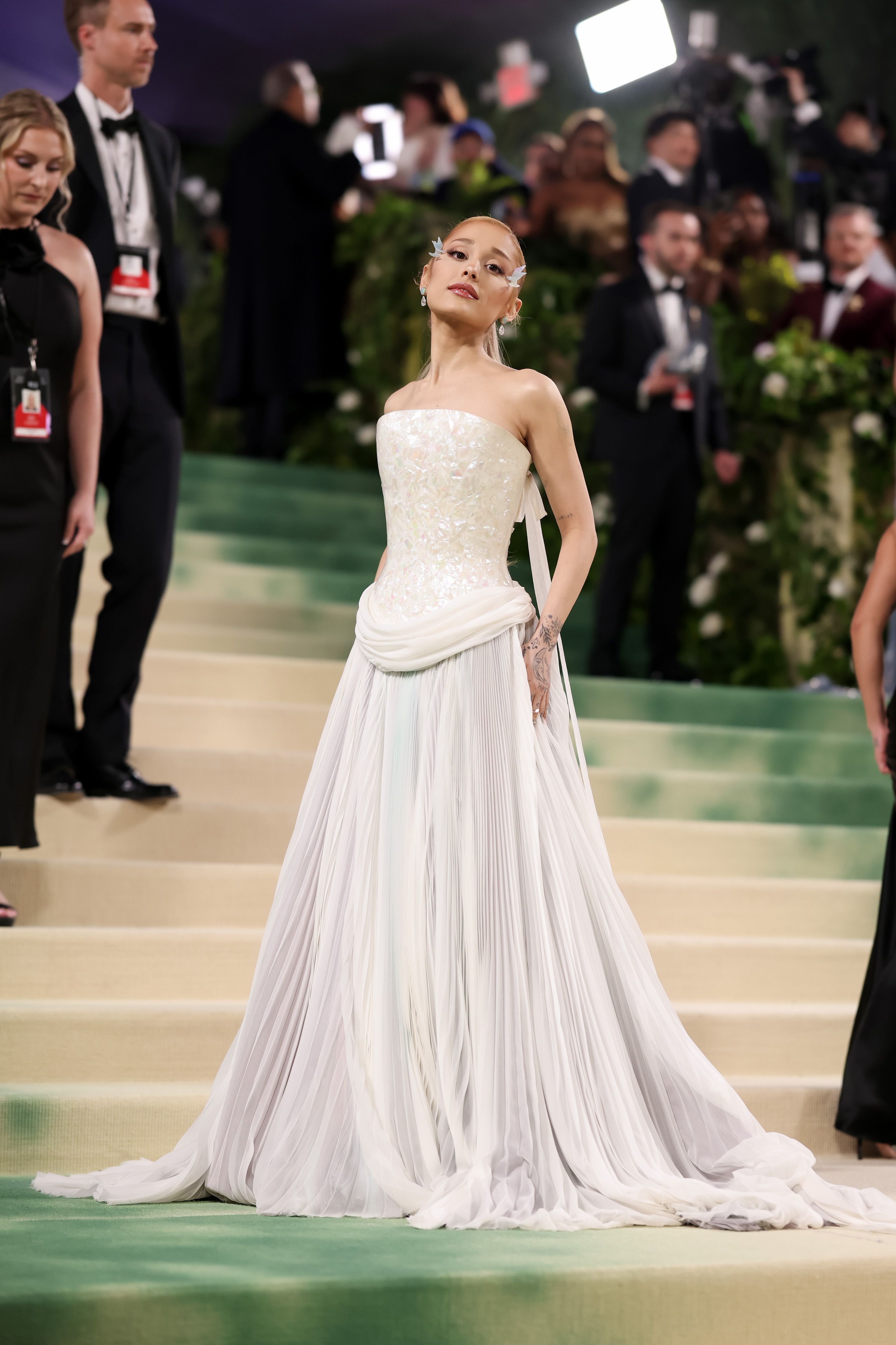
Ariana Grande’s striking Oscar dress choices—most notably her monumental, cloud-like custom pink Giambattista Valli Haute Couture gown—highlight major shifts in modern red carpet fashion: the ascent of immersive "method dressing," the convergence of cinematic storytelling with personal branding, and a decisive move away from understated minimalism toward bold, architectural couture.
The Iconic Silhouette: Unpacking Ariana Grande’s Oscar Gown
When Ariana Grande walked the red carpet at the 96th Academy Awards, her presence marked a turning point in both her personal style trajectory and the broader canon of award-show fashion. Wearing a custom pale pink column gown by Italian couturier Giambattista Valli, enveloped by an enormous, sculptural puff-sleeve cape with a trailing train, Grande delivered one of the most discussed fashion moments in recent Oscar history.
The dress featured a strapless, body-con puff-quilted base fabric overlaid with sheer pink silk faille, anchored by a massive, cloud-shaped stole that billowed behind her as she moved. Complemented by custom jewelry featuring pink diamonds and morganites, the ensemble was not merely an outfit; it was a carefully calibrated piece of mobile architecture designed to command attention from every angle of the Dolby Theatre carpet.
- Custom Pink Column Base
- Sculptural Cape
- Floating Train
- Immersive Character Narrative
Beyond its immediate aesthetic impact, the outfit signaled a profound shift in how high-fashion garments function during global media events. Rather than serving simply as an elegant framing for a celebrity, the dress operated as a visual narrative bridge, connecting Grande's established musical persona with her role as Glinda the Good Witch in Jon M. Chu’s film adaptation of Wicked.
Shift 1: The Dominance of Narrative "Method Dressing"
One of the primary trends highlighted by Grande’s Oscar appearance is the rise of method dressing—the practice where actors adopt fashion choices on press tours and red carpets that directly mirror their onscreen characters.
While method dressing has historical roots—ranging from classic Hollywood starlets remaining in studio-mandated characters to publicity stunts in the late 20th century—its modern revival has transformed how film campaigns are executed. Grande’s choice of an exaggerated, whimsical pink palette explicitly echoed her character Glinda’s visual identity, creating an instantly recognizable connection for audiences months before the film's premiere.
Traditional Red Carpet vs. Modern Method Dressing
- Traditional Approach:
- Independent Style
- Event-Only Impact
- Method Dressing Approach:
- Character Identity
- Thematic Couture
- Multi-Platform Narrative Campaign
This strategic alignment offers distinct promotional advantages:
- Visual Continuity: It creates a seamless visual language across entertainment news, social media clips, and promotional imagery.
- Built-in Viral Potential: Photogenic, thematic garments generate high engagement across platforms like Instagram, TikTok, and Pinterest.
- Character Ownership: By physically embodying the color palette and mood of the character during major industry events, the performer solidifies their association with the role in the public consciousness.
Grande’s Oscar dress proved that method dressing is no longer reserved exclusively for press junkets; it has successfully invaded the formal, prestige-driven space of the Academy Awards.
Shift 2: Redefining the Pop Star Image Transition
For over a decade, Ariana Grande’s public image was defined by a highly consistent visual signature: high ponytails, oversized streetwear, thigh-high boots, and winged eyeliner. Her transition into leading film roles required a parallel evolution in her visual identity, and high-fashion couture provided the vehicle.
The choice of Giambattista Valli—a house famed for expansive tulle, delicate color palettes, and regal drama—marked an intentional departure from pop-star streetwear toward classic Hollywood glamour. This transition reflects a broader industry pattern: young cultural icons using high-couture partnerships to signal professional growth, artist maturity, and versatility across entertainment mediums.
- Phase 1: Pop Music Signature
- High Ponytail & Streetwear
- Youth-Oriented Style Signature
- Stage-Driven Wardrobe
- Phase 2: Red Carpet Metamorphosis
- Architectural Haute Couture
- Soft, Romantic Color Palettes
- Fine Jewelry & Sculptural Silhouettes
- Phase 3: Cinematic Prestige Identity
- Character-Driven Concept Styling
- High-Fashion Editorial Endorsements
- Prestige Film Campaign Integration
By working with top-tier luxury houses like Giambattista Valli and Schiaparelli, Grande effectively recontextualized her image, demonstrating how strategically chosen red-carpet apparel can reposition an artist's brand within prestige film networks.
Shift 3: Architectural Volume over Red Carpet Minimalism
For several years, major red carpets favored sleek, minimalist silhouettes—90s-inspired slip dresses, streamlined columns, and quiet luxury tailoring. Grande’s Oscar gown represented a bold pivot back toward maximalist volume and theatrical structure.
Creating a dress of this scale requires specialized tailoring technique. The architectural cape alone demanded hundreds of hours of hand-drapery in Valli’s Paris atelier. The design balanced structural internal boning with lightweight exterior fabric density, allowing the garment to hold its expansive shape without completely engulfing the wearer.
Minimalist Era vs. Architectural Volume Trend
| Minimalism (Late 2010s-Early 2020s) | Maximalist Volume (Current Trend) |
|---|---|
| Bias-Cut Slip Dresses | Sculptural Capes & Trains |
| Neutral/Monochromatic Tones | Dramatic Proportional Scale |
| Concealed Construction | Visible Atelier Craftsmanship |
Fashion critics noted that this shift toward dramatic scale reflects a growing desire for high-impact visual spectacle at televised awards shows. In an era dominated by smartphone screens and fast-scrolling feeds, garments must possess dramatic proportions to command attention and make a lasting impression.
Comparing Red Carpet Strategies: Traditional vs. Narrative
To understand how Grande's look fits into the modern landscape, it helps to compare traditional red carpet styling with the narrative-driven approach that dominates contemporary award shows.
| Feature / Dimension | Traditional Red Carpet Styling | Modern Narrative & Method Styling |
|---|---|---|
| Primary Goal | Flatter the celebrity; showcase beauty trends | Tell a story; align with project/film identity |
| Color Selection | Complement wearer’s skin tone or event theme | Mirror character palette or film motifs |
| Silhouettes | Standard gowns, tuxedos, simple columns | Sculptural shapes, dramatic capes, theatrical volume |
| Pr/Marketing Value | Personal style feature in fashion press | Integrated marketing campaign across film & fashion |
| Atelier Involvement | Off-the-rack luxury or slight modifications | Multi-month custom couture development |
| Social Media Impact | Momentary look breakdowns | Extended viral narrative, memes, and fan synthesis |
The Business of High Fashion and Film Collaborations
The impact of Ariana Grande's Oscar dress extends beyond aesthetics; it underscores the lucrative commercial alignment between luxury fashion houses, film studios, and talent agencies.
When a high-profile performer wears a custom couture piece to the Academy Awards, the economic value generated for the design house is significant. Through Media Impact Value (MIV)—a metric measuring the financial value of publicity across digital, print, and social channels—a single iconic dress can generate millions of dollars in brand exposure.
- Film Studio / Talent
- Thematic Character Look
- High Fashion House (Couture Brand Elevation)
- Global Media Impact (Viral Social & Press)
- Thematic Character Look
For luxury houses like Giambattista Valli, designing an Oscar gown for an international star provides global visibility that conventional print or digital advertising rarely matches. For film studios, partnering with elite fashion houses ensures that project promotion penetrates prestige lifestyle and fashion outlets long before traditional trailers hit theaters.
Broader Industry Trends Signaled by Grande’s Oscar Styling
Fashion analysts and red-carpet observers point to several key industry developments highlighted by this historic red carpet appearance:
- The Revival of Pastel Romanticism: Soft pinks, pale lavenders, and buttercream yellow have resurfaced as dominant red carpet choices, replacing stark black and vivid primary tones.
- Focus on Movement and Tactility: Gowns are increasingly designed to interact with movement, using materials like delicate tulle, silk faille, and feathers to create dynamic visual effects on camera.
- Collaborative Stylist Direction: The partnership between performers and celebrity stylists (such as Law Roach and Mimi Cuttrell) has evolved into high-level creative direction, where every public appearance forms part of a cohesive multi-year narrative.
- Jewelry as Structural Complement: Rather than serving as mere accents, high jewelry pieces are chosen to echo the geometric flow of the garment, as seen in the color-matched stones used for Grande's Oscar look.
Frequently Asked Questions
Who designed Ariana Grande’s famous pink Oscar dress?
Ariana Grande’s dramatic pale pink custom gown worn to the 96th Academy Awards was designed by Italian couturier Giambattista Valli Haute Couture. The look featured a strapless column base accented by an enormous, cloud-like puff-sleeve cape and long trailing train.
What is "method dressing" in red carpet fashion?
Method dressing is a promotional fashion strategy where an actor wears red carpet looks that echo the aesthetic, color palette, or thematic elements of their character in a current or upcoming film project. Notable modern examples include Margot Robbie for Barbie, Zendaya for Dune and Challengers, and Ariana Grande for Wicked.
Why was Ariana Grande’s Oscar dress considered a major style shift?
The dress highlighted a shift away from sleek minimalism toward grand, architectural maximalism. It also marked Grande's deliberate transition from her signature pop-star streetwear aesthetic to high-fashion Hollywood glamour, while strategically promoting her film role.
How do custom couture gowns impact a fashion brand's value?
Custom gowns worn at high-visibility events like the Oscars generate significant Media Impact Value (MIV). The international press coverage, social media circulation, and fashion editorial analysis provide luxury houses with global brand exposure that exceeds traditional advertising methods.
What materials were used to construct Grande's Giambattista Valli gown?
The gown was constructed using sheer silk faille, custom-quilted fabric bases, and voluminous layers of structured tulle, designed to give the cape its signature cloud-like appearance while preserving a light, airy movement on camera.
Key Takeaways and Next Actions
Ariana Grande’s Oscar dress serves as a masterclass in how high fashion, personal branding, and entertainment marketing intersect. For fashion enthusiasts, stylists, and industry professionals, her look offers clear insights into the future of red carpet culture:
- Embrace Storytelling: Clothing choices resonate most deeply when they carry a clear, contextual narrative.
- Balance Scale and Structure: Executing maximalist fashion successfully requires expert tailoring to maintain balance between volume and human proportion.
- Leverage Strategic Color Alignments: Consistent use of a strategic color palette across public appearances builds strong visual identity recognition.
Whether analyzing celebrity wardrobe evolution or planning high-impact visual campaigns, understanding the mechanics of this iconic red carpet moment highlights how fashion remains one of the most powerful storytelling mediums in modern pop culture.