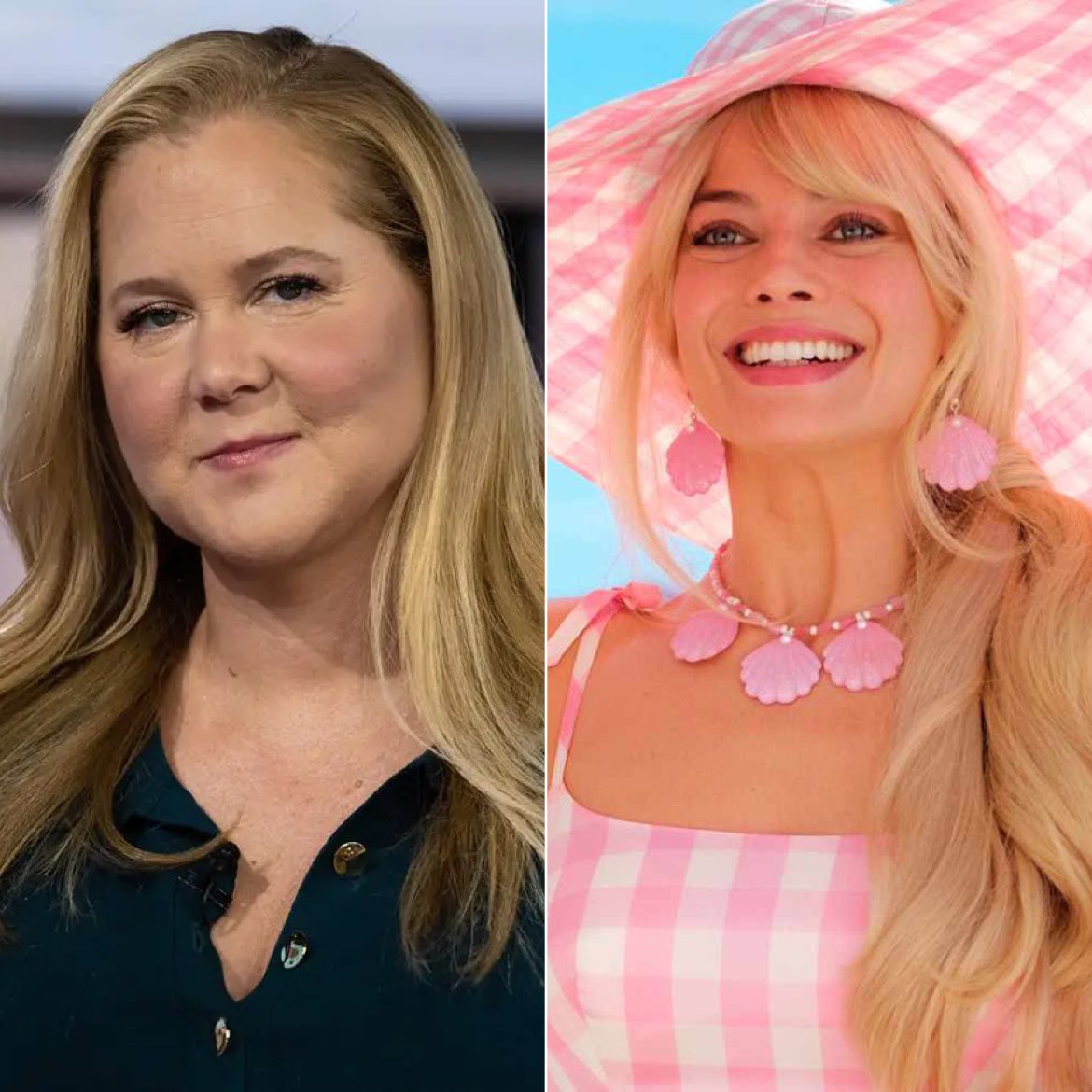
In late 2016 and early 2017, comedian and actress Amy Schumer was attached to star as the lead in a live-action Barbie film, a project that ultimately collapsed before production began. This high-profile departure from the role offers a definitive look at how creative differences, script development, and brand management intersect within the modern film industry. The project's cancellation serves as a precursor to the eventual 2023 film, illustrating the complex transition from an initial satirical concept to a blockbuster cultural phenomenon.
The Origins of the Amy Schumer Barbie Project
When Sony Pictures first announced its intent to produce a live-action Barbie film, the vision for the character was significantly different from the eventual Greta Gerwig-directed iteration. The project, as it stood during the development period involving Amy Schumer, was slated to be a fish-out-of-water comedy. The premise followed a woman who is expelled from "Barbieland" because she is not perfect enough—specifically, she did not fit the traditional, idealized aesthetic expected of a Barbie doll.
Schumer’s involvement was seen as a bold, subversive choice. Known for her biting social commentary, sketch comedy, and her focus on body positivity and the realities of modern womanhood, Schumer was meant to bring a "raunchy" and "feminist" edge to the iconic doll. This version of the script was intended to deconstruct the image of the Barbie doll, using the character’s exile into the real world as a vehicle for a commentary on beauty standards and societal expectations. For the studio, it was an attempt to modernize a legacy property through a lens of self-aware humor that was popular at the time.
Why the Project Fell Apart: A Timeline of Creative Departure
The official split between Amy Schumer and the production, announced in March 2017, was framed as a result of "scheduling conflicts." However, in subsequent years, both the actress and the industry at large acknowledged that the decision was heavily influenced by creative differences regarding the direction of the character and the script.
Developing a legacy brand like Barbie presents unique challenges for film studios. Mattel, the manufacturer of the toy line, maintains rigorous oversight over how their intellectual property is represented in media. While the original script sought to lampoon the doll's unrealistic proportions, balancing that satire with a narrative that felt authentic to the brand became a point of contention. Schumer’s approach to the character was deeply rooted in her specific brand of comedy—one that challenged traditional femininity. When the studio and the brand owners requested shifts in the tone of the screenplay, Schumer found that the project no longer aligned with her creative vision.
The tension highlights a fundamental struggle in franchise filmmaking: the need to appease a brand's corporate identity while allowing the creative talent the freedom to experiment. For a performer like Schumer, whose career is built on specific, often subversive comedic timing, the constraints of such a high-stakes corporate collaboration became untenable.
Comparing Development Visions: Schumer vs. The 2023 Success
To understand why the "unmade" lead is significant, one must compare the aborted project with the 2023 release. The 2023 film, directed by Greta Gerwig and starring Margot Robbie, managed to achieve the goal of satirical commentary while maintaining a tone that was universally embraced by both audiences and the brand owners.
| Feature | The 2016-2017 Development | The 2023 Production |
|---|---|---|
| Primary Approach | Fish-out-of-water satire | Existentialist fantasy |
| Central Conflict | Expulsion for physical imperfection | Crisis of identity/mortality |
| Tone | Raunchy, subversive, comedic | Whimsical, philosophical, surreal |
| Brand Integration | Tense creative compromise | Collaborative brand evolution |
The early development phase was focused heavily on a "modernization through subversion" strategy. The 2023 version, by contrast, utilized a "modernization through emotional depth" strategy. The latter allowed the film to touch upon the complexities of the Barbie doll’s legacy without necessarily alienating the core audience, a balance that the initial project struggled to achieve in its draft stages.
The Impact of Brand Stewardship in Modern Cinema
The case of the unmade Barbie lead acts as a masterclass in the risks inherent in legacy brand adaptations. Mattel, as the rights holder, acts as the final arbiter of how the "Barbie" persona is presented to the public. When an entity like Mattel enters the film space, they are not just looking for a successful box office performance; they are looking for "brand equity preservation."
For talent like Amy Schumer, working under such conditions can be restrictive. Her exit underscores a recurring problem in Hollywood: when a studio casts a distinct "voice" (like a comedian or a controversial director) but demands a "safe" final product, the project often fails in development. This period of the film's life cycle saw constant rewrites and shifts in leadership, which is a common symptom of a project that lacks a unified vision between the creative team, the studio, and the corporate owners.
Lessons Learned from the Cancellation
The failure of the initial iteration of the film provided several key lessons for the industry:
- Vision Alignment: Intellectual property owners and creative leads must agree on the fundamental tone of a project before cameras start rolling. If the "voice" of the lead actress is fundamentally incompatible with the "voice" of the brand, no amount of script doctoring will suffice.
- Script Versatility: The evolution of the script from 2017 to 2023 shows that the character of Barbie was flexible, but only once the focus shifted from "what she is" to "how she feels."
- Managing Public Perception: The departure of a lead actor is often a red flag for the public. The studio's initial attempt to mask the exit as a "scheduling conflict" is a standard PR tactic, but in the era of digital transparency, such claims are quickly scrutinized and eventually replaced by the truth—in this case, creative incompatibility.
Frequently Asked Questions
Why did Amy Schumer actually leave the project? While initially cited as a scheduling conflict, Amy Schumer later clarified that the project was not the right fit for her. She noted that the direction the film was taking did not align with her creative vision, as she sought to make a more subversive and distinct character study that did not necessarily resonate with the studio’s goals for the Barbie franchise.
Was the script for the Amy Schumer version ever released? No, the full script was never released to the public. However, excerpts and summaries from various interviews over the years have confirmed that the plot involved an "imperfect" Barbie being kicked out of a land of dolls and entering the real world, where she would have to navigate human life.
How did the studio respond to the change? Following the departure, the project transitioned into a new phase of development. The studio took several years to reassess the direction of the film, eventually partnering with LuckyChap Entertainment, which allowed for a more collaborative and creative approach that eventually led to the development of the 2023 film.
Is there a possibility the unmade script will be used later? It is highly unlikely. The 2023 film established a specific, high-grossing creative identity for the franchise. Studios generally look to expand upon established successes rather than revisiting discarded scripts from previous developmental cycles that were already deemed a mismatch.
Final Assessment: The Significance of Creative Autonomy
The story of the unmade lead is less about the failure of a specific movie and more about the delicate nature of bringing a global icon to the screen. For audiences and industry observers in 2026, the episode serves as a reminder that the best film projects are those where the creative vision and the corporate requirements are in complete harmony. When that harmony is absent, the most prudent choice for both the artist and the studio is often to part ways. Schumer’s decision to exit proved to be beneficial for her own career and ultimately paved the way for a version of the story that better satisfied the complex demands of a global brand.