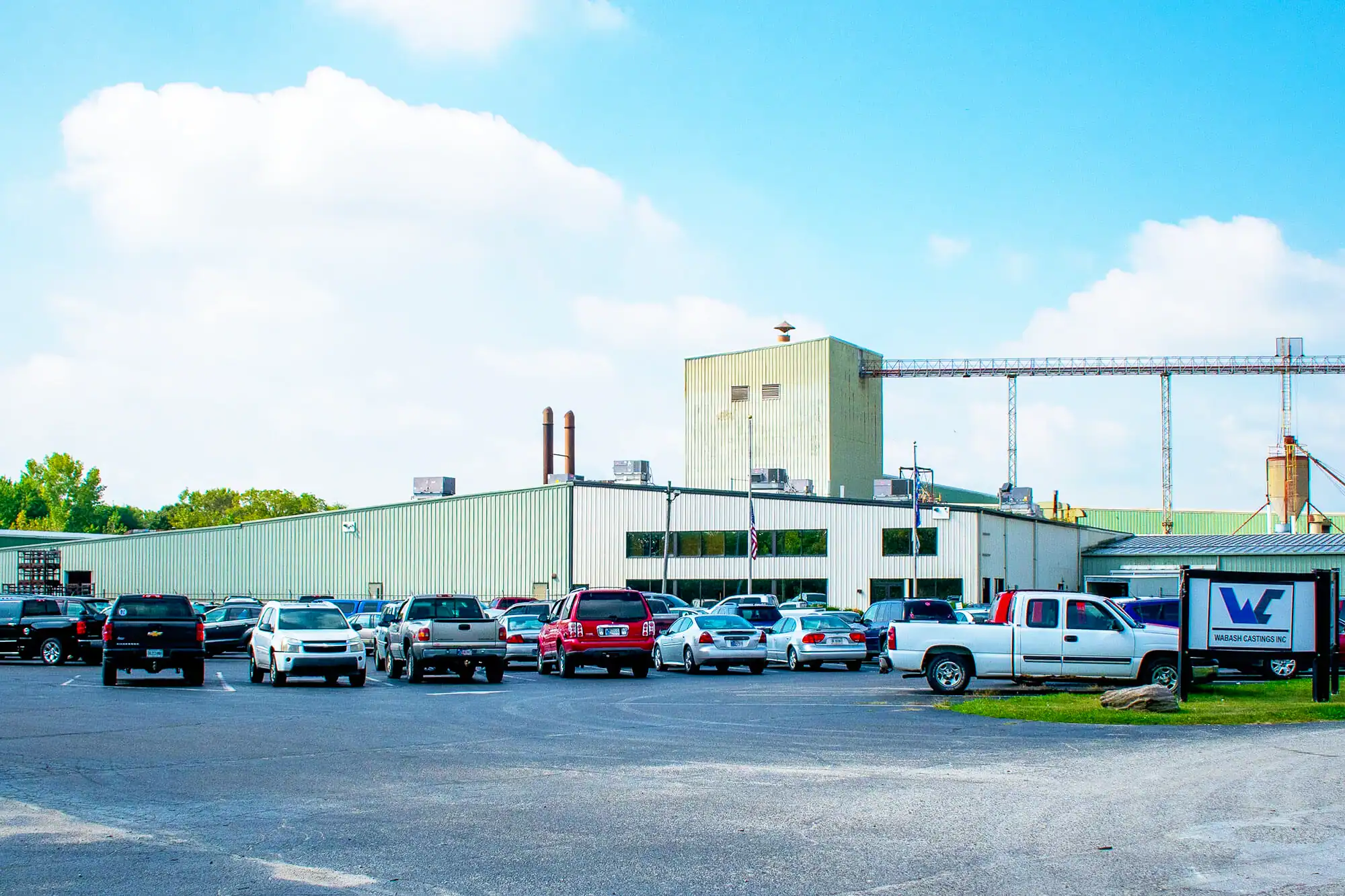
As of 2026, the Aluminum Foundry of Wisconsin (AFW) remains a cornerstone of the American Midwest’s manufacturing infrastructure, providing specialized sand casting solutions for diverse industrial sectors. Headquartered in Kenosha, the facility focuses on high-quality aluminum alloy production, utilizing advanced green sand and no-bake molding techniques to serve the medical, agricultural, and heavy equipment industries.
Wisconsin has long been recognized as a global hub for metal casting. Within this ecosystem, the Aluminum Foundry of Wisconsin occupies a specific niche, balancing traditional craftsmanship with the precision requirements of modern engineering. Whether you are a procurement officer looking for a reliable Tier 2 supplier or an engineer designing complex geometric components, understanding the capabilities, material science, and operational standards of this facility is essential for successful project execution.
The Heritage and Evolution of Aluminum Casting in Kenosha
Founded in 1954, the Aluminum Foundry of Wisconsin was established during the post-war industrial boom that defined the Great Lakes region. Over the decades, the company has transitioned from a manual job shop to a highly automated facility. In 2026, the foundry operates as a critical link in the domestic supply chain, helping manufacturers mitigate the risks associated with overseas sourcing, such as volatile shipping costs and long lead times.
The foundry’s location in Kenosha is strategically significant. Situated between Chicago and Milwaukee, it benefits from a robust logistics network and a legacy of metallurgical expertise. This regional concentration of skill allows the foundry to maintain a workforce that understands the nuances of aluminum solidification, shrinkage rates, and thermal conductivity—factors that are often overlooked in lower-cost, high-volume production environments.
Core Casting Processes: Sand Casting Excellence
The Aluminum Foundry of Wisconsin specializes primarily in sand casting, the most versatile and cost-effective method for producing aluminum components. By 2026, the facility has refined two distinct branches of this process to accommodate different volume and complexity requirements.
Green Sand Molding
Green sand casting is the workhorse of the AFW facility. Despite the name, "green" refers to the moisture content of the clay-bonded sand rather than its color. This process is favored for medium-to-high volume production runs due to its speed and the ability to reuse the molding material.
- The Process: A mixture of silica sand, bentonite clay, and water is compacted around a pattern to create a mold.
- Applications: Ideal for engine components, brackets, and housings where cost-efficiency is a priority.
- 2026 Standards: Modern automated molding lines at AFW now incorporate real-time sensors to monitor sand moisture and permeability, ensuring consistent mold hardness and reducing the likelihood of gas-related defects.
No-Bake (Air-Set) Casting
For larger castings or those requiring superior surface finishes and dimensional accuracy, the foundry employs the no-bake process. This method uses a chemical binder and a catalyst to harden the sand at room temperature.
- Precision: Because the mold is rigid before the metal is poured, there is significantly less mold wall movement compared to green sand. This results in tighter tolerances.
- Complexity: No-bake is particularly effective for "core-heavy" designs, where internal cavities are complex or require high structural integrity during the pour.
- Scale: AFW utilizes this process for heavy-duty industrial components that may weigh several hundred pounds.
Technical Specifications: Aluminum Alloys and Material Science
The selection of the correct aluminum alloy is the most critical decision in the casting process. The Aluminum Foundry of Wisconsin works with a broad spectrum of alloys, each tailored to specific mechanical properties such as tensile strength, corrosion resistance, and machinability.
| Alloy Type | Common Designation | Key Characteristics | Typical Applications |
|---|---|---|---|
| Aluminum-Silicon-Copper | 319.0 | Excellent pressure tightness and fluidness during casting. | Engine blocks, oil pans, manifold covers. |
| Aluminum-Silicon-Magnesium | 356.0 / A356 | High strength after heat treatment; excellent weldability. | Aerospace brackets, medical device frames, wheels. |
| Aluminum-Magnesium | 535.0 (Almag 35) | Highest corrosion resistance; excellent shock resistance; high polish. | Marine hardware, decorative architectural parts. |
| Aluminum-Zinc-Magnesium | 713.0 (Tenzalloy) | Self-aging properties; achieves high strength without heat treat. | Large structural frames, precision instruments. |
Understanding 356.0 vs. A356.0
Engineers frequently specify 356.0 for general-purpose structural parts. However, for 2026's more demanding applications, A356.0 is often preferred. The "A" denotes a higher purity version with lower iron content, which significantly improves the ductility and fracture toughness of the final part. The Aluminum Foundry of Wisconsin provides both, though they recommend A356 for components subjected to cyclic loading or impact.
Advanced Pattern Making and Tooling
A casting is only as accurate as the pattern used to create the mold. AFW coordinates closely with specialized pattern shops to ensure that tooling is designed with the appropriate "shrinkage allowance" and "draft angles."
- Draft Angles: To remove the pattern from the sand without damaging the mold, the vertical walls must have a slight taper (usually 1 to 3 degrees).
- Gating Systems: This refers to the network of channels through which the molten aluminum enters the mold cavity. In 2026, AFW utilizes solidification modeling software to simulate the flow of metal, identifying potential "hot spots" or turbulence before a single ounce of metal is poured.
- Tooling Materials: Depending on the expected production life, patterns may be constructed from wood (low volume), plastics/urethanes (medium volume), or machined aluminum (high volume).
Secondary Operations and Value-Added Services
Modern procurement trends in 2026 favor "one-stop" shops. The Aluminum Foundry of Wisconsin has expanded its capabilities beyond the pour, offering a suite of finishing services that allow customers to receive "machine-ready" or "assembly-ready" parts.
Heat Treatment
Aluminum's mechanical properties can be drastically altered through thermal processing. AFW provides standard heat treatments, including:
- T4 (Solution Heat Treated and Naturally Aged): Increases ductility.
- T5 (Artificially Aged Only): Provides dimensional stability for parts cast in permanent molds or high-strength alloys.
- T6 (Solution Heat Treated and Artificially Aged): The most common treatment for maximum tensile and yield strength.
Precision Machining
While sand casting provides a "near-net-shape," critical interfaces usually require CNC machining. By partnering with regional machine shops or utilizing in-house capabilities, the foundry ensures that bores, flanges, and threaded holes meet tolerances as tight as +/- 0.001 inches.
Surface Finishing
Depending on the application, castings may undergo:
- Shot Blasting: Using steel or glass beads to remove residual sand and create a uniform matte finish.
- Anodizing: An electrochemical process that increases corrosion resistance and surface hardness.
- Powder Coating: Providing a durable, colored finish for consumer-facing or outdoor components.
Quality Assurance and Certifications
In the B2B industrial sector, quality verification is non-negotiable. The Aluminum Foundry of Wisconsin maintains an ISO 9001:2015 certification, which mandates a rigorous quality management system (QMS).
Key Inspection Protocols include:
- Spectrographic Analysis: Before every pour, the chemical composition of the melt is verified using an optical emission spectrometer to ensure the alloy meets ASTM or military specifications.
- X-Ray/Radiographic Inspection: Used to detect internal porosity, inclusions, or shrinkage that are not visible on the surface.
- Liquid Penetrant Testing: A dye-based method used to identify microscopic surface cracks.
- Coordinate Measuring Machine (CMM): High-precision digital probes verify that the physical dimensions of the casting match the original CAD model.
Why Choose a Wisconsin-Based Foundry?
The decision to source from an aluminum foundry in Wisconsin, and specifically AFW, involves weighing several logistical and economic factors.
Proximity to the "Rust Belt" Manufacturing Base
Despite its name, the Rust Belt remains the heart of American high-tech manufacturing. By sourcing from Kenosha, companies in Illinois, Indiana, Michigan, and Minnesota can significantly reduce transit times and carbon footprints. In the 2026 economic landscape, localizing the supply chain is a primary strategy for "Just-In-Time" (JIT) manufacturing.
Technical Expertise and Consultation
Unlike massive overseas commodity foundries, the Aluminum Foundry of Wisconsin offers high-touch engineering support. Their team often assists in Design for Manufacturability (DFM), suggesting minor changes to a part’s geometry that can reduce weight, eliminate the need for complex cores, and ultimately lower the piece price.
Sustainability and Environmental Compliance
Wisconsin has strict environmental regulations regarding foundry emissions and sand disposal. AFW’s compliance with these standards ensures that customers are not inadvertently contributing to environmental degradation. Furthermore, aluminum is 100% recyclable, and a significant portion of the foundry's raw ingot is sourced from recycled secondary aluminum.
Frequently Asked Questions
What is the typical lead time for a new casting project at AFW?
In 2026, lead times vary based on tooling complexity. Generally, pattern construction takes 4 to 8 weeks, followed by 2 to 4 weeks for first-article inspection (FAI) samples. Once the design is approved, production runs typically ship within 4 to 6 weeks.
Can the foundry handle low-volume prototype work?
Yes. Using no-bake sand molding and 3D-printed sand cores, the Aluminum Foundry of Wisconsin can produce low-volume prototypes or even "one-offs" without the high cost of permanent metal tooling. This is an excellent option for R&D phases.
What is the maximum size and weight capacity for castings?
While aluminum is lightweight, the foundry can produce significant industrial components. AFW is optimized for castings ranging from a few ounces up to approximately 500 pounds, depending on the dimensions and the molding process used.
Does AFW provide pressure testing for liquid-handling components?
Yes. For castings intended for pumps, valves, or manifolds, the foundry can perform hydrostatic or pneumatic pressure testing to ensure there is no through-wall porosity that could lead to leaks in the field.
How does the foundry manage "gas porosity" in aluminum?
Gas porosity occurs when hydrogen is trapped in the molten metal. AFW uses rotary degassing units, which inject inert gases (like nitrogen or argon) into the melt to strip out hydrogen before pouring, ensuring a dense, high-integrity casting.
Strategic Recommendation for Procurement Teams
When engaging with the Aluminum Foundry of Wisconsin in 2026, it is recommended to involve their engineering team during the early stages of part design. Many costs in sand casting are driven by the complexity of the "parting line" and the number of internal cores required. By optimizing these elements early, you can reduce scrap rates and decrease the total cost of ownership.
For companies seeking a domestic partner capable of handling the transition from prototype to high-volume production, AFW offers a rare combination of historical expertise and modern quality control. To initiate a project, ensure you have a complete 3D CAD model (STEP or Parasolid format) and a detailed 2D drawing indicating critical tolerances, alloy requirements, and necessary heat treatments.