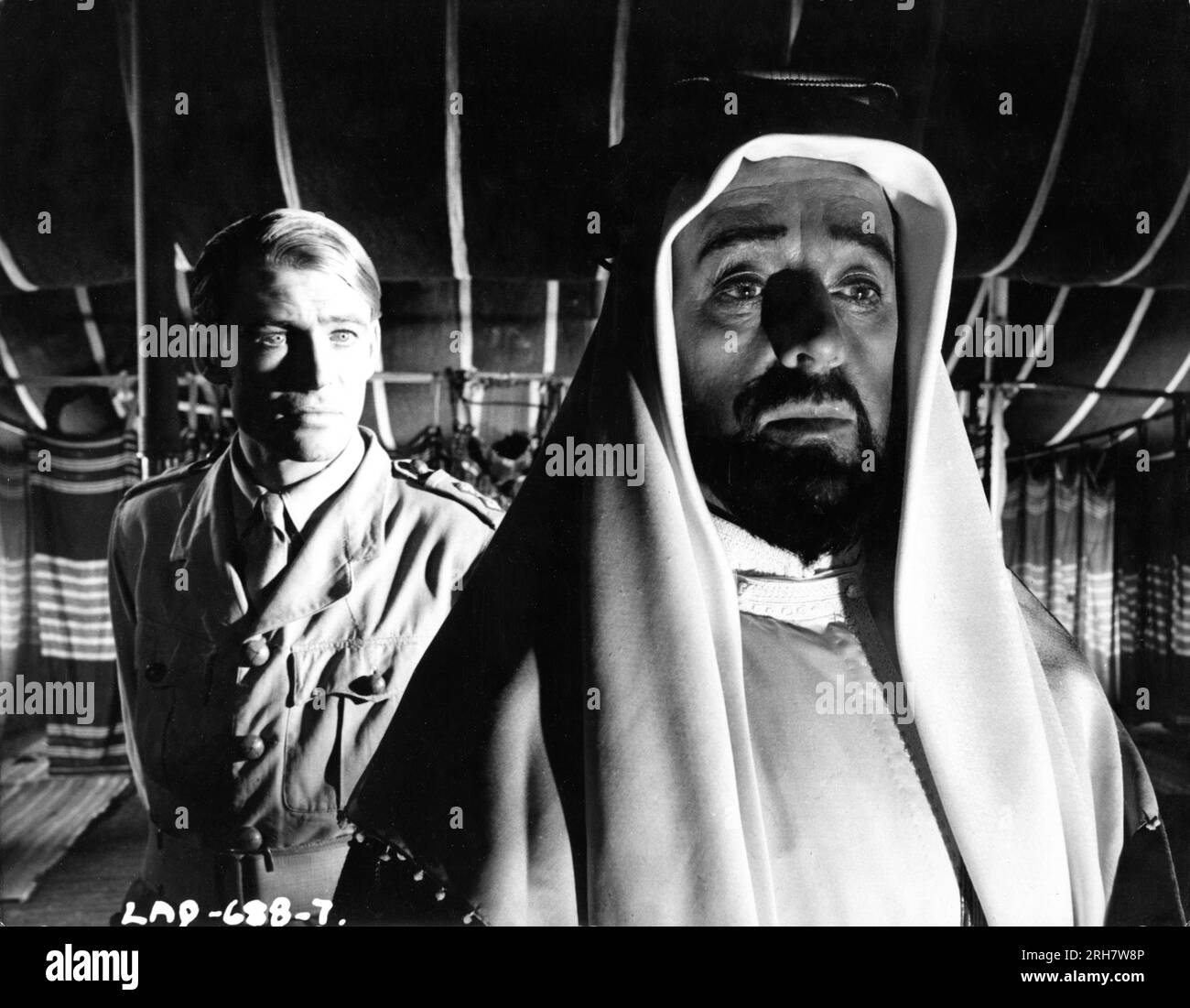
The historical connection between Sir Alec Guinness and Prince Faisal is defined by Guinness’s transformative portrayal of the future King of Iraq in the 1962 masterpiece Lawrence of Arabia. This cinematic depiction remains the primary lens through which Western audiences understand Faisal’s role in the Arab Revolt and his complex partnership with T.E. Lawrence.
As of 2026, the legacy of David Lean’s Lawrence of Arabia continues to stand as a pinnacle of 20th-century filmmaking. However, the intersection of Sir Alec Guinness and the historical Prince Faisal bin Al Hussein represents more than just a famous performance. It is a case study in how biographical cinema shapes public memory, the evolution of casting ethics, and the delicate balance between historical fact and dramatic narrative. To understand the relationship between the actor and the monarch, one must examine both the real-world political maneuvers of the early 20th century and the mid-century Hollywood environment that sought to dramatize them.
The Historical Prince Faisal: Architect of the Arab Revolt
Before he was a character played by a British actor, Prince Faisal was a pivotal figure in the restructuring of the Middle East. Born in 1883, Faisal was the third son of Hussein bin Ali, the Sharif of Mecca. During World War I, Faisal became the field commander and primary political face of the Arab Revolt against the Ottoman Empire.
Faisal’s historical importance cannot be overstated. He was not merely a passive recipient of British aid; he was a sophisticated diplomat who navigated the conflicting interests of the British Empire, the French government, and various tribal factions within the Arabian Peninsula. His goal was the creation of a unified, independent Arab state—a vision that was ultimately curtailed by the Sykes-Picot Agreement and the subsequent mandate system.
Historical records, including the writings of T.E. Lawrence in Seven Pillars of Wisdom, describe Faisal as a man of great dignity, patience, and strategic patience. He possessed a "stately" presence that commanded respect even from his colonial "advisors." This real-world gravitas provided the blueprint for the character Sir Alec Guinness would eventually bring to the silver screen.
Sir Alec Guinness: The Master of Disguise
In the early 1960s, Sir Alec Guinness was already established as one of the most versatile actors in the world. Known as the "Man of a Thousand Faces," Guinness had a unique ability to disappear into roles, ranging from the multiple characters in Kind Hearts and Coronets to the rigid Colonel Nicholson in The Bridge on the River Kwai.
His casting as Prince Faisal was not his first encounter with the role. Guinness had previously played the Prince in the London stage production of Ross, a play by Terence Rattigan that also explored the life of T.E. Lawrence. This stage experience allowed Guinness to develop a specific cadence and physical language for Faisal long before cameras rolled in the Jordanian desert.
Guinness approached the role with a characteristic focus on internal psychology. He portrayed Faisal as a man of deep intellect who was often "the smartest person in the room," even when surrounded by British generals. While the casting of a British actor to play an Arab prince is viewed through a critical lens in 2026, Guinness’s performance was hailed at the time for its restraint and "oriental" dignity, avoiding the broader caricatures common in earlier eras of Hollywood.
Comparing the Real Prince Faisal to the Guinness Portrayal
The version of Prince Faisal seen in Lawrence of Arabia is a blend of historical fact and the screenwriting needs of Robert Bolt and Michael Wilson. While the film captures Faisal’s strategic mind, it often simplifies his political motivations to serve as a foil to Lawrence’s burgeoning ego.
| Feature | Historical Prince Faisal | Alec Guinness’s Portrayal |
|---|---|---|
| Primary Goal | Independent Pan-Arab State | A pragmatic alliance against the Turks |
| Temperament | Shrewd, military-minded, cautious | Stoic, philosophical, almost prophetic |
| Relationship with Lawrence | Equal partner/Commander | Mentor and skeptical observer |
| Post-War Outcome | King of Syria (briefly), then King of Iraq | Depicted as a tragic diplomat in Damascus |
| Language | Fluent Arabic, limited English | Formal, poetic English with a stylized accent |
The table above illustrates the divergence between the man and the myth. Historically, Faisal was a more active military commander than the film suggests. In the movie, Guinness’s Faisal often appears as a sage-like figure observing Lawrence’s exploits from a distance, whereas the real Faisal was deeply involved in the logistics and tribal negotiations of the desert campaign.
The Production Context of Lawrence of Arabia (1962)
The collaboration between David Lean and Alec Guinness was often fraught with tension, yet it produced some of the most enduring images in cinema. When filming Lawrence of Arabia, Guinness faced extreme physical conditions. Shooting on location in Jordan and Spain meant enduring blistering heat and grueling schedules.
Guinness’s transformation involved significant makeup to darken his skin and the use of authentic-looking Arab robes. In his diaries and later interviews, Guinness spoke of the difficulty of finding the right "voice" for Faisal—one that sounded foreign but authoritative to a Western ear. This "master of disguise" approach was the hallmark of Guinness’s career, but it also reflects the limitations of 1960s casting, where major Middle Eastern roles were almost exclusively given to established European or American stars to ensure box-office viability.
Despite these contemporary criticisms of "brownface," historians of film note that Guinness’s Faisal was a significant departure from the "villainous Arab" tropes of the silent and early sound eras. He was portrayed as a man of honor, high culture, and superior political instincts—a portrayal that, for many Westerners, was their first exposure to a positive or complex Arab historical figure.
Modern Reappraisal: Representation and Authenticity in 2026
From the vantage point of 2026, the relationship between Guinness and the role of Faisal is frequently used in university film studies to discuss the history of representation. While Guinness is praised for his craft, modern audiences often question why an Arab actor was not cast in the role. At the time, Omar Sharif (who played Sherif Ali) was one of the few Middle Eastern actors given a prominent role in a high-budget Hollywood production.
However, many historians and film critics argue that Guinness’s Faisal remains a masterpiece of character acting. The performance captures the "weight of history" that the real Prince Faisal carried. The scene in which Guinness’s Faisal tells Lawrence, "With Major Lawrence, mercy is a passion. With me, it is merely good manners. You may judge which is more reliable," is often cited as one of the most insightful lines in the film, perfectly encapsulating the Prince’s pragmatic approach to power.
The Enduring Legacy of the Performance
The intersection of Alec Guinness and Prince Faisal has left an indelible mark on how the Hashemite dynasty is viewed in the West. For decades, the visual of Guinness in the kaffiyeh was the most recognizable image of an Arab leader in global popular culture.
The real King Faisal I of Iraq died in 1933, long before the film was made. However, his descendants and historians of the Hashemite house have had a complex relationship with the film. While the movie popularized the story of the Arab Revolt, it also solidified the "Lawrence myth," sometimes at the expense of the Arab leaders who actually led the movement.
Sir Alec Guinness passed away in 2000, but his portrayal of Faisal continues to be studied for its technical brilliance. It remains a definitive example of how an actor can bridge the gap between two vastly different cultures, even if that bridge was built using the problematic casting standards of the 1960s.
FAQ: Alec Guinness and the History of Prince Faisal
Did Alec Guinness ever meet the real Prince Faisal?
No. Sir Alec Guinness was born in 1914, and while he was a young man during the latter part of Faisal’s reign as King of Iraq, there is no record of them ever meeting. Faisal I died in 1933, nearly thirty years before the film Lawrence of Arabia began production. Guinness based his performance on T.E. Lawrence’s descriptions and historical photographs.
How did the Guinness portrayal affect the real Faisal’s reputation?
For many in the Western world, Guinness’s portrayal humanized and dignified a historical figure who might have otherwise been forgotten by the general public. It emphasized Faisal's intelligence and statesman-like qualities. However, some historians argue it also made him seem more dependent on T.E. Lawrence than he actually was in real life.
What makeup did Alec Guinness use for the role?
In line with the standard practices of 1962, Guinness used "stage tan" and various darkened foundations to match a Middle Eastern skin tone. He also wore a prosthetic nose in some scenes to more closely resemble the historical photographs of Prince Faisal. These techniques are a significant part of the discussion regarding historical cinema and casting in the modern era.
Was the real Prince Faisal happy with his portrayal in literature/film?
Since Faisal died in 1933, he never saw the film. However, his contemporary T.E. Lawrence wrote of him with great respect. Members of the Hashemite family have generally acknowledged the film’s role in bringing the Arab Revolt to a global stage, though they often point out that the film exaggerates Lawrence’s role at the expense of the Arab leadership.
Why was Alec Guinness chosen over a Middle Eastern actor?
In 1962, Hollywood studios were primarily concerned with "bankable" stars. Sir Alec Guinness was an Academy Award winner and a global name. Producing an epic of the scale of Lawrence of Arabia required names that would guarantee international distribution. Omar Sharif was the notable exception, and his success in the film helped open doors for more authentic casting in later decades.
Practical Recommendation for Further Study
To gain a truly comprehensive understanding of Alec Guinness’s portrayal versus the historical reality of Prince Faisal, it is recommended to engage with both cinematic and primary text sources.
- Watch the 4K Restoration of Lawrence of Arabia: Pay close attention to the scenes involving the Arab Council in Damascus. These scenes highlight Guinness’s portrayal of Faisal’s political acumen.
- Read Seven Pillars of Wisdom by T.E. Lawrence: This is the primary source material for the film. Lawrence’s descriptions of Faisal are vivid and provide the psychological foundation for Guinness's performance.
- Consult "A Line in the Sand" by James Barr: This historical text provides the geopolitical context of the Sykes-Picot Agreement and the real political challenges Faisal faced, which the film often simplifies for dramatic effect.
- Explore the Alec Guinness Diaries: For those interested in the actor's perspective, his published diaries offer a candid look at his struggles with the role, the heat of the desert, and his relationship with director David Lean.
By comparing the artistic choices made by Guinness and Lean with the documented history of the Hashemite family, one can appreciate Lawrence of Arabia not just as a film, but as a significant historical artifact that continues to influence our understanding of the Middle East in 2026.