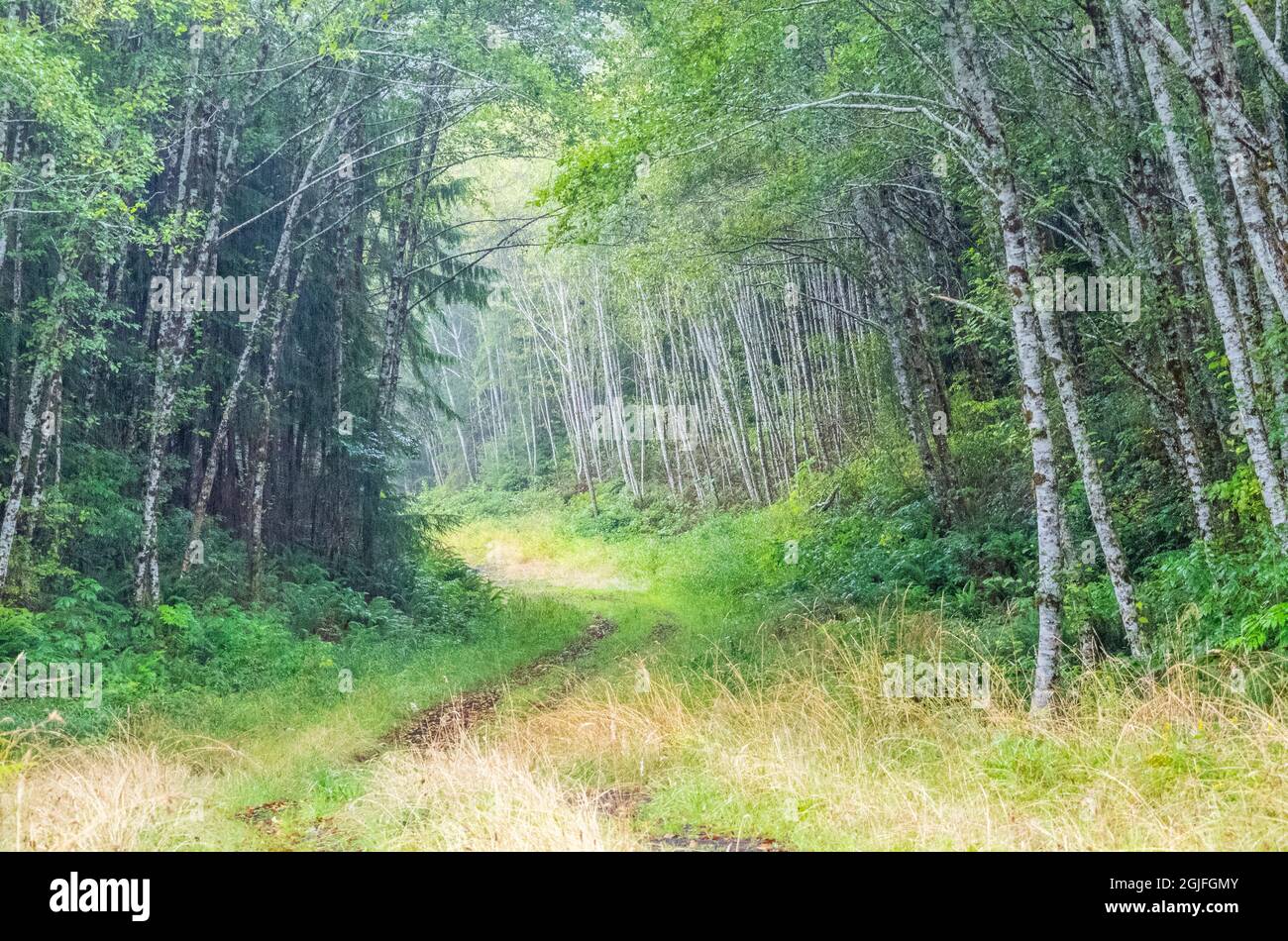
Alder trees are the most common deciduous hardwoods in Washington State, serving as vital "pioneer species" that rehabilitate soil through nitrogen fixation. Predominantly represented by the Red Alder (Alnus rubra), these trees thrive in the moist, temperate climates of the Pacific Northwest, providing essential habitat for wildlife and high-quality timber for the furniture and smoking industries.
As of 2026, understanding the role of alder trees in Washington’s ecosystem is more critical than ever. Whether you are a homeowner managing a wooded lot, a hiker curious about the flora of the Cascades, or a landowner considering reforestation, this guide provides a deep dive into the identification, ecological contributions, and practical management of Washington’s alder species.
Understanding the Primary Alder Species in Washington
While several species of alder exist globally, Washington is home to three primary types. Each has adapted to specific elevations and microclimates within the state’s diverse geography, ranging from the soggy coastal lowlands to the rugged peaks of the Olympic and Cascade mountains.
Red Alder (Alnus rubra)
The Red Alder is the undisputed king of Washington hardwoods. It is the largest alder species in the world, often reaching heights of 80 to 100 feet. It is most prevalent west of the Cascade Crest, where it dominates disturbed sites, riparian zones, and coastal forests. The name "Red" comes from the inner bark, which turns a vivid rusty-orange or red when exposed to air.
Red Alder is a fast-growing, relatively short-lived tree (typically 60 to 100 years). It is often the first tree to colonize an area after a landslide, clear-cut, or fire. Because it thrives in full sun and rich, moist soil, it frequently forms dense, even-aged stands that eventually give way to shade-tolerant conifers like Western Hemlock and Sitka Spruce.
Sitka Alder (Alnus viridis ssp. sinuata)
Unlike the towering Red Alder, the Sitka Alder is more of a sprawling shrub or small tree, rarely exceeding 30 feet in height. It is found at higher elevations and along the coast, often occupying avalanche tracks and subalpine meadows. Its flexible branches are an evolutionary adaptation to heavy snow loads; they can bend to the ground under the weight of winter drifts without snapping, springing back up once the thaw arrives.
Mountain Alder (Alnus incana ssp. tenuifolia)
Found primarily in Eastern Washington and at higher elevations in the Cascades, the Mountain Alder (also known as Thinleaf Alder) prefers the banks of streams and lakes. It is similar in stature to the Sitka Alder but can be distinguished by its leaf shape and its preference for the drier, more continental climate found east of the mountains. It plays a crucial role in preventing stream bank erosion in the Inland Empire and Okanogan regions.
Key Identification Features: How to Spot an Alder
Identifying alders in the Washington wilderness requires looking at several distinct botanical markers. Because they often grow alongside Bigleaf Maples and Black Cottonwoods, it is helpful to know the specific traits that set alders apart.
The Bark and Lichen Symbiosis
The bark of a mature Red Alder is typically smooth and light gray. However, it is rarely "clean." In the humid environment of Western Washington, alder bark is almost always covered in white crustose lichens. This gives the trees a mottled, white-patched appearance that can sometimes be mistaken for Birch from a distance. If you scrape the bark, the immediate oxidation of the inner tissues to a bright reddish-orange is a definitive diagnostic tool.
Leaves and Foliage
Alder leaves are alternate, deciduous, and generally ovate (egg-shaped). The most defining characteristic of the Red Alder leaf is its revolute margin. This means the very edge of the leaf blade is slightly rolled under toward the underside. The margins are also doubly serrated, meaning they have "teeth upon teeth." The top of the leaf is a deep, dull green, while the underside is paler and often coated with tiny rusty hairs.
Reproductive Structures: Catkins and "Cones"
Alders are monoecious, meaning both male and female reproductive parts are found on the same tree. In late winter and early spring (typically February through April in Washington), the male catkins elongate and turn yellowish-gold, releasing clouds of pollen into the wind.
The female structures are unique among deciduous trees: they develop into small, woody, cone-like structures called strobiles. These "cones" contain the seeds and persist on the tree long after the leaves have fallen. If you see a broadleaf tree in December covered in what look like tiny pine cones, you are almost certainly looking at an alder.
The Nitrogen-Fixing Powerhouse: Ecological Significance
One of the most remarkable features of the alder is its ability to "fertilize" the forest. Alders maintain a symbiotic relationship with a group of nitrogen-fixing bacteria called Frankia. These bacteria live in nodules on the tree's roots.
The Frankia Relationship
In this biological partnership, the tree provides the bacteria with sugars produced through photosynthesis. In exchange, the bacteria take atmospheric nitrogen—which plants cannot use directly—and convert it into a bioavailable form (nitrates). This process is so efficient that alders often produce more nitrogen than they need, enriching the surrounding soil as their nitrogen-rich leaves fall and decompose each autumn.
Soil Rehabilitation
In Washington’s history of logging and industrial use, alders have been the primary agents of soil recovery. In areas where topsoil has been stripped or depleted, alders move in quickly, fixing nitrogen and building up organic matter. This prepares the ground for the next successional stage of the forest. Foresters in 2026 increasingly recognize that removing all "weed" alders from a plantation can actually slow the growth of high-value conifers like Douglas-fir by depriving them of this natural nutrient boost.
Economic and Practical Uses of Washington Alder
Historically dismissed as a "weed tree" by the early 20th-century timber industry, Red Alder has seen a massive resurgence in economic value over the last few decades. Today, it is one of the most commercially significant hardwoods in the United States.
Furniture and Cabinetry
Alder wood is often referred to as the "Cherry of the West." It has a fine, uniform grain and a consistent texture that makes it exceptionally easy to work. It sands to a smooth finish and takes stains remarkably well, often being used as a more affordable substitute for expensive woods like Cherry or Walnut. In Washington, several large mills specialize exclusively in alder, producing lumber for high-end kitchen cabinets, furniture, and even electric guitar bodies.
Smoking and Culinary Arts
Pacific Northwest tradition dictates that salmon should be smoked over alder wood. Unlike the heavy, pungent smoke of Hickory or Mesquite, alder provides a light, slightly sweet smoke flavor that complements the delicate oils of seafood and poultry. For home cooks in 2026, alder remains the gold standard for traditional "plank-roasted" salmon.
Firewood Considerations
As firewood, alder is classified as a "medium-heat" wood. It burns cleanly with very little sparking and produces a moderate amount of heat (approximately 17.5 million BTUs per cord). While it does not burn as hot or as long as Oak or Madrona, it is much easier to split and seasons much faster—often being ready to burn in just six months if kept dry.
Comparative Overview of Washington Alder Species
The following table summarizes the key differences between the three primary species found in the state to assist in field identification and land use planning.
| Feature | Red Alder (Alnus rubra) | Sitka Alder (Alnus viridis) | Mountain Alder (Alnus incana) |
|---|---|---|---|
| Growth Habit | Large upright tree | Multi-stemmed shrub/small tree | Small tree or large shrub |
| Typical Height | 60–100 feet | 10–30 feet | 15–35 feet |
| Primary Habitat | Lowland forests, coastal plains | Subalpine zones, avalanche tracks | Streamsides, Eastern WA wetlands |
| Leaf Margin | Rolled under (revolute) | Sharply serrated, flat | Dull teeth, non-revolute |
| Bark Texture | Smooth, gray/white (with lichen) | Thin, yellowish-brown/gray | Thin, dark gray to reddish |
| Elevational Range | 0–2,500 feet | 2,500–7,000+ feet | 2,000–6,000 feet |
| Common Use | Lumber, furniture, smoking meat | Erosion control, wildlife cover | Riparian restoration |
Managing Alder on Your Property
For Washington homeowners, alders can be a mixed blessing. Their rapid growth provides quick shade and privacy, but their biology presents specific management challenges.
Planting and Site Selection
If you are planting alder in 2026, ensure the site has adequate moisture. Alders are not drought-tolerant and will show signs of stress—such as premature leaf drop—if the water table sinks too low during the dry July and August months typical of the PNW. They are best suited for rain gardens, the edges of ponds, or areas with high clay content that retain moisture.
Pruning and Structural Integrity
Alders are "brittle" trees. Their rapid growth results in wood that is less dense than slower-growing hardwoods. In heavy wind or ice storms—common occurrences in Washington winters—alder branches are prone to snapping.
- Safety Tip: Do not plant Red Alder within falling distance of your home or power lines.
- Pruning: Late winter, just before the sap begins to flow, is the best time to prune. Focus on removing "co-dominant leaders" (two main trunks) to encourage a single, stronger central trunk.
Dealing with Pests: The Tent Caterpillar
The Western Tent Caterpillar (Malacosoma californicum) is the most common pest associated with Washington alders. Every several years, the state experiences an "outbreak" where these caterpillars can completely defoliate entire stands of alder. While the sight of silk tents and leafless trees can be alarming, healthy alders usually survive these attacks, often putting out a second flush of leaves later in the season. Chemical treatment is rarely necessary for the tree's survival but may be desired for aesthetic reasons on residential properties.
Common Diseases and Environmental Stress
While hardy, alders are susceptible to certain fungal pathogens that can shorten their lifespan.
- Canker Diseases: Various fungi can cause sunken, dead areas on the bark. These cankers can eventually girdle a branch or the entire trunk, leading to dieback.
- Heart Rot: Because alders are relatively short-lived, older trees (50+ years) frequently develop internal rot. This makes them excellent for woodpeckers and cavity-nesting birds, but dangerous if located near structures.
- Leaf Spot: During particularly wet Washington springs, fungal leaf spots can cause premature browning. This is generally a cosmetic issue rather than a lethal one.
For detailed diagnosis and current 2026 treatment protocols, property owners are encouraged to consult the Washington State Department of Natural Resources (DNR) Forest Health resources or their local WSU Extension office.
Frequently Asked Questions
Are alder trees invasive in Washington?
No, all species of alder mentioned here are native to Washington. However, they are highly opportunistic. If you clear a patch of land, they will likely be the first "volunteers" to grow. Because they grow faster than many garden plants, they can feel invasive in a manicured landscape, but ecologically, they are a fundamental part of the native forest succession.
How can I tell the difference between Alder and Birch?
In Washington, native Paper Birch (Betula papyrifera) is primarily found in the northern part of the state (Whatcom, Okanogan counties). Birch bark peels off in thin, papery horizontal strips, whereas Alder bark is smooth and does not peel. Additionally, Alder "cones" are woody and stay on the tree, while Birch catkins shatter and fall apart when they release their seeds.
Do alder trees cause allergies?
Yes, alder pollen is a significant allergen in Washington, usually peaking in late February or March. Because alders bloom earlier than many other trees, they are often responsible for the first "hay fever" symptoms of the year.
Can I use alder wood for a retaining wall or fence posts?
Alder is not naturally rot-resistant. If it is in direct contact with the ground or constant moisture, it will decay within a few years. For outdoor projects that touch the soil, Washington natives like Western Red Cedar are far superior choices. Alder should be reserved for indoor furniture or projects where it is kept dry and sealed.
Why is the inner wood of my alder tree orange?
This is a natural chemical reaction. When the tree is cut or the bark is damaged, substances called polyphenols in the wood react with oxygen. This "oxidization" turns the wood from a creamy white to a bright rusty orange or red within minutes. It is a signature trait of the genus Alnus.
Moving Forward with Alder Management
If you have alders on your land, the best course of action is to view them as a "nurse crop." They are working to build your soil’s fertility for future generations of trees. For those in 2026 dealing with aging or hazardous alders, consider a selective removal process: remove trees that pose a threat to structures, but leave "snags" (standing dead trees) where safe to provide essential habitat for Washington’s diverse bird populations.
Whether for the timber they provide or the nitrogen they fix, alder trees remain an indispensable pillar of the Washington landscape.